
Gluten Intolerance: Gluten intolerance and celiac disease in children.
| Short on time? Here is the essentials ⭐ |
|---|
| Celiac disease is an autoimmune enteropathy triggered by gluten in a predisposed child 🧬 |
| Intolerance symptoms vary: digestive disorders, growth faltering, anemia, irritability 😕 |
| The celiac disease diagnosis is based on anti-transglutaminase IgA, ± biopsy depending on age and criteria 🔬 |
| Do not start a gluten-free diet before tests, under risk of false negatives 🚫🍞 |
| The only treatment: strict lifelong gluten avoidance + pediatric and dietary follow-up 🗓️ |
At school, at home and during festive moments, recognizing the signs of a true gluten intolerance in the child changes everything. Families sometimes notice bloated bellies, a picky appetite, persistent fatigue, or a break in the growth curve. Behind these subtle clues may hide a celiac disease, a frequent, sometimes silent pathology, yet reversible thanks to a methodical gluten-free diet. Recent HAS recommendations and current pediatric algorithms offer a clear path to securing the celiac disease diagnosis without wandering.
The challenge is not only dietary. It also concerns trust, autonomy, daily rituals, and the alliance between parents, pediatricians, schools, and dietitians. Understanding the difference between food allergy, gluten sensitivity, and celiac disease prevents unnecessary diets and deficiencies. With simple markers, concrete examples, and practical tools, each family can navigate calmly between reading labels, preventing contamination, and joyful menus. Because one certainty emerges: when care is precise and well explained, the child regains vitality, growth, and the pleasure of eating.
Gluten intolerance in the child: warning signs and confusion traps
The classic image of the celiac child still exists: swollen belly, thin limbs, fatigue, and soft stools. However, the intolerance symptoms are often more subtle. A persistent iron-deficiency anemia, recurrent stomach aches, unusual irritability, joint pains, or isolated short stature may indicate early celiac disease. Teachers sometimes describe an afternoon drop in attention. Parents note broken sleep. Taken separately, these elements cause little worry. Together, they paint a picture to be explored.
Lina, 7 years old, illustrates this mismatch. Her belly hurts after the cafeteria but not on weekends. Her weight curve slows, and her dental enamel shows small streaks. After months of ineffective antacids, a simple blood test reveals elevated anti-transglutaminase IgA. The diagnosis, later confirmed, will explain her digestive disorders and mood swings. And above all, allow for rapid improvement thanks to targeted support.
Differentiating celiac disease, food allergy, and gluten sensitivity
Three realities coexist and are not treated the same way. Celiac disease is autoimmune and accompanied by intestinal lesions. Wheat food allergy involves an immediate IgE reaction, with hives, swelling, or even anaphylaxis. Gluten sensitivity (non-celiac) involves bloating or discomfort, without specific blood markers or villous atrophy. Confusing these entities leads to inappropriate care. A broad avoidance diet without formal proof can mask the disease and delay growth.
In this perspective, fine daily observation matters. When do the pains occur? Which foods trigger crises? Are there canker sores, stubborn constipation, sad mood, or delayed puberty? These clues, shared with the pediatrician, guide what comes next. The golden rule remains: before any dietary change, aim for a documented celiac disease diagnosis. The issue is simple and crucial: treat the cause and restore the child’s energy, serenity, and pleasure in learning.
Celiac disease in children: mechanisms, genetics, and epidemiology
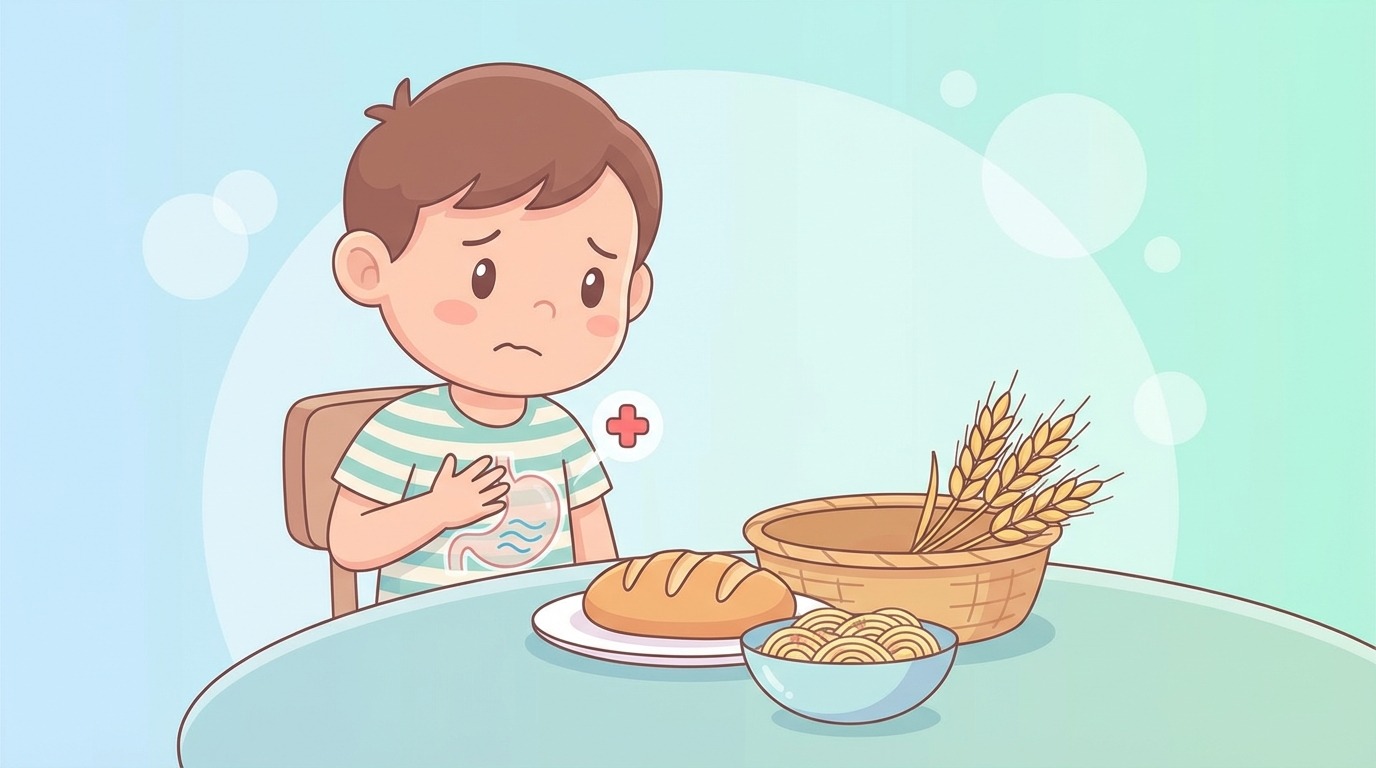
Celiac disease is a chronic inflammatory enteropathy. In children carrying HLA-DQ2 and/or DQ8, fragments of gluten (wheat, barley, rye, and hybrids) trigger an immune cascade. Duodenal villi flatten, reducing absorption of iron, calcium, and folate. Expected consequence: anemia, bone demineralization, and fatigue. The paradox is common: the child eats properly, but the intestine does not assimilate. Keeping this physiopathological logic helps explain the rapid benefits of a well-managed gluten-free diet.
On the population level, estimates converge. In Europe and the United States, prevalence is around 0.7%, with publications reporting up to 1–2% depending on cohorts. The annual incidence has increased in industrialized countries over recent decades, probably due to screening and early dietary diversification. In France, a large share of cases remains undiagnosed as the disease is often paucisymptomatic. Furthermore, girls are more affected than boys. This risk gradient requires heightened clinical vigilance in pediatrics.
Why does the intestinal lining weaken in some children?
The answer combines genetic background and mucosal immunity. Under the action of tissue transglutaminase, some gluten peptides become more immunogenic. T lymphocytes activate. Specific antibodies form. The mucosa remodels. In this context, minor contamination can re-trigger inflammation. This explains the requirement for a strict gluten-free diet. This rigor is not punitive. It protects the lining, restores absorption, and supports growth. The winning message for children? “Your gut heals better when you keep it safe.”
The framework has evolved in recent years. HAS, approached by AFDIAG, has worked on updated practical recommendations for screening, diagnostic confirmation, and follow-up. The target audience includes pediatricians, general practitioners, PMI doctors, and dietitians. Goal: detect early, diagnose quickly, support long-term. Relying on clinical, serological, and possibly histological criteria, the team builds a clear pathway for families.
This update supports a central message: when the strategy is clear and shared, the child gains well-being, energy, and confidence. Science explains the mechanisms. The educational setting transforms this knowledge into daily victories.
Celiac disease diagnosis in children: from blood test to no-biopsy criteria
The process always starts before any avoidance. The child must continue consuming gluten to ensure reliable tests. The first test targets anti-transglutaminase IgA, coupled with total IgA measurement. In case of IgA deficiency, alternative markers (anti-TG2 and anti-endomysium IgG) are considered. If antibodies are very high and other criteria are met, the current pediatric approach may confirm a diagnosis without biopsy after expert consultation. This option limits invasiveness when the context is very suggestive.
Duodenal biopsy via endoscopy still holds a key value. It confirms villous atrophy and allows differential diagnosis. For Lina, very positive serology and significant symptoms led to a pediatric gastroenterologist consultation. The pathway was clear: inform parents, organize endoscopy, then start a gluten-free diet with a trained dietitian. Tangible result in a few weeks: calmed belly, regained appetite, energy in sports.
Avoid missteps: do not remove gluten before tests
Temptation is strong to try avoidance “just to see.” This reflex, however, creates false negatives. Antibodies fall and biopsy can normalize. Reintroducing gluten after several weeks of avoidance is painful and delays diagnosis. The rule is therefore firm: no gluten-free diet without proof, and no self-diagnosis. Moreover, non-celiac gluten sensitivity should only be considered after excluding celiac disease and wheat food allergy through appropriate channels.
Finally, some situations require rapid expert advice: growth faltering, associated type 1 diabetes, autoimmune thyroid disorders, diffuse dental enamel anomalies, or family history of celiac disease. In these cases, it is better to speed up serology and access to a pediatric gastroenterologist. The clarity of the diagnostic pathway reassures and, above all, protects growth.
When parents have a structured roadmap, they cooperate better. The child feels supported and gains autonomy. Accurate diagnosis opens the door to a simple, demanding, but tremendously effective treatment.
Gluten-free diet for children: organization, joyful menus, and contamination prevention
The only treatment for celiac disease remains total gluten avoidance. Practically, this means avoiding wheat, barley, rye, and their hybrids. Pure oats certified gluten-free may be introduced with monitoring. The key to success lies in fun and repeated nutrition education. At home, create a dedicated cupboard, label flours, reserve a toaster. At school, inform the nurse and cafeteria, plan a PAI (individual accommodation plan) if needed. The more the environment understands the stakes, the more the child lives their journey serenely.
Families often fear culinary boredom. The opposite happens when cooking opens to alternatives. Buckwheat pancakes, polenta, fragrant rice, toasted legumes, and chestnut flour renew flavors. For crispy snack ideas, this crispy pumpkin recipe offers a simple, colorful, wheat-free example. By varying textures and colors, the plate becomes festive again. Friends love it, and the child no longer feels different.
Limit cross-contamination without stress
The danger often hides in crumbs. Shared cutting boards, poorly rinsed spoons, stray breadcrumbs suffice. Segment the kitchen, wash hands, favor individual butter servings. At the bakery, ask for separate packaging. On trips, carry explanatory cards and safe snacks. The goal is not fear. It is concrete, effective habits, transferable to relatives and teachers.
- 🍞 Avoid: breads, pasta, biscuits with wheat/barley/rye; be cautious with sauces and breading.
- 🥣 Favor: rice, corn, buckwheat, quinoa, potatoes, legumes.
- 🧽 Adopt: dedicated cutting board, reserved toaster, cleaned utensils.
- 🏫 Communicate: PAI, exchanges with cafeteria, clear labels in lunchbox.
- 🎉 Anticipate: homemade gluten-free cakes for birthdays, safe alternatives on outings.
The pleasure aspect is not trivial. It strengthens adherence, prevents slips, and normalizes social life. Moreover, varying seasonal recipes contributes to budget and sustainability. To complement, another tasty idea is offered here, ideal for a family brunch: a crispy pumpkin-based preparation.
Winning routines establish themselves when everyone finds a benefit: the child who feels understood, parents who save time, and the school that knows what to do. Discipline becomes almost invisible because it blends with daily life.
Pediatric follow-up, comorbidities, and focus on adolescent autonomy
After diagnosis, the story continues. Regular follow-up checks growth, iron status, vitamin D, sometimes bone density. Anti-transglutaminase antibodies serve as adherence compass. Progressive normalization confirms the right path. If digestive disorders persist, transient lactose intolerance or cross-contamination is investigated. Families appreciate a simple roadmap: assessments every 6 to 12 months, annual dietetic consultation, check-ins with school as needed.
Celiac disease can coexist with other autoimmune disorders, such as type 1 diabetes or thyroid dystrophies. This context requires coordinated vigilance. PMI doctors, general practitioners, and pediatricians share information to avoid blind spots. During key periods, especially puberty, one motto applies: support autonomy without letting go of the hand. Understanding labels, politely refusing uncertain dishes, asking about sauce composition — these are adult-in-the-making gestures.
Social life, sports, and mental health: maintaining momentum
Physical activity structures bone growth and mood. A healed intestine reabsorbs calcium better; combined with sports, it is a winning duo. Psychologically, children fear “bothering others.” Reminding the right to safe food frees speech. Teachers and leaders must know that a slip is not a mere annoyance, but a real inflammation risk. Calmly displaying these rules strengthens group confidence.
And if the teenager transgresses? Rather than dramatize, explain the consequences and offer appetizing alternatives. Labeling apps help at the supermarket. Restaurants better train their teams. Festivals and school outings plan options. The dynamic is clear: when society organizes itself, the child progresses without hiding. Follow-up becomes a lever for fulfillment, not a sterile constraint.
Ultimately, success is measured on three levels: symptoms eased, harmonious growth, preserved self-esteem. With a solid alliance between family, caregivers, and school, these three goals are reached, and the horizon brightens sustainably.
Quick references for families and caregivers: criteria, resources, and tips
When a pediatrician suspects celiac disease, they quickly specify tests: anti-transglutaminase IgA and total IgA, ± anti-endomysium, ± HLA genetics depending on context. They remind not to remove gluten. They schedule expert consultation if growth slows, autoimmune comorbidities, or widespread oral-dental signs. On the family side, the goal is to observe without changing. Meals, symptoms, and energy throughout the day are noted. These concrete details will guide direction.
To structure information, a visual tool is often helpful. The table below summarizes common situations and proposed actions. It is used as a mnemonic device, adaptable to each child’s reality. Emojis facilitate memorization and make the tool more engaging. The essential is not to be perfect, but coherent and consistent.
| 🧭 Key indicator | ✅ Practical action |
|---|---|
| Recurrent abdominal pain 🤕 | Consult; request anti-TG2 IgA + total IgA 🔬 |
| Growth faltering 📉 | Accelerate pediatric/gastroenterology consultation 🏥 |
| Persistent iron-deficiency anemia 🩸 | Consider celiac disease; complete workup 📑 |
| “Test” avoidance plan 🍞🚫 | Postpone until tests; avoid false negatives ⏳ |
| Confirmed gluten-free diet 🥗 | Dietary education; prevent contamination 🧽 |
For the plate, think in colors, textures, and seasons. The crunch of roasted vegetables, the creaminess of a buckwheat risotto, the softness of fermented milk yogurt without contact gluten make a complete meal. On Sundays, cook batches for the week’s lunchboxes. On Wednesdays, invite a friend and offer a “blind test” flour tasting. In short, turn the constraint into a collective game, serving health.
“An informed child eats better than a worried child”: this maxim guides exchanges. When words are clear, gestures become simple, and success follows.
Quels signes doivent alerter à l’école ou à la maison ?
Douleurs abdominales répétées, ballonnements, fatigue, irritabilité, cassure de la courbe staturo-pondérale, anémie, anomalies de l’émail dentaire ou retard pubertaire. Réunies, ces manifestations justifient une sérologie ciblée avant tout changement alimentaire.
Peut-on commencer un régime sans gluten en attendant les résultats ?
Non. Retirer le gluten avant les examens peut normaliser les marqueurs et fausser la biopsie. Il faut maintenir une alimentation contenant du gluten jusqu’au bilan complet, guidé par le pédiatre.
Quelle différence entre maladie cœliaque et allergie au blé ?
La maladie cœliaque est auto-immune et endommage l’intestin. L’allergie au blé est une réaction IgE immédiate avec urticaire, œdème, voire anaphylaxie. Le diagnostic et la prise en charge diffèrent.
Le régime sans gluten est-il à vie ?
Oui. L’éviction stricte est le seul traitement efficace. Elle permet la réparation muqueuse, la disparition des symptômes et une croissance harmonieuse, avec un suivi médical régulier.
Comment prévenir la contamination croisée à la maison ?
Réserver des ustensiles, nettoyer soigneusement, utiliser un grille-pain dédié, lire les étiquettes, et organiser un placard ‘sans gluten’. Informer tous les proches qui cuisinent pour l’enfant.
“Protecting a child’s intestine today is expanding their horizon tomorrow.”