5-Year Development: The development of the 5-year-old child according to Naitre et Grandir.
| Short on time? Here’s the essentials ✨ |
|---|
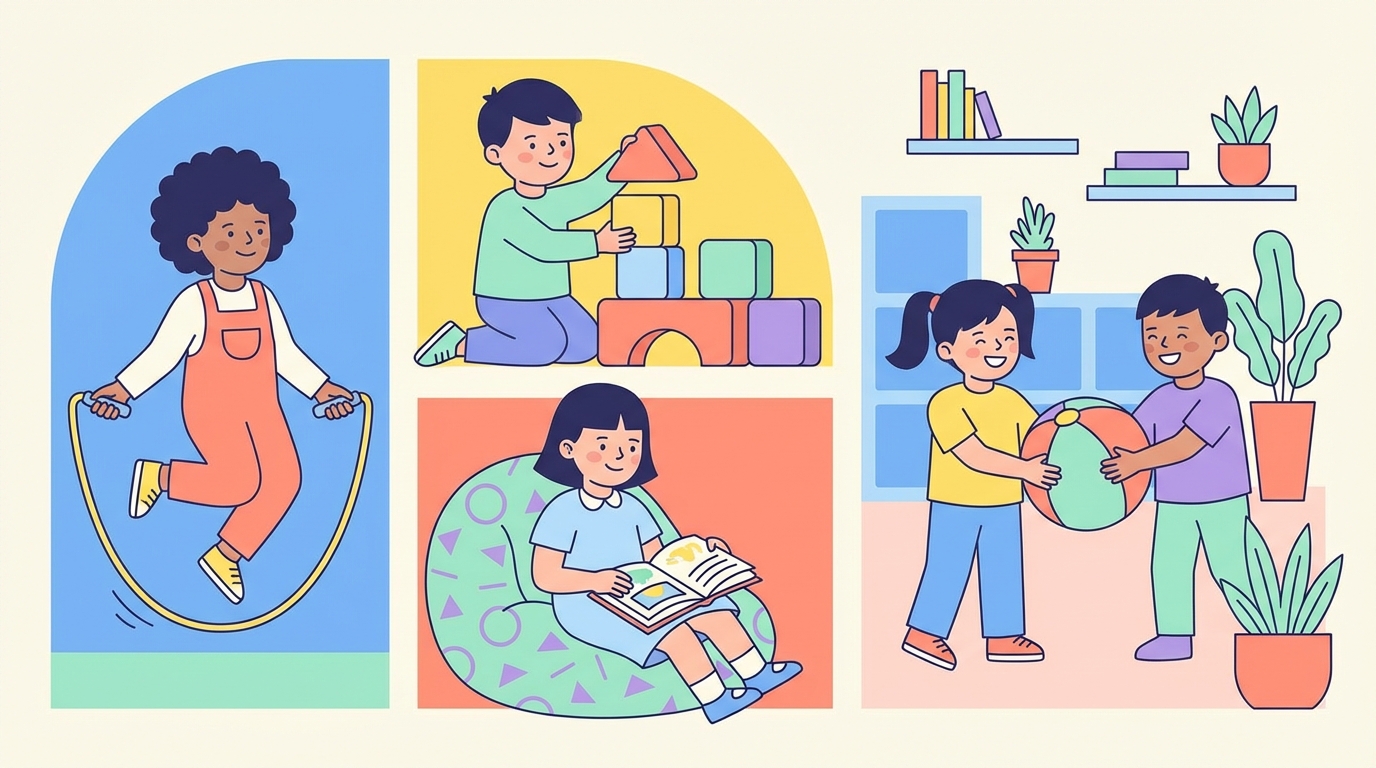
| Motor skills 🏃♂️: jumping, running, climbing and improving hand-eye coordination. |
| Language 🗣️: complex sentences, rich vocabulary, cascading questions. |
| Emotions 💗: better identifying, expressing and calming intense emotions. |
| Socialization 🤝: rule-based games, cooperation, friendships that matter. |
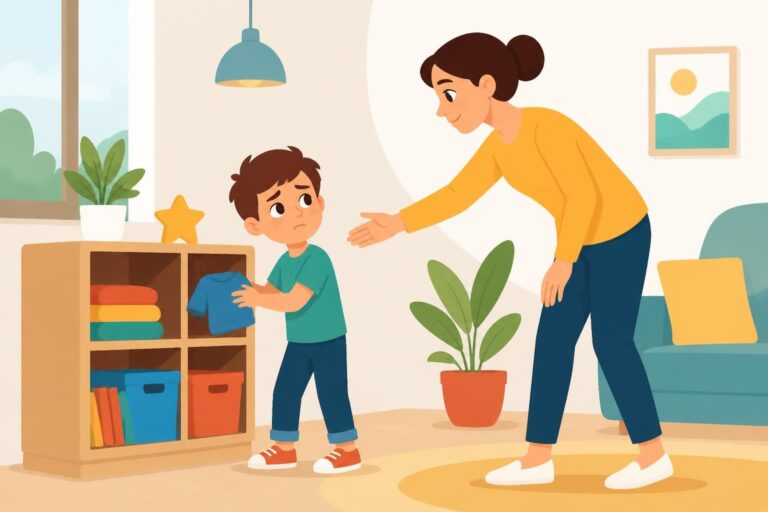
| Autonomy 👕: dressing, washing the face, tidying personal belongings. |
| Learning 📚: phonological awareness, numbers, scientific curiosity. |
At 5 years old, the child moves forward confidently toward independence. He loves to move, ask questions and understand his surroundings. This unique moment in child development comes with a growth in motor skills, language, and cognition. Meanwhile, socialization sharpens, as does the ability to name emotions and follow rules, both in class and at home. In the spirit of the milestones proposed by Naitre et Grandir, this stage opens the way to harmonious growth, provided daily life is adjusted with kindness and consistency.
Families often observe the same scenario. A child who jumps rope, recounts his day in detail and insists on “doing it alone.” Yet, every journey remains unique. Thus, the balance between free play, quiet time and structured learning becomes crucial. Predictable routines provide security, while graduated challenges stimulate the desire to learn. As a common thread, let’s take the example of Léo, 5 and a half years old, who turns his living room into an idea laboratory. His story will illustrate how to encourage autonomy without skipping steps and how to support a calm progression toward school.
Key milestones at 5 years according to Naitre et Grandir: motor skills, language, cognition, and emotions
At this age, motor skills gain precision. A child climbs the ladder of the slide, jumps on one foot, then alternates without losing balance. He throws a ball with more power. However, catching remains sometimes hit or miss. Fine motor skills also progress. Lines become better controlled, and scissors are easier to handle. To understand this continuum, a reminder of the early stages of gross motor skills in toddlers sheds light on the evolution of coordination and muscle tone.
Language takes off. Sentences lengthen, grammar solidifies, even if conjugations still stumble. The child tells a story respecting the order of events. He asks questions in series, tackling “whys” and “hows.” This blossoming feeds learning. Léo, for example, is passionate about planets. He invents rocket stories and wants to compare the size of celestial bodies. Thanks to regular readings, his vocabulary expands and becomes more precise.
On the cognitive level, logical links consolidate. The child sorts objects by color, shape or size. He understands “more than,” “less than,” and “as much as.” Thinking is structured around simple rules. Playing board games, he accepts the common rule and learns to plan a move ahead. In fact, executive functions are trained daily. Moreover, attention span lengthens. A craft project can last twenty minutes, sometimes more, if the challenge remains within reach.
Emotions become clearer. The child recognizes anger, sadness, and joy. He knows how to name them more often and uses reassuring strategies. Deep breathing, drawing what he feels, or isolating himself briefly in a quiet corner help. Still, outbursts persist during fatigue periods. Patient and consistent support reduces these storms. The milestones from Naitre et Grandir highlight the key role of a trusted adult who encourages, reassures and secures.
Socialization becomes richer. Friendships matter more, and cooperation grows. Conflicts exist, but they become learning opportunities. Offering rule-based games adapted to emotional levels helps a lot. And if playful confrontations get out of hand, useful resources exist to channel energy, such as the guidelines on children’s battle games, to open dialogue and set clear boundaries.
In short, 5 years marks a milestone. Child development advances on several fronts simultaneously. With a stable environment and adjusted challenges, psychomotor growth and learning align on a confident trajectory.
Autonomy and daily life at 5 years: effective routines, group rules and confident socialization
The fifth year establishes autonomy. The child dresses faster, undresses without help, and better adjusts fastenings. He puts his shoes in the right place. He washes his face with fewer splashes. These gestures boost confidence. Thus, offering a visual routine with pictograms promotes success. Léo loves ticking off his morning steps. He feels proud and starts his day more calmly.
Mealtime becomes a social learning moment. Sitting posture, use of cutlery, alternating between conversation and bites are practiced day after day. When behaviors overflow, practical tips prove valuable. Advice on table manners helps establish a positive framework without fighting over every bite. Meanwhile, responsibilities empower the child. Setting the table, wiping small messes, then putting away his napkin stimulate group contribution.
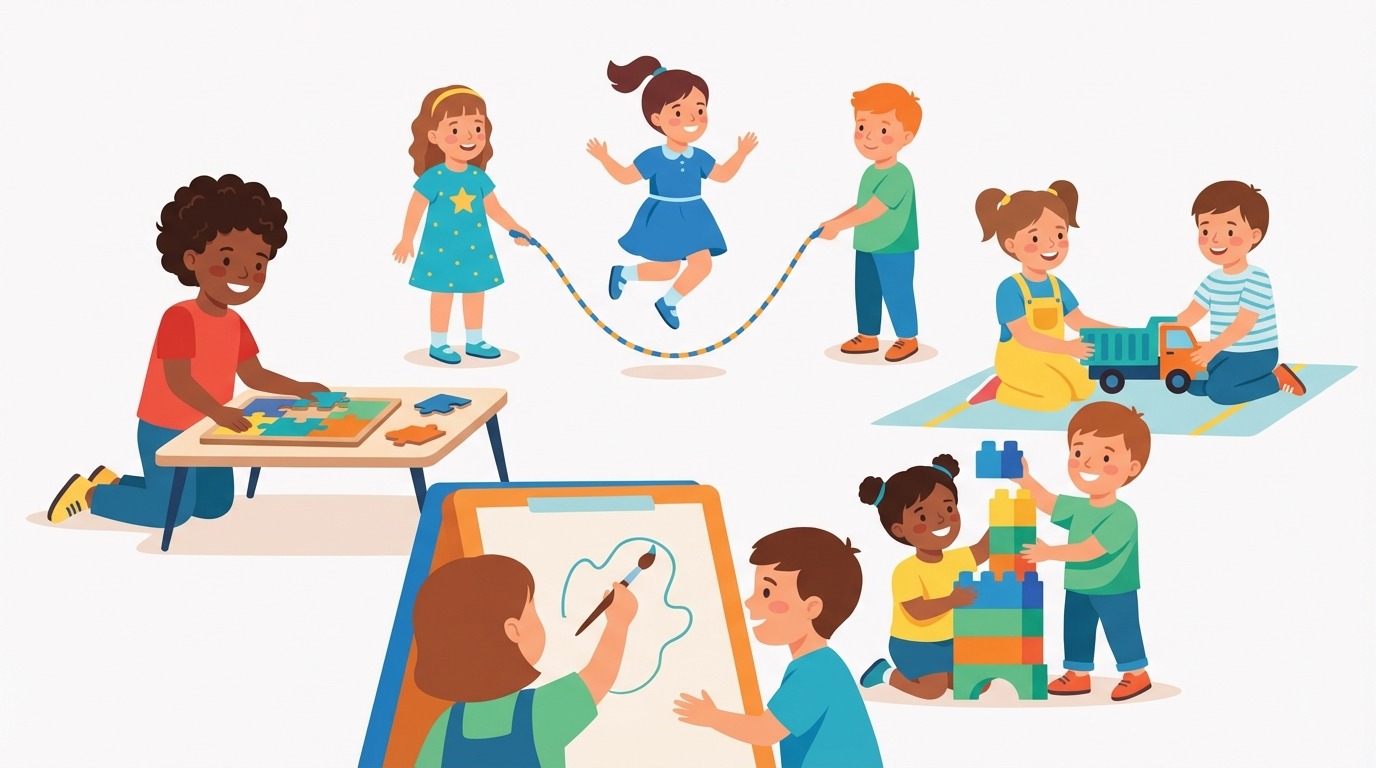
Shared life rules ease daily routine. Saying what is expected, illustrating it, then practicing together creates common language. Next, adherence is reinforced by example. Adults model the desired behavior. At school, the child respects taking turns speaking and understands that an activity has a beginning, middle and end. During group games, he explores cooperation and patience. As a result, socialization deepens and becomes a lever for learning.
Among siblings, close ages sometimes sharpen rivalry. Individual attention rituals defuse many tensions. When the household also includes a baby, play arrangements can be revisited. Equipment choices, such as a play mat for the youngest, help organize space without restricting freedom for the older children. Circulation is thus smoother for motor activities and shared reading.
Fears evolve with age. Typical toddler fears fade, but others emerge, like fear of the dark or monsters. Comparing with the milestones of fears between 1 and 3 years helps to put things in perspective. We validate the emotion, then propose security rituals. A nightlight, a guardian cuddly toy, or a soothing story go a long way. Quickly, the child gains emotional mastery.
Ultimately, autonomy remains a dynamic process. It progresses through trials, errors and concrete feedback. Consistent framing, stable routines and a warm tone form a winning trio for everyday socialization.
Rituals and tools that make a difference every day
Some supports yield quick results. A visual timer helps manage time. A responsibility chart clarifies who does what. A “solutions” box gathers ideas to resolve small conflicts. This culture of concrete tools teaches the child to seek strategies rather than fidget. Progress is then celebrated with special attention or chosen playtime. Intrinsic motivation gradually sets in.
After the video, it is still useful to adapt each idea to the reality of the home. The same tool, well calibrated, can soothe rushed mornings and overly noisy evenings. The essential thing is to keep a training logic, not immediate perfection.
Learning and preparation for school: language, numbers, attention and joy of learning
School preparation is not just about letters and numbers. It includes curiosity, perseverance and listening. The child sharpens phonological awareness. He hears rhymes, initial and final sounds. He recognizes some familiar letters, sometimes his name. At the same time, he handles quantities, compares collections and orders from smallest to largest. This cognition in full development thrives through concrete and playful situations.
Stories remain an ideal ground. We question the narrative, anticipate the next part, then relate the plot to real life. Léo loves pointing out the characters’ emotions. He suggests solutions when a hero hesitates. Thus, language and emotions strengthen together. In mathematics, cooking develops number sense. We count spoons, measure, divide into equal parts. Learning then takes on a taste of success.
Fine motor skills support early writing. Planning modeling activities, beads to string or clothespins strengthens the hand. In parallel, motor circuits maintain gross motor skills at a good level. This synergy between body and mind prepares for the posture of a student. In this regard, families appreciate reliable resources on intellectual development to organize targeted games, without pressure.
The emotional climate remains central. A child learns better when feeling competent. Effort is valued, not just the result. Strategies that worked are named. This attitude strengthens motivation and self-esteem. Moreover, it feeds perseverance when the task becomes difficult. A calm space, soft light and a transition period before the activity improve concentration.
On the interaction side, socialization continues to operate as a driver. Rule-based games settle in, and verbal exchanges become more nuanced. The child practices argumentation. He learns to listen, then respond. Thanks to these skills, the classroom becomes a place of real cooperation, not just a space of top-down instructions. Naitre et Grandir’s milestones converge towards this message: the joy of learning fuels long-term success.
Simple activity ideas to strengthen school prerequisites
- 📖 Dialogic reading every evening: spot rhymes and guess what comes next.
- 🧱 Free construction: name shapes, compare heights and measure.
- 🎲 Short board games: wait your turn, count and memorize rules.
- 🧩 Progressive puzzles: visualize the whole, plan the steps.
- ✂️ Fine motor workshops: scissors, modeling clay, beads and clips.
- 🥣 Educational cooking: weigh, share, order actions.
In sum, school success is rooted as much in enthusiasm as in structure. The duo of consistency and pleasure remains the best springboard to first grade.
After this second video insight, a practice period consolidates the learning. Choose two ideas, try for a week, then adjust. Simplicity protects motivation and makes progress visible.
Targeted games and activities to stimulate overall growth at 5 years
Play is the first classroom. It feeds growth, language, cognition, and emotions. At this age, the child excels in symbolic play. He creates scenarios, explores roles and experiments with cooperation. Dress-up clothes, a wooden kitchen and various figurines open the field of possibilities. The imaginary world becomes a social laboratory where the child masters negotiation and problem-solving.
For gross motor skills, circuits built in the living room work wonders. Jumping over cushions, weaving between cones, then crawling under a chair. In this way, coordination, balance and rhythm improve. Then a daily outdoor slot is reserved. Walking, running and climbing nourish health and clear the mind. Because seasonal variations require caution, the pace and level of difficulty are adapted.
Rule-based games structure the mind. Start with short challenges, then increase complexity. Cooperative games teach winning together. Competitive games train frustration management. When energy gets too high, rely on concrete guidelines to prevent outbursts. Ideas around battle games remind that a good framework is prepared in advance. Limits are named, stop signals explained, then the transition to calm ritualized.
Artistic workshops free expression. Techniques are mixed: chalk, gouache, collage and ink. Choices of colors are commented on, and what is seen is described. Thus, language weaves with gesture. Songs and rhymes lead to rhythm. They make syllables dance and serve sound awareness. An audio recording given to the child nourishes pride and strengthens memory.
To develop socialization, organize group “missions.” Building a cabin, preparing an art exhibition or inventing choreography requires planning and mutual help. Parents also find their place. They guide without doing it for the child. Supporting this, milestones on social development offer simple strategies to encourage empathy and cooperation.
Balanced weekly mini-program
Here is an easy outline to adapt. Monday, motor circuit and shared reading. Tuesday, cooperative game and modeling clay. Wednesday, nature outing and writing names. Thursday, cooking and puzzles. Friday, music and symbolic play. Saturday, fresh air with family. Sunday, creative calm and weekly review. This kind of rhythm supports progression without overwhelming the schedule.
Underlying everything is the golden rule: vary, adjust, celebrate. Play then keeps its training power, and learning settles in over time.
Warning signs and support strategies: when to consult, with whom, and how to act
Every child progresses at their own pace. Yet certain milestones call for attentive vigilance. If language remains difficult to understand, if the child does not form comprehensible sentences, or avoids contact with peers systematically, an assessment is warranted. Trajectories are compared without dramatizing. For general knowledge, milestones from 1 to 3 years help detect early delays, for example when a 1 to 3-year-old child does not speak. At 5 years, functional language and real social engagement are expected.
Marked behavioral difficulties at the table, permanent opposition, or very frequent emotional breakdowns may signal a need for help. Resources on the meal framework provide concrete support points to get started. Then a network of professionals is called upon. Educators, speech therapists, occupational therapists and psychomotricians work hand in hand with the school. The Naitre et Grandir milestones emphasize the importance of early action, as brain plasticity supports great catch-ups.
Persistent fears, very frequent nightmares, or overwhelming phobias also deserve attention. Normal variations are distinguished from signs that disrupt daily life. Information on toddler fears helps understand the evolution of anxieties. At 5 years, fear of the dark or thieves often eases with reassuring routines. If suffering persists, specialized advice reassures the family and child.
In families with a baby, ensure spaces encourage coexistence. Using a play mat for the youngest frees zones for building and dance for the older ones. Thus, everyone has an exploration territory, without constant conflicts. Finally, monitor overall balance: sufficient sleep, varied diet and daily movement. This physical foundation supports emotional regulation and attention capacity.
To conclude this section, remember a three-step strategy. Observe without judgment, act in small steps, then evaluate the effect. This simple loop establishes a progress dynamic and strengthens the alliance between child, family and educational partners.
Orientation tools for families
Families benefit from recording observations over a few weeks. Note precise examples, their frequency and context. At a meeting with school or a professional, this data makes analysis more precise. Moreover, reference content on intellectual development and social development enriches overall understanding. They provide ideas for concrete adjustments, easy to test the next day.
Ultimately, early screening is better than prolonged worry. A calm and collaborative approach changes the child’s trajectory for the better.
{“@context”:”https://schema.org”,”@type”:”FAQPage”,”mainEntity”:[{“@type”:”Question”,”name”:”Quels jeux privilu00e9gier pour un enfant de 5 ans ?”,”acceptedAnswer”:{“@type”:”Answer”,”text”:”Misez sur les jeux de ru00e8gles courts, le jeu symbolique, les constructions, les puzzles progressifs et les ateliers artistiques. Ajoutez des parcours moteurs pour soutenir la coordination et lu2019u00e9quilibre. Alternez coopu00e9ration et compu00e9tition pour entrau00eener la gestion des u00e9motions.”}},{“@type”:”Question”,”name”:”Comment soutenir le langage au quotidien ?”,”acceptedAnswer”:{“@type”:”Answer”,”text”:”Lisez des histoires, u00e9changez sur la journu00e9e, jouez avec les rimes et les sons. Invitez lu2019enfant u00e0 raconter, u00e0 du00e9crire et u00e0 poser des questions. Valorisez lu2019effort et modu00e9lisez des phrases riches, sans corriger de fau00e7on su00e8che.”}},{“@type”:”Question”,”name”:”Quels repu00e8res du2019autonomie attendre u00e0 5 ans ?”,”acceptedAnswer”:{“@type”:”Answer”,”text”:”Su2019habiller et se du00e9shabiller, se laver le visage, ranger ses affaires et participer u00e0 de petites responsabilitu00e9s familiales. Des routines visuelles, un minuteur et un tableau de tu00e2ches facilitent ces acquis.”}},{“@type”:”Question”,”name”:”Quand consulter un professionnel ?”,”acceptedAnswer”:{“@type”:”Answer”,”text”:”Si le langage reste difficilement intelligible, si la socialisation est tru00e8s limitu00e9e, ou si les u00e9motions du00e9bordent au point de perturber la vie quotidienne. Demandez conseil u00e0 lu2019u00e9cole, puis orientez-vous vers orthophonie, psychomotricitu00e9 ou psychologie selon le besoin.”}},{“@type”:”Question”,”name”:”Comment pru00e9parer lu2019entru00e9e au CP sans pression ?”,”acceptedAnswer”:{“@type”:”Answer”,”text”:”Installez des rituels courts, ludiques et ru00e9guliers: lecture dialoguu00e9e, jeux de nombres en cuisine, dessins et chansons. Cultivez le plaisir du2019apprendre, valorisez la persu00e9vu00e9rance et conservez des temps libres pour jouer.”}}]}Which games to prioritize for a 5-year-old child?
Focus on short rule-based games, symbolic play, constructions, progressive puzzles, and artistic workshops. Add motor circuits to support coordination and balance. Alternate cooperation and competition to train emotional management.
How to support language daily?
Read stories, discuss the day, play with rhymes and sounds. Invite the child to tell stories, describe and ask questions. Value effort and model rich sentences without harsh correction.
What autonomy milestones to expect at 5 years?
Dressing and undressing, washing the face, tidying belongings, and participating in small family responsibilities. Visual routines, a timer and a chore chart facilitate these skills.
When to consult a professional?
If language remains hard to understand, socialization is very limited, or emotions overflow to the point of disturbing daily life. Ask the school for advice, then turn to speech therapy, psychomotricity or psychology as needed.
How to prepare for entry to first grade without pressure?
Set up short, playful and regular rituals: dialogic reading, number games in cooking, drawings and songs. Cultivate the joy of learning, value perseverance and keep free time for play.
“At 5 years, every question opens a door: offer the key, not the whole hallway.”