Language Questions Parents: Parents’ questions about children’s language and speech from 1 to 3 years old.
Between 1 and 3 years old, curiosity explodes, questions fly, and each day brings a new word. This decisive moment in language development nevertheless raises many questions. How can we know if a child’s speech is progressing in the right direction? What markers distinguish the typical language acquisition from a possible language delay? And above all, how to stimulate without applying unnecessary pressure? The answers rely on clear benchmarks, concrete examples, and strategies that turn routines into a springboard for verbal expression.
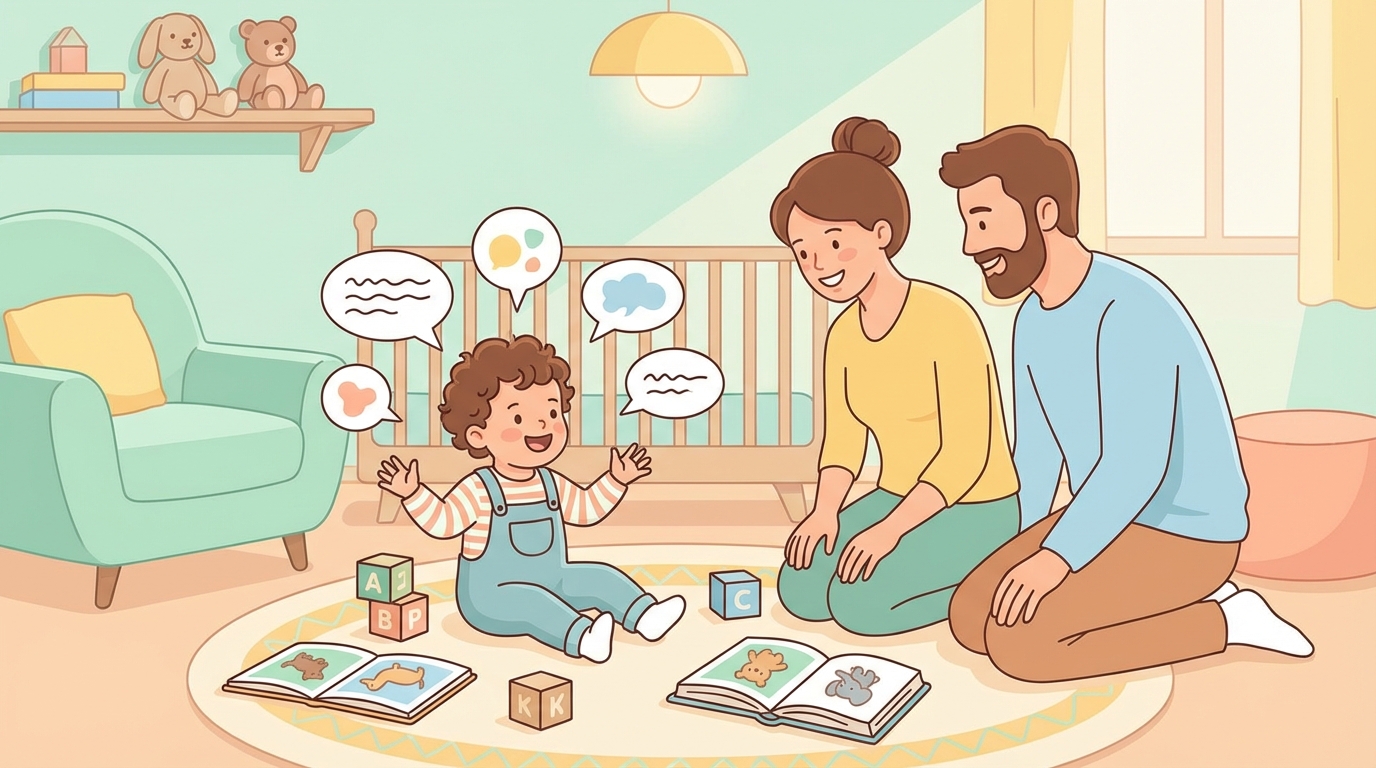
In many families, a little scene repeats itself. Lina and Karim watch Milo, 26 months old, babbling while pointing at the window. He says “encor’ oiseau”, waits, smiles, then adds “grand oiseau, là”. This moment seems trivial. Yet, it reflects well-established early communication, coordinated gestures to words, and a refining oral comprehension. Thus, between the “what is it?” and “why?” the parents play a key role. By responding with simple words, accurately reformulating, and naming the world, they nurture thought and build confidence.
| Short on time? Here’s the essentials ⭐ |
|---|
|
Solid benchmarks for language development from 1 to 3 years old
Language development starts long before the first word. From the first months, babbling structures sounds and prepares articulation. Then, around 12 months, an isolated word gains meaning and becomes a tool for action. At 18 months, the lexical explosion begins. The child understands simple instructions and sometimes combines two words to ask, show, refuse, or comment.
Between 2 and 3 years, progress is obvious. Short sentences lengthen and become more precise. Oral comprehension covers longer instructions. Concrete temporal notions appear: “not right now”, “later”, “wait”. The questions “what is it?” and “why?” testify to a powerful cognitive engine. Meanwhile, pronouns and verbs start to appear, enriching verbal expression.
By 3 years, many children have a lexicon of 300 to 800 words. This range is justified by personality, interests, and verbal environment. It does not itself indicate difficulty. Thus, an animal enthusiast may know many nouns, while another may favor action verbs. Both paths remain compatible with a harmonious trajectory.
Word length also plays a role. Rare and multisyllabic terms, like “hippopotamus” or “helicopter”, generate normal errors. However, common long words with simple syllables, like “pants” or “chocolate”, are often well produced. The brain sorts, practices, and optimizes: this is the core of language acquisition.
A strong benchmark reassures many parents: between 3 and 3.5 years, the child is generally well understood by people outside the family. Before that, word transformations can blur the message. However, if intelligibility does not improve, it is advisable to discuss it promptly with the doctor, who will refer to speech therapy support if necessary.
Language intertwines with social and emotional aspects. Progress accelerates when interactions are enriched. In this regard, social development nourishes speech through rule games, imitation, and cooperation. Cognition also matters. To explore these links, the dossier on intellectual development sheds light on the steps intertwined with speech.
Finally, some events modulate the pace without slowing it down permanently. A new fear, common between 1 and 3 years, sometimes changes the tone of exchanges. The tips around typical fears help reassure and restart dialogue. A family who talks, listens, and names the world gives wings to words.
Common questions from parents about child speech: normal or worrying?
Many questions come up at the park, at the nanny’s, or at daycare. Should one worry if a 20-month-old child does not say as many words as their cousin? The comparison is misleading because pace varies. Nonetheless, a practical threshold helps: few or no words after 18 months merits a consultation. This is not a verdict, it is a checkpoint to avoid a language delay that could go unnoticed.
And if a child “speaks” through gestures? This is often a strength of early communication. Pointing and facial expressions support word construction. However, around 24 months, the combination of two words should be regularly heard. Without this, a medical opinion is necessary to check hearing and consider referral.
Many adults wonder about transient stuttering. Between 2 and 4 years, the mind goes faster than the mouth. Syllable repetitions appear, then fade within a few months. It is important to avoid injunctions (“speak well”), slow the family pace, and value the message rather than the form. If tensions rise or discomfort persists, a calm and early speech therapy support reassures everyone.
Another frequent question: why do long words stumble while small words go well? The articulatory load makes the difference. Furthermore, daily use engraves some “big” words in phonological memory. The emotional context also influences fluency. After a scare or upset, flow changes. To understand these nuances, it is useful to consider the child as a whole.
Life’s ups and downs sometimes weigh on language. A bereavement, even discreet, disrupts exchanges and mental availability. To see clearly and find the right words, these markers for talking about grief with a child can help the family reopen the conversation. By ripple effect, speech resumes its path.
Finally, when concern persists, it is better to consult rather than wait. A simple marker: if a child from 1 to 3 years does not speak or progresses very slowly despite rich exchanges, an early assessment reassures and guides. Early detection increases potential for improvement and reduces daily frustrations.
In summary, recurring questions do not call for uniform answers. They require benchmarks, listening, and a compass: the child’s comfort in interactions. It is this comfort that must be protected.
Concrete strategies at home: language games, routines, and books that encourage talking
The home remains the most powerful laboratory for language acquisition. There is no magic formula, but simple habits make a lasting difference. The key: set up predictable, joyful, and interactive situations, then multiply opportunities to name, comment, and tell stories.
Routines are your allies. In the bath, name objects, describe actions, introduce verbs: “rinse”, “turn”, “pour”. At the table, compare: “it’s crunchy”, “it’s sweet”, “one more spoon”. Thus, oral comprehension strengthens, and verbal expression follows. While reading, alternate closed and open questions. “What is it?” to point, then “why is he wearing a coat?” to elicit explanation.
Language games promote these back-and-forths. A “seek and find” on a picture book develops shared attention. A sound lotto trains phonological discrimination. Card games “I match what goes together” structure categories, enriching vocabulary. Battle games, with their turns and simple rules, cultivate waiting and reply, two key skills for conversation.
When Milo watches a truck, Lina says “truck”, then enriches: “the red truck drives fast”. This technique, called expansion, links the child’s interest to precise words. Karim reformulates when Milo says “milk fallen”: “yes, the milk spilled on the table”. Together, they confirm the message and model a full version, without harsh correction.
Songs and nursery rhymes rhythm language. Associated gestures free memory and support articulation. You can create a “morning playlist” to start the day with rhymes and movements. Also, a “story box” with figurines allows inventing short stories, training chronology and syntax.
To get inspired and visualize scenarios, a well-chosen video saves time.
Here is a list of simple, effective, and enjoyable actions for the whole family:
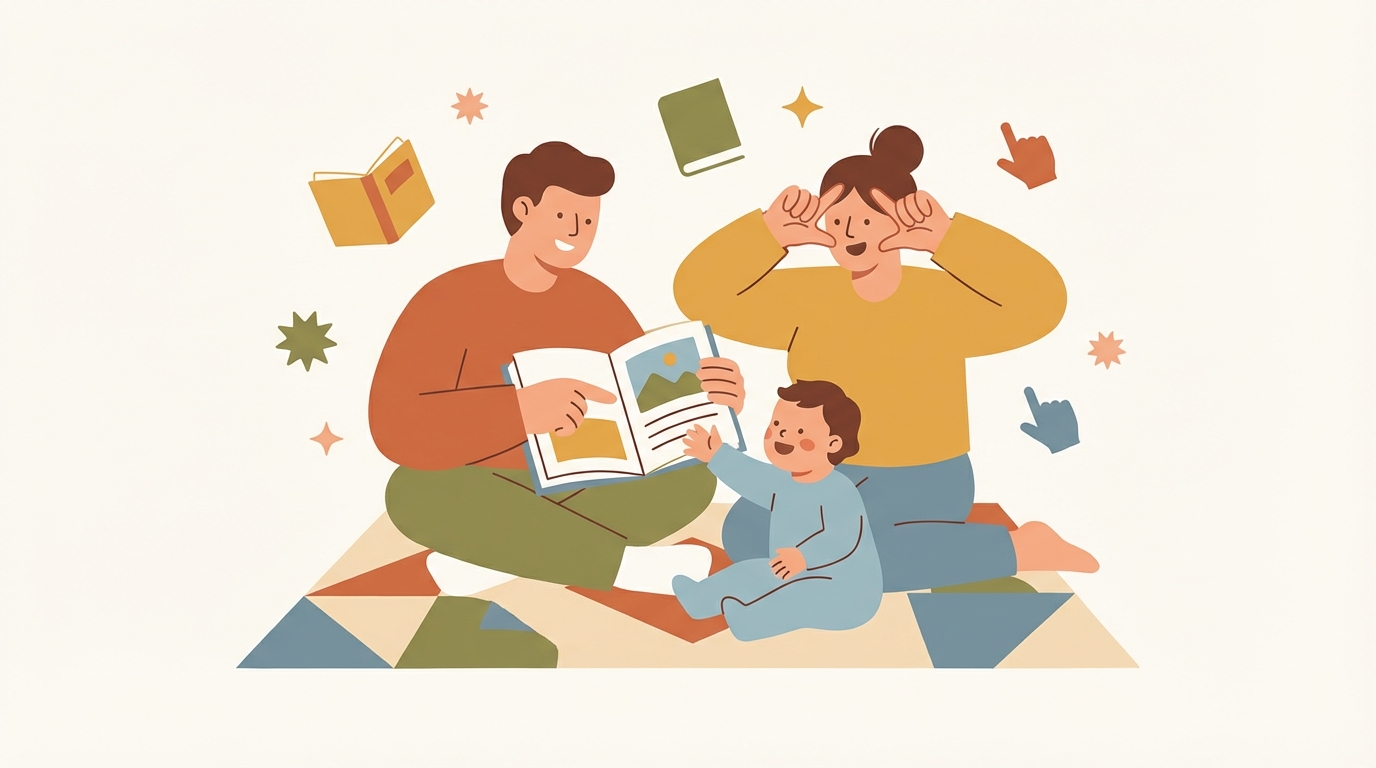
- 📚 Read 10 minutes morning and evening, letting the child turn pages and point.
- 🎵 Sing nursery rhymes with gestures, then vary tempo and voice.
- 🧸 Use figurines to tell stories “before, during, after”.
- 🗂️ Play categories: fruits vs. vegetables, vehicles vs. animals.
- 🗣️ Practice “I see… you see…” in the car or park to describe.
- ⏳ Leave pauses: the child takes their turn and dares more easily.
These strategies provide a daily thread, supported by joy and consistency. This builds solid foundations.
Oral comprehension and verbal expression: stimulating without pressure or over-stimulation
The temptation to “do more” can tire the child. Yet language grows in a calm environment. So it is necessary to moderate, observe, and follow the current curiosity impulse. A trip to the market becomes an exploration ground: smells, colors, action verbs. But one knows when to stop when signs of saturation emerge.
To enrich oral comprehension, clarity of sentences helps. Instructions are segmented: “take the book”, then “put it on the table”. Then, we complexify: “take the book and put it near the cushion”. The child assimilates step by step. Conversely, a continuous flow drowns information and kills the desire to respond.
Quality overrides quantity. Moderated, chosen, and co-viewed screens can be occasional supports. However, human exchanges remain irreplaceable. A discussion around a recipe involves verbs, adjectives, and chronology. This living framework nourishes verbal expression in context.
In some families, two languages coexist. Should one fear confusion? No. Balanced bilingualism, associated with stable contexts (one language per person or situation), does not hinder language development. It can even offer cognitive advantages. The key is the pleasure of communicating and the consistency of routines.
Emotions cross all interactions. A sudden fear, a separation, or intense fatigue modulate availability. Talking about feelings, naming “angry,” “surprised,” “disappointed” opens doors. To explore these topics, resources on fears between 1 and 3 years or on child bereavement provide apt words to soothe and restart speech.
For adults wishing to strengthen the educational support, ideas exist to work with children without a diploma and join awakening projects. Relying on field practices, these networks create a word-rich and caring environment.
Finally, some families like to watch brief and concrete demonstrations.
When support stays adjusted, confidence grows, and progress follows naturally. The child feels listened to for understanding, not for correction.
Spotting a language delay and organizing support: when to consult, who to see, how to act
Trajectories vary. Yet warning signs line the path. It is recommended to consult if, at 18 months, there is almost no word or pointing gesture. At 24 months, the lack of two-word combinations must raise questions. At 3 years, marked difficulties in being understood, even by strangers, justify consultation. Thus, one does not “dramatize”; one checks and acts early.
An initial assessment often includes hearing control and fine observation of interactions. A child may hear some sounds and miss others, enough to slow speech. Then, depending on results, speech therapy support is proposed. It relies on games, books, stories, and targeted exercises integrated into family routines.
In the preschool population, about one in seven children has language vulnerabilities. This figure, regularly cited in clinical summaries, encourages vigilance without alarmism. The goal remains clear: diagnose early, support the family, and value every progress. When support begins quickly, the recovery margin is wide.
Follow-up often includes concrete goals: improve intelligibility of frequent words, enrich thematic vocabulary (clothes, food), stabilize some sentence structures. Professionals equip parents with tricks: expansions, pauses, supportive gestures, limited choices to encourage verbal decision-making. These same strategies benefit siblings, who become allies of the project.
The socio-emotional dimension matters. Well-being, sleep, and appetite are monitored. The shared pleasure of storytelling the day is measured. If a context disrupts the child, adapted markers are relied upon. Articles dedicated to social development help read these signals. Looking ahead, one can consult development towards 5 years to anticipate school and expected skills.
Finally, for very minimally verbal children, alternative and augmented communication supports are introduced. Pictures, gestures, or pictograms open the door to the message, reduce frustration, and prepare words. Meanwhile, families find supplements in resources dedicated to major cognitive functions and intellectual development. Everything then aligns around the same goal: speech that lightens daily life.
The aim is simple: spot early, surround well, and celebrate every gained sentence. The path is traced step by step.
Examples of effective questions to ask a child from 1 to 3 years old
Questions shape thought. Thus, one must alternate simple and open forms. Invitations to comment are favored rather than rapid-fire interrogations. In this perspective, variety guides the child towards precision and narration.
| Examples of stimulating questions 🧠 |
|---|
| 🟢 “What do you see in the picture?” then “And then, what happens?” |
| 🟣 “Who is it?” then “How does he feel, in your opinion?” |
| 🟡 “Where is the car going?” then “Why does it stop here?” |
| 🔵 “Which one do you prefer?” then “Tell me, because…” |
| 🟠 “Tell what we did this morning” with gestures and objects as support |
With this palette, conversation becomes a game, and thought unfolds with enthusiasm.
“Words grow where we sow listening, joy, and shared stories.”
{“@context”:”https://schema.org”,”@type”:”FAQPage”,”mainEntity”:[{“@type”:”Question”,”name”:”u00c0 3 ans, quel vocabulaire est attenduu2009?”,”acceptedAnswer”:{“@type”:”Answer”,”text”:”La plupart des enfants disposent du2019environ 300 u00e0 800 mots et forment des phrases de 3 u00e0 4 mots. Lu2019u00e9cart est normal selon la personnalitu00e9, les intu00e9ru00eats et lu2019environnement verbal. On surveille surtout lu2019intelligibilitu00e9 et la progression mois apru00e8s mois.”}},{“@type”:”Question”,”name”:”Quand parler de retard de langageu2009?”,”acceptedAnswer”:{“@type”:”Answer”,”text”:”On se pose la question si peu ou pas de mots u00e0 18 mois, peu de combinaisons u00e0 24 mois, une intelligibilitu00e9 faible apru00e8s 3 ans, ou si lu2019entourage su2019inquiu00e8te. Un avis mu00e9dical et un bilan orthophonique permettent du2019agir tu00f4t et sereinement.”}},{“@type”:”Question”,”name”:”Quels jeux langagiers essayer au quotidienu2009?”,”acceptedAnswer”:{“@type”:”Answer”,”text”:”Lecture partagu00e9e, comptines avec gestes, lotos et imagiers, u00ab cherche et trouve u00bb, ru00e9cits avec figurines, catu00e9gories u00e0 trier, et questions ouvertes. Lu2019objectif : enrichir la compru00e9hension orale et encourager lu2019expression verbale sans pression.”}},{“@type”:”Question”,”name”:”Les erreurs sur les mots longs sont-elles normalesu2009?”,”acceptedAnswer”:{“@type”:”Answer”,”text”:”Oui. Les mots rares et multisyllabiques demandent un effort articulatoire et mnu00e9sique plus grand. En revanche, des mots longs fru00e9quents (pantalon, chocolat) sont souvent bien produits. On regarde la clartu00e9 globale apru00e8s 3 ans.”}},{“@type”:”Question”,”name”:”Qui peut aider en cas du2019inquiu00e9tudeu2009?”,”acceptedAnswer”:{“@type”:”Answer”,”text”:”Le mu00e9decin vu00e9rifie lu2019audition et lu2019u00e9tat gu00e9nu00e9ral. Lu2019aide orthophoniste propose un accompagnement personnalisu00e9, ludique et intu00e9gru00e9 aux routines familiales. Des ressources fiables en ligne complu00e8tent ce suivi.”}}]}À 3 ans, quel vocabulaire est attendu ?
La plupart des enfants disposent d’environ 300 à 800 mots et forment des phrases de 3 à 4 mots. L’écart est normal selon la personnalité, les intérêts et l’environnement verbal. On surveille surtout l’intelligibilité et la progression mois après mois.
Quand parler de retard de langage ?
On se pose la question si peu ou pas de mots à 18 mois, peu de combinaisons à 24 mois, une intelligibilité faible après 3 ans, ou si l’entourage s’inquiète. Un avis médical et un bilan orthophonique permettent d’agir tôt et sereinement.
Quels jeux langagiers essayer au quotidien ?
Lecture partagée, comptines avec gestes, lotos et imagiers, « cherche et trouve », récits avec figurines, catégories à trier, et questions ouvertes. L’objectif : enrichir la compréhension orale et encourager l’expression verbale sans pression.
Les erreurs sur les mots longs sont-elles normales ?
Oui. Les mots rares et multisyllabiques demandent un effort articulatoire et mnésique plus grand. En revanche, des mots longs fréquents (pantalon, chocolat) sont souvent bien produits. On regarde la clarté globale après 3 ans.
Qui peut aider en cas d’inquiétude ?
Le médecin vérifie l’audition et l’état général. L’aide orthophoniste propose un accompagnement personnalisé, ludique et intégré aux routines familiales. Des ressources fiables en ligne complètent ce suivi.