Best Baby Sleep & White Noise Apps (2026 Comparison)
| Short on time? Here’s the essential |
|---|
|
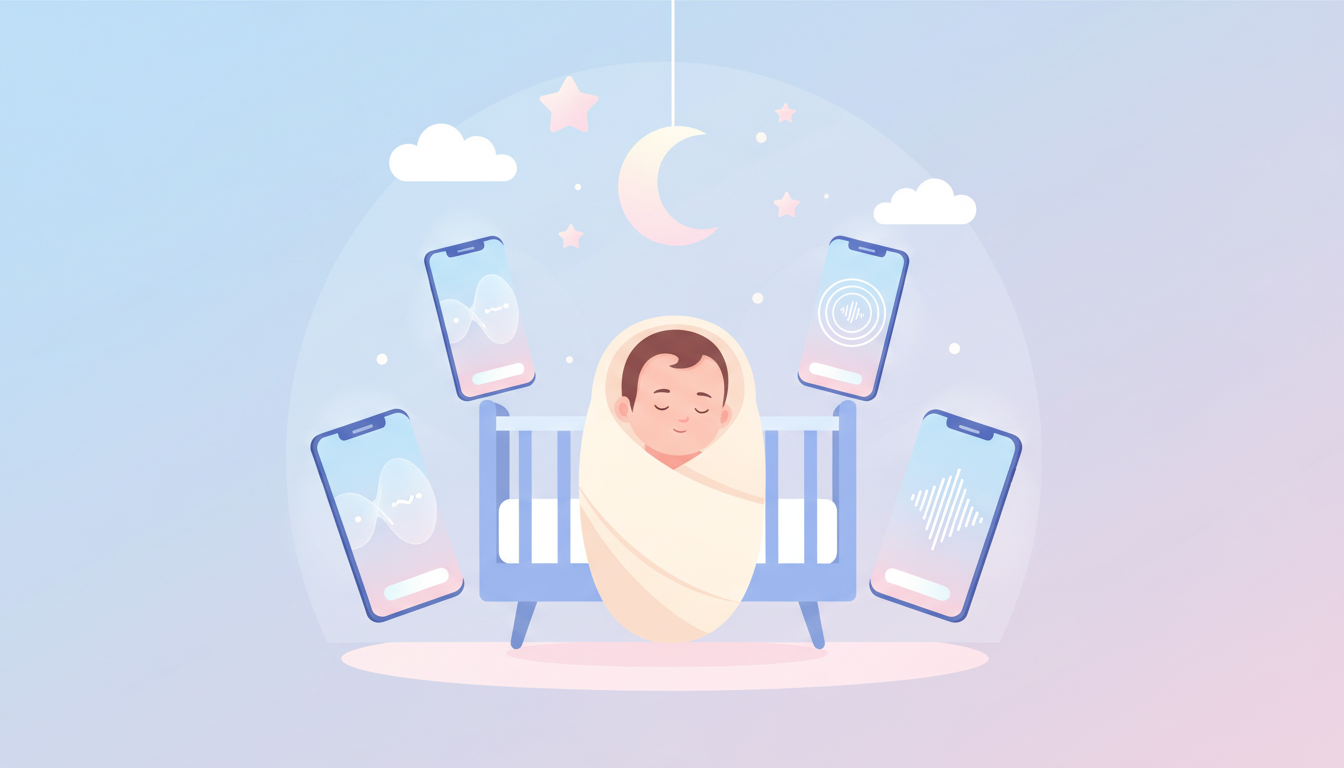
At night, everything seems louder: a creaking floor, a motorcycle in the distance, a slamming door… and a baby that startles. Yet, baby sleep is built on simple, repeated cues, almost tender in their regularity. This is exactly where the best sound apps find their place: they install a constant sound environment, capable of reassuring and protecting rest phases. And when the household is lively — siblings, dog, neighbors, traffic — white noise becomes a discreet curtain that softens the everyday jolts.
In 2026, apps are no longer limited to “playing rain sounds.” They offer soothing sounds in high quality, smart timers, offline playback, sometimes a virtual night light, and even routines that accompany both naps and bedtime. However, not all are equal. Some promise a lot but tire users with ads, while others focus on sobriety and become true allies for calming baby and parents. The right choice is never abstract: it is verified in a real room, at a real time, with a very real baby.
Why white noise helps baby fall asleep: simple science and real-world reality
White noise is a continuous sound that spreads many frequencies, a bit like a stable “breath.” Thus, it acts as a mask: it makes sudden noises less prominent. Yet, a baby often wakes not because the world is noisy, but because it is unpredictable. A burst of laughter, an elevator, a plate set down too quickly: these peaks wake the baby, even when the overall noise level remains moderate.
Moreover, many infants calm down with constant sounds because they recall a rhythmic and enveloping atmosphere. Without romanticizing, the “cocoon” effect exists: the baby’s brain no longer needs to sort every micro sound event. So, energy shifts to the right place: digestion, growth, emotional regulation. And when parents see calm come, the room finally breathes, which strengthens the feeling of security.
A concrete example: the lively apartment and micro-wakings
In an apartment building, noise is rarely loud, but it is frequent. As a result, the baby may experience micro-wakings: fluttering eyes, flailing arms, a dropped pacifier. A well-configured app can reduce these moments because it “smooths” the sound background. The expected outcome isn’t perfect sleep, but more continuous, thus more restorative sleep.
However, the goal is not to cover everyone. A soft volume usually suffices. In fact, a good test is to speak quietly near the bed: if the conversation remains audible, the sound is not excessive. This simple check helps protect hearing, while retaining the masking effect.
Soothing sounds are not all equal: choose according to age and temperament
Some babies calm with a steady breath. Others prefer rain, the sea, or a regular beat. Thus, the most effective sleep techniques respect the child’s sensitivity. A newborn may like a very monotone sound. Conversely, after several months, a more “natural” sound may be better tolerated because it remains soft while being less uniform.
Finally, the sound must support a ritual. When the same sound starts at the same time, the brain understands: “We’re going to sleep.” This association is precious because it builds a stable cue, even during sleep regressions. Next step: look at how modern apps transform this logic into very practical tools.
2026 comparison: essential criteria to spot the best baby sleep apps
A 2026 comparison that’s useful isn’t limited to a ranking. It helps understand which criteria really change life, especially at 3 AM. First, sound quality matters: a compressed or metallic breath can annoy, while a clean recording soothes. Next, app stability is crucial: a bug that cuts sound can restart crying within seconds.
Then, the timer makes all the difference. Infinite playback can be a fallback, but gradual extinguishing is often healthier. Thus, the baby does not cling to the sound like a crutch. And when the cut-off is faded, the transition remains soft. Simple, but deadly effective.
Features to prioritize (and those that tire)
A virtual night light is very useful, especially for quick diaper changes. However, if the light is blue or too bright, it stimulates. So, a warm tint and low setting are essential. Also, offline playback is a real comfort: no network cut, no sudden ad, and possible use in the car.
Conversely, apps that multiply pop-ups kill the ambiance. Even if the free offer attracts users, an overly aggressive model ends up costly in stress. Families who also use tracking tools appreciate more coherent ecosystems, like those presented in a selection of tracking apps popular among parents. The idea isn’t to pile up, but to simplify.
Focus: “Sounds to Help Baby Sleep” and what its success says about real needs
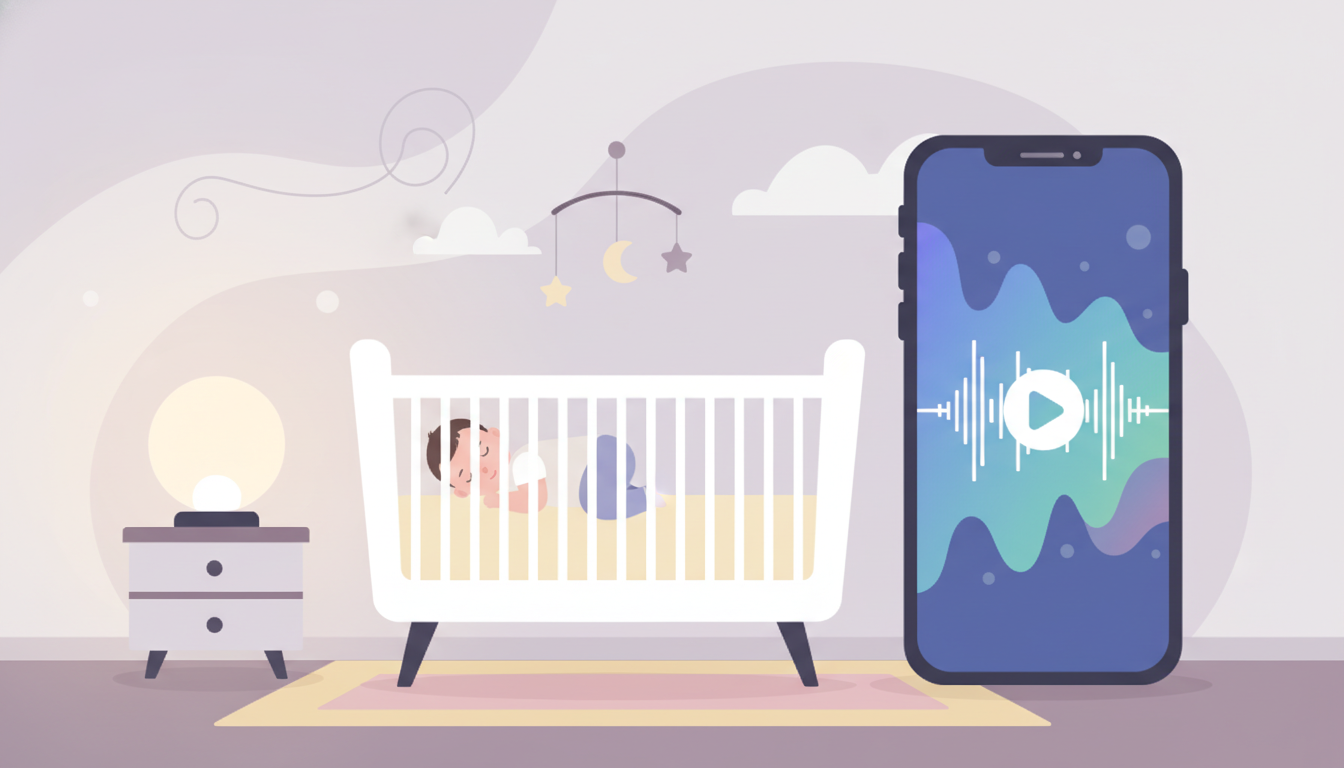
Among popular apps, “Sounds to Help Baby Sleep” bets on a large library: lullabies, continuous noises, nature. It also offers a timer, background playback, and offline mode. This trio answers a concrete use: launch a sound, keep the phone usable, and stay calm even without internet. Public feedback often highlights a straightforward interface, which matters a lot when fatigue sets in.
Meanwhile, data issues become central. Some profiles indicate possible collections (activity, performance, sometimes location). Therefore, permission settings must be systematic. And if an app asks for too much, better switch. To go further on digital tools around daily life, a practical guide on baby tracking apps helps separate useful from superfluous. The guiding thread remains the same: fewer options, but more trust.
Once the app is chosen, everything plays out in usage. Precisely, the next section details concrete routines tested in very real families.
To visualize typical sound atmospheres, this video resource helps compare sound textures before choosing.
Bedtime rituals: sleep techniques and routines that transform evenings
Technology doesn’t replace presence but can support a reassuring ritual. The most important is repetition: same sequence, same tone, same pace. Thus, the baby anticipates and relaxes. A simple routine example: dimmed light, calm diaper change, cuddle, sound launch, then lay in bed. This process seems banal, yet it builds solid emotional security.
In practice, the sound serves as a “bridge” between arms and bed. This moment is often sensitive: baby falls asleep on the adult, then wakes at the lay-down. So, a constant background reduces sensory break. And when night wakings happen, relaunching the same sound at a stable intensity helps find the sleep path again.
Recommended settings: volume, duration, and phone placement
Volume should remain moderate. Better to increase distance than power. The phone or speaker is placed far from the bed, and the sound should diffuse like a light blanket. Also, a timer of 20 to 45 minutes often suffices for baby’s falling asleep. Then, if the environment is noisy, longer duration can be justified, but with low volume.
The virtual night light should remain a tool, not a show. A fixed, warm light, at minimum, avoids overstimulation. And if the app offers animations, they can be disabled. At night, the fewer stimuli, the better the body understands it’s rest time.
Case study: colic, agitation, and evening separation
When the baby goes through a phase of colic, he often seeks a constant cue. A monotone sound can help him settle, especially when paired with slow rocking. However, if the child gets upset with continuous noise, a “light rain” sound might suit better. The idea is to observe, then adjust, without changing everything every night.
During separation peaks, a stable ritual supports the bond. A short, repeated phrase, then the same sound, creates a clear transition. Parents often describe a detail that changes everything: don’t multiply returns to the room. Instead, a brief passage, a hand placed, unchanged sound. Little by little, coherence calms down.
For complementary bedtime gestures, another video can inspire gentle and realistic routines, without parental “performance” pressure.
Safety, data, and common sense: using a white noise app without risks
A white noise app is a tool, so it’s used with simple rules. First, volume protects hearing: better a discreet ambiance than a “sound wall.” Then, the device must never be in the bed or within arm’s reach. Physical safety remains a priority, especially when baby starts grabbing and pulling.
Next, digital hygiene deserves real attention. Some apps specify sharing data with third parties or collecting usage info. Therefore, it is useful to choose an app that works in airplane or offline mode, and to limit permissions. A peaceful night should never come at the cost of unnecessary exposure.
Quick checklist to apply starting tonight
- 🔉 Set a soft volume, then decrease slightly more after 5 minutes.
- 📍 Place the phone at a distance from the crib, on a stable surface.
- ⏲️ Activate a timer with gradual cut-off if available.
- 📴 Test the offline mode to avoid notifications and interruptions.
- 🔒 Check permissions (location, mic, tracking) and remove superfluous ones.
- 🌙 Choose a warm and very low virtual night light, only if needed.
Create a coherent parental ecosystem, without overload
Many families juggle between sounds, tracking, and practical advice. However, too many apps kill simplicity. So, a small number of well-chosen tools saves breath. For those who want a broader view of tracking, a top list of baby tracking apps can help reduce duplicates. The goal remains the same: a smoother daily life, not a more “connected” one.
And when lack of sleep weakens skin, mood, or organization, other resources can support daily life. For example, concrete tips for baby eczema complement a global approach to nighttime comfort. A baby who scratches less often falls asleep faster, creating a virtuous circle.
This logical thread naturally leads to the last question: how to choose “the” right app according to baby’s profile and parents’ lifestyle, without getting lost in options.
Choose according to baby’s profile: the real match between needs, sounds, and lifestyle
The best apps don’t win because they have 200 sounds. They win because they meet a specific need, at the right time. A baby very sensitive to outside noises will benefit from an effective continuous sound. Conversely, a baby who gets angry at monotony will prefer more organic soothing sounds, like rain or waves.
Next, lifestyle matters. A family that travels or spends lots of time in the car will need offline mode and a quick interface. An apartment family will appreciate sound that masks without “invading” the room. And if multiple adults take turns, the simplicity of settings avoids volume or timer errors.
Mini-scenarios to decide without error
Scenario 1: baby startles at the slightest noise. Here, a stable white noise, a long timer at first, then an earlier fade over days. Thus, the brain learns to sleep despite environment. The progression must remain gradual, or wakings increase sharply.
Scenario 2: baby falls asleep well but wakes during lay-down. In this case, starting the sound before the last cuddle helps. Then, keeping the same sound at lay-down reduces the break. And if the app allows slightly lowering volume after 15 minutes, sleep becomes more autonomous.
Scenario 3: baby needs visual cues at night. A virtual night light can help for a few days, notably during teething. However, the light must remain minimal, otherwise alertness increases. A simple rule: if the adult can move without turning on the light, the light is sufficient.
The detail that changes everything: emotional coherence
A sound doesn’t calm only by its frequency. It also calms because it announces presence, attention, a framework. When the adult launches the app calmly, speaks little, and repeats the same gestures, the baby feels understood. And when the baby feels understood, they fight sleep less. This coherence is the heart of successful baby sleep apps: they support the ritual, they don’t replace it.
To finish on a note that sticks in the mind, a phrase stands out as a nighttime cue:
“A peaceful night can’t be forced: it’s prepared, minute by minute, with gentleness and consistency.”
{“@context”:”https://schema.org”,”@type”:”FAQPage”,”mainEntity”:[{“@type”:”Question”,”name”:”Quelle est la diffu00e9rence entre bruit blanc, bruit rose et sons de la nature ?”,”acceptedAnswer”:{“@type”:”Answer”,”text”:”Le bruit blanc est un souffle uniforme qui couvre un large spectre de fru00e9quences, utile pour masquer les bruits soudains. Le bruit rose est plus doux car il attu00e9nue les aigus, ce qui peut sembler plus agru00e9able sur la duru00e9e. Les sons de la nature (pluie, vagues) sont moins u201ctechniquesu201d et souvent mieux acceptu00e9s par certains bu00e9bu00e9s, tout en gardant un effet de masquage.”}},{“@type”:”Question”,”name”:”Combien de temps laisser une application de bruit blanc pendant la nuit ?”,”acceptedAnswer”:{“@type”:”Answer”,”text”:”Une minuterie de 20 u00e0 45 minutes suffit souvent pour lu2019endormissement bu00e9bu00e9. Si lu2019environnement est tru00e8s bruyant, la diffusion peut durer plus longtemps, mais avec un volume bas. Un fondu progressif est idu00e9al pour u00e9viter une du00e9pendance et favoriser un sommeil plus autonome.”}},{“@type”:”Question”,”name”:”Le tu00e9lu00e9phone peut-il rester pru00e8s du berceau ?”,”acceptedAnswer”:{“@type”:”Answer”,”text”:”Mieux vaut garder lu2019appareil u00e0 distance du lit, sur une surface stable, et u00e9viter tout cu00e2ble u00e0 proximitu00e9. Le son se diffuse tru00e8s bien dans une piu00e8ce sans u00eatre collu00e9 au bu00e9bu00e9. Cette pru00e9caution ru00e9duit les risques physiques et aide aussi u00e0 maintenir un volume raisonnable.”}},{“@type”:”Question”,”name”:”Une veilleuse virtuelle sur smartphone est-elle une bonne idu00e9e ?”,”acceptedAnswer”:{“@type”:”Answer”,”text”:”Oui, si elle reste chaude, tru00e8s faible, et utilisu00e9e seulement quand nu00e9cessaire (change, tu00e9tu00e9e, ru00e9assurance). Une lumiu00e8re trop vive ou bleutu00e9e peut stimuler et compliquer le rendormissement. Lu2019idu00e9al est une luminositu00e9 minimale, fixe, sans animations.”}}]}What is the difference between white noise, pink noise, and nature sounds?
White noise is a uniform breath covering a wide frequency spectrum, useful for masking sudden noises. Pink noise is softer because it attenuates the highs, which can seem more pleasant over time. Nature sounds (rain, waves) are less “technical” and often better accepted by some babies, while retaining a masking effect.
How long should a white noise app run during the night?
A timer of 20 to 45 minutes often suffices for baby’s falling asleep. If the environment is very noisy, playback can last longer, but with low volume. A gradual fade-out is ideal to avoid dependency and promote more autonomous sleep.
Can the phone stay near the crib?
Better to keep the device at a distance from the bed, on a stable surface, and avoid any cables nearby. The sound diffuses very well in a room without being stuck to the baby. This precaution reduces physical risks and also helps maintain a reasonable volume.
Is a virtual night light on a smartphone a good idea?
Yes, if it remains warm, very low, and used only when necessary (diaper changes, feeding, reassurance). A light that is too bright or bluish can stimulate and complicate falling back asleep. The ideal is minimal, fixed brightness without animations.