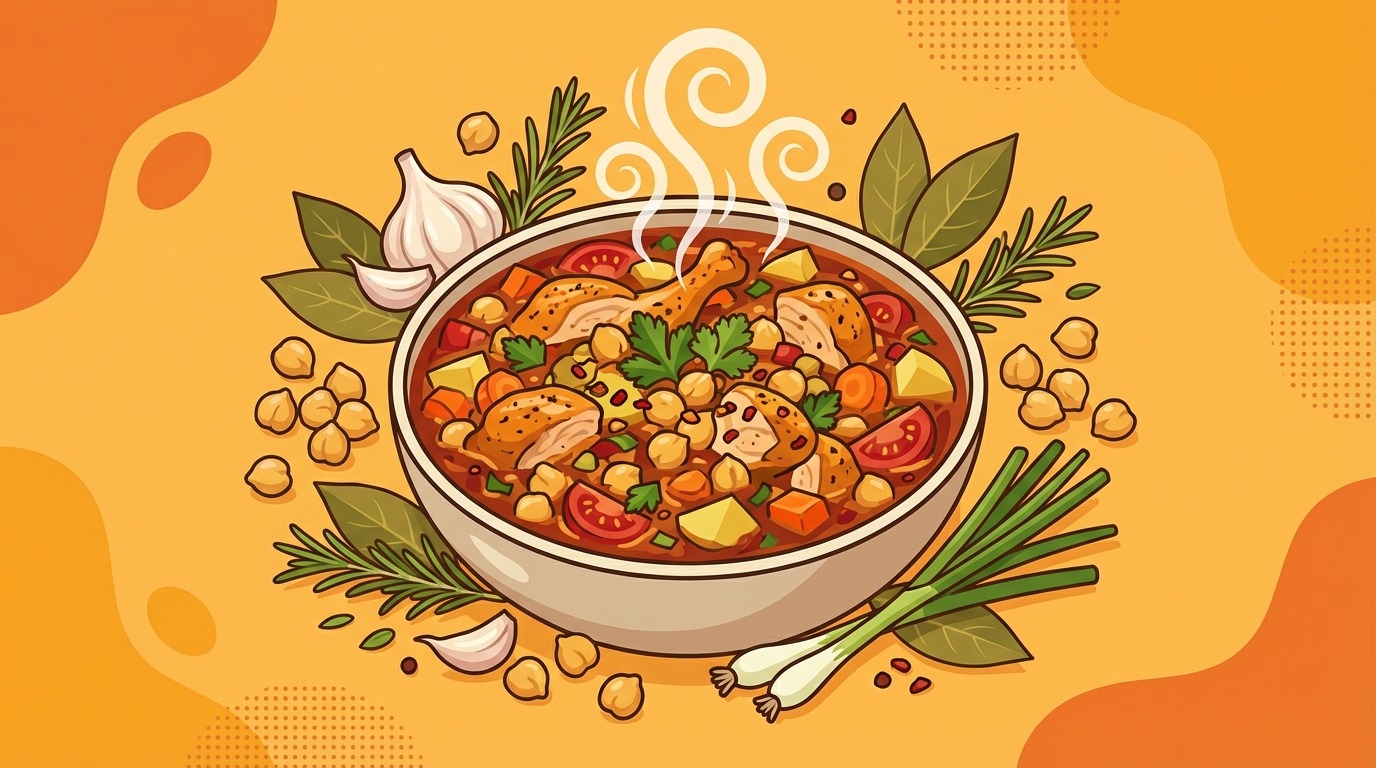
Chicken Chickpea Stew: PC Recipe: chicken and chickpea stew.
| Short on time? Here’s the essentials ✨ |
|---|
| Chicken and chickpea stew = friendly, economical, and protein-rich slow-cooked dish ✅ |
| Sear the white meat, add aromatics, hydrate, then simmer 45 to 60 min 🔥 |
| Key spices: cumin, turmeric, sweet paprika, ras el-hanout 🥄 |
| Target texture: thick soup that coats the spoon without heaviness 🍲 |
| Batch cooking: keeps for 3 days refrigerated, 3 months frozen 🧊 |
| Side dishes: semolina, rice, flatbread, lemony pickles 🫓🍋 |
When the day runs fast, the stew becomes a promise: that of a home that fills the air with aroma, a table that gathers. Here, the chicken–chickpeas duo makes an accessible, complete, and deeply traditional recipe, capable of traveling from Maghreb to Levant, while speaking to everyday life. We bet on a slow-cooked dish that adapts to available time, the tastes of a moving family, and seasonal desires.
The principle is clear: first color, then depth, finally structure. We brown the white meat, awaken the spices, then let the pot tell the story. The texture then aligns on a thick soup, generous but lively, where every spoonful revives the appetite. As a common thread, a fictional family — Lina, Mehdi and their twins — serves as a concrete illustration: this stew has solved their rushed evenings and their long Sundays. Let’s move on to the art of doing well, without shortcuts, and with mastered enthusiasm.
Chicken chickpea stew: the DNA of a comforting traditional slow-cooked dish
Browning, hydrating, binding: the trilogy of flavor
The base is nothing mysterious. We sear pieces of chicken with skin to concentrate flavor, then set them aside. Next comes the ignition of spices in the fat: cumin, turmeric, and sweet paprika reveal a warm scent, without excessive heat. Garlic and onion complete the foundation, as they play the sweet-salty echo that makes the recipe memorable.
We deglaze with broth to recover the drippings, then add the chickpeas. Base vegetables, like carrot or zucchini, give structure and color. Thanks to gentle cooking, the sauce naturally thickens: it becomes a thick soup, coating and suitable for convivial moments. This framework gives direction but leaves plenty of creative freedom.
A traditional dish… still relevant
Why does this slow-cooked dish remain relevant? First, it fits modern schedules. It accepts waiting, likes reheating, and gains character the next day. Second, it serves as a bridge between generations: elders recognize a traditional thread, while children appreciate the mildness of the white meat and the roundness of the chickpeas. Finally, it feeds off local markets: celery in winter, pepper in spring, sun-dried tomato in late summer.
Lina’s family often relies on a saffron broth when evenings cool down. Mehdi prefers a dash of preserved lemon to lighten it. The twins, meanwhile, demand cubes of sweet potato, as the sweetness soothes any bitterness. Each household thus adjusts the flavor compass. In the end, the essential remains: a stew that brings people together without ever boring.
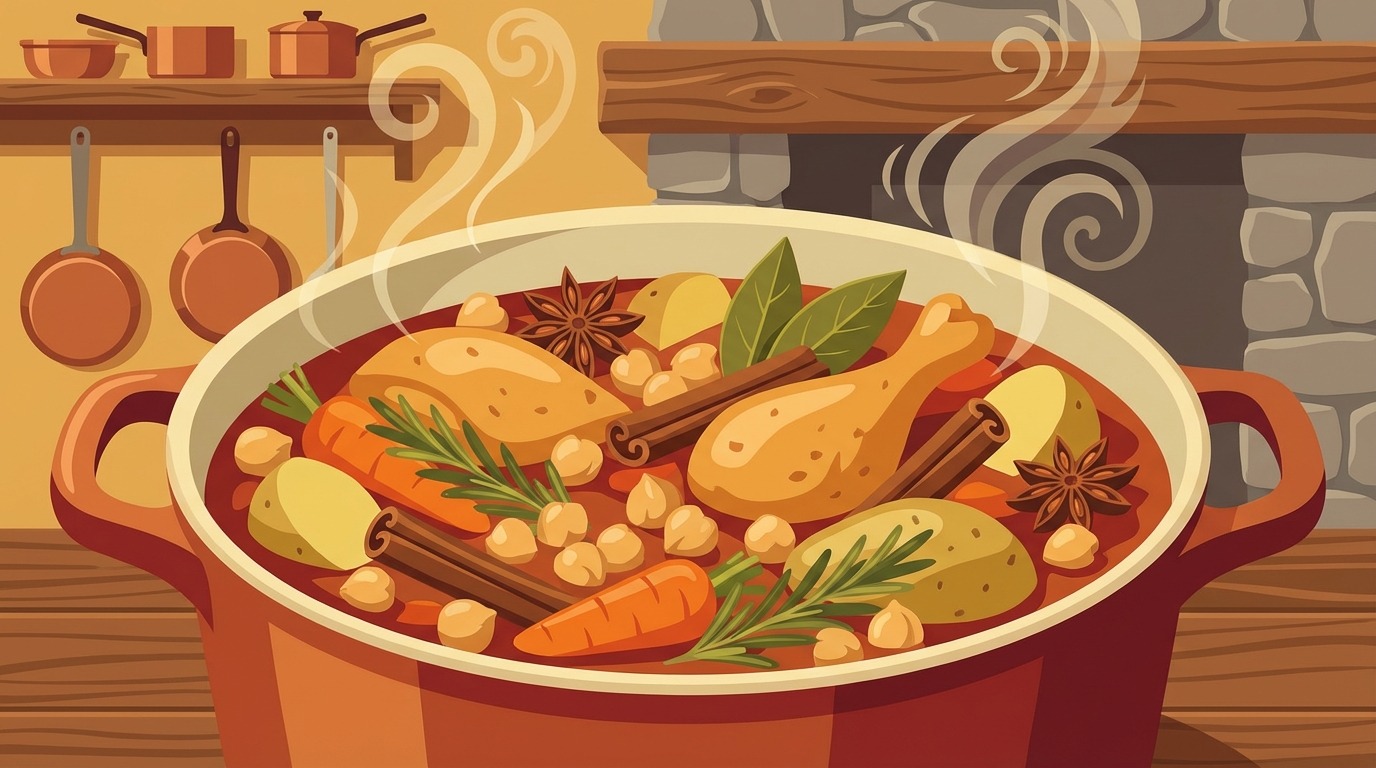
PC recipe: chicken and chickpea stew, from market to pot
Ingredients and smart substitutions
For 4 to 6 guests, choose 1.2 kg of chicken drumsticks and thighs. Opt for 400 g of cooked chickpeas, or 200 g dry soaked overnight. Count 2 onions, 3 garlic cloves, 2 carrots, 1 celery stalk, 1 tbsp tomato paste. Plan 1.2 l broth, 2 tsp cumin, 1 tsp turmeric, 1 tsp sweet paprika, bay leaf, and a drizzle of olive oil. Finish with lemon, coriander, and a pinch of salt.
Need an alternative? Replace part of the broth with coconut milk for a creamier signature. Swap the paprika for ras el-hanout for a more floral touch. And if you fear gluten, serve with fragrant rice instead of bread.
Step-by-step: the foolproof method
- 🔥 Sear the salted and peppered white meat until well browned. Set aside.
- 🧄 Sweat onions and garlic. Add tomato paste. Lightly caramelize.
- 🌶️ Toast the spices for 40 seconds. Stir to avoid burning.
- 💦 Deglaze with broth. Scrape the bottom to incorporate the tasty drippings.
- 🥕 Add carrots, celery, bay leaf, chickpeas, then the chicken.
- 🍲 Simmer 45 to 60 min at a gentle boil. Aim for a thick soup that coats.
- 🍋 Adjust salt, add lemon zest and chopped coriander just before serving.
Useful tip: if the sauce remains thin, crush some chickpeas against the pot wall to naturally thicken. Conversely, if it becomes too dense, loosen with a splash of hot broth. This flexibility ensures balance, whatever the pot size.
For Lina and Mehdi, two steps are enough to organize themselves during the week: searing and starting in the morning, then finishing cooking upon return. Thus, dinner improvises without stress. This method establishes an efficient routine and leaves room for play before the meal.
Spices and variations: flavoring the stew without distorting it
Aromatic profiles according to desires
In cooking, the architecture of spices counts as much as the list. For a Maghreb accent, aim for cumin, ground coriander, ras el-hanout and a hint of cinnamon. For a Levantine profile, bet on sumac, mild Aleppo pepper and parsley. And for a Provençal version, thyme, bay leaf, fennel, and orange zest create a discreet elegance. Each aromatic thread accompanies the stew without overshadowing the chicken–chickpeas duo.
The key notion remains hierarchy: spices briefly heated in fat, herbs added at the end of cooking. This timing preserves the freshness of herbs and the depth of toasted spices. Thus, the mouth first receives the spiced warmth, then the vegetal brightness.
Family variations and clever adjustments
For very young palates, replace paprika with sweet cubed pepper. It sweetens the sauce and reduces spicy intensity. For a party, add green olives and sliced preserved lemon; the dish becomes more vertical, ideal for elegant plating. Finally, for a rustic option, incorporate a handful of pearl barley, which adds a slight chewiness.
Some evenings, Mehdi adds a spoonful of tahini at the end of cooking. The sauce then firms up, like a light silk. Other times, Lina crumbles a bit of feta over the plates to bring a salty contrast. These gestures don’t overwhelm the traditional thread: they highlight its contours.
Before moving on to nutrition and organization, keep this sensory benchmark in mind: aim for a thick soup that remains bright. This balance point serves as a compass in all variations, even the boldest.
Nutrition, families and organization: the stew that simplifies everyday cooking
Balance and food safety
Chicken brings lean protein. Chickpeas provide fiber, folates, and minerals. Together, they promote satiety, limiting snacking. For safety, cook through (at least 74 °C) and cool quickly in shallow containers. Label date and content, for clear tracking. This rigor protects quality and health.
During holidays or pregnancy, some precautions apply. Avoid raw milk cheeses as topping, and choose a well-controlled broth. For reliable benchmarks, consult these nutrition tips for holidays and pregnancy. Thus, the slow-cooked dish remains safe and delicious for all.
Batch cooking and reheating without compromise
- 🗓️ Prepare a double batch on Sunday, then portion for 2 dinners.
- 🥶 Freeze on day 1 to preserve chickpeas texture.
- 🔥 Reheat gently with a splash of water or broth.
- 🍋 Add acidity (lemon, yogurt) only at the last moment.
This strategy preserves taste and texture. It frees up time on school nights. At Lina’s, Wednesday thus becomes a true oasis of calm. The pot simmers during homework, and everyone sits down without tension. The meal no longer becomes an obstacle, but a gathering.
If needed, adjust the plate: more chickpeas for a filling lunch, more green vegetables in the evening. This modularity proves the strength of the recipe. It stands the test, regardless of the week.
Pairings, service and table culture: making a friendly stew shine
Sides, plating and drinks
To serve, two routes coexist. In bistro style, present in a casserole, with fine semolina and fresh herbs. In a more elegant version, plate in a deep dish like a thick soup edged with olive oil, sprinkled with coriander and a dash of lemon. Flatbreads, pilaf rice, or pearl barley work very well. For drinks, mint-lemon infusion or sparkling water with orange zest accompany without overpowering.
For family celebrations, provide a generous version and a few condiments: pickled onions, mild harissa, lemony yogurt. These touches allow everyone to dose intensity and freshness. For additional references adapted to festive moments, consult a dedicated guide like these practical recommendations for composing a safe menu. You gain serenity, without giving up pleasure.
Small case study: the community dinner
At a solidarity dinner, 40 covers were served with this stew. The kitchen opted for chicken thighs, as they remain tender when kept warm. Part of the chickpeas was blended to strengthen the binding. Result: smooth service, clean plates, and enthusiastic feedback. The cost per person stayed controlled, since season and well-chosen spices were favored.
At home, you can reproduce this scheme on a small scale. Start cooking in advance, keep warm, plate at the last moment. Thus, the evening’s tempo stays flexible. The slow-cooked dish supports conversation rather than interrupting it. In the end, the table shines, and the memory lasts.
“A good stew listens to time, then tells the story of home.”
How long should chicken and chickpea stew be simmered?
Aim for 45 to 60 minutes at a gentle boil. The meat should be tender, and the sauce become a thick soup that coats without heaviness.
Can canned chickpeas be used?
Yes, rinse them and add them halfway through cooking to prevent them from falling apart. Mash part of them if you want to thicken the sauce.
Which spices work best?
Cumin, turmeric, and sweet paprika form a solid base. Add ras el-hanout for a floral scent, or sumac for a lemony note.
How to reheat without drying out the dish?
Reheat gently with a bit of broth or water. Add the acidic touch (lemon, yogurt) at the end of reheating to keep the brightness.
Is this dish suitable for children?
Yes, soften the spices, add gentle vegetables like sweet potato, and serve with a soft starch for a comforting plate.