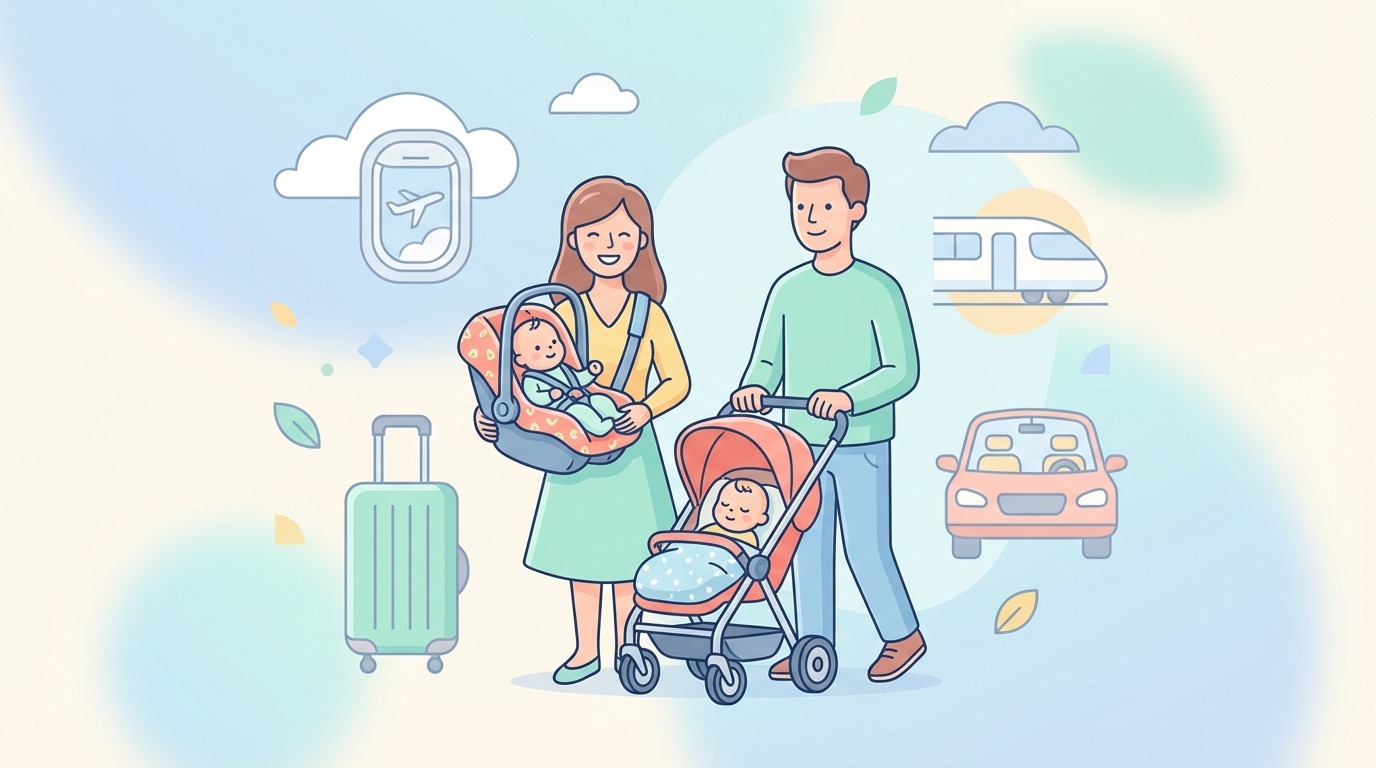
Child Travel: Travel and movement with a child from 0 to 12 months.
Traveling with a toddler reveals a delicate balance between boldness and gentleness. On one hand, the desire to explore is renewed; on the other, the need to protect a still-so-new being. At 7 days old, a newborn may be accepted on a plane by some airlines, but experience shows that waiting 2 to 3 months makes the baby travel more peaceful. Between identity formalities, health insurance, and itinerary choices without jet lag, every decision weighs on the scale of comfort. Families who succeed in their departure have one thing in common: an anticipatory and pragmatic baby travel preparation. They equip themselves, inform themselves, then plan rest times as carefully as visits.
In the reality of parents, crying is part of the game, just like diaper changes, breastfeeding, or bottles served at unlikely hours. Yet, with concrete tips, a plan B for each key moment, and familiar sensory cues, infant travel becomes a positive experience. This guide adopts a simple logic: explain the why before the how, map out each mode of transport, then orchestrate life on site around baby travel sleep, baby feeding during travel, and child safety. Final goal: turn the first adventure into a reassuring memory… and inspire the desire to travel again.
| Short on time? Here’s the essentials ⏱️ |
|---|
| Waiting 2-3 months for flying encourages a calm journey 🍼 |
| Individual identity documents essential, even for an infant 🛂 |
| Morning or evening flights, feeding/swallowing during takeoff/landing ✈️ |
| Stroller often accepted up to the gate, bassinet to book 🎠 |
| Approved rear-facing car seat, breaks every 2 hours by car 🚗 |
| Consistent rituals = better sleep, even while traveling 🌙 |
| Health kit + insurance + weather plan B = serenity 💊 |
Preparing a trip with a baby from 0 to 12 months: schedule, documents, health, and itinerary
A precise organization starts with the right schedule. Pediatricians recommend waiting 2 to 3 months before a commercial flight, enough time to build immunity and avoid an overly intense program. Between 2 and 6 months, the infant sleeps a lot; this window simplifies naps in motion and limits stimulation. Beyond that, curiosity explodes; a flexible rhythm then becomes essential. This progression illuminates each project choice.
Documents are non-negotiable: identity card for a domestic flight, passport for international, and sometimes visa. A travel authorization is added if the child is not traveling with both parents. Processing times vary; aiming for 6 weeks in advance prevents last-minute panic. Carrying secured digital copies also helps during administrative mishaps.
Anticipating health: vaccines, hygiene, and insurance
Health guides the itinerary. Before booking, it is strategic to evaluate the vaccine requirements of the destination and the season. Some tropical regions require injections that the infant cannot receive; then one must either give up or postpone. As a precaution, a complete health kit, a reliable thermometer, and pediatric paracetamol are essential. Treatments adapted to fragile skin limit redness and discomfort; products designed for delicate skin simplify daily life, like these delicate skin care products appreciated by families.
Travel insurance including medical expenses, assistance, and repatriation drastically reduces stress. European health insurance cards also facilitate access to public care in the Old Continent. Before departure, a consultation with the pediatrician confirms the infant’s fitness to travel and specifies actions to take in case of fever en route.
Choosing the right destination and setting a rhythm
Simplicity is key. A short flight, a temperate climate, and zero jet lag favor a happy departure. Cities with large parks, shaded walks, and accessible health services tick many boxes. The itinerary must incorporate visible break times in the schedule, including at least one daily slot dedicated to family rest. This discipline protects good humor, thus the overall success of the project.
Emma and Karim’s family, who traveled with Naël (5 months), illustrate this model. Seville at the end of winter: mild temperatures, naps in a baby carrier under orange trees, hotel near a health center. Their secret: group visits into short blocks, then return early to respect rituals. Unsurprisingly, baby travel sleep followed.
Final key to this preparation: thinking about “cues.” A comforter, a sleeping bag, a compact nightlight, and a recognizable mini mattress cover recreate a cocoon wherever you are. This base avoids many tears and boosts parents’ confidence from day one.
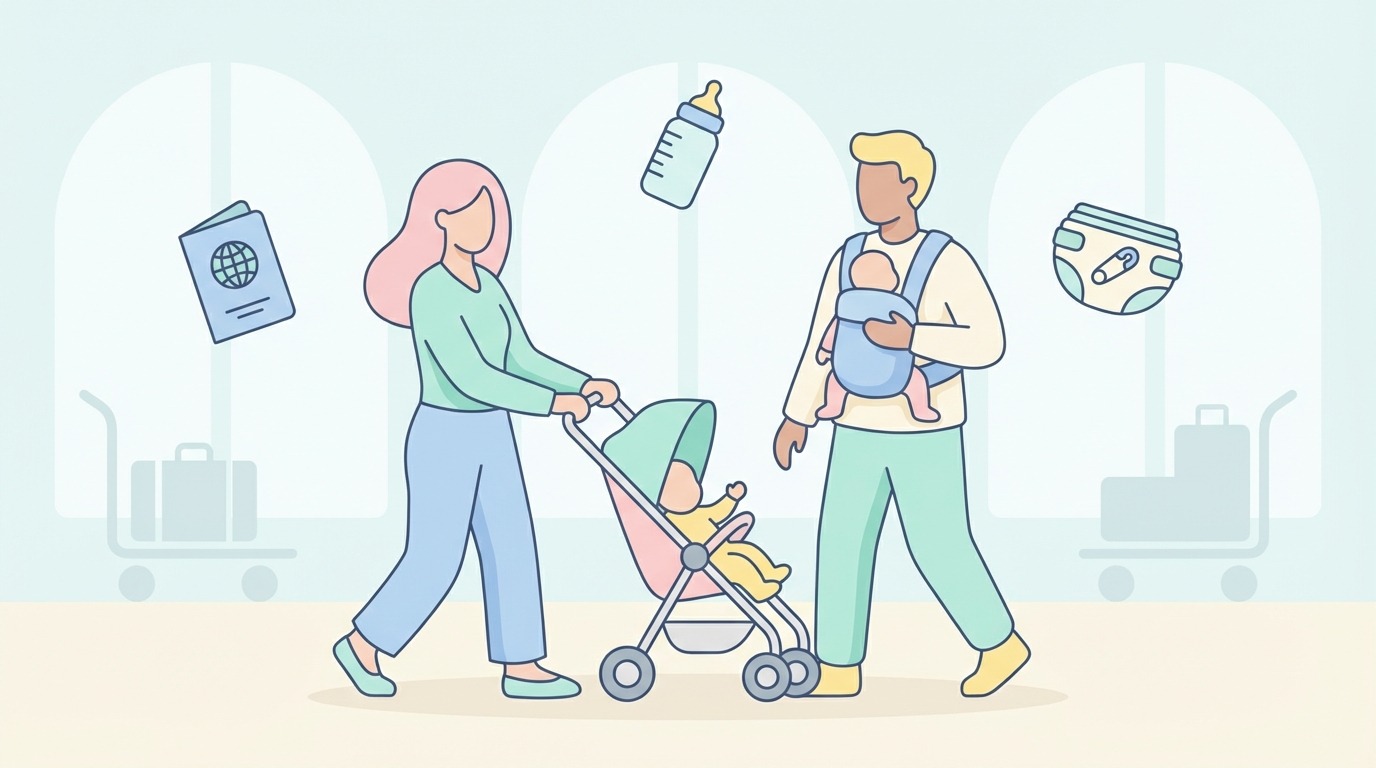
Taking the plane with an infant: seats, bassinets, ear pressure, and cabin kit
In 2026, most airlines accept babies from 7 days old, while recommending medical advice. Booking directly with the airline opens valuable options: notifying about the infant, suitable row, and sometimes a bassinet for under 10 kg. Aisle seats provide useful freedom of movement during a baby change while traveling or to rock the baby in the aisle. Bassinet requests must be made early; some airlines only have a few per plane.
Flight timing matters. Leaving early morning or evening often aligns the journey with a sleep cycle. Conversely, late afternoon often awakens nervousness. At takeoff and landing, sucking helps manage pressure: breastfeeding, bottle, or pacifier, no matter, as long as swallowing occurs. This simple habit limits ear discomfort that sometimes triggers crying.
Cabin baggage: the art of anticipating without overloading
An organized backpack is essential to keep hands free. Inside, plan generously: diapers, wipes, travel changing mat, waterproof bags, 2 to 3 outfit changes for the baby, and 1 for the adult. Regarding nutrition, baby milk is exempt from the 100ml rule if presented separately at control. An insulated bottle of hot water and powder sachets save crucial minutes. Baby feeding during travel benefits from simplicity on D-day.
An ergonomic baby carrier protects parents’ backs during transfers. Strollers are often allowed up to the plane gate and returned upon exit. For stroller transport, check dimensions and policies; an ultra-light stroller folded in one motion changes life during connections.
Crying during the flight: understand, prevent, soothe
Crying signals a need. Hunger, diapers, ear pain, heat, sensory overload… The priority is to quickly assess the cause. A light wrap for swaddling, slow rocking, and a comforter often suffice. To gain confidence, this practical guide on crying in babies 0 to 12 months summarizes subtle signals useful during the flight. Most passengers show empathy when parents remain calm and proactive.
Some babies calm with gentle stimuli. A whispered lullaby or a fabric book occupies without disturbing. The goal is not endless distraction but restoring known sensory cues. A predictable environment soothes.
To visualize installation and procedures, watching videos often helps clarify last-minute technical points.
One detail makes the difference: the seat location. Near the toilets, access to changing tables simplifies logistics. Finally, waiting during boarding avoids prolonged proximity. Boarding at the end of the line can limit extra seated time, which is precious with an unpredictable infant travel.
Train and car with baby: safety, comfort, and breaks that make all the difference
The train appeals for its freedom of movement. On TGV and Intercités, nursery spaces exist on some routes, with integrated changing tables. This mobility prevents prolonged crying and promotes micro-naps. Booking family spaces when possible offers a more tolerant environment for a rushed baby change while traveling. A baby carrier proves practical to move between cars without bumping equipment.
Financially, the free or nearly free fares for infants on many networks lighten the budget. Well-thought cabin baggage, a compact stroller, and a bag of light toys form a winning trio. Parents often like to set up a “nest corner”: thin blanket, comforter, crumpled book. This cue calms the child during stops.
Car: rigor saves lives
Child safety begins before starting the vehicle. An approved car seat, installed rear-facing as long as possible, forms a barrier in case of shock. Checking anchors, angle, and harness tightness is vital. A video demonstration facilitates handling.
Breaks every two hours are mandatory, more frequent with an infant. Each stop offers the chance to feed, change, and move the baby a little. Leaving during a planned nap limits initial crying. To refine the itinerary and vehicle equipment, these tips for preparing a car trip with a baby gather key points to check before departure.
Heat represents a subtle danger. Quality sunshades, water for adults, and breathable clothing for the baby prevent discomfort. Avoid thick coats in the car seat to improve harness efficiency. A thin travel sleeping bag easily replaces a blanket that might slip.
When rhythm gets involved
Every child has a tempo. Some fall asleep to the regular hum of the train; others prefer stillness. Observing what soothes the child, then planning accordingly, saves precious hours of tranquility. Léa and Nino’s family chose to travel by car at dawn with their 9-month-old daughter. Result: 3 hours of uninterrupted nap, then a playful break. The success is not magic; it results from logical arbitration between biological needs and technical constraints.
In the end, train or road, the golden rule remains the same: preserve safety, ritualize transitions, and allow short but regular breaks. This framework aligns the journey with the baby’s physiology and defuses surprises.
Smart equipment to travel with baby: perfect bag, stroller transport, and changing corners
Good baby travel equipment serves as a pleasure guarantee. It is not about taking “everything just in case,” but about orchestrating essentials by scenarios: flight, layover, trip to accommodation, nap, walk, meal, bath. Each scenario has a mini-kit identified in the main bag. Parents thus save time and protect their nerves.
The bag that simplifies everything
A backpack segmented by colored pockets frees the hands and speeds access to essentials. Inside, group by use: change, meal, sleep, health. Compressible soft containers prevent “clutter.” A travel-friendly changing mat, waterproof bags, and biodegradable wipes compose the basic kit. The mini health travel kit includes thermometer, pediatric paracetamol, saline solution, and barrier cream.
- 🍼 Nutrition: bottles, scoops, soft spoon, easily rinseable bib
- 🧷 Change: diapers +2 over calculation, liniment, protective cream
- 😴 Sleep: comforter + backup twin, sleeping bag, USB nightlight
- 🧼 Hygiene: gentle cleansing gel, moisturizing cream, microfiber towel
- 🎲 Stimulation: small book, rattle, teething ring, foldable mat
A selection of skin-friendly products simplifies rituals; dedicated brands reassure with their consistency, like these delicate skin care products often favored. For stimulation, a compact mat creates a “home” everywhere. The 2026 selection of baby play mats highlights lightweight, washable models that slip easily into the trunk.
Stroller, baby carrier, travel crib: making the right choices
The stroller + baby carrier duo covers nearly every terrain. In town, the one-hand foldable compact stroller takes the advantage. In cobbled alleys or stairs, the ergonomic baby carrier saves calves. For stroller transport by plane, most airlines allow bringing it up to the gate, then retrieving it upon arrival. Checking weight and folding guarantees access to this convenience. A carrying bag protects the frame in the hold.
The travel crib is not always necessary. If provided by accommodation and hygiene is satisfactory, traveling light is essential. Otherwise, a recent ultra-light model assembles in one minute. The child benefits from sleeping a few nights in it prior to departure to get used to it.
Mobile changing corners: efficiency and discretion
Changing a baby en route requires a simple method. Find a clean and safe space, spread the mat, keep a hand on the child, while limiting the duration. Ready-to-use pre-assembled kits avoid rummaging. Adding a lightly scented wipe and a protective cream prevents diaper rash. This steady routine protects general comfort and maintains positive energy.
Equipping without overloading, that’s the equation. The solution comes from a clear hierarchy of the infant’s real needs. Once defined, logistics begins to run with delightful fluidity.
Living on site with a toddler: sleep, meals, climate, and stress-free activities
Once arrived, the mission becomes simple: preserve the cues. Baby travel sleep holds if the routine is respected. Keep the same evening rituals, sing the same lullaby, offer the same sleeping bag. Naps revolve around outings, with a return to the nest at a fixed time. This framework soothes parents as much as the child.
Meals and hydration: the art of keeping it simple
Baby feeding during travel is organized in stages. On the road, opt for familiar preparations. On site, introduce soft textures, light purees, and compotes. Recipe ideas designed for mobility constraints inspire: these recipe ideas help vary meals without surprises. Hydrate often, adjust portions to the heat, and prefer unbreakable containers to secure mealtime.
For peaceful breastfeeding, a discreet shawl, a water bottle, and a feeding reminder app offer an effective trio. For bottle feeding, dosing containers and access to controlled potable water avoid improvisation. The goal is not to revolutionize the menu, but to preserve digestive tolerance.
Climate, sun, and fragile skin
In the sun, choose shade above all. Toddlers are not exposed directly. A wide-brim hat, lightweight UV-protective clothing, and mineral sunscreen on exposed areas reduce risks. In the evening, a lukewarm shower and moisturizing cream soothe the skin. Vigilance doubles in humid or very dry climates, where skin dehydrates quickly.
Activities: aim for quality, not quantity
Short, nearby outings and calm stimulation times compose an ideal day. A park 10 minutes away, a museum to see in two wings, then a nap. Parents who manage this balance avoid the “marathon” effect that wears everyone out. Infant travel tips often involve lightening the agenda rather than adding activities.
And if the child struggles to fall back asleep for several nights in a row? Return to fundamentals: stable schedules, decreasing light, constant ritual. As support, these sleep apps help some households better set rhythms. The crisis sometimes goes through a transitional phase, a sign of adapting to the environment.
On site, happiness depends on little: a play mat near a window, a baby chair in front of a garden, and a relaxed parent. This simplicity reconciles the desire for elsewhere with the reality of a toddler.
Anti-unexpected strategies: checklists, plan B, and emotion management
The best defense against chaos remains preparation. A checklist verified the day before protects against forgetfulness. In order: documents, health, nutrition, sleep, hygiene, transport. Packing the bag by modules shortens each maneuver. For the plane, confirm the bassinet request 48 hours in advance. For the train, locate nursery spaces. For the car, test the seat installation and prepare the sunshade kit.
A plan B for each scenario offers real serenity. If the restaurant is slow, a hermetic bottle and a compote save the day. If the weather shifts, a nearby indoor activity avoids frustration. If the night unravels, bring the ritual back to basics and reduce outings the next day to stabilize the course. This ability to adapt allows the trip to remain pleasant.
Adults’ emotions directly influence those of the baby. Slow breathing and a gentle voice often defuse crises. To understand crying and respond without exhaustion, this guide on toddler crying remains a useful reference while traveling. Knowing there is an end-of-day peak helps better work around it.
Before departure, a “logistics test” at home earns big points. Unfold the stroller, install the car seat, prepare a bottle under real conditions, time it. Small difficulties revealed in the living room will have no hold at the airport or rest areas. This dress rehearsal turns apprehension into skill.
Underlying everything, a simple rule closes the loop: think first about the child’s biological needs, then about sightseeing desires. When this principle guides each choice, the road brightens and the collective experience calms.
“The most beautiful travel memory with a baby is not the destination, it is the trust that is built at each step.”
At what age can a baby take the plane without major risk?
Most airlines accept infants from 7 days old, but waiting 2 to 3 months is recommended. The immune system is more mature, sucking better coordinated, and sleep more predictable, making the experience calmer.
What documents are needed to travel with an infant?
An individual identity document is essential, even in France. For international travel, a passport is required and a visa may be added depending on the country. A travel authorization is necessary if the child does not travel with both parents.
How to manage ear pressure during takeoff and landing?
Offer the baby to suckle (breast, bottle, pacifier) during these phases. Swallowing balances the pressure. Avoid letting the child sleep at the very beginning of takeoff if possible, to encourage sucking.
Is the stroller allowed up to the plane door?
Often yes, for compact and lightweight models, but policies vary. Check the size and weight allowed, and provide a protective bag. The stroller is generally returned at the exit of the aircraft.
Key tips for a car trip with a baby?
Install an approved rear-facing car seat, leave at nap time, plan breaks every two hours, and protect from the sun. Avoid coats under the harness and check anchors at each departure.