Couvade Syndrome: Understanding Couvade Syndrome During Pregnancy.
Experiencing a pregnancy transforms a couple’s life by 360°, and not only for the expectant mother. The couvade syndrome highlights a reality still too little spoken of: some future fathers experience symptoms similar to those of pregnancy. Nausea, weight gain, fatigue, or sleep disturbances sometimes appear as early as the first trimester, subside in the second, then return before birth. Far from being a peculiarity, this psychosomatic phenomenon reflects an intense parental adaptation and a developing emotional commitment.
This topic, long relegated to the margins, now occupies a legitimate place in prenatal discussions. Because fatherhood is also prepared in the body and heart, understanding this “empathetic pregnancy” helps to normalize it and better support it. Available data from various studies suggest a significant frequency, especially for first-time fathers. Psychology sheds light on the mechanisms, while simple strategies help regain ease in everyday life. Through concrete examples and targeted advice, this article offers a clear, useful, and compassionate guide to navigate this delicate and foundational moment.
| Short on time? Here’s the essentials ⏱️ |
|---|
| The couvade syndrome is not an illness 🧠; it reflects an intense parental adaptation. |
| Possible symptoms: nausea, fatigue, weight gain, sleep disturbances, irritability 🤢💤⚖️. |
| Common pattern: 1st trimester, lull in 2nd, return in 3rd, relief after birth 📅. |
| Likely causes: hormonal factors (testosterone, prolactin) + psychology (empathy, anxiety) 🧬❤️. |
| What to do: lifestyle hygiene, couple dialogue, prenatal involvement, consultation if necessary 💬🏃♂️👨⚕️. |
Couvade during pregnancy: understanding this emotional and psychosomatic phenomenon
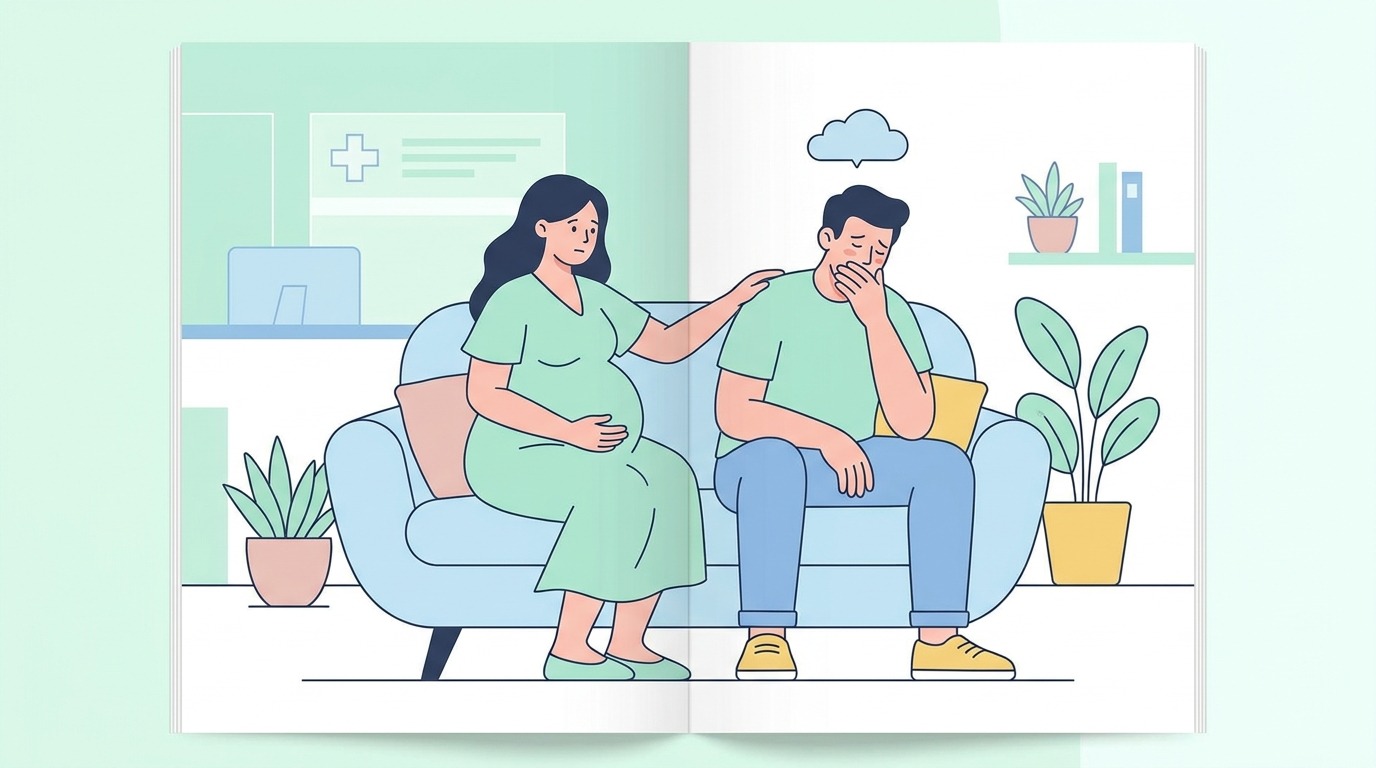
The couvade syndrome describes a set of symptoms experienced by the non-gestating partner during pregnancy. This phenomenon, sometimes called “nervous pregnancy” or “empathetic pregnancy,” includes bodily and emotional manifestations. It often occurs without underlying pathology. However, it can disrupt daily life if the surrounding people minimize it.
Historical works linked it to birth rites where the father would symbolically lie down. This cultural interpretation finds a modern echo: it highlights the desire to “physically engage” in awaiting the baby. Today, clinics rather speak of psychosomatic disorders. The body thus expresses the magnitude of psychological adjustments. Nothing illogical, since a new parental role is crystallizing.
The frequency varies by studies and countries. Several surveys mention a wide range, between 11% and 65% of future fathers affected. In the United States, figures range from 25% to 52%. Differences depend on methods, definitions, and cultural contexts. In practice, many men keep their sensations secret. They seek a digestive or professional cause, whereas the timing points to pregnancy.
The pattern is often cyclical. Signs emerge in the first trimester, then a lull is observed in the second. Afterwards, a resurgence in the third trimester accompanies increased stakes. Birth relieves most cases. However, discomfort can persist for a few days, the time to land. This tempo invites anticipation rather than submission.
Typical symptoms and trimester rhythms
Many describe morning nausea, heartburn, changing appetite, or gradual weight gain. Sometimes headaches, back pain, cramps, or dental hypersensitivity are added. Food cravings occur at unlikely times. Sleep disturbances and fatigue increase irritability and impair concentration. Psychologically, mood may wobble.
These signals rarely correspond to organic impairment. They nonetheless require attention. In cases of sharp pain, persistent diarrhea, or marked loss of appetite, medical advice is necessary. The goal is not to medicalize couvade but to not ignore another cause. Careful sorting reassures the couple and prevents an anxiety spiral.
Cultural landmarks and couvade rites
In several traditions, couvade ritualizes fatherhood. The father “carries” symbolically, shares rest, and receives care. This age-old scene finds today’s translation: prenatal preparation, fathers’ groups, and active involvement in consultations. The message remains the same: transform waiting into concrete presence. When symbol becomes action, anxiety eases.
Stage conclusion: couvade signifies a transition to honor, not a problem to hide. Naming it is already containing it.
Symptoms of couvade syndrome: from body to emotions
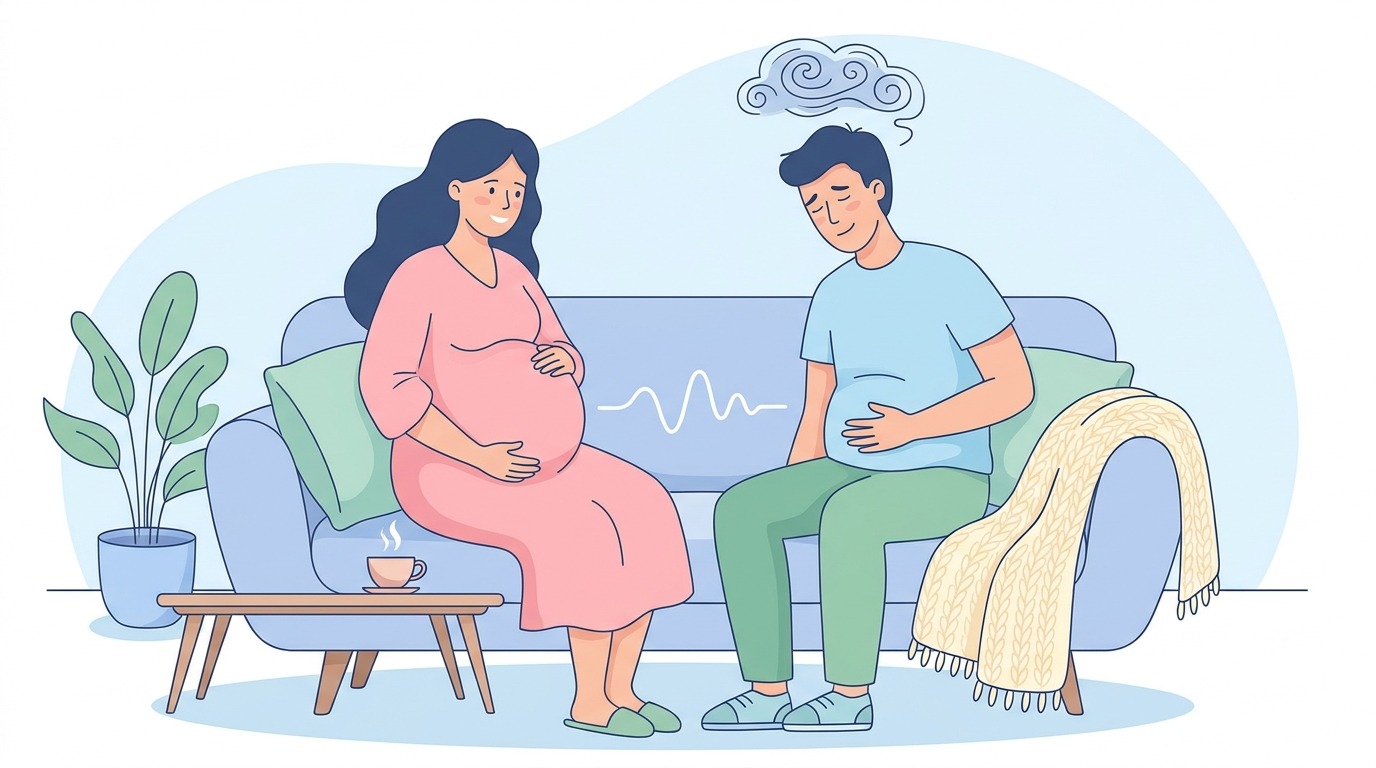
The body often speaks first. A future dad, let’s call him Leo, wakes up with nausea while his partner goes through her first trimester. He snacks more, then notices slight weight gain. He falls asleep late, wakes early, and accumulates a fatigue that clouds his mind. This mosaic of sensations forms a coherent picture with couvade.
Physical signs to watch without dramatizing
Heartburn alternates with capricious appetite. Sometimes bloating and cramps are added. The head feels heavy after too-short nights. Back pain recalls postural stress. On the other hand, any intense pain, severe digestive disorder, or fever warrants examination. This reassures the couple and avoids confusion.
The second trimester often calms things down. Leo sleeps better, sweats less anxiety, then regains energy. This respite seems to confirm the psychosomatic hypothesis. The third trimester revives fears related to childbirth. Sleep disturbances resurface, sometimes accompanied by vivid dreams. This cycle is not exceptional. It follows the emotional curve of the household.
Psychological impact and daily repercussions
Mental intrusions appear. Do I have what it takes to be a father? Will I protect my family? These questions shake but direct commitment. Irritability rises when fatigue sets in. Then self-esteem falters facing the mirror highlighting weight gain. At work, concentration wavers, especially if the pace remains demanding. A cycle forms: less sleep, more raw emotions.
Fortunately, several escape routes exist. Hygiene routines reduce the intensity of symptoms. Emotional sharing restores couple cohesion. Prenatal involvement restores a clear place. The body breathes, the mind follows.
Ideally, the caregiver addresses couvade from the first consultations. A simple question normalizes: “Have you noticed any sensations that surprise you?” This gesture opens a space. Leo feels legitimate. Prevention often starts with permission to feel.
Key insight: physical and psychic signs tell the same story; they require a coordinated response.
Causes and mechanisms: hormones, psychology, and fatherhood-to-be
Several models complement each other to explain couvade. Biologically, studies suggest a drop in testosterone and a rise in prolactin in some future fathers. These hormonal variations could sensitize to the baby’s signals. After birth, an increased reactivity to crying is often observed. The body prepares for fatherhood, too.
Hormonal hypothesis, from intuition to measurement
Why these variations? Affective closeness, empathy, and routine changes act as levers. The social brain modulates stress and care circuits. Thus, psychology and hormones intertwine. No hormone “causes” couvade alone. Together, they make one more receptive and vulnerable to digestive symptoms and light sleep.
This framework avoids two pitfalls. Reducing couvade to anxiety would be unfair. Explaining it only by hormones would miss the relational dimension. A continuum is required: biological factors, personal history, and couple climate.
Psychosocial mechanisms: place, empathy, and identification
Pregnancy redirects attention to the mother. Some partners feel marginalized. The body reacts accordingly: sleep disturbances, persistent fatigue, occasional nausea. Others feel diffuse jealousy toward the mother-baby bond. Symptoms sometimes relieve guilt and give the father a “part to carry.” This identification strengthens empathy and engagement.
Prenatal courses sometimes intensify couvade. Paradox? Not so much. The greater the involvement, the more emotions actualize. This mental activation also fosters coping strategies. In other words, intensity opens the way to solutions.
And in women’s couples?
The literature has focused mainly on heterosexual fathers. In women’s couples, the view of both mothers as equals may reduce emphasis on the biological. Couvade might therefore be less frequent there. However, empathy and parental adaptation also exist. The non-gestating partner may feel somatic tensions, especially if stress rises. More inclusive studies are desirable to refine these nuances.
Key idea: no single cause, but a synergy between biology, experience, and relational context.
Practical advice: easing symptoms and strengthening parental adaptation
A winning strategy combines lifestyle hygiene, couple rituals, and prenatal anchoring. The goal: reduce the intensity of symptoms while nurturing the feeling of competence. Here is a clear plan inspired by situations experienced in perinatal consultation.
Targeted lifestyle hygiene and protective routines
- 🍽️ Divide meals: 3 meals + 2 light snacks to limit nausea and reflux.
- 🥦 Favor fiber, lean proteins, and water; reduce fats and sugars to counter weight gain.
- 🚶♂️ 30 minutes of moderate activity most days: stress down, fatigue better managed.
- 🛏️ Sleep hygiene: regular schedules, screen off 60 minutes before, cool room to reduce sleep disturbances.
- 🧘♂️ Breathing 4-7-8 or heart coherence: soothe the nervous system in 5 minutes.
These simple adjustments produce a cumulative effect. They reduce bodily alarm and create a recovery base. Leo, applying these guidelines for two weeks, already has fewer nighttime awakenings and regains mental clarity.
Dialogue, place, and prenatal involvement
The couple benefits from sharing feelings weekly. Name the emotion, then propose a concrete action. For example, plan a walk after the ultrasound. Structural involvement helps: attending appointments, managing paperwork, preparing the nursery. Talking to the baby each evening establishes a tender and stabilizing ritual.
Prenatal classes provide a roadmap. Recognizing false labor, preparing the maternity bag, practicing pain-relief positions: all levers that calm. Avoidance fuels anxiety; action transforms it.
When to consult and whom to contact
If symptoms intensify, mood drops for several weeks, or sleep severely deteriorates, consulting becomes a priority. A general practitioner, midwife, or perinatal psychologist can help. Sometimes a few sessions suffice to restart adaptation. Teleconsultation apps facilitate access during busy times.
Anchor point: the alliance of daily life, speech, and involvement turns couvade into a springboard toward fatherhood.
Couvade syndrome and society: destigmatize, train, and prevent
Talking about couvade means modernizing the pregnancy narrative. The partners are not extras. They also go through an identity shift. Companies, healthcare teams, and media play an amplifying role. When the environment validates the experience, shame retreats, and help becomes accessible.
Healthcare settings: inclusive protocols and early detection
Systematic screening during prenatal consultations changes the game. A brief question, a checklist, and clear guidance often suffice. Maternity wards can integrate a “partner and couvade” module. Thematic support groups offer a concrete space to untangle anxiety, expectations, and physical symptoms.
Ongoing training for caregivers in 2026 already includes perinatal mental health. Including couvade strengthens skills. Professionals gain ease, and couples gain security. The cost is low, the human impact radiant.
Companies and family policies
Adjusting working hours around ultrasounds and prenatal classes supports parental adaptation. HR can distribute a short guide on couvade: detect, normalize, refer. A caring culture avoids stigmatizing remarks. Result: less furtive absenteeism and a calmer return to work after birth.
Culture, media, and research
Fiction influences reality. Showing a partner preparing the maternity bag, moved during monitor checks, acknowledging nausea from stress: these images set a precedent. Meanwhile, research must widen its scope. Women’s couples, adoptive families, and contemporary configurations deserve specific data. Better understanding means better support.
Final societal message: recognizing couvade means making room for active, sensitive, and competent fatherhood.
“Couvade does not weaken the father: it initiates him.” ✨
How to distinguish couvade from a medical problem ?
The context and timing guide: symptoms (nausea, fatigue, weight gain, sleep disturbances) following the key moments of pregnancy suggest couvade. However, any severe pain, fever, weight loss or persistent digestive disorder requires medical advice to rule out an organic cause.
Can couvade last after birth ?
Most often, symptoms quickly decrease after delivery. Residual fatigue and disturbed sleep remain common in the first weeks. If depressive mood, marked anxiety, or insomnia persist, consultation is necessary to prevent a paternal postpartum depressive episode.
Is medicated treatment necessary ?
Generally no. Lifestyle hygiene, couple support, and prenatal involvement are sufficient. A professional may recommend brief therapy, relaxation techniques, or, more rarely, targeted treatment if anxiety or associated depression exists.
Are women’s couples concerned ?
Literature remains limited, but empathy and parental adaptation can generate somatic symptoms in the non-gestating partner. Frequency seems possibly lower when both mothers are equally co-mothers from the start. More studies are needed.
How to talk about it with healthcare providers without embarrassment ?
Simply say: “Since the beginning of the pregnancy, I have had nausea and sleep badly; could this be related?” Teams know this phenomenon. Your words facilitate detection and support, without judgment.