Family Bowling Game: DIY: family bowling game for 3-5 year olds.
| Short on time? Here’s the essentials ⭐ |
|---|
| 🎯 Goal: a simple, safe, and fun family bowling game for 3-5 year old children. |
| ♻️ Craft with plastic bottles, lightly weighted with water or sand. |
| 🧠 Educational game: counting, colors, fine motor skills, turn-taking. |
| 🥎 Skill game: shooting line, two throws, easy points to count. |
| 🌦️ Craft activity and family leisure adaptable indoors/outdoors. |
| 🧽 Maintenance: rinse the pins, dry, store in a mesh bag. |
| 💡 Scoring tip: strike = 20 pts, spare = 10 pts. 🎉 |
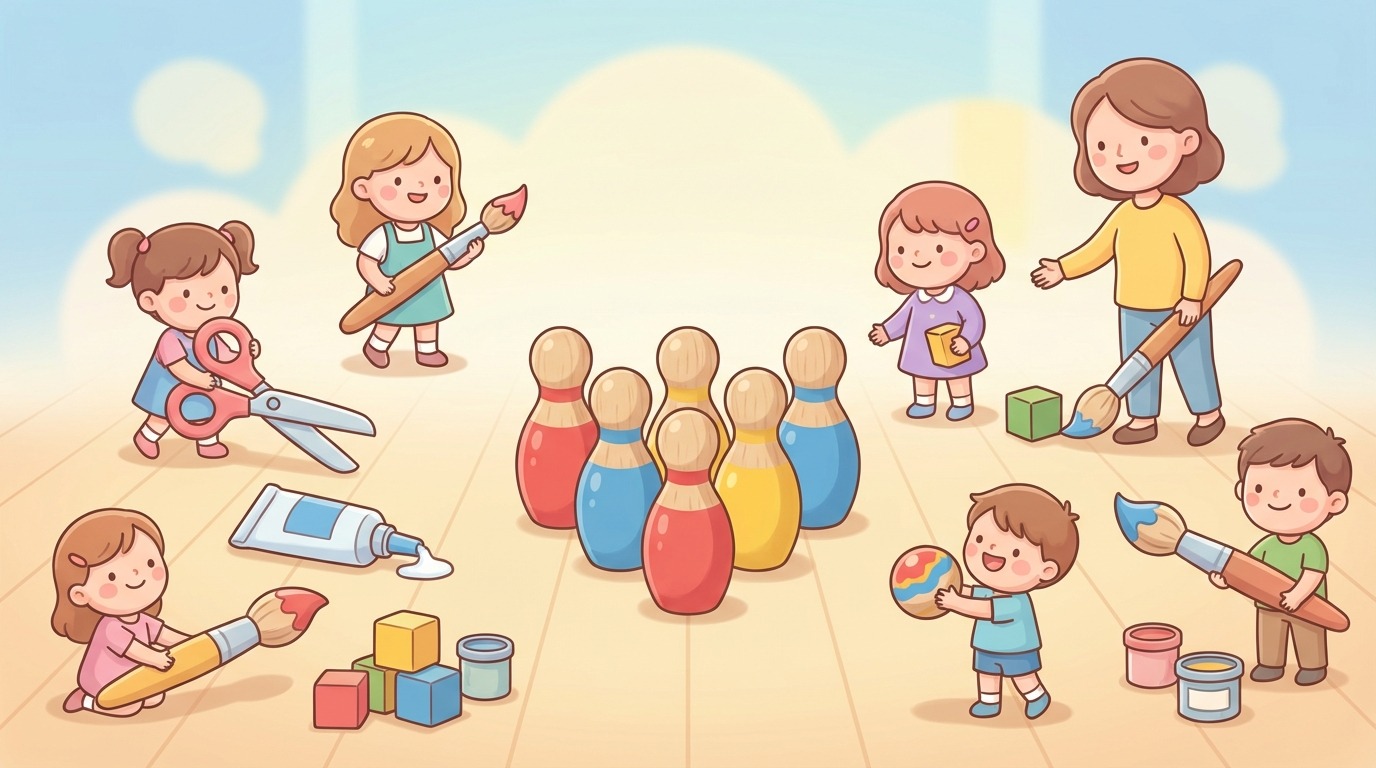
A family bowling game made at home ticks all the boxes for an activity for 3-5 year old children: it fosters autonomy, strengthens fine motor skills, and offers a joyful setting to learn counting. By recycling bottles, everyone makes a colorful and personalized skill game. Little hands paint, screw on caps, then roll a foam ball; the movement sharpens with each try. And because good crafting also helps set a framework, the shooting line and turn-taking create reassuring landmarks. In the garden, living room, or community room, this family leisure becomes a gentle and effective ritual. Children laugh, cooperate, and learn, while adults guide without taking over. The tangible result: a fun activity that is lasting, inexpensive, and rich in sensory, social, and cognitive discoveries.
Family bowling game with recycled bottles: materials, safety, and step-by-step assembly
A good start relies on clear choices. For this craft, six to ten plastic bottles of 50 cl or 1 l suffice. This volume remains manageable for 3-5 year old children and limits total weight. The cap must be screwed on firmly. This detail prevents any leaks and secures handling. For the weight, a handful of dry sand or two fingers of water per bottle achieves the ideal balance. Too much weight makes the pins almost indestructible; too little causes them to wobble at the slightest breeze.
Before decorating, rinse and dry the inside. Then, degrease the outside with a little dish soap. This way, acrylic paint adheres well. Prefer bright colors and simple patterns. Wide stripes help the eyes follow rotation. Funny dots encourage visual discrimination. A permanent marker is used to draw numbers, but colored stickers also work very well.
Recommended materials and quick safety checklist
The experience flows better when everything is ready. Arrange the materials on a tray and announce each step. This ritual captures attention and frames the duration. Children like knowing when we start and when we finish. This feeling of control soothes many tensions. Once the area is ready, instructions are easier to remember.
- 🥤 Clean bottles (6 to 10) + caps screwed firmly
- 🏖️ Dry sand or water, small amount for weighting
- 🎨 Non-toxic acrylic paint, foam brushes
- 📍 Colored stickers or masking tape
- 🥎 Soft foam ball, child’s hand size
- 📏 Tape to mark the shooting line
- 🧼 Wipes and aprons, protected floor
The play area must stay clear. Put away hard and slippery objects. Set up a non-slip mat if playing indoors. The ball must be foam. It absorbs energy and reduces impact. This choice maintains safety without killing the fun.
Assembly, arrangement, and testing the throw
Fill, screw, decorate. Then, arrange the pins in a triangle or staggered pattern. Start three steps from the line. Depending on age, you will step back one step. Remind the key rule: two throws per turn. The score is simply calculated. One pin down = one point. All pins down in one go = 20 points. Knock all down in two throws = 10 points. This scoring amuses and motivates, without complicating calculations.
Colorful variation to diversify interest: assign a value to the caps. Red = 6, yellow = 5, black = 4, green = 3, blue = 2, no color = 1. This mechanic opens a strategy game accessible to children. They aim for a color, then observe the effect. They quickly understand that trajectory matters as much as force. You encourage a gentle and well-aimed throw. Precision prevails over brute strength.
After a few rounds, assess and adjust. If the pins resist too much, remove some weight. If there are too many wind falls, add a pinch of sand. This custom calibration sets up a very rewarding success curve. The child feels competent, so eager to replay. This is the best guarantee of a lasting skill game. In a word: test, observe, refine.
Final note for this step: safety guides everything, and the joy of trying seals the desire to continue.
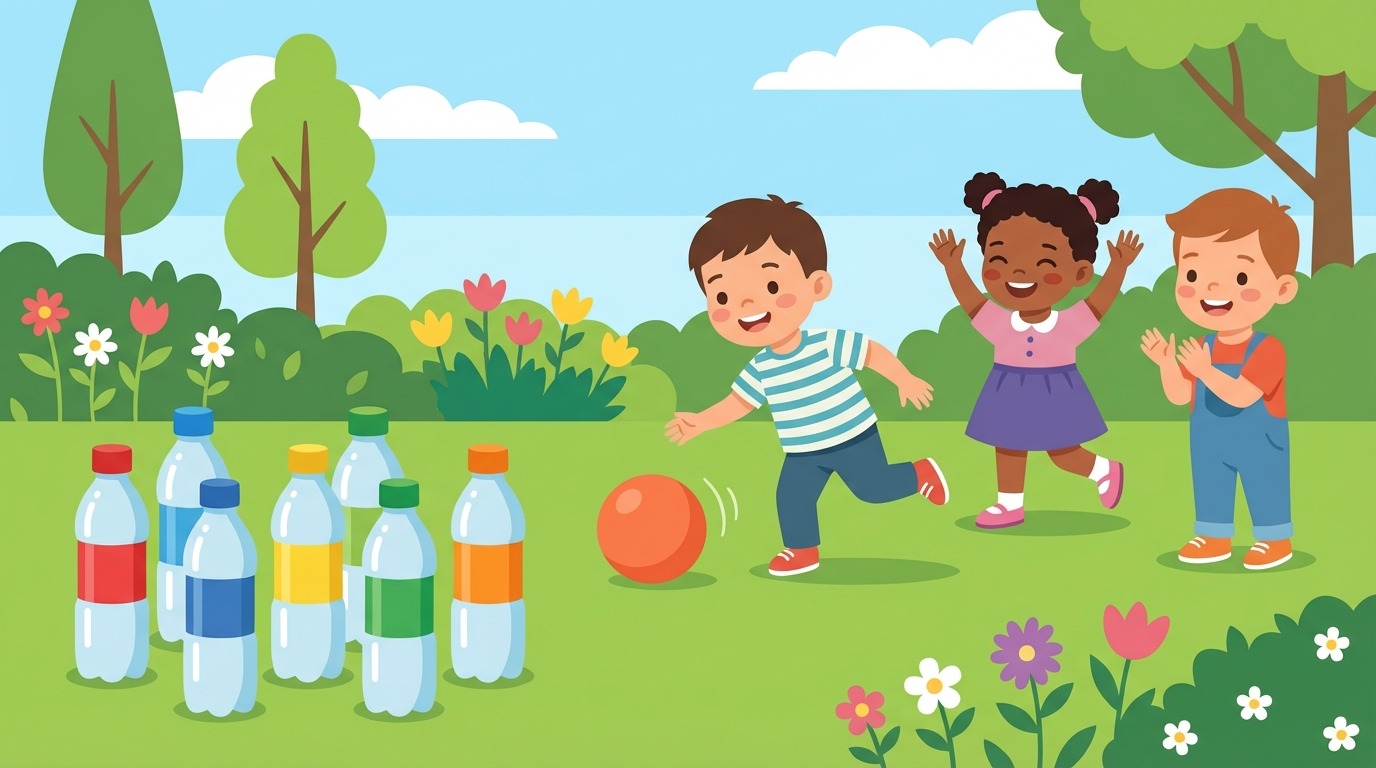
Educational game and fine motor skills: learning to count, aim, and wait your turn
The bowling game with bottles becomes a powerful educational game when intentions are structured. For fine motor skills, every micro-movement is exploited. Screwing a cap trains thumb-index pinch. Pouring sand stimulates hand-eye coordination. Painting straight stripes forces slowing down. All this later supports the throw. The hand remembers these precise movements. The wrist better guides the ball, and the shoulder spends less energy.
On the cognitive side, counting creeps in everywhere. We count set pins, then fallen ones. We add up some color values. We compare two scores. 3-5 year old children grasp small visible quantities well. The color code helps them move from concrete to abstract. The joy of scoring a point reinforces memorization. The brain likes positive emotion. It remembers better when the result is clear, immediate, and celebrated.
Simple rules for big progress
The framework stays light but consistent. Two throws, shooting line respected, score announced out loud. Clarity supports attention. Children focus on the movement, not on unclear rules. When a strike falls, enthusiasm rises. One says “20 points”. If all fall in two throws, one cheers “10 points”. This coded language is part of the game. It establishes a reassuring and engaging common culture.
To work spatial awareness, vary the arrangement. In straight lines to start, staggered to increase difficulty. Ask the child to describe what they see. “Two reds in front, one green behind.” This verbalization supports language skills. It also reinforces the action plan: “I aim for the red.” The child links words and movement. The throw gains intention and finesse.
Cooperation, emotions, and confidence
Waiting your turn is learned through experience. Suggest a 30-second hourglass for preparation. This little visual cue soothes the waiting line. Then, ritualize encouragement: “Good luck!” and “Great try!”. Effort is praised, not only results. The child dares to fail, then tries again. This loop creates calm resilience. It transfers to other key moments in the day.
Finally, cooperation takes shape with a common mission. For example, the final “big cleanup.” Everyone sets a pin upright simultaneously. Count to three, and voilà! Shared task weaves team spirit. It teaches gesture coordination. And above all, it ends the session peacefully. A tidied-up game naturally invites replay.
Next logical step: apply all that inside, outside, and even in very small spaces. You’ll gain flexibility without losing the essential.
Indoor/outdoor adaptations: flexible rules and clever variations for 3-5 year olds
The same family bowling game changes face according to the space. In an apartment, prefer a very soft foam ball. It rolls quietly and respects neighbors. A mat reduces throw range. The pins stand better. Outside, one can widen the lane and lengthen the distance. The wind requires adding an extra spoon of sand. This adaptation keeps the difficulty enjoyable, not frustrating.
Simple sensory variation: glue a strip of felt on each pin. On contact, the ball slows a bit. Children learn to adjust their force this way. Another effective idea: introduce a “mystery pin.” Its color changes each round. If it falls, everyone earns a sticker. This mini-bonus infuses a dose of cooperation. Everyone shouts “mystery pin!” together, and the joy is shared.
Gentle routines and smooth transitions
3-5 year olds experience the activity better when transitions remain clear. A well-framed game even supports other daily learnings. For example, setting a short ritual before the session lightens the mood. A 20-second song, two deep breaths, then everyone touches the shooting line. This sequence helps the brain “change room” internally. The same logic applies to key moments in a toddler’s day. For parents also navigating toilet training outside the home, a predictable framework works wonders. Concrete landmarks facilitate toilet training in daycare and soothe transitions.
Hosting a birthday? Organize the “silent lane.” When the music stops, a child throws. When it starts again, pins are reset. Everything becomes joyful choreography. This simple rule channels the group, even when large. Shyer children dare because the moment is marked by music.
Small spaces, maximum fun
Little room? Scale it down. Use mini bottles, about 33 cl, and a rolled-up sock ball. Reduce the throwing distance to two steps. To keep the challenge, introduce a “lane” with two tape strips. If the ball goes out, calmly restart. This visual framing improves trajectory. The child collects quick successes. They feed the desire to persist, key to deep learning.
And outdoors, why not create a grand finale in the low sun? Let the child place the pins themselves. They explain their choice. You validate and add a small constraint: “keep 20 cm between two pins.” The balance of freedom and rules builds autonomy. It also sets gentle responsibility: we play, but respect the structure.
Final practical tip: store pins in a mesh bag that lets them dry. This detail extends equipment lifespan. A sturdy game comes back to the table more often. And the more we play, the more we learn.
Home tournament: scoring, turn-taking, and positive encouragement
A mini-tournament turns an afternoon end into a party. The format remains short. Three rounds per player, two throws per round. The score sheet fits on an A4 page. Write the name and points per round. Read aloud after each throw. This transparency motivates and avoids disputes. Children understand what’s happening and what’s left to do.
The clear scoring formula simplifies the session. One knocked down pin counts for one. A strike is 20 points. A spare earns 10 points. If playing with a color code, add the value of each fallen pin. Alternate formats depending on the group’s energy. Start simple, then switch to the color code for the grand finale. Variety renews momentum without breaking the framework.
Roles that build responsibility
Assign roles to involve everyone. A child “line judge” checks foot position. Another “counter” announces points. A third “setter” stands pins back up each time. These mini-tasks channel the waiting line. They strengthen self-esteem. Everyone contributes to the common success. The tournament becomes a play where everyone plays a rewarding part.
On the emotional side, prepare encouraging phrases. “You tried differently, well done!” or “Your ball rolled very straight.” Praise the precise movement and intention. This approach strengthens helpful behaviors. It also defuses heavy comparisons. If needed, offer a “comfort” throw when frustration rises. The child hugs their teddy, breathes, then throws. This micro-ritual brings safety back and renews pleasure.
Smiling finals and ties
In case of a tie, organize a “mirror throw.” The first chooses a target pin, the second must try the same. Lots of laughter, even more learning. You always finish with a collective celebration: high five in a circle, small dance, group photo. Emotional memory keeps these signals. It links the game to shared success. Everyone quickly wants to play again tomorrow.
Want visual inspiration and model movements? A short video of targeted motor activities offers concrete ideas to vary speeds, grips, and trajectories.
Key takeaway: a successful tournament relies on stable rules, clear roles, and lots of kindness.
Progressive crafting, creative themes, and sustainable maintenance of the bowling game
A good family leisure renews itself. Theme the pins according to the season. Spring? Paint flowers and insects. Summer? Marine motifs. Autumn? Red and brown leaves. Winter? Snowflakes and penguins. Add small glued textures to enrich touch. The relief promotes grip and stimulates curiosity. Each theme reopens the desire to play. Children rediscover the skill game from another angle.
For an “ocean” lane, some families create crustacean pins. This idea is fun and memorable. And when a pregnancy is ongoing, other topics also come up at the table. Need useful clarifications? One can check updated dietary guidelines with professionals. For example, nutritionist advice on crab during pregnancy reassures and avoids approximations. The same logic applies to the game: rely on reliable sources, adapt, and move forward calmly.
Maintenance, storage, and eco-friendly habits
After each session, quickly rinse the outside if the lane was outside. Dry with a cloth. Open the caps for five minutes to release moisture, then screw back on. Store in a mesh bag. Air circulates. Lingering odors disappear. Once a month, check the weight. Sand can clump; break up lumps by shaking. Replace water if it becomes cloudy. This care prevents leaks and extends gear life. A well-maintained game reassures the child. It expresses the value you give to this shared moment.
Simple eco-gesture: prepare a “bowling bottles” box. The whole house knows where to drop the next containers. The game becomes a micro collective project. Waste is reduced without a moral lesson. Children perceive the concrete benefit of recycling. They see an object go to the bin, then return as a shiny pin. This educational loop leaves a mark.
Ideas to renew interest without redoing everything
Changing a single parameter often suffices. Lengthen the lane by half a meter. Reverse the order of colors. Change the value of a “joker” pin for a special round. Install a mini cardboard ramp for the youngest. It stabilizes the movement and gives a sense of control. You can also create a homemade challenge book. A few concrete examples follow, adapted for 3-5 year olds.
- 🌀 Gentle throw: knock down at least 2 pins without loud noise.
- 🎯 Aim for the color: topple only a green or blue pin.
- 🧩 Cooperative duo: one child places, the other throws, then switch.
- ⏱️ Fun minute: succeed 3 calm throws in 60 seconds, without running.
- 🌈 Rainbow: touch three different colors in the same round.
These challenges steer attention and provide realistic goals. The child sees what they try. They understand what needs adjusting. They progress without pressure, with pleasure. And pleasure truly fuels lasting learning.
Final transversal recommendation: align routines. When daily milestones are clear, everything flows. This coherence benefits the game but also the rest of family life.
Links between skill game and daily rituals: structure, autonomy, and serenity
The bowling game becomes a mirror of daily life. One rule, one turn-taking, one precise movement, one clear score. This quartet reassures 3-5 year old children. They feel the structure, so they dare to explore. In morning sessions, the game wakes the body. At day’s end, it helps unwind softly. Parents modulate distance, light, and musical tempo. The home’s general climate harmonizes. Over time, these micro-rituals support emotional regulation.
In many families, the progress curve appears after weeks. The throw gains trajectory. The child announces their score spontaneously. They suggest variations. They invite an adult to play “like me.” This transfer of initiative proves ownership. Autonomy settles naturally. Meanwhile, other routines become smoother. The rule is set, the goal named, then encouragement follows. This pattern also works for dressing, outings, or naps.
When the community comes into play, the same pillars hold. In daycare or play centers, a clear ritual encourages calm. Visual supports help small groups. The leader shows the line, points to the scorer, then validates the throw. Children align with this rhythm. Speech becomes predictable. It calms anxieties. And sharing equipment then makes sense. We wait, try, and tidy up.
For out-of-home transitions, reliable resources are worth gold. Many parents coordinate games, learning, and new stages. A glance at practical markers can save time. In this respect, browsing a serious guide on toilet training in daycare helps maintain a coherent framework. Messages align, and the child breathes easier.
In sum, by weaving links between this skill game and daily life, we build a pedagogy of pleasure. The rule does not constrain, it supports. The structure does not limit, it opens a path. And trust grows with every pin that falls.
What is the ideal age to start this bottle bowling game?
From 3 years old, with a very soft foam ball and a short distance. Between 4 and 5 years, you can lengthen the lane, color the pins, and introduce a simple point value.
How much weight should be put in each pin?
Aim for light: two fingers of water or a small handful of sand. Test and adjust. Too heavy, the pin won’t fall; too light, it wobbles without interest.
How to avoid breakage and noise indoors?
Use a foam ball, add a non-slip mat, and space the pins. Glued felt reduces impact. Calm returns without losing the fun.
What simple scoring rules for 3-5 year olds?
One pin knocked down = 1 point. Strike = 20 points. Knock all down in two throws = 10 points. Say the score out loud to help counting.
What to do if a child gets frustrated after several failures?
Offer a ‘comfort’ throw, move the shooting line closer, and praise effort. End on an achievable success, even small, then replay later.
“With a few bottles and lots of kindness, we knock down pins… and raise children.” 🎳💛