Parents Dispute Protection : Parents’ dispute: protecting the child (1-3 years).
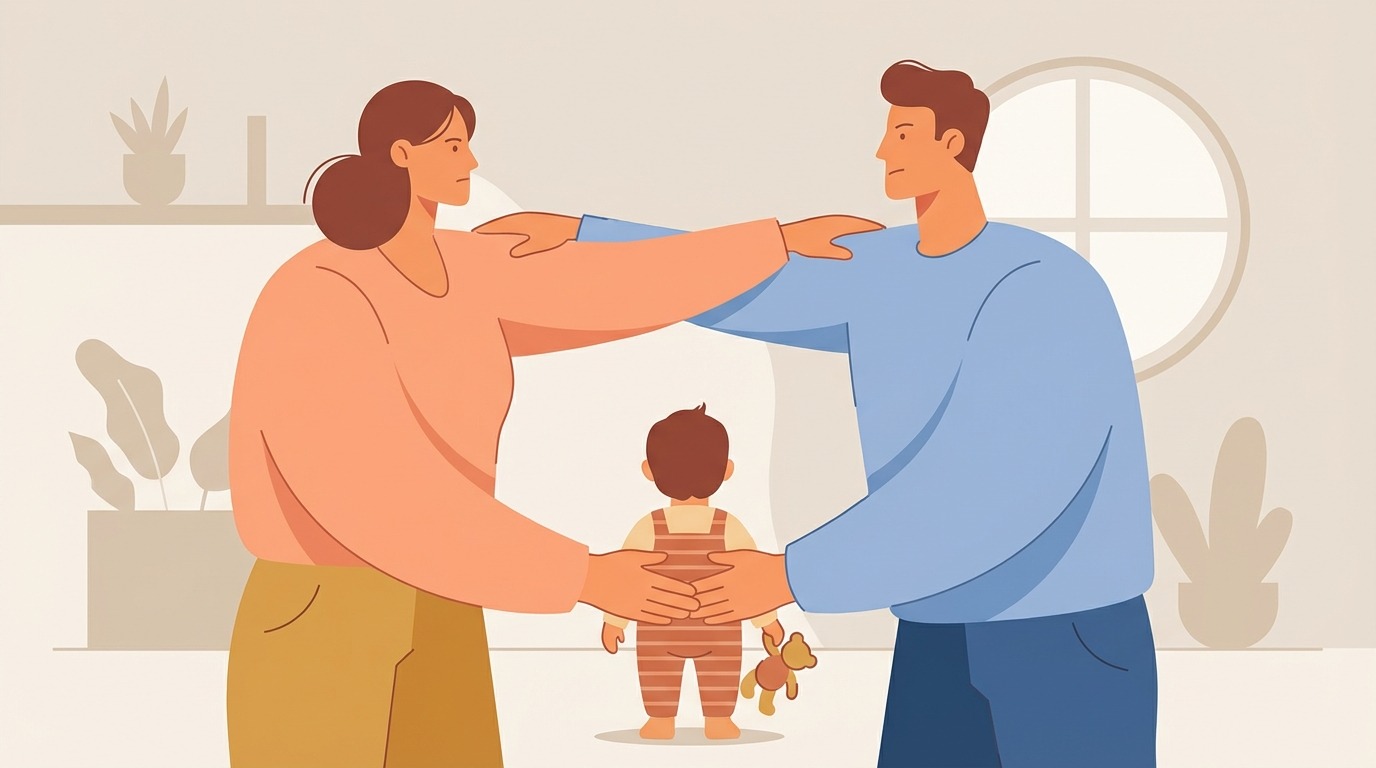
In many households, the argument arises without warning. However, with a baby aged 1 to 3 years, every raised voice is perceived as an alert. Their brain, still in development, picks up on the emotional intensity, not the arguments. Hence the urgency of genuine emotional protection, which does not pit the parents against each other but strengthens their alliance around the safety and well-being of the child. By transforming conflict management into an educational skill, the home becomes a soothing learning ground, even when family stress rises.
Today, neuroscience confirms the intuition of early childhood professionals: repeated exposure to parental tensions impairs emotional regulation. However, simple routines, non-violent communication, and, if necessary, supervised mediation create powerful safety nets. Thus, the question is not “should all disagreements be avoided?”, but “how to argue without breaking the toddler’s internal compass?”. The approaches are concrete: defuse in a low voice, name emotions, reassure the child, then repair afterwards. This framework protects curiosity, self-esteem, and the precious drive for exploration between 12 and 36 months.
| Short on time? Here is the essential ⏱️ |
|---|
| Stop the escalation as soon as a toddler is present 👶 |
| Speak quietly, keep bodies relaxed, step away for a few minutes if necessary 🧘 |
| Reassure the child immediately: “Mom and Dad are angry, but you are safe” 🛡️ |
| Repair after the dispute: simple explanation, hug, return to routine 🧩 |
| Model dialogue: express a need, propose a compromise 🤝 |
| If tensions persist: family mediation or educational support ⚖️ |
| Preserve the toddler’s well-being: sleep, hydration, free play 💧🎈 |
Parental Disputes and Emotional Security of the Toddler (1-3 years)
Between 1 and 3 years, the child does not understand the nuances of a disagreement, but their body reacts. Heart rate accelerates, muscles tense, and attention shifts toward the perceived threat. Thus, the home must become a space of emotional protection: disagreement is possible, but without sensory overflow. This involves controlling voice volume and body posture. A parent who crouches, speaks softly, and keeps their hands open sends a powerful signal of safety.
Specifically, the warning signs between 12 and 36 months are clear: nighttime awakenings, regression (toileting, language), agitation during separations, or conversely, withdrawal. Additionally, frequent tantrums, biting peers, or a sudden refusal to go to daycare may indicate family stress that has become too intense. Faced with these signs, the golden rule is to act quickly and simply: reduce intensity, verbalize, and soothe through contact.
Here is a mini “emergency stop” ritual to adopt. First, one of the parents says quietly: “Pause, let’s calm down.” Then the adults move out of auditory range. Next, one parent stays with the child and reassures: “You are not the cause of our dispute. We love you, we will fix this gently.” Finally, suggest a simple and calming action: drink a glass of water, look out the window, breathe together.
The next day, a brief “repair” strengthens the protection axis: “Yesterday, we spoke too loudly. We found a solution. You have nothing to carry.” Putting it into words cuts short diffuse guilt. Moreover, the adult can name their own emotion: “I was frustrated, I chose to breathe.” The implicit message is powerful: emotions are legitimate, but we regulate them safely for the other.
In the background, routines consolidate internal safety: stable mealtimes, bedtime rituals, daily free playtime. For example, establishing a “quarter-hour cuddle-reading” after dinner becomes a pillar of well-being. And if tiredness or thirst amplify crying, anticipate. On this point, these health landmarks are useful: prevent dehydration in children 💧, because a well-hydrated body better regulates stress.
Neuroscience and Disputes: What Happens in the Brain of 1 to 3 Year Olds
In toddlers, the brain prioritizes survival. Thus, when tension rises, the amygdala triggers the alarm, and the stress axis activates. Repeated activation can disrupt the maturation of emotional regulation circuits. Yet, at 2 years old, these networks are still plastic. This is great news: a calm environment repairs quickly. Conversely, recurrent loud noise leaves an imprint of excessive vigilance.
Developmental psychology research converges: frequent exposure to parental quarrels limits sustained attention and makes transitions more difficult. Moreover, emotional memory retains the general climate. In other words, even if the child does not remember the words, they keep the imprint of the tone. To deepen the role of marital tensions on maturation, see this analysis on separation and the child’s brain 🧠.
How to reverse the trend? First, reduce sensory intensity: softer voices, slow gestures, respected distances. Then multiply positive “counter-imprints”: tender body play, singing, lukewarm baths, walks. Through repetition, these calming experiences wire more effective regulation pathways. Finally, link emotion to meaning. A short phrase is enough: “Dad wanted this, Mom that, we look for a solution together.”
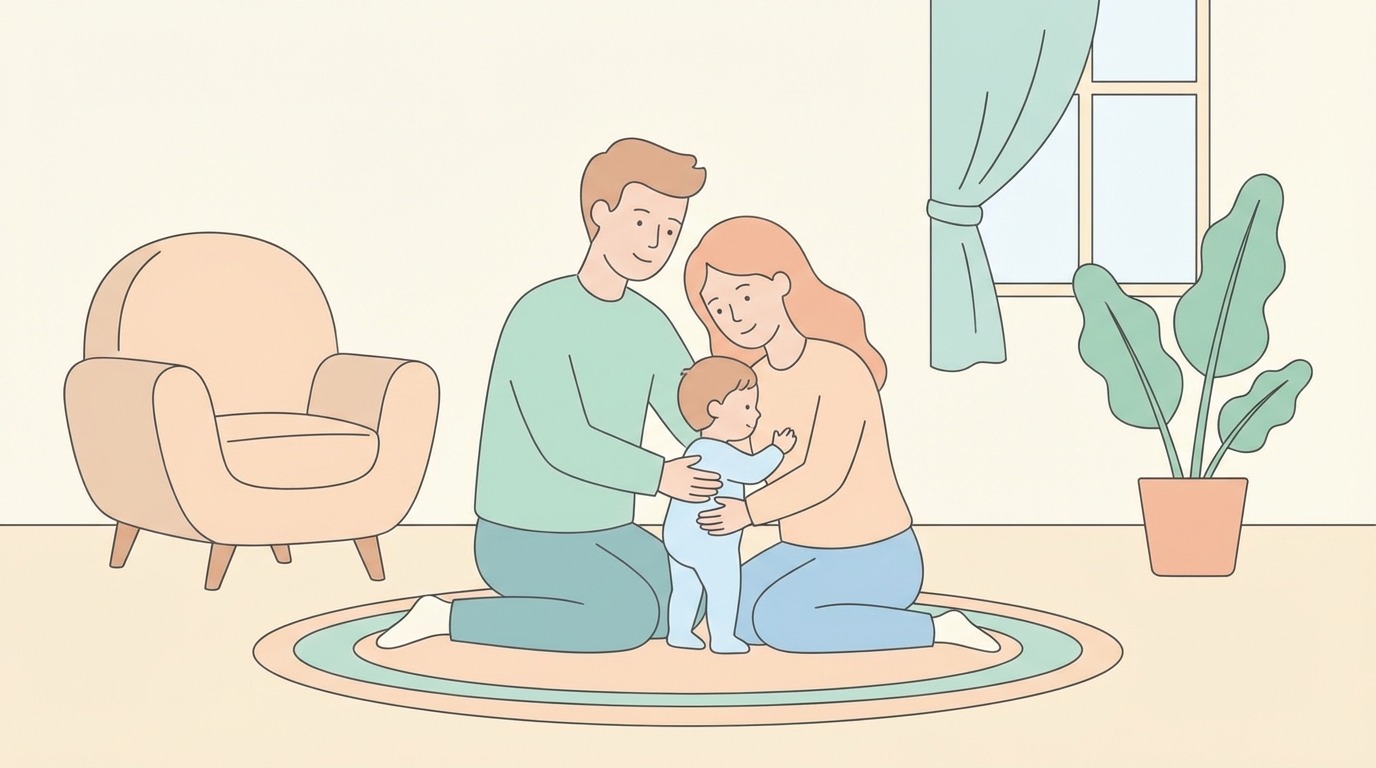
It is not about banning all conflict. On the contrary, framing a dispute becomes a living course in conflict management. The child observes a model: we contradict, listen, propose a solution, reconcile. This scenario reduces fear of abandonment and nurtures trust. When scenes repeat with kindness, socio-emotional development gains stability.
Practical Guide: The Calming Triangle
Three concrete levers help to “cool down” the atmosphere: synchronized breathing, cottony voice, gentle touch. First, breathe in with the child on three counts, breathe out on four. Then speak as if whispering to a bird. Finally, place a light hand on the back, if the child accepts it. Together, these gestures establish bodily safety faster than a thousand explanations.
From Crisis to Model: Turning the Dispute into Social Learning
A conflict handled delicately shows the toddler how to go through disagreement without hurting. For this, we rely on two pillars: expressing needs and seeking compromise. For example, saying “I need calm to listen to you” is better than an accusation. Thus, the child hears an architect’s language rather than a judge’s language. They learn that relationships are built.
To Avoid / To Favor (Minute Version)
- ❌ Shouting and accusations → ✅ Constructive dialogue with “I feel / I need”
- ❌ Belittling the partner → ✅ Mutual understanding and recognition of effort
- ❌ Slammed doors → ✅ Stress management: pause, water, breathing
- ❌ Ultimatums → ✅ Clear and realistic parental compromise
Let’s stage a typical “constructive reply.” Instead of “You never help me!”, say: “I feel overwhelmed in the evening. Can you give the bath while I prepare dinner?”. Result: the request is precise, the door to compromise opens, and the child observes a controlled exchange. Then, the sequence closes by marking relational repair in front of them: “Thanks, we found a solution.”
In some families, repeated tensions overwhelm goodwill. At this stage, family mediation offers a secure framework to put the pieces back together. Techniques of communication are learned, daily rules are redefined, and commitments are formalized. Moreover, if friction is accompanied by rough gestures, it remains essential to know the basics of first aid in case of minor injuries 🩹, because overall protection also includes the body.
In short, the “model dispute” follows a clear thread: stop the escalation, express a need, propose, thank. Repeated, this pattern nourishes the toddler’s self-esteem, who understands the bond holds firm even when there is friction. It is a well-being capital for life.
Safety Nets: Mediation, Educational Support, and Legal Framework Centered on the Child’s Interest
When conflict settles in and weakens the child, solutions exist to restore family safety. Family mediation often constitutes the first step. Supervised by a professional, the parents clarify what concerns the couple and what relates to coparenting. Thus, clear rules are redefined: places of discussion, schedules, channels, break times. This framework reduces unexpected emotional events that frighten the toddler.
If the situation requires, the family court judge can be seized. Depending on the case, a social investigation, psychological assessment, or supervised visitation rights may be ordered. The guiding principle remains the child’s best interest: stability, continuity, and no pressure. Sometimes, educational support is implemented when the child’s balance is truly threatened. In France, parental centers specifically welcome children under three with both parents when they need intensive support to fulfill their educational role: this support can make a difference.
The law also recalls firm limits: systematic belittlement, emotional blackmail, prevention of contact, or instrumentalization of the child are serious signals. In severe cases, the judge can adjust residence, suspend certain rights, or impose mediation. This swift action prevents the young child from being caught in a loyalty conflict, so destructive for their development.
For families, the goal is not “to be right,” but to restore a climate of protection and predictability. Thus, coparenting agreements benefit from being written, simple, and verifiable: who does what, when, and how to communicate if there is disagreement. This structural effort frees mental space to play, sleep, explore. This is precisely what a toddler needs to grow up peacefully.
Finally, relying on a nearby network helps maintain distance: grandparent relay, trusted neighbor, daycare educator, family mediator. Each can become an anchor point when the storm returns. Again, prevention is better than cure: paths are marked before the storm. This anticipation offers the young child a sensation of a “net” ready to stretch around them.
Lasting Harmony: Routines, Parental Self-Regulation, and a Soothing Environment
The best antidote to the family stress spiral is the caring routine. At this age, any predictable rhythm soothes the nervous system. Start with three pillars: protected sleep, regular meals, daily free play. Then add a reunion ritual after work: five minutes without screens, fully dedicated to the child. This attentional bubble prevents many evening frictions.
Parental self-regulation changes everything. Plan “micro-breaks” to release pressure: 90 seconds of breathing, a lukewarm shower, three minutes of soft music. Also, moving together releases tension. Even at 2 years old, running in the park, pushing a balance bike, or dancing in the living room brightens the mood. In this sense, guidelines on children’s physical activity 🏃 can inspire simple and safe ideas.
The material environment also counts. Secure the house to reduce sources of alert: no slamming objects, stable furniture, calm corner for reading. Create a sensory “nest”: soft lighting, throws, baskets of cardboard books. Also, keep water within reach, since a thirsty child becomes irritable more quickly. Hence the interest in anticipating hydration, especially during fever or heat, with the advice “prevent dehydration.”
Next, solidify the educational alliance. A brief daily check-in between adults aligns messages: non-negotiable limits, margins of choice, and strategy in case of disagreement. This three-minute “parental stand-up” avoids contradictions in front of the child. When friction arises, defer the discussion by saying explicitly: “We’ll talk about it tonight, now let’s read the story.” The toddler hears the promise of continuity, not the break.
Finally, maintain a language of encouragement. Name what goes well: “You put away gently,” “You wait your turn.” These micro-recognitions strengthen the competent identity of the young child. Little by little, they internalize a story of safety: the world is reliable, the adults regulate themselves, protection is constant. It forms the discreet foundation of a peaceful childhood.
Express Toolbox for Tense Days
Keep this mini-list on the fridge: 1) water + slow breathing; 2) kneel down and speak softly; 3) rephrase the need; 4) offer a simple choice; 5) repair with a hug and a reassuring phrase. These five steps bring the child back to their safety zone in less than three minutes. They show parents that conflict management is a concrete skill, not a utopia.
Do occasional disputes really harm 1-3 year olds?
Yes, at this age, the brain perceives mostly intensity. A single and repaired dispute leaves few traces, but repetition creates excessive vigilance. The essential: lower the volume, reassure immediately, then briefly explain once all is calm.
How do I know if my child is affected?
Watch for: sleep disturbances, regressions (toileting, language), hypervigilance, crying at separations, or unusual withdrawal. If these signs last several weeks, seek advice from your pediatrician or an early childhood psychologist.
Is there a “right way” to argue in front of a toddler?
Ideally, talk out of their earshot. If disagreement happens in their presence: low voice, “I” messages, a pause if emotion overflows, then visible repair (thanks, hug, return to routine). Modeling resolution is formative.
What to do if tensions become too frequent?
Request family mediation to relearn communication. If the child’s balance is threatened, the family court judge’s involvement and educational support can secure daily life, always in the minor’s best interest.
“A well-managed disagreement does not harm childhood: it teaches that love knows how to heal.”