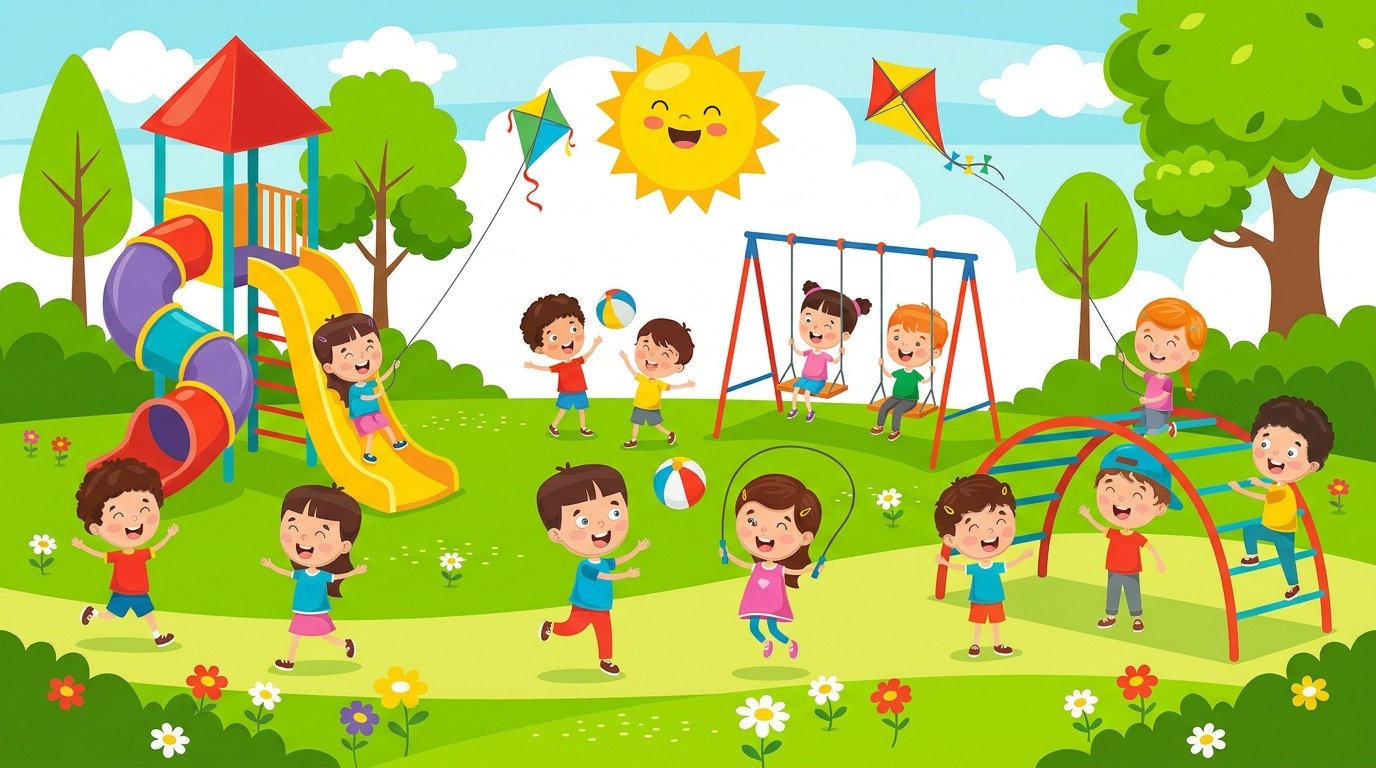
Outdoor Video Games: Outdoor game ideas for children.
Laughter bursts better in the open air. With simple, dynamic, and safe outdoor games, every garden, schoolyard, or park turns into a lively stage where motor skills, cooperation, and imagination awaken. The secret lies in three concrete levers: choosing children’s activities suited to age, balancing the group’s energy, and pacing the session between physical challenges, playful breaks, and moments of observation. From “freeze tag” for 4–6-year-olds to Ultimate Frisbee for preteens, including quick orienteering courses and photo hunts, the range of children’s game ideas is broad and adaptable without complicated equipment.
To go further, clever “hybrids” also include outdoor video games: photo rallies on smartphones, augmented reality treasure hunts, QR quizzes to solve as a team. Used with discretion, they boost engagement and storytelling while keeping movement at the core. Finally, safety, weather, and logistics are anticipated: gentle reminders of rules, marked zones, hydration, and shade options. With light preparation, outdoor animation flows better; everyone moves, laughs, learns, and leaves with vivid memories.
| Short on time? Here’s the essentials ⏱️ |
|---|
| 1) Prioritize safety and clear zones 🦺 |
| 2) Match the game to age, number, and energy 👶👧🧑 |
| 3) Alternate dynamic and calm outdoor games ⚖️ |
| 4) Plan for water, shade, and weather variations 🌤️💧 |
| 5) Mix cooperative, skillful, and discovery: complete children’s entertainment 🎯 |
Outdoor children’s games: easy ideas for school holidays
Why these activities boost health, attention, and collective joy
The outdoors acts like a giant, open, and free gym. Running, jumping, throwing, crawling: these simple moves activate the skeleton, refine balance, and nourish hand-eye coordination. Recent studies confirm better attention after 20 minutes of children’s activities outdoors, even with moderate effort. Moreover, space reduces sterile competition: you spread out, laugh louder, dare more. Result: a recharged mood and a cohesion that naturally forms.
The social dimension strengthens. Little ones learn turns, “gentle rules,” and the pleasure of helping without elimination. Older kids develop tactics, manage frustrations, and discover that a “miss” quickly turns into a learning opportunity. Essentially, these children’s team games form a joyful micro-society where everyone has their place—from the daring sprinter to the clever observer.
Choosing the right game: the 4 quick filters that hit the mark
Success depends on four simple points: age, group size, equipment, and energy/time. A “1,2,3 Red Light” amazes a 5-year-old audience but bores middle schoolers. Conversely, a crazy Spikeball works better from age 12, on soft grass. For group size, some formats shine with 6 (Ninja Freeze), others thrive with 20 (Fox-Hen-Viper). Regarding equipment, most outdoor games launch with cones, scarves, chalk, or even nothing. Finally, balance cardio: brief warm-up, peak intensity, and calm play to cool down.
Need a safety and organization reminder? Concrete guidelines from essential safety tips help structure the session, from field choice to clear instructions.
Examples by age group with educational objectives
3–6 years: “Bubble fishing” develops dexterity, “Freeze tag” encourages mutual help without elimination, and “Family knockdown” builds coordination and patience. Sensory workshop variations complete the set; for accompanying babies, gentle suggestions are available at early learning ideas for toddlers.
7–10 years: “Grenadier” boosts speed and trajectories, “Tomato-Ketchup” trains verbal memory and anticipation, “Frog relay” strengthens thighs and laughter. Added are “Trail jammer” for fine observation and “Nature bingo” linking curiosity and respect for living things.
11–15 years: “Ultimate Frisbee express,” “Flag Football relax,” or “Street Tchoukball” combine cardio, precise passes, and tactical communication. “Photo rally” and “Assassins Game light” stimulate environmental reading, social strategy, and playful pressure management.
Final tip: alternating tempo and posture (running, skill, creative calm) maintains attention and reduces conflicts. It’s the key to a smooth and joyful session.
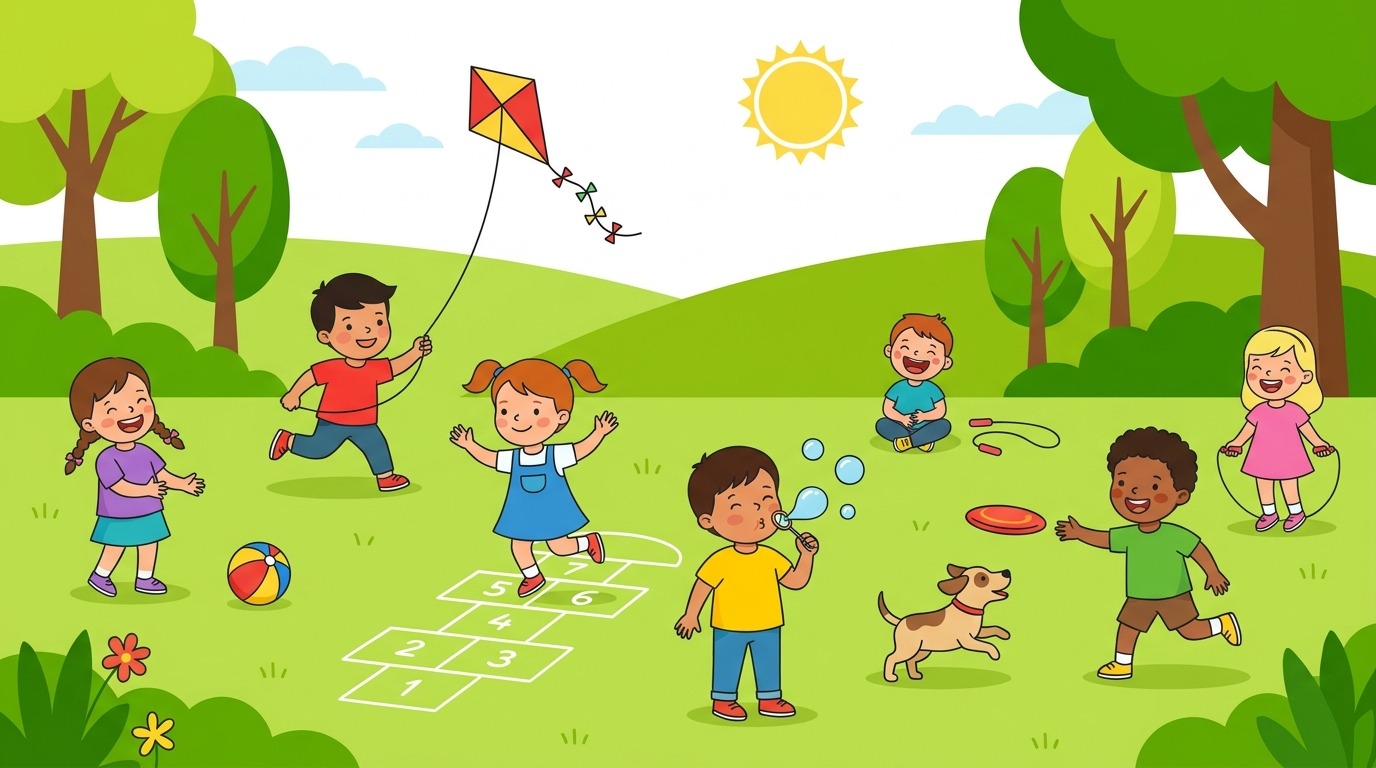
Outdoor game ideas for kids: outdoor activities, water games, and easy activities
No equipment: when space becomes the best accessory
The field creates the experience. “Sleeping giant” puts self-control front and center: move quietly, steal the treasure scarf, and learn suspense management. “Moving conductor” trains joint attention: the group follows a secret leader, a spy decodes changes. “Ninja Freeze” builds sharp reflexes: single-move attack, quick dodge, frozen pose. These educational outdoor games start in two minutes, focus the group, and reassure with simple instructions.
Another trusty classic: “Fox-Hen-Viper 2.0”. Three teams, a predation loop, measured cardio, and clear roles. Children quickly understand systemic logic while having fun. Hits are counted aloud, hierarchies rotate from round to round, and inclusion stays paramount.
With small accessories: scarves, hoops, bubbles and… imagination
A colored scarf, and you reinvent “musical chairs” without chairs via “Musical rainbow.” Add a speaker, remove a color each round, and everyone stays in the game through active penalties. Hoops open a world: “Frog relay” for controlled jumps, “Express tunnel” for collective timing, “Human bridge” to strengthen listening and trust. Bubbles awaken momentum: “Bubble fishing” transforms the air into a sparkling ocean.
Water stirs laughter in summer. “Ice bomb” offers a mini-escape game: locks to decode before the big splash. You learn sequential logic under gentle pressure. To complete the kit, awakening brands also offer age-appropriate supports like interactive early games to divert into outdoor observation challenges.
Quickly adapt to terrain, wind, sun
The same game is played anywhere: garden, city stadium, beach, forest. Distances shrink if space is tight, swap a ball for a foam ball, mark the ground with chalk. Strong wind? Choose low-to-ground formats (revisited pétanque, tchoukball) and avoid frisbees. Bright sun? Set up shade and lighten intensity. Sharp cold? Multiply short sleeves and consult cold weather protection tips to maintain comfort and health.
To start without hesitation today, nothing beats quick scouting: clear zone, visible rules, rotation of roles. Three steps ahead that change everything.
Outdoor games for children: 20 easy ideas for the garden
A ready-to-use directory, sorted by energy and age
Here’s a bouquet of modifiable ideas tested in schoolyards, municipal parks, and camps. The principle: little equipment, lots of meaning. Each suggestion specifies the main benefit to guide your choice. Add a timer, a touch of humor, and the magic happens.
- 🌟 Freeze tag: pursuit with no elimination; immediate cooperation; perfect 4–7 years.
- 🎨 Musical rainbow: responsiveness, listening, light frustration management.
- 🫧 Bubble fishing: fine coordination, short jumps, guaranteed wonder.
- 🧱 Family knockdown: aiming, correcting throws, patience between turns.
- 🐸 Frog relay: gentle strengthening, team spirit, synchronized laughter.
- ⚡ Grenadier: speed, false trajectories, progressive cooperation.
- 🍅 Tomato-Ketchup: verbal memory + anticipation, circle dynamics.
- 🧭 Trail jammer: path reading, perseverance, well-earned victory.
- 📸 Photo rally: observation, visual storytelling, sharing angles.
- 🏃♀️ Giant beret: explosive start, fair duel, clear score.
- 🥏 Ultimate express: communication, precision, contactless fair play.
- 🏈 Flag football relax: varied roles, strategy, moderate cardio.
- 🤸 Ninja Freeze: reflexes, muscle control, minimal game plan.
- 🕸️ Spider web: cooperation, careful carrying, planning.
- 🪣 Human bridge: nonverbal coordination, balance, trust.
- 🎯 Revisited pétanque: intergenerational skill, fine point calculation.
- 🧊 Human Curling: friction notion, impulse control, guaranteed fun.
- 🌿 Nature bingo: ecological curiosity, listening, photo souvenirs.
- 🧩 Ice bomb: sequential logic, positive stress, summer laughs.
- 🚧 “Raft” rescue: creativity, center of gravity, express project.
The strength of the directory is its flexibility. Chain a cardio game and a calm format to temper excitement. Switch from a competitive mechanic to cooperative logic to mend connections. Also consider toddlers who watch and want to join: gentle ideas exist on the side of baby-friendly toys, always focused on safety.
Want a narrative thread after recess? A “story” moment with figurines can extend family imagination, for example thanks to family role-playing games. The important thing is overall balance: move, create, tell.
In short, this idea box shows that with a clear space, two scarves, and a foam ball, an afternoon takes on a new dimension. Simple does not mean simplistic: it’s the art of essentials.
Outdoor video games and hybrid outdoor animations: when digital makes you move
Connecting outside and digital without sacrificing movement
When well used, digital tools boost engagement without locking children onto the screen. A photo rally encourages better looking: framing, lighting, funny details. An augmented reality treasure hunt helps spot markers, statues, or natural silhouettes, then prompts running to the next clue. A QR quiz sticks puzzles to urban furniture: each right answer unlocks a bonus rule for the next game. The phone serves as a narrative compass, not a virtual chair.
Parents of 5–8-year-olds often want a clear framework. This guide on video games for children aged 5 to 8 helps shape content, duration, and usability, so digital remains a springboard to outdoor animation, not an end in itself.
Three turnkey hybrid formats
1) Story-hunt AR: each team scans a marker, discovers a character, and receives a physical mission (do a relay, build a shape with bodies, find a yellow object). 2) Creative photo bingo: a 9-theme grid (funny shadow, natural circle, collective smile) and a light sprint to complete a line. 3) Connected quick orienteering course: simplified map, 6 markers to point at, but with an audio clue at each step to guide younger kids. In every case, set duration (15–25 minutes), mark the perimeter, and emphasize cooperation.
And digital safety? It’s stated from the start: no public image sharing without permission, no visible names, devices in airplane mode during moves. Golden rule: if the screen doesn’t trigger moving or observing, put it away immediately.
Argument: why hybrid works so well
Because it speaks the language of children while bringing them back to reality. The app triggers desire, the physical task does the rest. The shy engage through written missions, the more restless hook onto the physical challenge. Teams mix talents: attentive photographer, sprinter, strategist. This cultivates autonomous motivation: they play, so they move, so they learn.
Operational conclusion: integrate digital in light doses, with a clear goal (observe, tell, mark), then return to free play. It guarantees lasting balance.
Successful outdoor animations: safety, rhythm, and stress-free logistics
Checklist before going out: prepare without overloading
A well-thought-out bag is enough. It holds: water bottles, sunscreen, hats, bandages, measuring cups, 6 scarves, 1 foam ball, 4 foldable hoops, 1 compact speaker, chalk, and a soft whistle. Anticipate a shaded spot and a quiet waiting area. For bus or train trips during a nature outing, prepare items to reduce discomfort; this guide on motion sickness in children offers concrete and reassuring tips.
For clothing, follow the three-layer rule in cool weather, breathable fabrics in summer, and closed shoes that support the feet. Hydrate every 15–20 minutes during sustained formats. A clear, positive, and brief safety reminder frames everything: respect the perimeter, no hard contact, stop if someone falls.
Conduct the session like a mini-adventure
The winning structure: 1) very short icebreaker game, 2) large dynamic activity, 3) calm or creative game, 4) big cooperative finale. Each transition gathers the group in a circle, states the goal, and recalls a single rule. Roles rotate (leader, referee, timekeeper) to involve everyone. Capture attention with a simple ritual: a team shout, a gesture, a collective “check.”
When energy overflows, a micro-relaxation ritual suffices: blowing out an imaginary candle, stone statue, listening for the “farthest sound.” The intention is not to restrain but to channel so joy lasts.
Adapt to the environment and rebound on the unexpected
Sloping terrain? Place end zones uphill to balance efforts. Wet grass? Choose stable ground games (revisited pétanque) and avoid long sprints. Heatwave? Short water games, alternated with shade and sheltered breaks. Small terrace? Precision games, hoops laid down, zigzag walking courses. Large park? Quick orienteering, giant beret, and big relays.
In case of fickle weather, stick to the plan with a ready plan B: “static” versions of moving games (passes, target shots, motor riddles), or a mini-creative workshop that feeds the next game’s story. In the end, the best logistics are barely visible; they leave all room for the group’s momentum.
Last watchword: caring safety, controlled rhythm, shared joy. That’s the equation that makes you grow.
“Outside, every laugh leaves a lasting memory: move, cooperate, start again.”
Quels jeux de plein air lancer avec zéro matériel ?
Misez sur Géant endormi, Ninja Freeze, Chef d’orchestre, 1-2-3 Soleil ou Poule-Renard-Vipère. Ils s’expliquent en 60 secondes, engagent tout le groupe et s’adaptent à tout espace dégagé. Ajoutez un rituel court pour enchaîner proprement.
Comment équilibrer compétitif et coopératif ?
Alternez un jeu à score (Béret géant, Grenadier) avec un format coopératif (Pont humain, Toile d’araignée). Fixez un objectif commun final, par exemple battre un chrono d’équipe. L’important est de varier rythme et posture.
Que faire quand il fait très chaud ?
Raccourcissez les manches, privilégiez l’ombre, intégrez des jeux d’eau brefs (Bombe glacée) et hydratez toutes les 15–20 minutes. Préparez serviettes, casquettes et zones de repos. Évitez les sprints prolongés en plein soleil.
Comment inclure les plus timides ou moins sportifs ?
Donnez des rôles valorisés : arbitre bienveillant, gardien du temps, photographe du rallye. Proposez des jeux d’adresse et d’observation (Brouilleur de pistes, Pétanque revisitée) qui réduisent la pression physique. Tournez les rôles à chaque manche.
Peut-on intégrer des outils numériques sans perdre le mouvement ?
Oui, si l’écran sert de déclencheur. Utilisez des rallyes photo, des chasses AR ou des quiz QR qui exigent déplacement et observation. Limitez la durée d’écran, fixez le périmètre et rangez le téléphone dès que la tâche physique est lancée.