Motion Sickness: Managing motion sickness in children.
| Short on time? Here’s the essentials ⏱️ |
|---|
| 👀 Fix your gaze on the horizon, choose a stable and well-ventilated seated position, and avoid reading while moving to reduce nausea and vomiting. |
| 🥨 Before departure, a light snack and some water are enough; avoid an empty stomach as well as a heavy meal for better prevention. |
| 🛑 Breaks every 60–90 minutes, fresh air, and rest break the cycle of motion sickness. |
| 🌿 Ginger and sometimes acupressure bracelets help; medications should be taken with professional health advice. |
| 🌊 On a boat, prioritize the center of the vessel to limit the effect of swell; in a car, gentle driving makes all the difference. |
Some children jump with impatience at the idea of a trip, others turn pale at the first curve. Motion sickness more often affects children aged 2–12, and sometimes a winding road or rough sea is enough to trigger nausea, cold sweats, and vomiting. The good news is that careful preparation, clever prevention, and a few reflexes during the journey transform the experience. This guide brings together concrete strategies for car, train, plane, and boat, with clear markers to adapt seating, food, distraction, and, if necessary, medications. It is based on field feedback and simple physiological principles to illuminate parents’ decisions. A reference family, with Lina, 6 years old, illustrates throughout the sections what really works. Each part answers a specific question, with no detours or empty formulas, so that a trip becomes a smooth, serene, and even joyful moment. What if you transformed the road into a terrain of calm sensory explorations?
Motion sickness in children: understanding causes and mechanisms
Understanding already soothes. Motion sickness, or kinetosis, arises from a conflict between what the eyes see and what the inner ear perceives. When the child looks at a book in the car, their eyes suggest stillness. However, the vestibule sends signals of movement. This disagreement confuses the brain and triggers nausea. By ripple effect, salivation increases, the skin pales, then vomiting may occur. Some children also describe a headache, dizziness, or even a sensation of warmth.
Why are some more sensitive? The inner ear of young children is particularly reactive. Between ages 2 and 12, sensitivity peaks, then declines. Moreover, fatigue, hunger, strong smells, heat, and anxiety amplify discomfort. Nervous driving, with sudden accelerations and braking, further increases sensory conflicts. Conversely, a gentle and regular pace soothes. The seat and seated position also play a role: on the rear axle of a bus or at the back of a boat, movements intensify. At the center of a vessel, the effect of the swell is less, which explains tolerance differences depending on location.
Triggers vary according to mode of transport. In a car, repeated turns and mountain passes are dreaded. In a plane, turbulence dominates, but stressful anticipation can do as much damage. On a train, comfort improves if the child faces forward. On a boat, a long swell period with slow rolling is more exposing than a short sea. This fine reading of contexts allows adjustment of the environment without overloading the child with injunctions.
How to recognize a beginning episode? The child freezes, raises the hand to the mouth, becomes silent. Very quickly, sweat beads, breathing shortens, and salivation increases. At this stage, opening a window or going outside for air when possible often changes the situation. In younger children, who express less, agitation and crying indicate discomfort. Vomiting occurs only later, rarely immediately.
Should you worry? Generally, symptoms stop as soon as movement ends. The major risk remains dehydration if vomiting recurs. It is then recommended to hydrate in small sips and monitor urine. Finally, remember a key idea: the brain learns. With well-managed exposures, the child adapts. This plasticity opens the way to the prevention strategies shown just after, for lasting progress.
Contradictory signals: the central role of the inner ear
The vestibule informs about acceleration and gravity. When vision says “I’m reading, so I am still,” the inner ear says “it’s turning and swaying.” The hesitant brain triggers a universal vegetative response: nausea then vomiting. This framework explains why looking at the horizon or closing the eyes soothes many little travelers.
Prevention before departure: food, seating, route, and calming routine
Prevention starts well before the seatbelt is fastened. A dry snack (crackers, bread, banana) 45 to 60 minutes before departure stabilizes the stomach. A heavy fatty meal increases the risk of nausea. Conversely, leaving with an empty stomach weakens. Better to find a middle ground and take small sips of water. For Lina, 6 years old, half a yogurt and some pretzels significantly reduced gastric jolts on winding routes.
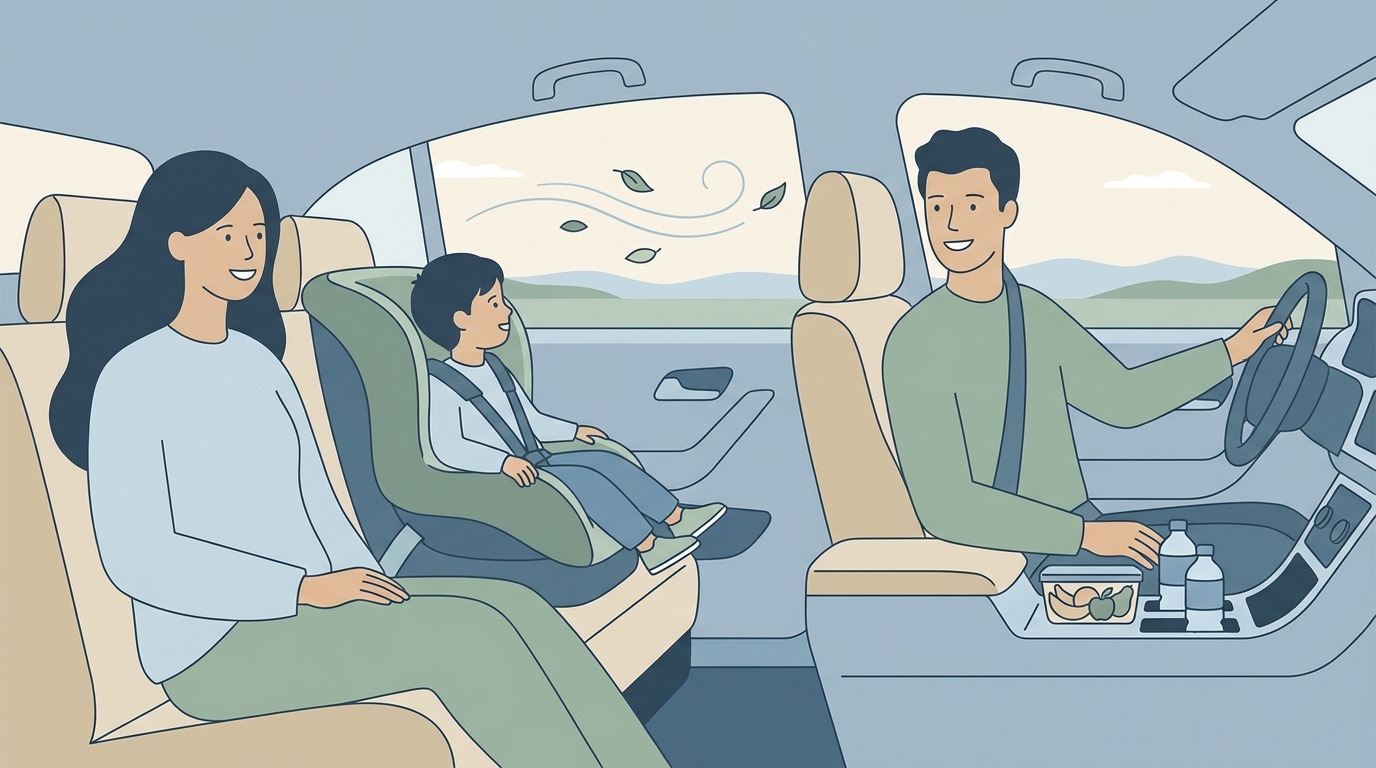
The choice of seat weighs heavily. In a car, the middle of the backseat, in a well-chosen car seat, offers a more stable forward view. On a train, placing the child facing forward avoids visual lag. On a plane, seats near the wings feel less turbulence. On a ferry, aiming for the center of the boat reduces the impact of the swell. In all cases, an upright seated position, with gaze tilted toward the horizon, limits contradictory signals.
Material preparation counts just as much. A “better-travel” kit groups vomit bags, wipes, water bottle, dry snacks, change of clothes, and a mist sprayer. Sunglasses to reduce glare and a small cushion to support the head are added. Also repeat the child safety rules in the car: they reassure and structure, which reduces anticipatory anxiety.
Route planning really influences. Smooth driving, less twisty roads, and departures at quiet times limit jolts. Targeting the child’s nap is a discreet lever: by sleeping, they cut the nausea loop. Lina falls asleep on the first section, then benefits from a break at the first rest area, in the shade, to breathe and stretch. This alternating rest/route smooths out the whole journey.
Beware of screens and sensory overload. Reading, playing on a tablet, or focusing on a close toy increases the vision/vestibule conflict. Still, total boredom can generate stress. The right balance is found with gentle stimuli: calm songs, riddles, guided observation of the landscape. Avoid sensory overstimulation just before departure; a calm atmosphere prepares the body for the road.
Last but decisive detail: the cabin. A moderate temperature, light ventilation, and neutral odors encourage comfort. Harsh air fresheners sometimes trigger nausea. Regarding the vehicle, explore practical resources like traveling with children in a Toyota or leaving with baby in a Peugeot to anticipate storage, sunshades, and modularity. Every detail saves brain effort and spares the stomach.
Express checklist before departure
- 🥨 Light snack + water in small sips
- 🪑 Upright seated position, gaze to the horizon
- 🌬️ Well-ventilated cabin, no strong odors
- 🗺️ Gentle route, planned breaks
- 🎵 Calm stimuli, no close screens
- 🧰 Anti-vomiting kit ready
What to do during the trip: distractions, breathing, breaks, and lifesaving adjustments
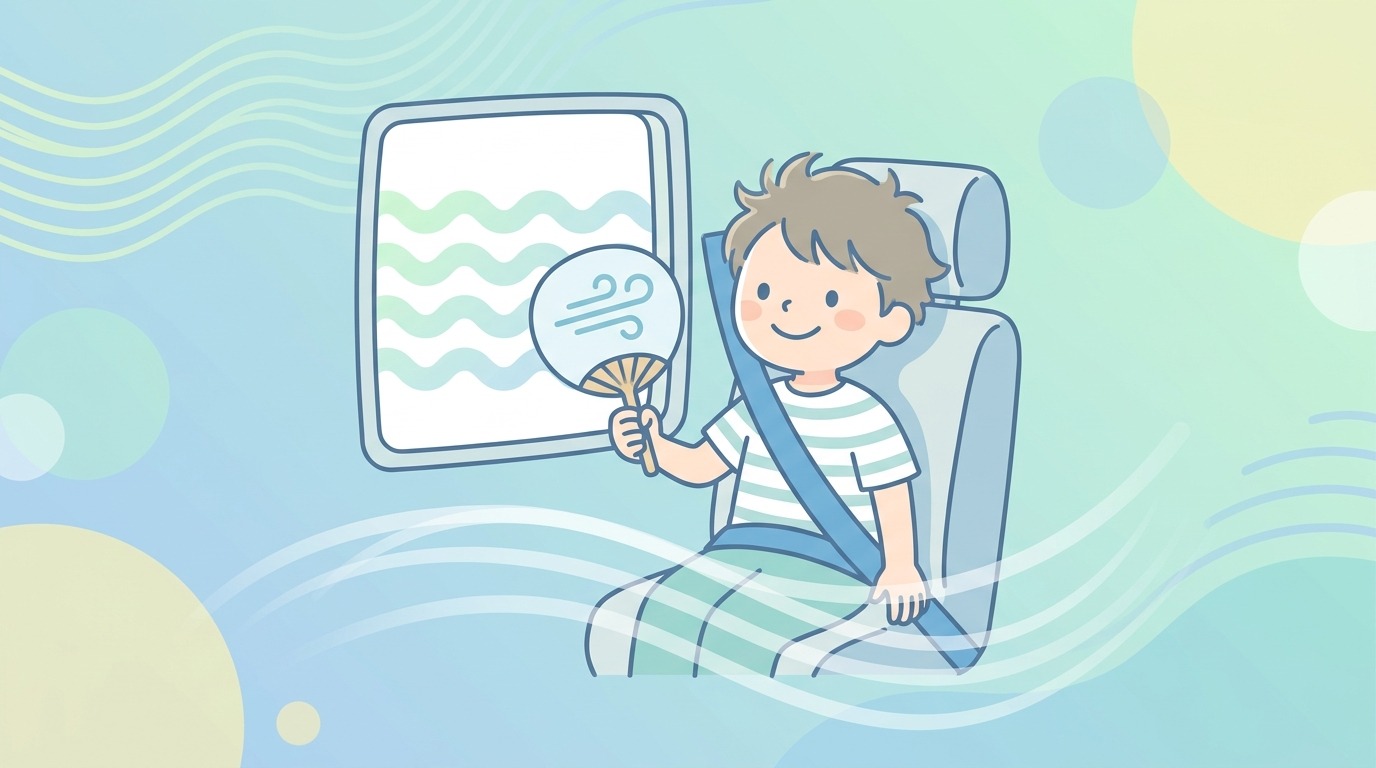
At the first signs, quick action breaks the escalation. Slightly opening a window or adjusting the ventilation toward the face refreshes. Encourage the child to breathe slowly through the nose, then exhale through the mouth, restoring a calm rhythm. With the hand placed on the belly, they feel the movement and calm down. This mini-cardiac coherence is practiced in two minutes and diverts attention from nausea.
Appropriate distractions work wonders. “Seek and find” games in the landscape, car color games, or the animal sound game elicit laughs without focusing the gaze too close. Another classic is offering a pair-matching game based on heard or seen objects: two bicycles, two buses, two clouds with funny shapes. These activities engage the outside and reduce sensory dissonance, unlike reading.
Posture remains essential. Supporting the head with a cushion reduces micro-movements. Keeping feet on the floor anchors the child. Looking at a distant fixed point, like the horizon line, instantly calms. On public transport, choosing the most stable spot possible and turning, if possible, in the direction of travel, reduce the frequency of vomiting. This routine strengthens break after break.
What if an episode occurs anyway? Anticipating the “plan B” makes everyone calm. Stop as soon as possible, go out for a 5-minute walk, offer a few sips of fresh water, then restart gently. If vomiting has occurred, mouth rinsing with water and a cold compote restore comfort. Above all, avoid commenting on the incident; the child understands they keep control over the rest of the trip.
Group dynamics act strongly. Adults model calm: a calm voice, cheerful tone, a landscape story transform the atmosphere. Conversely, rush and tense remarks aggravate tension. In Lina’s family, a “pause-horizon” ritual was established: every hour, stretch, look into the distance, drink two sips, restart. This consistency reassures and establishes predictability beloved by children.
When the sea rises or the road winds, some specific tricks are golden. On a boat, stay centered and on the deck when possible to catch the horizon; this reduces the effect of the swell. In the mountains, plan breaks at viewpoints to break the series of turns. In a plane, during turbulence, close your eyes, relax your shoulders, and breathe in for four counts, out for six, lowering vestibular reactivity. Every mode of transport has countermeasures; knowing them saves time on discomfort.
Mini rituals that change everything
- 🧊 Cool wipe on the neck for 1 minute
- 🌫️ Inhale through the nose, long exhale through the mouth (5 cycles)
- 🔭 Game “find 3 blue objects in the distance”
- 🚏 Scheduled break, two stretches, two sips of water
- 🎶 Gentle collective song during delicate moments
Natural remedies and medications: what works, what requires caution
Solutions exist but must be used methodically. Ginger, in forms adapted for children like candies, syrup, or drops, has a recognized anti-nausea effect. Taken 30 to 60 minutes before departure, it reduces symptom intensity. Lemon, in lightly lemoned water, can also help. These approaches please children who refuse tablets and fit easily into global prevention.
Acupressure bracelets target the P6 point on the wrist. Many families report reduced nausea, especially if worn before boarding. They can also be useful during the journey. As for essential oils, caution is advised with little ones; some are unsuitable depending on age. If use is considered, expert advice must be followed and adapted routes prioritized, never blindly.
Medications against motion sickness are an effective recourse on long or rough trips. First-generation antihistamines, at pediatric doses, are given beforehand and may cause drowsiness. This effect is useful for the trip but requires adjusting logistics: bring a cushion, check hydration, and ensure regular rest stops. Transdermal scopolamine is reserved for older children; generally avoided under 12 years.
A point of vigilance: driving must remain gentle, especially if a sedative medication was given to the child. Additionally, parental supervision remains vigilant. Watch responsiveness, hydration, and body temperature. If needed, adjust ventilation and multiply micro-breaks. The winning strategy combines pharmacological measure, breathing routine, and refined sensory management.
Case study: Lina had to take a ferry on a day with marked swell. Her parents started with a ginger candy an hour before, then added bracelets. On the boat, they stayed in the center, outside, looking at the horizon. Despite some nausea, no vomiting occurred. The “natural + posture + environment” combination made the difference, no medications needed. On another long coach trip, a prescribed antihistamine was used; Lina rather dozed, and frequent breaks complemented the effect.
When to seek medical advice?
If vomiting recurs on every trip, if the child loses weight, or if intense headaches persist outside transport, an opinion is necessary. Likewise, in case of recent ENT illness, the inner ear may remain sensitive. Before repeated medication treatment, professional approval is essential. Good practices never exclude safety and ethics.
Specific situations: car, train, plane, boat and warning signs not to miss
Each mode of transport presents its challenges. In a car, combine smooth driving, rhythmic breaks, and clear vision. Avoid tense conversations, prefer observation games. Late-day trips, when fatigue falls, require increased attention. On a train, the direction of travel and a seat near the window to watch the horizon change the situation. A simple snack at the start and water, no soda, preserve digestive calm.
In a plane, stressful anticipation matters more than the flight. Offer guided breathing from boarding, position the head, and remind the routine. During turbulence, closed eyes, relaxed shoulders, long breath out. Screens remain possible with slow content, at a distance, with regular breaks. Watch for dehydration, as the cabin’s dry air can worsen nausea.
On a boat, the swell rules. Stay centered, at a low level, face forward, then go outside when safe; these are key reflexes. Chewing a dry biscuit, sipping fresh water, looking at the horizon line: this triptych lowers vomiting risk. Limit passages in rear zones where rolling is stronger. Fuel odors worsen symptoms, hence the benefit of staying away from engine decks.
Warning signs remain simple. Intense thirst, unusual drowsiness, absence of urine for several hours, or persistent vomiting beyond the trip call for an evaluation. Rehydrate fractionally: two sips every five minutes over 30 minutes, then reassess. When insufficient, medical advice is required. Meanwhile, keep the seatbelt well adjusted and verify installation safety; a useful reminder is offered here: road safety advice.
Finally, after-transport care matters. A moment of rest, a mild and digestible meal, a shower and some calm time reset the vestibular system. Promote a symbolic victory: draw the landscape, stick a “trip captain” sticker, or tell what helped. This positive narration accelerates brain adaptation. Next outing, the child approaches the road with more confidence, and so do the parents.
Small extras that count
- 🧴 Mist sprayer + microfiber towel for freshness
- 🧃 Cup for small sips to limit nausea
- 🕶️ Glasses to reduce glare, allies of the horizon
- 🧸 Comfort toy “emotional anchor,” reassuring during turns
- 🪙 Reward tokens for each successful break
“A serene journey begins with a clear routine, a stable seated position, and an intention of gentleness: the body always follows the path the gaze opens to it.” ✨
At what age is motion sickness most common in children?
Sensitivity peaks between 2 and 12 years. It then tends to decrease as the brain gradually adapts to movements, especially with good prevention and well-paced trips.
What foods to offer before leaving?
Opt for a light and dry snack: crackers, bread, banana, yogurt. Avoid an empty stomach and heavy meals. Offer small sips of water before and during the trip.
How to seat my child in the car to limit nausea?
Install them in the center of the backseat, if possible, in a suitable and well-fixed car seat. Keep an upright seated position, gaze toward the horizon, and lightly ventilate the cabin.
Are motion sickness medications safe?
They can help, especially pediatric antihistamines. However, medical or pharmaceutical advice remains essential for dosage, age, and contraindications. Beware of induced drowsiness.
What to do in case of repeated vomiting during the trip?
Stop, let the child breathe fresh air, offer small sips of water. Change clothes if needed. If vomiting persists or signs of dehydration appear, consult quickly.