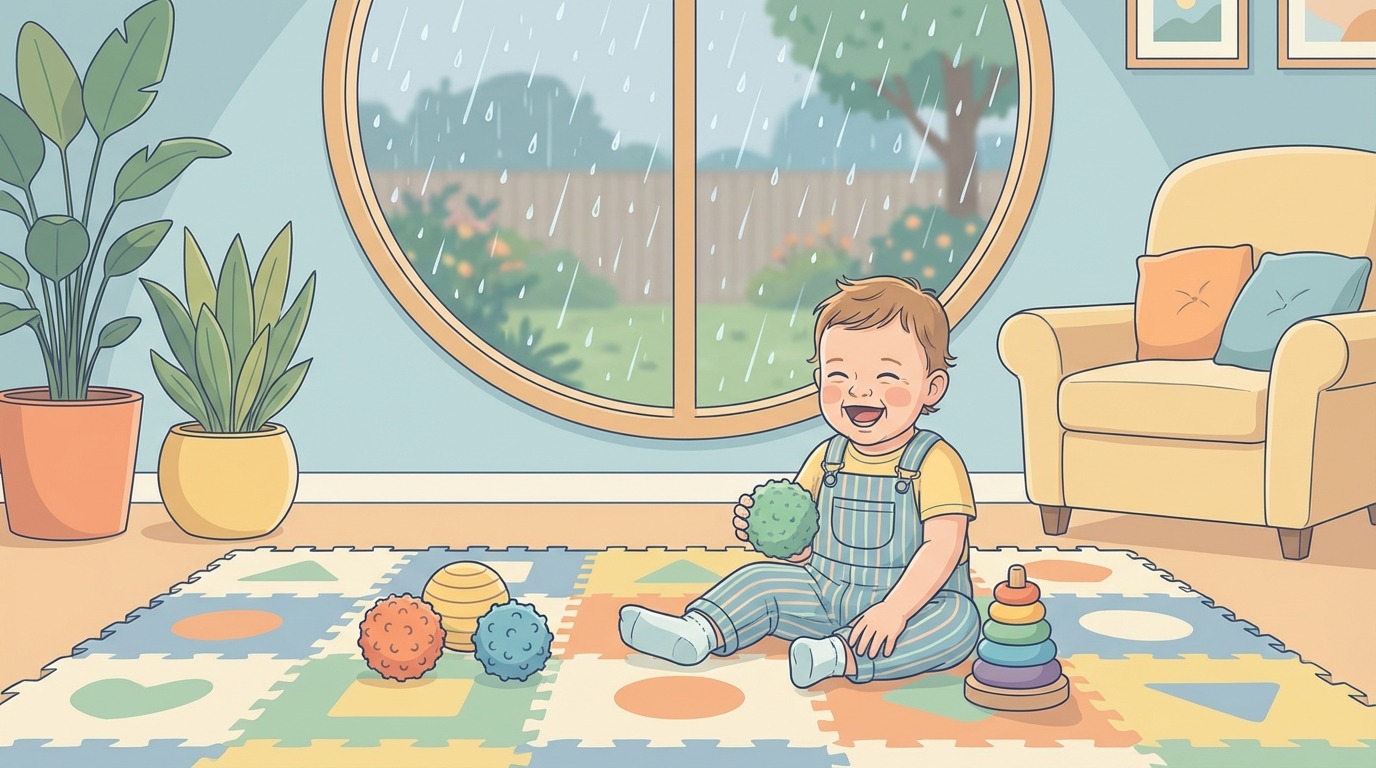
Playing at Home When It Rains: Game ideas to do inside the house when it rains (1-3 years).
| Short on time? Here’s the essentials |
|---|
| 🌧️ Turn rain into opportunity with indoor games that stimulate the senses, motor skills, and language. |
| 🧠 Alternate quiet games and movement to respect the rhythm of 1-3 year olds and maintain attention. |
| ✂️ Prepare a “rain” basket with fine motor activities, stickers, pasta, pouring boxes. |
| 🎵 Focus on simple rituals: nursery rhymes, creative games, short stories, gentle courses in the living room. |
| 🔒 Keep safety front and center: close supervision, non-toxic materials, clear spaces. ✅ |
When the sky darkens, the house can become a lively and joyful exploration stage. With game ideas for 1-3 year olds designed for little hands, every hallway, cushion, and basket transforms into an everyday lab. As soon as they start to play when it rains, a toddler gains confidence, refines gestures, and enriches their vocabulary.
Parents often look for a simple, safe, and fun rain child activity. It’s achievable, provided the day is structured in short blocks, alternating creative games and breaks, and incorporating musical cues. Through well-chosen homemade educational games, gray weather gives way to bright laughter, focused looks, and a contagious calm.
Indoor sensory games for playing when it rains: textures, sounds, wonder
The 1-3 year mark is a period where the senses guide everything. Indoor sensory games then become the key to rich awakening. A fictional family, that of Maya, 2 years old, illustrates this well. On a gray day, a simple bin with semolina, spoons, and cups occupied Maya for twenty minutes, without frustration. The material flowed through her fingers, the soft noise soothed her attention, and the gestures became more precise. This kind of scenario is nothing exceptional, because the young brain seizes repetition as a solid learning base.
Easy and stress-free sensory bins
Why start with a sensory bin? Because it’s immediate, adaptable, and very safe if you choose non-allergenic food elements. A low box, a sheet laid on the floor, and three textures suffice: semolina, colored rice with vinegar, raw pasta. The child manipulates, pours, tips over, then repeats. With each try, the hand adjusts. Fine motor activities strengthen and the gesture becomes clearer. Gradually naming actions like “pour,” “fill,” “empty” also develops language.
Sensorial bottles and visual effects
Sensorial bottles offer a hypnotic show. In a sturdy bottle, mix water, oil, glitter, and some beads. By turning it upside down, the child observes slow movements. This show calms emotions and channels attention. Personalize with seasonal treasures like dried leaves or colorful buttons. Clear instructions help: “Shake gently,” then “Watch them float.” At this age, short verbal guidance promotes autonomy and reduces agitation.
Soft music and light scarves
Paired with scarves, music becomes a sensory medium. The rhythm guides the arm, the scarf extends the movement, and the breath calms. A three-minute track is enough to establish a ritual. By varying tempo and movement, coordination and listening are worked on. Sliding in a “pause-stop” like a game introduces playful self-regulation. This balance between action and pause prepares for other quiet games.
Safety, duration, and playful tidying
Stay close to the child, check the size of elements, limit time to 15 minutes: these three rules avoid fatigue. Then tidying becomes a game. A short song, an illustrated box, and it’s done. This “we tidy together” phase embeds a responsible ritual. Homemade child activities then flow better, and the next session starts in a calm space. The secret remains alternation: sensory, break, then movement. Thus, the rain never takes over.
In conclusion to this part, a simple box and some well-chosen textures can change the indoor weather: attention focuses, the hand learns, and the child smiles.
Fine motor activities and creative games at home: agile fingers, curious mind
When a gray day lingers, focusing on fine motor activities is essential. Creative games engage fingers and open cognitive doors. The example of Noah, 22 months beautifully illustrates the interest. With slightly warm homemade modeling clay, he rolled cylinders, pressed with caps, then cut with a plastic knife. In ten minutes, his gesture strengthened, concentration rose, and vocalizations multiplied. Each repeated action prepares future drawings and autonomy at mealtimes.
Enriched modeling clay and everyday tools
Clay becomes an endless testing ground. Add mild spices for smell, XXL beads to bury, imprints of big keys. The child presses, pulls, stacks. A simple challenge is proposed: “Make three small balls.” The numbered instruction structures the task without rigidifying it. These games for toddlers invite exploration without performance pressure. Educationally, sensation and language associate to create a lasting anchor.
Pouring and XXL tongs
A tray, two bowls, big tongs, and pom-poms. The goal remains clear: move from one container to another. The tong strengthens the thumb-index grip, useful for future pencil strokes. We demonstrate, the child imitates, then we verbalize: “You pinch, you put down.” In case of fatigue, replace the tongs with a spoon. This graduated guidance avoids frustration and maintains the joy of doing. Calm background music supports the effort.
Sensory collages and stickers
Giant stickers are magical. Sticking, peeling off, repositioning trains the eye and hand. Stick repositionable tape strips on a windowpane and let the child create at eye level. Verticality mobilizes shoulders and consolidates the gesture. Naming colors and counting slipped shapes strengthens learning. These are homemade educational games that are both aesthetic and effective.
“Rain” basket ready in 2 minutes
Anticipation changes the game during a rain child activity. A dedicated, discreet but ready basket guarantees a smooth start. Slip in some essentials and announce the novelty with enthusiasm. This preparation turns waiting into desire.
- 🎨 Homemade modeling clay + wooden rolling pin
- 🧩 XXL stickers and cardboard sheets
- 🥄 Spoons, cups, and pom-poms for pouring
- 🧺 Giant clothespins to catch scarves
- 🎵 Small music box to rhythm the activity
In closing this section, remember: the more concrete and guided the gesture, the more the child gains precision, autonomy, and joy in acting.
Indoor motor course: coordination, balance, and confidence in the rain
Movement soothes, structures, and energizes. A motor course designed for the living room transforms energy into learning. Maya’s family returns to the scene. With three cushions, a cardboard tunnel, and a line of tape on the floor, the living room becomes an adventure ground. The child climbs, crawls, then walks on a balance beam. This simple orchestration regulates excitement and improves body awareness. All this happens without expensive equipment.
Balance line with tape
Stick a strip of colorful adhesive tape on the floor. Invite the child to walk heel-to-toe. Count to five in a singing tone. Then, offer a variation: “Walk like a hedgehog,” with small steps. The imagery game mobilizes imagination and reduces apprehension. By adding a cushion to step over, you innovate without complicating. Indoor games gain richness with little.
Tunnel, cushions, and musical stops
A large cut cardboard becomes a tunnel. Cushions form a soft “mountain.” Start brief music, the child crosses, then stops when the music stops. This simple rule encourages listening and self-control. One minute effort, fifteen seconds break, three cycles. The time structure avoids emotional overheating, and smiles remain on schedule.
Motor animal encyclopedia: walk like animals
The animal repertoire amuses and strengthens muscles. The bear walks on all fours, the duck advances in a squat, the cat arches and stretches. Each posture engages different chains. The adult shows first, then verbalizes in short words. This game easily inserts between two parts of the course. The result is seen quickly: more confidence and calmer transitions afterward.
Durations, safety, and planned off-track escapes
Plan a 8 to 10 minute course, no more. Space out furniture, secure the carpet, and keep a hand close without carrying. An “escape zone” with soft books or plush toys welcomes spontaneous breaks. This anticipation prevents tears. Homemade child activities then flow better, and rain almost becomes an excuse to move better.
To visualize a simple and safe sequence, look for a clear demonstration adapted to 1-3 year olds.
After this movement phase, a gentle transition to a calm moment is required. Reading and quiet games take over profitably.
Quiet games, reading, and symbolic play: soothe, tell stories, grow
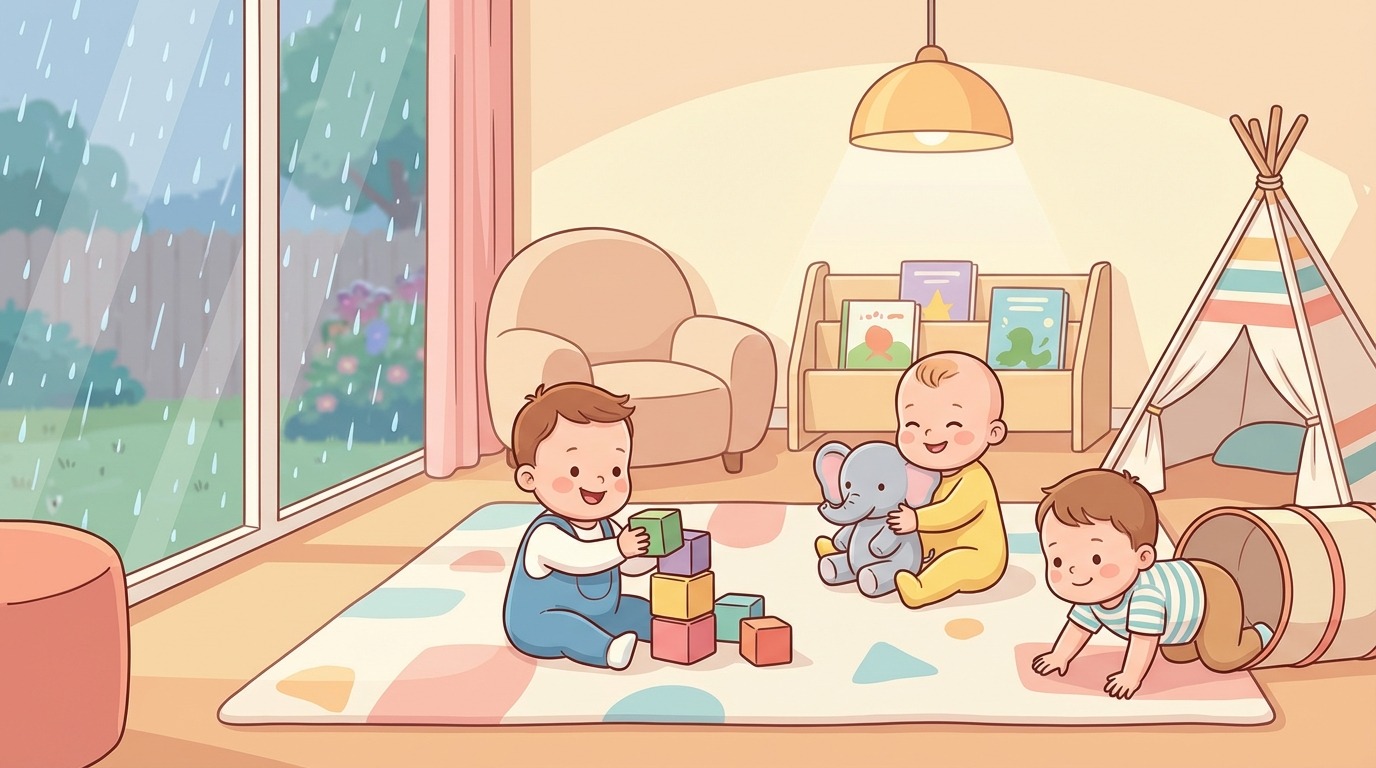
Cognitive rest times are as important as action. Settling into a cozy corner, finding a familiar story, opening a play kitchen box: this is the heart of quiet games. This breathing supports memory and understanding. The child feeds mental scenarios, replays life scenes, and strengthens attachment bonds. Language unfolds in the background.
Irresistible reading nook
A throw, two cushions, warm light suffice. Set out 6 to 8 cardboard books, no more. Abundance tires; selection soothes. We browse together, point to images, name actions. Repetition counts. Some stories are read dozens of times, and that is an asset. Homemade educational games include this reading ritual, as it strengthens vocabulary and story structure.
Sung picture books and gesture rhymes
Nursery rhymes combine rhythm, gesture, gaze. They trace reassuring markers. Choose two short songs and repeat them over several days. This musical thread links activities and eases the transition to nap time. Gestures guide motor skills, while rhyme stamps words. This simple tandem creates a calm atmosphere, ideal when thunder rumbles in the distance.
To vary, you can link the picture book and the song. Point to images during the chorus, then invite the child to gently clap their hands. This back-and-forth captures attention without saturating it.
Symbolic play: play kitchen, dolls, and little scenes
The toy kitchen, doctor’s kit, or miniature garage stimulate narration. The child serves, bandages, parks, and invents. These scenes replay daily rituals and help integrate sometimes intense emotions. We verbally validate: “You’re feeding, that’s kind.” By repeating their words, we broaden their grammar. These games for toddlers don’t aim at the result but at role experience. A sick plush toy quickly becomes an excuse for great empathy.
Calming box
Prepare a discreet box with an hourglass, cardboard emotion cards, and a small stress ball. During a spike in excitement, offer the hourglass and two slow breaths. This brief protocol works well at this age. It prevents escalations and nurtures self-soothing. Close the box together when calm returns.
In summary of this part, the more predictable and gentle the environment, the longer the child engages, and the better they get through a rainy day.
Mini-sciences and playful cooking: discoveries and homemade educational games at hand
The kitchen and bathroom hide educational treasures. Homemade educational games don’t require sophisticated equipment. They mainly require intention: observe, compare, name. With Lina, 3 years old, a simple banana muffin served as a complete experiment. We measured, poured, mixed. Then we observed the rising in the oven from a distance. The smell signaled the end. So many sensory and logical cues, anchored in pleasure.
Little pastry, big learnings
Choose a very short recipe. Give clear tasks: mash the banana, pour the flour, stir. The child handles visible quantities and understands the sequence. Meanwhile, name the utensils. The impact is twofold: precise language and sense of time. Once the muffins are cooked, let them cool before touching. This simple rule teaches caution without brakes.
Color wheel in cups
In three small glasses, put water and a drop of primary food coloring. Offer to mix two colors with a pipette. Green, orange, purple appear like magic. The child anticipates, wonders, then checks. Fine motor activities slip into every pipette gesture. Protect the table with a tablecloth and keep a towel handy.
Float or sink: bathtub physics
At bath time, turn the moment into gentle observation. A stopper floats, a spoon sinks. Line up the objects on the edge, make hypotheses, then test. Bath becomes a moment of awakening, without excessive duration. This routine naturally integrates without disrupting family schedule.
Discovery of magnets and sorting by materials
A large coated magnet and safe objects at hand: big paperclips, wooden spoons, stoppers, non-sharp metal pieces. The child explores what “sticks” or not. They learn by comparing. Sorting by materials inaugurates categorical thinking. Conclude with clear tidying, with boxes labeled by pictograms.
Summary table of educational benefits
| 🧩 Key benefits of homemade educational games |
|---|
| Language strengthened by naming actions and objects 🗣️ |
| Fine motor skills stimulated by pouring, pinching, transferring ✋ |
| Logic developed by comparing, sorting, predicting 🧠 |
| Autonomy cultivated with simple and safe routines 🚦 |
| Creativity nurtured by free exploration and imagination 🎨 |
The last word of this section boils down to a clear equation: when experience is concrete, learning is lasting, and rain becomes a great ally.
How long should an activity last for a child aged 1 to 3 years?
Aim for short blocks of 8 to 15 minutes. Alternate movement and quiet games to respect attention and avoid sensory overload. Watch for signs of fatigue and offer a break as soon as they appear.
Which materials should be favored for safe sensory bins?
Choose non-allergenic food elements (semolina, pasta, colored rice with vinegar), wide and stable containers, and close supervision. Avoid small pieces if the child still puts many things in their mouth.
How to manage excitement during an indoor motor course?
Structure the activity with short music-stop cycles, arrange a clear space, and add a calming zone with books and plush toys. Limit the duration to 10 minutes, then offer a calm activity.
What to do if my child refuses an activity?
Offer a simple binary choice (clay or stickers), reduce the task, and join them in imitation. The feeling of control often reignites desire. Change the activity without insisting if resistance persists.
How to integrate these games daily without overloading the routine?
Prepare a “rain” basket ready to use, set two short slots in the day, and recycle the same materials by changing the instructions. Consistency is enough to embed good habits.
“When it rains outside, count on indoor awakening: small gestures, big progress, and memories that shine brighter than the sun.”