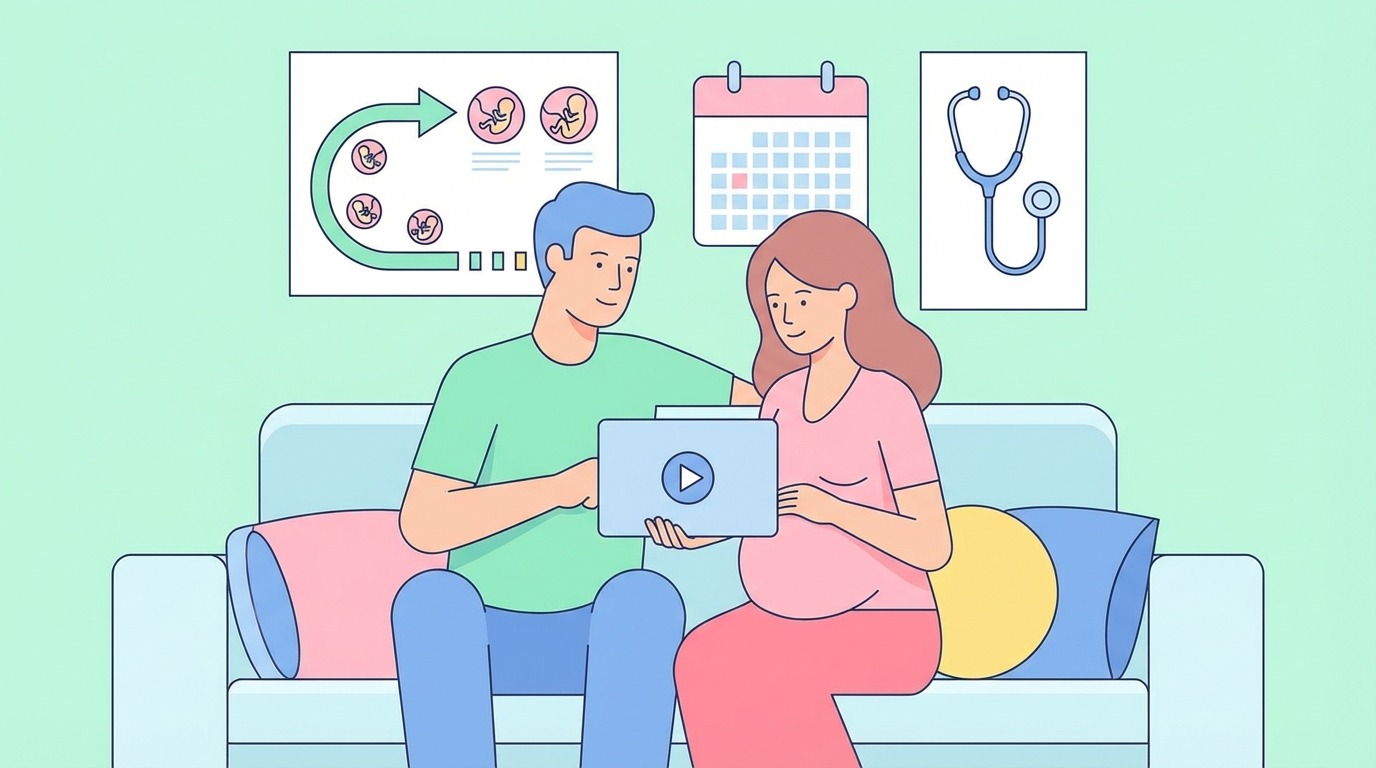
Pregnancy Video: Pregnancy monitoring and advice for expecting parents.
The video transforms the pregnancy experience into a clear, educational, and reassuring journey. By following reliable visual content, expectant parents better understand pregnancy progression, baby development, and pregnancy monitoring milestones, from the positive test to the first contractions. The best clips explain tests, show concrete actions, offer exercise demonstrations, and decode possible choices without dramatizing. This short format, accessible on mobile, fits into daily life and strengthens confidence, especially when medical information seems dense. Thanks to videos, recurring questions find clear answers at the right time.
Specialized platforms now multiply series dedicated to childbirth preparation, pregnancy nutrition, future mom’s well-being, and fourth-trimester parenting. On screen, a midwife shows the best position to relieve the back, a pediatrician explains skin-to-skin contact, an obstetrician details the second-trimester ultrasound. Meanwhile, short audio formats, such as podcasts, help review essentials during a commute. By combining these supports, skill-building becomes progressive and motivating without overload. The goal is not to know everything, but to know what to do, when, and why. This clarity changes the game at important decision moments.
| Short on time? Here’s the essentials ⏱️ |
|---|
| Follow a reliable playlist 🎯: key tests, warning signs, relieving actions. |
| Combine videos and notebook 📝: note questions, appointments, useful measurements. |
| Pregnancy nutrition 🥗: daily balance and regular hydration. |
| Childbirth preparation 🤰: breathing, positions, birth plan. |
| Resources 🔗: social rights, aids, choice of primary professional. |
Pregnancy videos and step-by-step monitoring: choose, understand, apply
The abundance of content makes sorting essential. A good video journey presents short chapters, cites its sources, distinguishes normal from pathological, and encourages consulting in case of doubt. Ideally, each episode links a specific pregnancy monitoring stage to a concrete action. For example, a module on the first trimester supports nausea management, details first tests, and offers a point on workplace safety.
To structure learning, a guiding thread is useful. Take the example of Anna and Malik. Their goal: to understand pregnancy progression and anticipate appointments without anxiety. They select a weekly series led by a midwife, synchronized with a typical calendar inspired by best practices. Each week, they watch a 6 to 8-minute video, then list three actions to undertake: question the practitioner, adjust a daily gesture, add a note to the notebook.
Identify reliable videos and use them methodically
Several markers guide the choice: clear language, precise anatomical visualizations, references to updated recommendations, and appropriate warnings. Content that also addresses expected physical changes, like progressive weight gain or center of gravity shift, helps to project without apprehension; see the summary offered here that can clarify landmarks: body changes during pregnancy. At the same time, it is appropriate to avoid sensationalist or too general videos that drown the essentials.
The “Watch–Note–Act” method works very well. First, watch, ideally together, to align understanding. Then note two or three key ideas, circling the warning signs to watch for. Finally, act realistically: install a nursing pillow to sleep better, prepare questions before the next consultation, rewatch a breathing video.
Examples of actions guided by video
- 🗓️ Synchronize appointment booking with episodes dedicated to key tests.
- 🧘 Adapt work posture after a tutorial on safe stretches.
- 🚿 Set up an evening well-being ritual inspired by a gentle massage demonstration.
- 📱 Create an “emergencies” list after a module on symptoms not to ignore.
A good practice also consists of combining video and written support. Reference platforms often offer downloadable sheets. This dual format facilitates memorization and avoids endlessly replaying the same sections.
Want a first simple and visual benchmark? A guided search helps identify synthetic animated clips and clinical demonstrations in context.
The video makes the gestures concrete, but medical monitoring remains the main compass. Effectively combining the two approaches ensures a progression that is both calm and safe, week after week.

Essential pregnancy advice for expectant parents: nutrition, lifestyle, and warning signals
Pregnancy advice becomes more effective when anchored in routine. Diet, sleep, physical activity, and stress management form the foundation of the future mom’s well-being. The video offers practical pedagogy: a dietitian shows typical plates, a prenatal coach adapts movements, a psychologist offers anti-stress breathing techniques. Every gesture counts, and adopting the right reflex early avoids many later discomforts.
Pregnancy nutrition: balance above all
Simple guidelines fit in a few lines: vegetables at every meal, a source of quality protein, whole starches, and regular hydration. Videos showing plate building in real time allow portion adjustments and prevent nighttime cravings. For a clear and actionable overview, this practical file details smart choices and precautions: nutrition during pregnancy. The goal is to support maternal energy and baby’s development without restrictive dieting.
Cravings arise, and that’s normal. However, a flexible framework avoids excess fast sugar. Prenatal batch cooking videos ease the week: two hours on Sunday, and healthy meals ready with a few gestures. This organization also reduces post-day stress.
Lifestyle: move, breathe, sleep
Walking 30 minutes most days supports circulation and improves sleep quality. Soft mobility series teach how to preserve the pelvic floor and relieve the lower back. Coherent breathing demonstrations soothe the mind, especially at day’s end. Regarding exposure, certain precautions are necessary. A useful reminder on chemicals and medical imaging is available here: precautions regarding chemicals and x-rays. These vigilance points, well explained in video, quickly become reflexes.
Warning signs and particular situations
Visual pedagogy helps spot signs requiring medical advice: fever, unusual pain, bleeding, severe headaches, blurred vision, regular contractions before term. A synthetic reminder, to consult promptly if in doubt, can be found here: fever during pregnancy. For metabolic issues, understanding gestational diabetes and hypertension with animated diagrams simplifies adherence to recommended measures: diabetes and hypertension during pregnancy.
A pregnancy after 40 raises specific questions, addressed precisely in short and clear formats. Recent resources put benefits of attentive monitoring into perspective and show serene journeys: expectations and specifics after 40. Result: an active and informed stance, without unnecessary anxiety, with coherent everyday decisions.
The cornerstone remains coherence: small repeated actions, anchored in real life, and adjusted thanks to feedback from the care team. This solid base supports what comes next: preparing childbirth with confidence.
Childbirth preparation on video: breathe, move, choose consciously
Childbirth preparation is best experienced as gentle, regular training. Videos allow repeating breathing exercises, testing positions, then identifying what suits best. This work, guided by professionals, reduces fear and enhances the sense of control. Sessions address three areas: birth physiology, body tools, and shared decision-making strategies.
Breathing and pain management
Dedicated sequences teach to synchronize breath and contraction. Long exhalation gives support, while low sounds promote relaxation. Visualizing a contraction as a wave, with animated diagrams, helps the brain anticipate pain decrease. Partners find their role: remind the rhythm, support contact, offer a sip of water.
Positions and mobility
Videos demonstrate step by step the positions that reduce pressure: ball, supported lunge, assisted squat, gentle walking. One chapter emphasizes perineum protection and gravity’s role. Direct consequence: less tension, a feeling of progress, and increased endurance. This approach works at home as well as in maternity, with simple equipment.
Birth plan and shared decisions
Writing a birth plan is not fixed. Clips explain how to formulate preferences, understand alternatives, and remain flexible. Viewing commented examples makes the exercise more concrete: wishes for skin-to-skin, pain management, mobility during labor. The video here becomes a decision simulator. Every choice fits within medical monitoring and is reassessed if needed.
To start gently, a video search engine offers workshops guided by midwives and specialized physiotherapists. Watching 10 minutes a day is already enough to progress.
In sum, preparation that is visible, repeated, and embodied by video establishes real bodily competence. This trust capital benefits both the giving birth parent and the birth partner.
Baby development and pregnancy progression in images: from first to third trimester
Understanding baby development trimester by trimester gives meaning to tests and feelings. Fetal animations make tangible what happens in utero. In the first trimester, videos show organ formation and first heartbeats. In the second, growth accelerates, features sharpen, and movements coordinate. In the third, baby perfects reserves and prepares for birth. Seeing these stages rather than reading facilitates appropriation and nourishes the emotional bond.
Trimester 1: foundations and vigilance
Images explain nidation, placenta formation, and emergence of major structures. The video tool highlights common symptoms: nausea, fatigue, olfactory hypersensitivity. Platforms associated with weekly calendars detail these landmarks, with concrete tips to ease discomfort. Serious content also reminds emergency situations and early risks. To better understand a still taboo event, a clear and empathetic resource can help: miscarriage in the first trimester. Human language and precise diagrams often liberate speech.
Trimester 2: growth and morphological ultrasound
Didactic videos show ossification, active movements, and sucking. At this stage, the so-called “morphological” ultrasound assesses organs in detail. Better understanding reduces stress and prepares useful questions for the sonographer. A step-by-step decoding is offered here: second-trimester ultrasound. A video chapter explaining classic cuts and what is measured allows approaching the exam with clarity.
Trimester 3: finishing and preparation for meeting
The last trimester focuses on lung maturation and weight gain. Content shows the growing space occupied by baby and the interest of positions for freer breathing. Some practical reminders make a difference: hydrate, split meals, schedule short naps. Observing these images explains why left lateral sleeping relieves circulation. Visual learning reinforces adherence to simple advice without mental effort.
Quality videos do not replace consultations. They prepare for them. They complement support and help connect sensations to physiology. This bridge between knowledge and experience becomes a solid support throughout pregnancy.
Organize your pregnancy monitoring in 2026: care pathway, social rights, and reliable resources
Seamless pregnancy monitoring rests on three pillars: a clearly identified care team, a realistic appointment calendar, and an understanding of available rights. Video series produced by university perinatal teams illustrate this pathway from A to Z, with clips on consultations, tests, and administrative procedures. These short, chaptered formats adapt to busy schedules and specific family needs.
Choose your primary professional and coordinate appointments
The primary contact can be a midwife, a trained general practitioner, or an obstetrician-gynecologist. The essential point is to feel comfortable and confident. A video comparing roles and complementarity of professions resolves many hesitations. A typical calendar includes monthly consultations, screening for gestational diabetes if indicated, regulatory ultrasounds, and preparation workshops. Relying on video reminders and a shared agenda facilitates adherence.
Rights, aids, and administrative landmarks
Public institutions put online video workshops detailing pregnancy declaration, daily allowances, and family aids. Watching these sequences upstream avoids incomplete files and late payments. A handy tip: list supporting documents while watching and check off as you go. This visual method reduces mental load and secures the household budget.
Digital resources and culture of reliability
Dedicated platforms gather videos, articles, and expert testimonials. Some offer more than 4 hours of content to decode medical gestures, understand rare surgical tests, and master birth logistics. Others, like podcasts produced by health players, provide accessible analyses on the pregnancy journey. Expectant parents benefit from building a personal library: a playlist “tests,” a “well-being,” a “birth.”
To complete the organization, a reminder on physical changes helps anticipate clothing and workstation adjustments, while keeping an eye on signs to share in consultation. This synthetic passage remains very useful: body landmarks during pregnancy. With a clear vision of the pathway and resources, each week finds its pace, without rush.
Ultimately, the orchestration of monitoring, supported by well-chosen videos and a quality care relationship, establishes a proactive dynamic. This dynamic, lasting and motivating, ideally prepares for meeting the baby.
« The right video at the right time turns doubt into decision and fear into confidence. »
What is the ideal pace for watching pregnancy videos without overload?
Two to three short videos per week are enough to progress. The important thing is to alternate practical content (gestures, positions) and medical landmarks (tests, alerts), then note 2 concrete actions after each viewing.
How to verify the reliability of a pregnancy video content?
Prefer identified authors (midwives, doctors), cited sources, a date of update, and a measured tone. Serious videos distinguish normal from urgent and invite consulting in case of doubt.
Can pregnancy nutrition really be managed through video?
Yes, if videos show real plates, portions, and seasonal alternatives. Combining a weekly menu plan and a shopping list makes application immediate, without complicated calculations.
How to involve the partner in childbirth preparation?
Watch sessions together, assign simple roles (breathing rhythm, postural support, hydration), and repeat 10 minutes a day. Visual checklists strengthen each person’s autonomy on the big day.