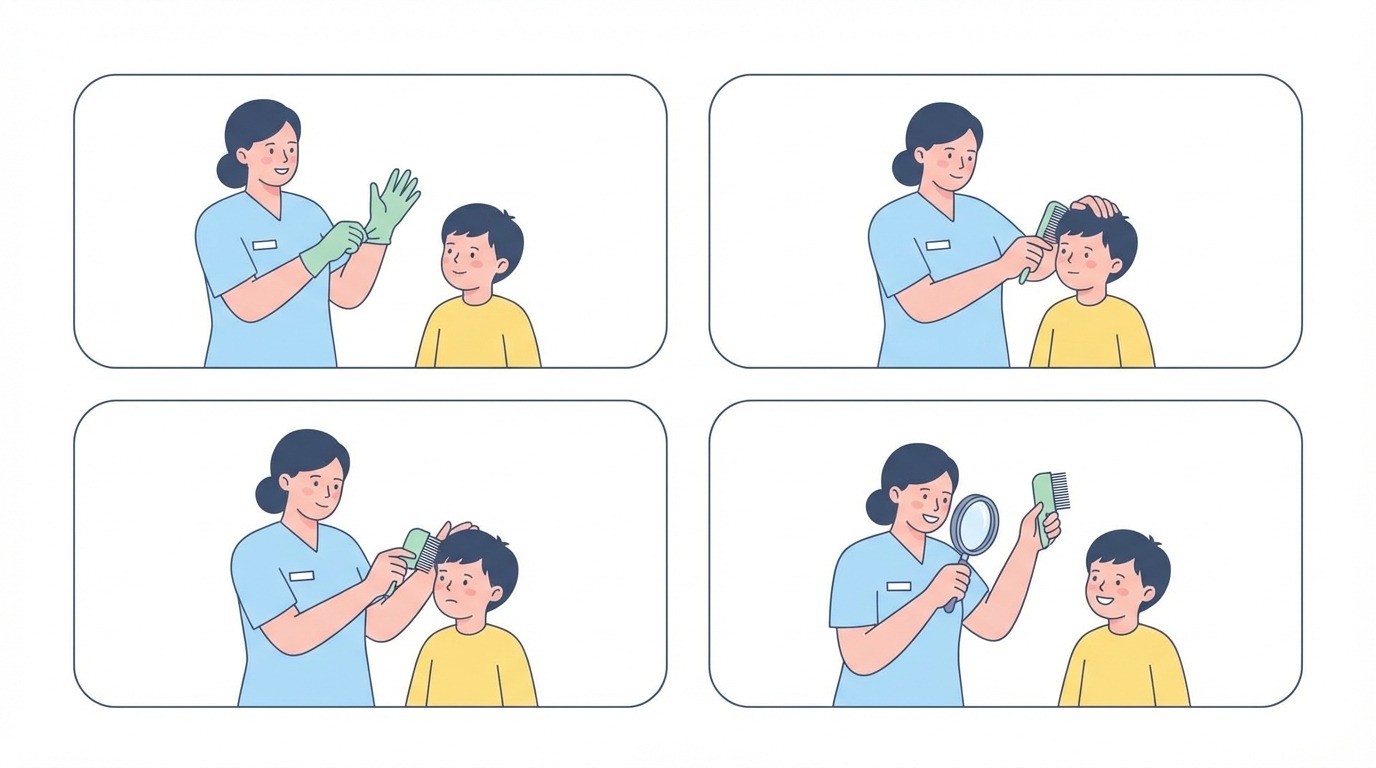
Slow Hair Lice Treatment: Treatment of lice and nits: step by step.
| Short on time? Here’s the essentials ⏱️ |
|---|
| Identify early: itching at the nape/behind the ears + nits stuck to the hair ✅ |
| Winning protocol: treatment Day 0 + removal of nits with a lice comb + repetition on Day 7-10 🔁 |
| Textiles: wash at 60°C or isolate for 48 h; brushes/hairbands: hot water/isopropyl alcohol 🧺 |
| Avoid reinfestation: hair tied back, no sharing of hats/combs, weekly check of children 👧🧒 |
| Choose the method: anti-lice shampoo or oil/silicone-based lotion + thoughtful prevention 🌿 |
| Precautions: essential oils contraindicated in pregnant women and children < 3 years ⚠️ |
Against lice, effectiveness relies on a simple and thorough approach: identify quickly, choose a tested treatment, and follow it through until complete elimination of lice and nits. Modern solutions combine mechanical actions (meticulous combing, controlled heat), ovicidal products, and targeted disinfection measures. Families find that a “Day 0 – Day 7/10” protocol stops hatching cycles. Meanwhile, children stay the focus: hair tied back, no sharing of hats, and quick checks as soon as alerts circulate at school.
Beyond common misconceptions, lice do not jump, do not fly, and survive poorly outside the host. They crawl, lay eggs near the scalp, and exploit every oversight to restart. That’s why prevention matters as much as treatment, with simple and repeated precautions. The concrete examples below detail a step-by-step procedure designed to reduce parents’ stress and children’s discomfort, while saving time. Focus on the essentials, with actions that truly make a difference.
Lice and nits: recognize quickly and well before acting
Spotting lice early prevents escalation. The first signs include localized itching at the nape and behind the ears, warm areas where parasites thrive. Inspection under bright light often reveals oval nits, whitish to yellowish, firmly glued 1 to 3 mm from the scalp. Unlike dandruff, they do not slide when blown on. A metal lice comb with fine teeth helps confirm the diagnosis by capturing adults or nymphs.
Understanding lice anatomy strengthens the strategy. These insects measure 1 to 4 mm, are flattened and wingless. They crawl quickly thanks to three pairs of legs equipped with hooked claws adapted for hair. Their color ranges from translucent to brown after a blood meal. Their piercing-sucking apparatus injects anticoagulant saliva, causing the itching reaction. This biology explains their adhesion, discretion, and the need for mechanical removal complementing treatment.
The life cycle demands repetition: the egg (nit) hatches in 7 to 10 days, the nymph becomes an adult in about ten days, and the female lays 5 to 10 eggs per day. A single survivor revives infestation within weeks. That’s why the Day 7-10 window is non-negotiable. Without this second pass, young hatchlings escape and rebuild a colony. In a CE1 classroom, for example, weekly screening resolves most cases before they settle.
Where to search first? Behind the ears, at the base of the neck, and on the frontal hairline. Lice favor these stable, moist zones. When combing wet, separate into fine sections and rinse the comb in soapy water between each strand. A paper towel placed under the comb highlights captures. A portable mirror and headlamp facilitate observation, especially with thick or curly hair.
Survival outside the host: limited but enough to contaminate objects in the very short term. A head louse lives up to 24 hours on textiles and cannot survive blood deprivation beyond 48 hours. Nits resist better, up to 10 days without hatching if heat is favorable. This difference justifies washing nearby textiles and isolating accessories for 48 hours. Methodical vigilance is better than excessive disinfection.
Practical conclusion of detection: from the first signs, organize systematic sibling checks and calmly inform the school. Proper detection saves time and reduces the need for repeated treatments.
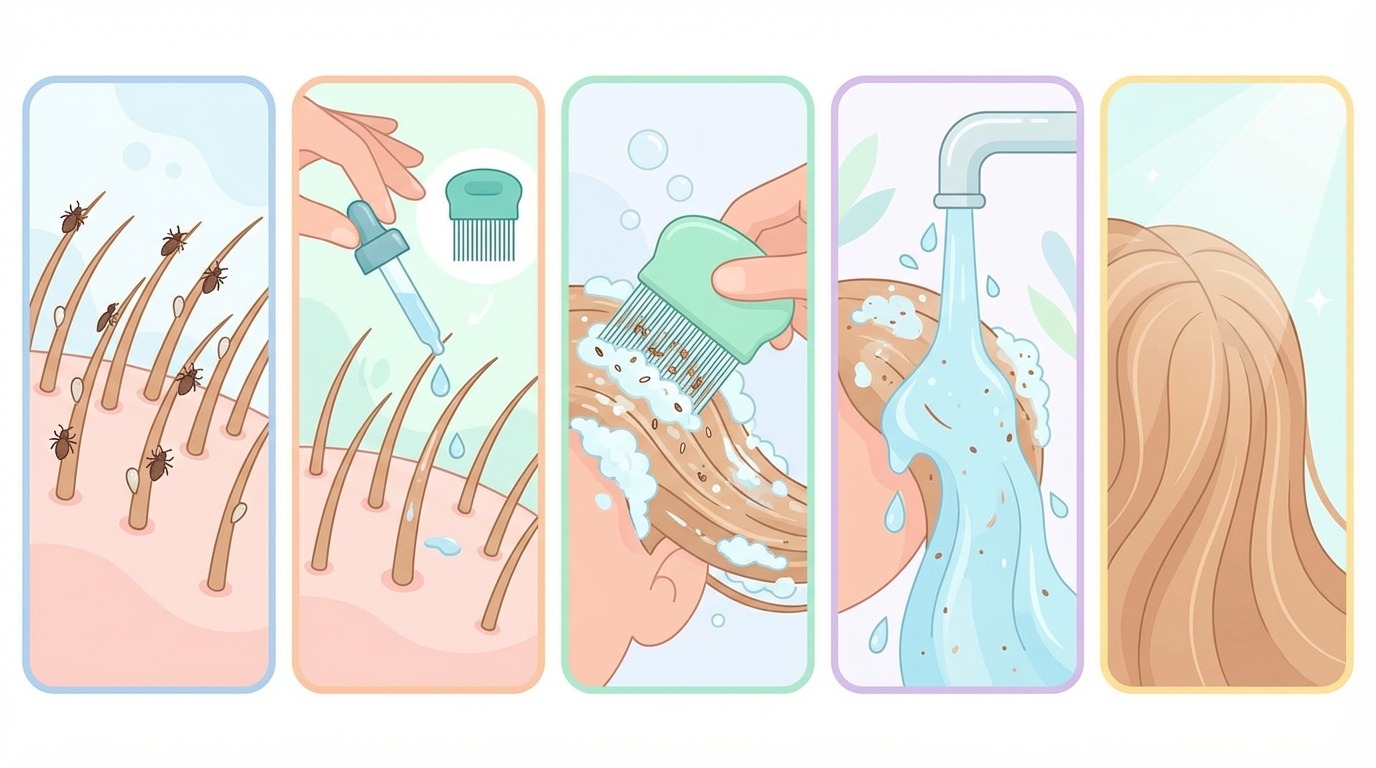
Step-by-step treatment of lice and nits: protocol from Day 0 to Day 10
A clear protocol reassures and works. Set up a simple roadmap: Day 0, strong action; Days 1-6, maintenance; Day 7-10, repetition. Draw inspiration from a common case: Émilie, 8 years old, returns from school camp; itching at night, nits near the nape. Her parents follow the roadmap below and avoid reinfestation at home within about ten days.
Day 0: strike fast and accurately
Choose a lotion or a anti-lice shampoo with mechanical action (dimethicone, fatty oils) or a recent ovicidal formula. Apply on dry hair, from roots to tips, focusing on the nape and behind the ears. Respect the application time. Rinse as instructed, then run the lice comb strand by strand through slightly damp hair. Rinse the comb in warm soapy water between each pass.
- 🗓️ Day 0: application of treatment + complete combing
- 🧺 Nearby textiles (pillowcase, hat, comforter): 60°C if possible, otherwise sealed bag for 48 h
- 🪮 Brushes/hairbands/clips: soak 10 min at 60°C or isopropyl alcohol
- 🏠 Sofas/car seats: vacuum and wash covers; no unnecessary harshness
- 👧 Hair tied back and no sharing accessories between children
For sensitive skin, favor non-neurotoxic solutions. Pyrethroids have shown local resistance; read instructions and alternate class if failure. Essential oils can complement adults, but remain cautious: contraindicated in pregnant women and children under 3 years.
Days 1 to 6: maintenance and control
Perform daily wet combing for 10 to 15 minutes. Focus on key areas. Illuminate strongly and section into fine strands. If needed, apply conditioner to ease comb sliding and reduce static electricity. Monitor nighttime itching. Keep a small diary: date, captures, areas. This traceability motivates and guides repetition.
Inform close contacts who had head-to-head contact. Early communication prevents “ping-pong” effect among cousins or classmates. For useful resources aimed at parents, consult practical supports such as dedicated family guides that help organize the routine without stress.
Days 7 to 10: repeat to break the hatching cycle
Repeat the initial treatment, even without visible live lice. This is key. Nits that escaped the first pass would otherwise have time to hatch. Comb methodically again, then rewash intimate textiles. Check again 48 hours later. If lice persist, change product class and intensify combing.
Final point: avoid ineffective or irritating recipes (mayonnaise, unmanaged diatomaceous earth, henna). They waste time and mask signs, without guaranteeing elimination. The discipline of this protocol wins the day in most cases.
This visual demonstration complements the written steps. Keep in mind that a regular routine is better than an excess of miscellaneous purchases.
Treatment methods compared: choose the right tool at the right time
Every family must balance effectiveness, skin tolerance, and availability. Comparing approaches avoids half-measures. Options group into four families: neurotoxic chemicals, mechanical/occlusive, thermal, and natural. All benefit from combination with a lice comb and thoughtful textile hygiene.
| Method 🔧 | Strengths ✅ | Limitations ⚠️ | Audience 🎯 |
|---|---|---|---|
| Pyrethroids | Fast action; varied formats | Local resistance; risk of irritation | Informed teens/adults |
| Dimethicone/occlusives | Mechanical, few resistances; well tolerated | Requires combing; greasy hair afterward | Families, sensitive skin |
| Thermal treatment | Asphyxiation/dehydration of eggs; no chemicals | Professional device; risk of misused heat | Managed recurrent cases |
| Essential oils 🌿 | Repellent/complementary effect | Contraindications; effect variability | Adults, add-on use |
| Mechanical suction | Natural; useful for toddlers | Requires know-how/equipment | Infants/sensitive children |
Since malathion’s withdrawal for safety reasons, recourse to silicone occlusives and combing protocols has increased. In 2026, several regions report failures with isolated pyrethroids. Hence the interest in combining: occlusive Day 0, daily combing, repetition Day 7-10. Professional thermal devices prove powerful when operated by a trained practitioner.
For children with asthma or eczema, favor unscented lotions and gentle rinsing. Precautions count: protect the eyes, ventilate the bathroom, and test a small area in case of allergic background. Never apply on damaged scalp; treat irritation first.
Watching a comparison helps decide according to your context. The balance between effectiveness and tolerance remains the compass.
Smart prevention and disinfection: home, school, and travel
The best victory is the one that prevents return. Prevention relies on regular and easy-to-maintain actions. Tie long hair in braids or buns during school alert periods. Ban sharing hats, helmets, and scarves. Place personalized labels on coats to avoid loose exchanges in the cloakroom. Organize a quick weekly check with a lice comb on Sunday evening, before the school week.
Disinfection is better kept targeted. Wash pillowcases, covers, hats, and towels at 60°C. What cannot be washed: seal in a bag for 48 hours, then air out before reuse. Vacuum sofas and car seats briefly. Avoid fumigants or irritating sprays indoors: they are of little use for head lice and potentially harmful. Brushes soak for 10 minutes in very hot water. Simplicity, consistency, efficiency.
In communities, calm communication avoids stigmatizing children. Inform teachers, suggest notice to families, but don’t dramatize. Remind that hygiene is not the cause. School directors appreciate “hair tied back” posters during alert periods. A home-return kit can include: metal comb, hair clip, resealable bags, and a memo for Day 0/Day 7.
Repellent sprays based on oils (true lavender, diluted tea tree) may help adults. Apply to accessories, never pure on small children’s skin. Always test tolerance. To plan these family routines, many parents like relying on checklists or practical readings such as useful resources for family organization, which provide clear and reassuring guidance.
When traveling or at camp, pack a comb, hairbands, and a waterproof bag. Check upon return, then on Day +7. This simple cadence prevents 80% of relapses seen in highly exposed families. Prevention succeeds when it becomes a discreet and caring ritual.
Complex cases and medical precautions: when to consult, what to avoid
Certain contexts require increased vigilance. If the scalp is damaged, infected, or if neck lymph nodes swell with fever, consult a doctor. Scratching lesions may become infected and require local care. For people with significant allergic backgrounds, prefer a gentle strategy: well-tolerated occlusive, rigorous combing, and breaks between applications.
Lice do not come from pets. Dog or cat lice are species-specific and do not survive on humans. However, distinguish clearly head lice, body lice (linked to clothing, poverty context) and pubic lice. Locations change the approach. Body lice require reinforced textile hygiene and medical advice. Pubic lice impose screening of partners and appropriate treatment.
Regarding frequent mistakes, three traps dominate. First, not repeating the treatment on Day 7-10: this opens the door to relapse. Then, “over-disinfecting” the home with unsuitable products: high effort, low benefit. Finally, multiplying incompatible products in a short time: irritation and confusion. A clear, written line avoids these pitfalls.
Consider the psychological factor. Children may feel ashamed or sleep poorly. Reassure them with a short routine, a playful timer for combing, and a simple explanation: the parasite is not a fault. A progress diary with stickers turns the constraint into a daily mini-victory. Parents also gain peace of mind.
Final professional advice: plan a final check two weeks after the end of the protocol. Without capture or itching, the milestone is passed. In case of doubt, resume combing two evenings in a row. Consistency always beats escalation.
“A followed protocol always beats a rushed parasite.”
Should the whole family be treated at the same time?
Treat only the infested persons, but check the entire household on the same day. This coordination avoids the ping-pong effect. In case of doubt, comb each scalp for 10 minutes and repeat this screening on Day +7.
Is a hairdryer enough to kill nits?
Heat helps but does not replace a validated treatment. Professional thermal devices are calibrated. At home, use heat as an adjuvant, never as the sole method, and continue meticulous combing.
How long should accessories be kept in quarantine?
Isolating for 48 hours in a sealed bag is sufficient for most non-washable accessories. Beyond that, air them out then reuse. Head lice do not survive long away from a blood source.
What is the best time to repeat the treatment?
Between the 7th and 10th day after the first application. This window targets hatching from surviving nits and breaks the cycle before sexual maturity of nymphs.
Can I use essential oils on a 2-year-old child?
No. They are contraindicated in children under 3 years and pregnant women. Prefer a well-tolerated occlusive and daily combing, with simple prevention actions.