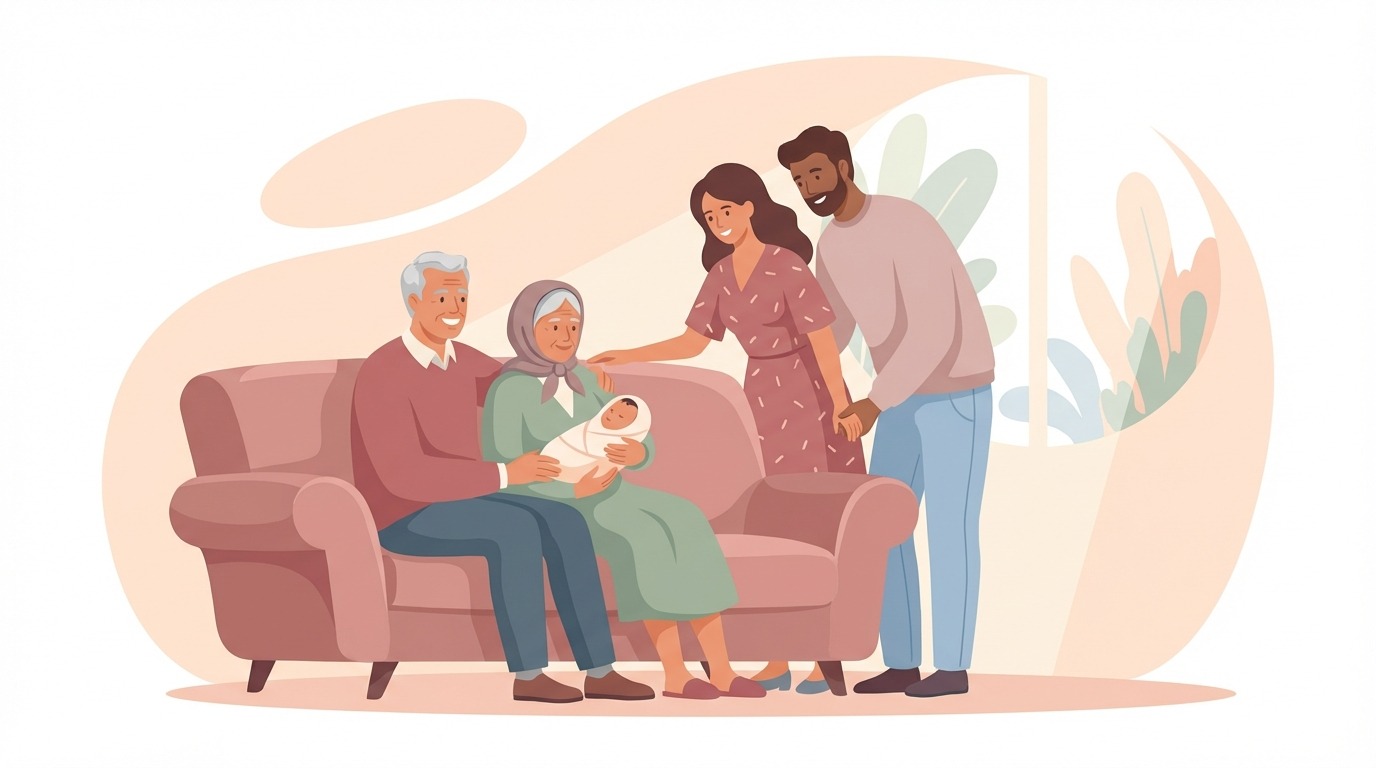
Stepparent Grandparent: Chronicle: being a stepparent grandparent, finding one’s place.
| Short on time? Here’s the essentials ✨ |
|---|
| Work on communication 🤝: express clear expectations, listen without interrupting, validate parents’ feelings. |
| Respect the family role 🧭: support without taking over, avoid comparisons, ask for consent before acting. |
| Foster the intergenerational relationship 🌱: simple rituals, cooperative games, shared memories. |
| Welcome grandparental emotions 💓: joy, jealousy, anxiety… give them space to better regulate them. |
| Practice adaptation 🔄: adjust habits, follow parental instructions, stay curious about new practices. |
| Offer family support 🛟: logistical help, calm presence, backup during periods of fatigue or unforeseen events. |
| Move forward as a good grandparent 🌟: find your place step by step, with tact and consistency. |
Becoming a good grandparent opens a sensitive, often bright, sometimes complex chapter. In this chronicle of a growing family, joy mixes with caution: it’s about finding one’s place without overshadowing anyone. Parental priorities evolve, methods too, and we move from “we’ve always done it this way” to “what do the parents say today?”. Thus emerges a family role made of support, clear boundaries, and fair attentions. The key lies in communication and adaptation, two concrete levers to nurture a healthy intergenerational relationship.
The common thread throughout the support is simplicity: reliable gestures, reassuring words, and an available presence. Grandparental emotions also matter, as they guide daily attitudes. When acknowledged, cooperation flows smoothly. This dynamic, both tender and demanding, builds lasting family support. It allows the child to feel secure, the parents to feel respected, and the elders to fulfill a unique, proud, and fully useful role.
Being a good grandparent: finding your place in the family role without overstepping
When a child arrives, everyone adjusts their markers. For the good grandparent, the priority isn’t to impose past habits, but to enter into dialogue. Firstly, it is important to name a simple intention: support parenthood, not replace it. This distinction soothes. It shows that respecting the parental framework is a cornerstone.
At the moment of the announcement, particular attention makes things easier afterwards. Knowing how to receive the news, avoiding injunctions, and asking open questions establish a constructive relationship. Many families describe a smoother transition when the announcement is accompanied by measured gestures and clear words. A telling example: offering a card with congratulations, then asking how to participate “usefully”. This “how” puts listening at the center.
After the announcement: welcome rituals and alignment with parents
The moment of the announcement builds trust. To inspire a delicate approach, a practical guide on how to announce pregnancy to the future father’s parents offers respectful paths. This resource reminds us that a baby’s arrival triggers sometimes overwhelming impulses. However, framing these impulses with simple questions creates a safe space. For example: “What instructions reassure you for the first caregiving sessions?”.
Then, alignment on routines prevents misunderstandings. Young parents often rely on modern tools. Moreover, following the infant’s cues can be facilitated by reliable apps. This overview of the top baby tracking apps helps understand the logic of their choices. By referencing them, the elder shows real adaptation. This values parental decisions.
Healthy boundaries: say yes to help, no to interference
Where to place the cursor? A simple rule works well: offer, then wait for agreement. This stance avoids the “lone ranger” effect. It also shows relational maturity. Thus, offering babysitting time, grocery delivery, or a prepared meal becomes a gesture of family support, not a reminder to obey. The nuance changes everything.
Families share how a frank conversation transformed cooperation. For example, Marc and Lina expressed to their elders the need for stable schedules. Grandparents proposed a weekly chart. This simple tool clarified expectations. Less friction, more autonomy for each. The framework, far from restricting, strengthened mutual trust.
When a second child arrives, balance shifts again. Preparing helps prevent role confusion. A useful article on the best way to announce a second pregnancy shows how to protect the eldest’s place. The good grandparent can then offer a dedicated presence to the eldest, while respecting the newborn’s rhythm. This dual attention structures attachment.
Finally, “finding your place” doesn’t mean fading away. It means exercising calm, reliable, discreet influence. A key phrase can guide: “I’m here, according to your rules.” It invites dialogue. It reassures parents and supports the child. Here is a solid foundation for what follows.

Communication and adaptation: the chronicle of active listening in daily life
Communication is a muscle. It strengthens through precise and repeated gestures. First, reformulating. Saying: “If I understand correctly, you want…” calms. Then, validating emotions. Affirming: “It’s normal to be tired” supports. Finally, asking for permission. Offering: “Would you like me to take over this afternoon?” embodies respect.
This method promotes adaptation. It reduces sensitivities and increases cooperation. Active listening transforms latent tensions into concrete adjustments. Every detail counts: calm tone, timing, actual availability. Presence doesn’t replace clarity. It makes it credible.
Concrete communication tools that unlock
A simple trio works well: observation, question, agreement. Example: “I saw he was crying after 5 p.m. Do you want me to take him to the park or do you prefer babywearing at home?”. This structure gives choice, therefore power, to the parents. It creates a cooperative framework, useful to each one’s family role.
With some children, sensitivity is intense. Reactivity to noises, textures, or transitions requires heightened delicacy. A perspective on hypersensitivity in 1-3 year olds offers concrete paths. Slowing the pace, anticipating changes, and naming sensations become decisive. The good grandparent then adjusts interactions without overprotecting.
- 🗣️ Say “thank you for the instruction” rather than “okay if I want” ✅
- ⏸️ Take a pause before responding, to avoid escalation 🔁
- 📅 Confirm agreed schedules by message, to gain serenity 🧩
- 🧸 Offer a maximum of two choices to the child, to reduce overload 🫶
- 🌿 Remind common goals: safety, sleep, attachment 💚
When disagreement arises, the winning approach remains the same: understand, explain, conclude. The end of the exchange must lead to a plan. A simple, visible, shared plan. Over time, it becomes a ritual of cooperation.
Grandparental emotions can surface at any moment. Immense joy, mild frustration, sometimes jealousy. Welcoming them without judgment, then placing them in a notebook or with a peer, frees the relationship. This emotional hygiene protects the bond with the child and the parents. It creates a healthy base for upcoming challenges.
The horizon line remains clear: a climate of trust. Trust is earned through repeated and coherent actions. Once installed, daily life breathes. And the child, silent witness, attaches to it.
Intergenerational relationship: rituals, games and legacies that unite
An intergenerational relationship is nourished by objects, gestures, and stories. Rituals provide rhythm. Games weave complicity. Stories transmit landmarks. This triptych reassures the child and enhances everyone’s place. It also reduces misunderstandings because it clarifies what is done together.
Starting with simple things remains a winning strategy. Wednesday, shared homemade soup. Saturday, a reinvented tale. Sunday, a stroll at the market. These cotton-like markers quickly engrain in emotional memory. The child finds a signature there: the presence of a reliable and warm elder.
Rituals that respect the parental framework
Rituals only make sense if they respect sleep, nutrition, and screens. The instruction set by the parents must guide initiatives. Thus, if screen time is limited, one directs towards cooperative games. A homemade circuit, construction, role play. These alternatives boost creativity and maintain educational coherence.
For festive seasons, a cultural detour nourishes the imagination. Far from excess, one can compose sober and playful lists. An article on traditions around Santa Claus helps calibrate expectations. The idea isn’t to buy the bond, but to live it. By small touches, joy settles in.
Play as a common language
Play is a bridge. It regulates emotional intensity, teaches waiting, and makes you laugh together. Proposing calm sensory activities soothes sensitive children. For others, light motor paths unload energy. Fine observation indicates the direction. This adjusted gaze offers the child a stable and joyful place.
Marc and Lina recount the magic of a “family secrets notebook.” They paste tree leaves, short recipes, drawings. Each page becomes proof of connection. The child remembers, tells stories, and asks for these moments. The grandparents “sign” their presence with a gentle trace, without exaggeration.
Overall, these practices create an ecology of connection. They structure the week, soothe transitions, and encourage autonomy. All this, without stealing the spotlight from the parents. That’s the subtlety of a good grandparent.
Family support in times of crisis: a practical compass to stay fair
Unforeseen events test the strength of the framework. Illness, separation, bereavement. In these moments, family support becomes vital. It rests on three pillars: calm presence, simple logistics, emotional relay. Fair support is seen, heard, and felt. It doesn’t smother. It carries.
Calm presence starts with an “I am available” followed by a precise slot. Vague promises exhaust. Conversely, a short, revisable plan reassures. For example: “I handle school pick-ups this week, from 4 to 6 pm.” This sentence turns diffuse anxiety into concrete breathing.
Supporting the child’s emotions without overburdening
Naming what you see protects the child. Saying: “Your heart is heavy. Let’s breathe together” provides a reassuring framework. Words must remain simple, sincere, and short. Gestures too. Reading, walking, breathing. Everything that densifies emotional security benefits the little one.
During difficult losses, clear landmarks help the adult remain reliable. A resource on grieving in children offers concrete guidelines. Speak truthfully, respect the pace, avoid unspoken fears. These signposts give strength to the entourage. They avoid rushing forward.
Grandparental emotions also require listening. Welcoming them prevents placing them on the child. Calling a friend, a professional appointment, a steady walk, lighten the load. This personal hygiene protects the relationship. It maintains coherent gestures towards the parents.
Preventing affective overinvolvement
Family dynamics have their surges. Sometimes enthusiasm overflows and blurs boundaries. Monitoring the temptation to “do it all” avoids exhaustion. A perspective on certain signs of hyper-involvement in fathers reminds the importance of each person’s spaces. This idea also applies to elders. Knowing when to stop preserves trust.
One last landmark simplifies the task: document the family agreement. A whiteboard or shared notepad fix the organization. Everyone reads their role there. Less mental load, more clarity. This clarity lowers tension and protects the child. It honors everyone’s family role.
In the end, supporting means adjusting, not occupying. This nuance protects the strength of the bond. It makes every gesture readable and therefore soothing.
Chronicle of continuous learning: growing with your grandchildren
Parenthood changes quickly. Information circulates, norms evolve. Opposing it stiffens. Adapting it broadens the field. In this chronicle of a link in motion, the elder benefits from learning, testing, then adopting. This humble and curious posture builds a gentle, credible, and modern authority.
Understanding the young parents’ context promotes mutual respect. Many inform themselves about fertility, health, rhythms. Diving into a clear resource on timing of fertilization allows grasping their concerns. Knowing their world softens judgments. The exchange becomes finer, more nuanced.
Habits that last
Three gestures establish a lasting climate: inform oneself, co-decide, and conduct regular reviews. First, read the parental instructions and align. Then, co-decide on rituals. Finally, every quarter, adjust. This cycle continuously nourishes adaptation. It makes progress visible and quickly corrects blind spots.
Curiosity keeps ties alive. Test a cooperative game, try a handed-down recipe, visit a suitable exhibit. The child learns new things there, and the elder sees them grow. Each discovers themselves differently. Boredom recedes. Joy works.
Marc and Lina established a quarterly “family council.” Fifteen minutes suffice. What went well? What tires us? What will we test the next three months? This light mechanism multiplied gentle moments. Residual conflicts eased.
Finally, gratitude directs energy. Saying thank you, naming the effort, recognizing intention, support motivation. It encourages the child to cooperate. It invites parents to entrust. And it gives the good grandparent a clear, gentle, and respected place.
“We don’t impose ourselves. We make ourselves useful.” This phrase sums up a clear approach. It establishes a lasting course to being a grandparent with tact and heart.
“To love is to let the place grow.” 🌟
How to find your place without upsetting the parents?
Start by listening to their priorities, then ask how to help usefully. Offer, wait for agreement, and restate the instructions. This triad establishes serene cooperation and strengthens trust.
What boundaries to set to avoid interference?
Clarify what belongs to the parents (rules, care, rhythms) and what can be delegated (logistics, presence, backup). Write down agreements and review regularly. Clarity avoids misunderstandings.
How to support a very sensitive child?
Slow down, anticipate transitions, reduce stimuli, and name sensations. Offer a maximum of two choices. Align with parental instructions to guarantee a stable framework.
What to do in a family crisis?
Offer a calm presence, a concrete logistical plan, and simple words. Preserve your own emotional hygiene to stay reliable. Formalize the organization to reassure everyone.
Which intergenerational rituals to establish?
Short and regular meetings: reading, cooking, outings, crafts. Rituals respect parental rules and strengthen attachment without creating tension.