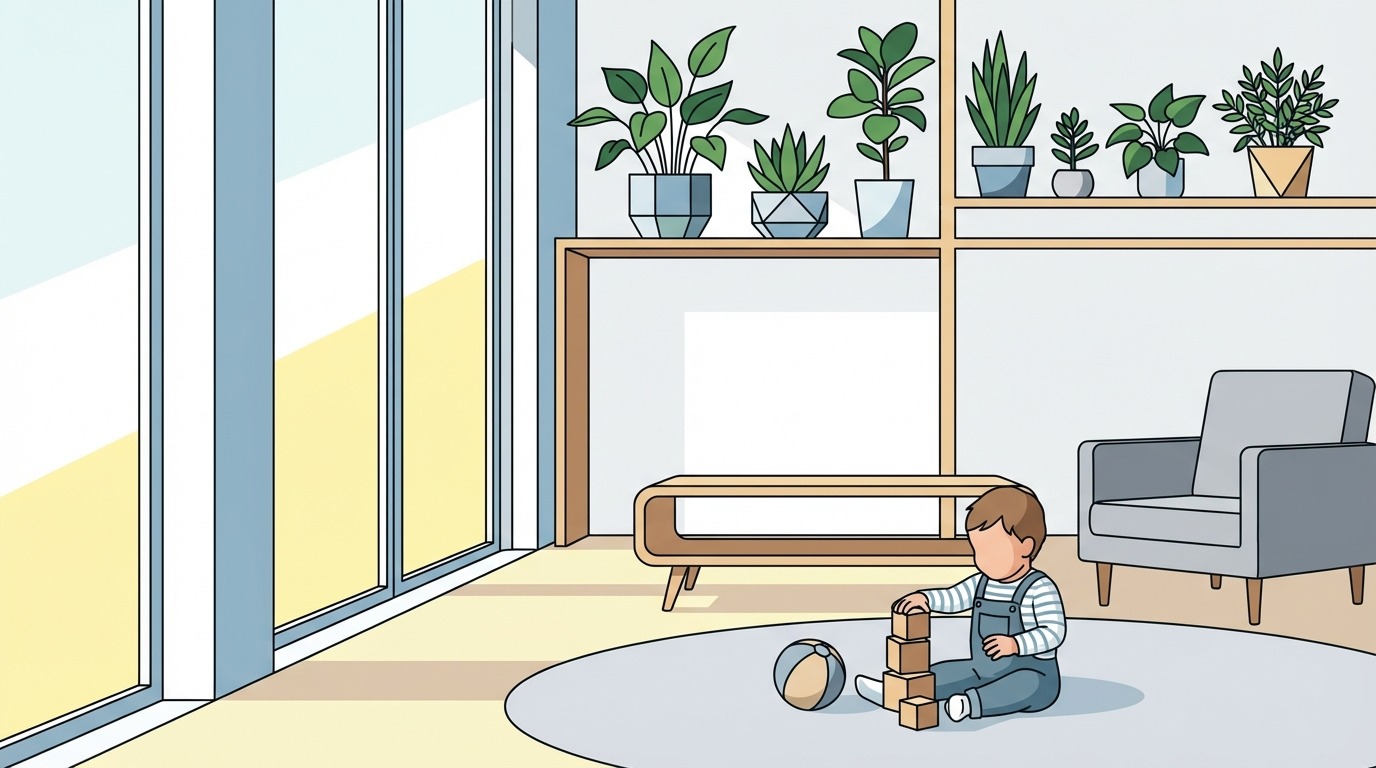
Toxic Indoor Plants: Toxic indoor plants for children.
| Short on time? Here is the essential ⚡ |
|---|
| Children explore with their mouths 👶: place toxic plants up high and secure every room. |
| Dieffenbachia, philodendron, pothos, oleander 🌿: main risks of poisoning and irritation. |
| In case of ingestion 🚑: rinse the mouth, remove residues, call 15 or 112, keep the plant or a photo. |
| Prevention 🛡️: red labels, high shelves, locked pots, playful learning. |
| Safe alternatives ✅: calatheas, pilea, peperomia, chlorophytum, aromatic herbs. |
In many homes, the beauty of indoor plants invites itself into the living room, kitchen, or bedroom. Yet, in a world where children discover by touching and tasting, some toxic plants can turn a decor into a discreet danger. Quick actions save, but good arrangements especially prevent poisoning. Families who adopt a simple prevention approach — placing plants up high, clear labeling, inspection rituals — greatly reduce toxicity daily. The goal is not to ban greenery, but to make it an ally of health and curiosity.
The scene is set: indoor plants charm, but they require rules. In a daycare, an urban apartment, or at grandparents’ house, the same principle applies. First, identify species at risk. Then, adapt the interior with visible and easy-to-maintain solutions. Finally, prepare an emergency kit and clear instructions. This trio reassures, protects, and allows a peaceful relationship with nature at home. Here, safety does not oppose beauty: it makes aesthetics smarter.
Never leave these pretty toxic plants within children’s reach
A welcoming home is full of textures, colors, and curiosities. For a toddler, shiny foliage looks like a toy. Thus, toxic plants placed within reach become a temptation. An 18-month-old child can tear off a leaf in seconds. They may also put a piece of stem in their mouth by simple imitation. This scenario creates an immediate danger, often silent at first.
In practice, most incidents occur in the living room and kitchen. These rooms concentrate family life and quick movements. A pot near a sofa offers easy access. Moreover, watering sometimes lets sap drip. Yet, some species irritate skin or eyes. Cutaneous toxicity is common with euphorbias and dieffenbachia. Simple contact can cause redness and burning.
Another risk factor: colorful fruits. They irresistibly attract. The love apple tree, for example, bears berries that look like miniature tomatoes. A child easily confuses them. After chewing, digestive signs may appear. Vomiting, diarrhea, abdominal pain can be seen. Sometimes symptoms are delayed. Thus, oleander can cause troubles hours after ingestion.
A fictional case study illustrates the mechanism well. Lina, 2 years old, grabs a pothos leaf while climbing a stool. She chews it. Immediately, she cries and touches her mouth. Her parents notice excessive salivation and a hoarse voice. They rinse her mouth with small sips of water. They then call 15 for medical advice. The photo of the plant speeds up the assessment. In less than ten minutes, the action plan is clear.
Prevention starts by rethinking height. Wall shelves above 1.60 m reduce the risk. Next, plants are kept away from “ladder-like” furniture such as chairs or trunks. Finally, stabilized pot covers fixed discreetly are installed. These three simple gestures change the game. They limit access and reduce accidental poisoning.
Key point to remember: risk control arises from thoughtful placement, visible labeling, and gentle vigilance integrated into family routine.
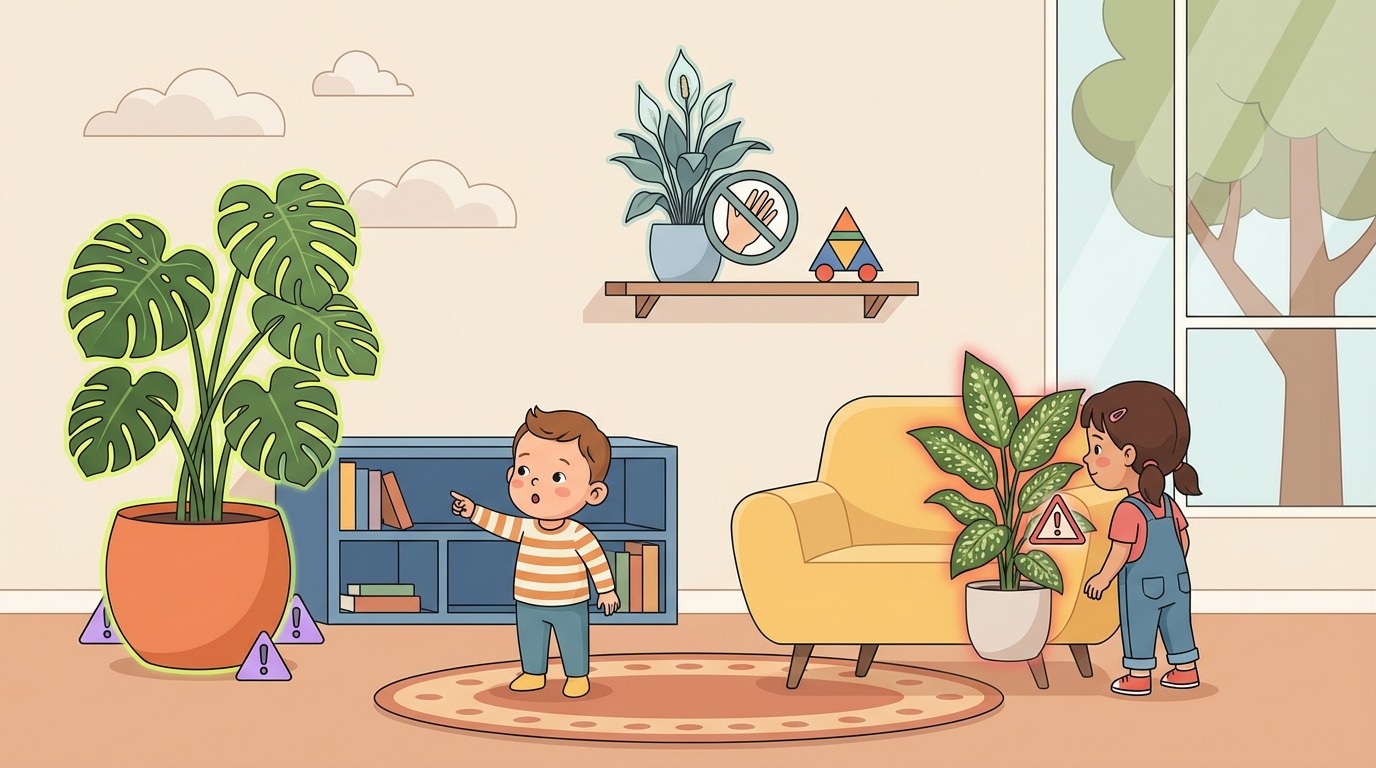
Indoor plants: beware of poisonings, here are the species to know
Several plant families concentrate incidents. They often contain calcium oxalate crystals or alkaloids. These substances irritate mucous membranes, skin, and digestive tract. The goal is clear: recognize critical names. Then act to limit exposure. This identification transforms a house into a controlled environment.
Dieffenbachia is emblematic. Its sap causes pain, swelling, and salivation. After chewing a leaf, the child may struggle to speak. Swallowing becomes difficult. Swelling of lips and tongue is also seen. Advice: prevent access and wear gloves when pruning. Philodendron follows the same irritating logic. It triggers mouth burns and breathing discomfort when consumed in large amounts.
Pothos (epipremnum) is very popular. However, its sap irritates skin and mucous membranes. Even slight chewing causes a burning sensation. Mouth swelling is possible. Sensitive individuals may develop red eyes after rubbing. Oleander remains formidable. A small dose can cause cardiac disorders. The delayed appearance of symptoms sometimes confuses diagnosis. Hence the importance of prompt medical advice.
Euphorbias — including crown of thorns — contain very irritating latex. Eye contact can cause temporary blindness. Rinse thoroughly and for a long time. Cyclamen mainly exposes through tubers. Ingestion can cause nausea and even paralysis. For amaryllis, the bulb concentrates toxicity. Handling should be careful, especially during repotting.
Croton (codiaeum) and poinsettia cause local dermatitis. They sometimes trigger eczema on reactive skin. Common ivy causes irritations and digestive troubles. As for spathiphyllum (peace lily), it strongly irritates mucous membranes. This list is not exhaustive but covers common incidents. It should guide purchases and room arrangements.
| Plant 🌿 | Risk parts ⚠️ | Signs in child 👶 | First action 🆘 |
|---|---|---|---|
| Dieffenbachia | Sap, leaves | Burning, salivation, swelling | Rinse mouth, call 15/112 |
| Philodendron | Leaves, stems | Mouth pain, difficulty swallowing | Remove residues, small sips of water |
| Pothos | All parts | Burn, lip swelling | Monitor breathing, contact doctor |
| Oleander 🔴 | All parts | Nausea, drowsiness, bradycardia | Immediate medical emergency |
| Euphorbias | Latex | Skin/eye burns | Rinse 15 minutes, medical advice |
To visualize basic actions and better identify species, a video support helps a lot. Reliable content helps fix the right reflexes in the family.
Protecting health at home: daily prevention and safety
The best strategy relies on physical barriers and clear signals. First, raise the baseline. Each plant with proven toxicity goes on a dedicated shelf. Then, install wall fixings to prevent falls. Weighted pot covers limit tipping. Thus, even an enterprising child cannot reach the foliage.
Additionally, room-by-room mapping proves effective. The living room hosts safe species. The kitchen, often busy, houses no risky plants within small hands’ reach. Children’s rooms remain “green” but secured zones, with non-toxic varieties. In the entrance, delicate subjects are placed high. This layout logic simplifies life.
Signage matters too. A color code makes vigilance tangible. For example, a red sticker on the pot means “do not touch”. An orange sticker means “handle with gloves”. A green sticker reassures: “no known danger”. This visual approach speaks to children. It facilitates education gently and active prevention.
- 🧼 Hand washing after watering or pruning: mandatory ritual.
- 🔒 Lockable pot covers and secured shelves: anti-fall and anti-climb.
- 👀 Weekly inspection: fallen leaves, visible sap, fruits to remove.
- 📸 Photo of each plant with its name: useful for the poison control center.
- 🎲 Game “leaf or no leaf?” to learn not to put things in the mouth.
Regarding equipment, a mini “plants” kit brings real peace of mind. Include saline sachets, gentle cleansing gel, sterile compresses, and gloves. Also add a laminated sheet “What to do if…”. Thus, even the babysitter has a protocol. This preparation reduces hesitation and speeds up correct actions.
An inspiring example comes from a very active blended family. They installed a “green wall” up high, only with safe species. More delicate plants live in a closed office. They use a wall height gauge “safety line” to assess placement. Result: zero incidents and a nature corner that amazes children. The message is clear: safety is designed, materialized, and passed on.
Conclusion of this practical step: structure the home, label, ritualize. This trilogy reduces the risk of poisoning without sacrificing aesthetics.
What to do in case of poisoning: minute-by-minute protocol
When a child has chewed a leaf or touched sap, speed counts. First, stay calm to reassure. Then, gently remove visible fragments from the mouth. Offer small sips of water or breast milk if the child still takes it. Avoid inducing vomiting. This can worsen mucous membrane damage.
If sap gets in the eyes, rinse with saline solution for at least fifteen minutes. Keep eyelids open if possible. In case of skin irritation, wash with lukewarm water and mild soap. Then remove soiled clothing. These simple actions limit irritant penetration. They reduce pain quickly.
Take a clear photo of the plant. Note the time, estimated ingested amount, and observed signs. Then call 15 or 112. Mention the child’s age and weight. Describe symptoms: salivation, swelling, vomiting, drowsiness, hoarse voice. On medical advice, you will either monitor at home or go to emergency. Keep the pot label or a leaf in a clean bag if transport is needed.
There are warning signs requiring emergency care: breathing difficulties, repeated vomiting, unusual drowsiness, seizures, or contact with oleander. In such cases, do not hesitate. Go to the hospital. Meanwhile, place the child in a semi-seated position to breathe more easily. Do not give any medication without medical advice. Stay alert for behavior changes.
After the event, progressive debriefing is necessary. Identify failings: accessible pot, nearby chair, fruits not removed. Correct immediately. Also display emergency numbers near the phone. Moreover, incorporate a small educational game to anchor the rule “look, don’t taste”. This constructive approach turns an incident into lasting learning.
To complement these steps, an educational video can serve as a mnemonic. It reassures, shows, and reminds the essentials to the whole family.
Non-toxic alternatives and positive pedagogy for a peaceful interior
The pleasure of plants at home is not limited to risky species. There is a wide range of reputed non-toxic options. Calatheas and marantas offer superb patterns. Pilea and peperomia bring volume and softness. Chlorophytum (spider plant) elegantly drapes down. Aromatic herbs like basil and mint combine usefulness with pleasure. Thus, we keep beauty without compromising safety.
To replace a pothos, choose a hanging calathea or a non-toxic Swedish ivy. For the graphic effect of a philodendron, a peperomia obtusifolia works wonders. Palm lovers opt for areca, well tolerated in homes with children. For a bright corner, the African violet (saintpaulia) offers generous flowers. Before each purchase, check official lists and horticultural datasheets.
Positive pedagogy plays a major role. Toddlers love stories. Invent a tale: “plants have fragile skin, we look with our eyes”. Then organize a repotting workshop with safe species. Give a mini watering can. Value attention to the leaves. Thanks to this framework, the indoor greenery becomes a wake-up ground. The rule of no mouthing is anchored in play.
An illustrative example comes from a top-floor apartment. Marius, 3 years old, has his “own garden” on a shelf at his height. There is a chlorophytum, a pilea, and basil. He waters on Wednesdays. He reports the leaf condition to his parents. In the living room, more delicate species are placed high. By contrast, this clear separation helps Marius understand. He respects without frustration.
From an aesthetic viewpoint, alternatives allow all moods. Refreshing jungle, meditative corner, gourmet kitchen, or peaceful bedroom. Design does not regress; it transforms. Bonus: these “learned” plants become language tools. We name, count, describe textures. The plant then takes a central educational place. It supports curiosity and the emotional health of the youngest.
Final point of this journey: choose safe varieties, tell stories, create rituals. This trio gives a lively and serene interior, without giving up the joy of green.
Indoor plants: beware of poisonings – practical guidelines for families
To anchor reflexes, here is a synthesis of concrete markers. It combines common sense, science, and organization. It addresses parents, early childhood professionals, and active grandparents. Thus, everyone aligns their practices with a common vision of prevention and safety.
- 🧩 Always identify the plant before purchase. Search for the Latin name and verify toxicity.
- 🪜 Keep out of real reach, not just “apparently”. Anticipate climbing.
- 🧴 Wash hands after any handling, especially with latex or sap.
- 📝 Stick a clear label: “plant to look at, not to touch”.
- 🧰 Prepare a simple kit and display emergency numbers: 15/112.
This structured reminder supports autonomy. It frames everyday actions. It cultivates a reflex of calm vigilance, far from anxiety. It is the foundation of a green and safe home.
“The most beautiful plant is the one that lets children grow safely.”
Which indoor plants are most dangerous for children?
The main ones to avoid within reach are dieffenbachia, philodendron, pothos, oleander (very toxic), certain euphorbias (irritating latex), cyclamen (tubers), amaryllis (bulb), and ivy. They can cause mouth burns, vomiting, drowsiness, or eye irritation.
What immediate actions should be taken in case of ingestion or contact?
Remove residues from the mouth, rinse with small sips of water, wash the skin, rinse eyes for 15 minutes if needed, then call 15 or 112. Do not induce vomiting and keep the plant or its photo for identification.
How to organize prevention at home?
Place toxic plants up high and fix shelves, use stable pot covers, apply color stickers, keep a record with each plant’s name, and introduce playful rituals to remind not to put things in the mouth.
Which non-toxic decorative alternatives should be favored?
Choose calatheas, marantas, pilea, peperomia, chlorophytum, areca, saintpaulia, and aromatic herbs. Always check compatibility with your home and recent horticultural sources.
Is poinsettia dangerous for children?
Poinsettia can cause skin irritation and mild digestive disturbances if ingested. Avoid any contact with its sap (white latex) and place it high during holidays to reduce risk.