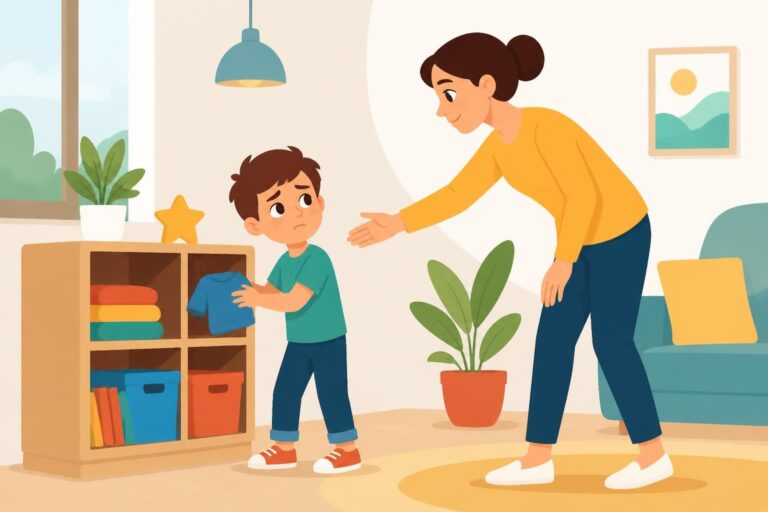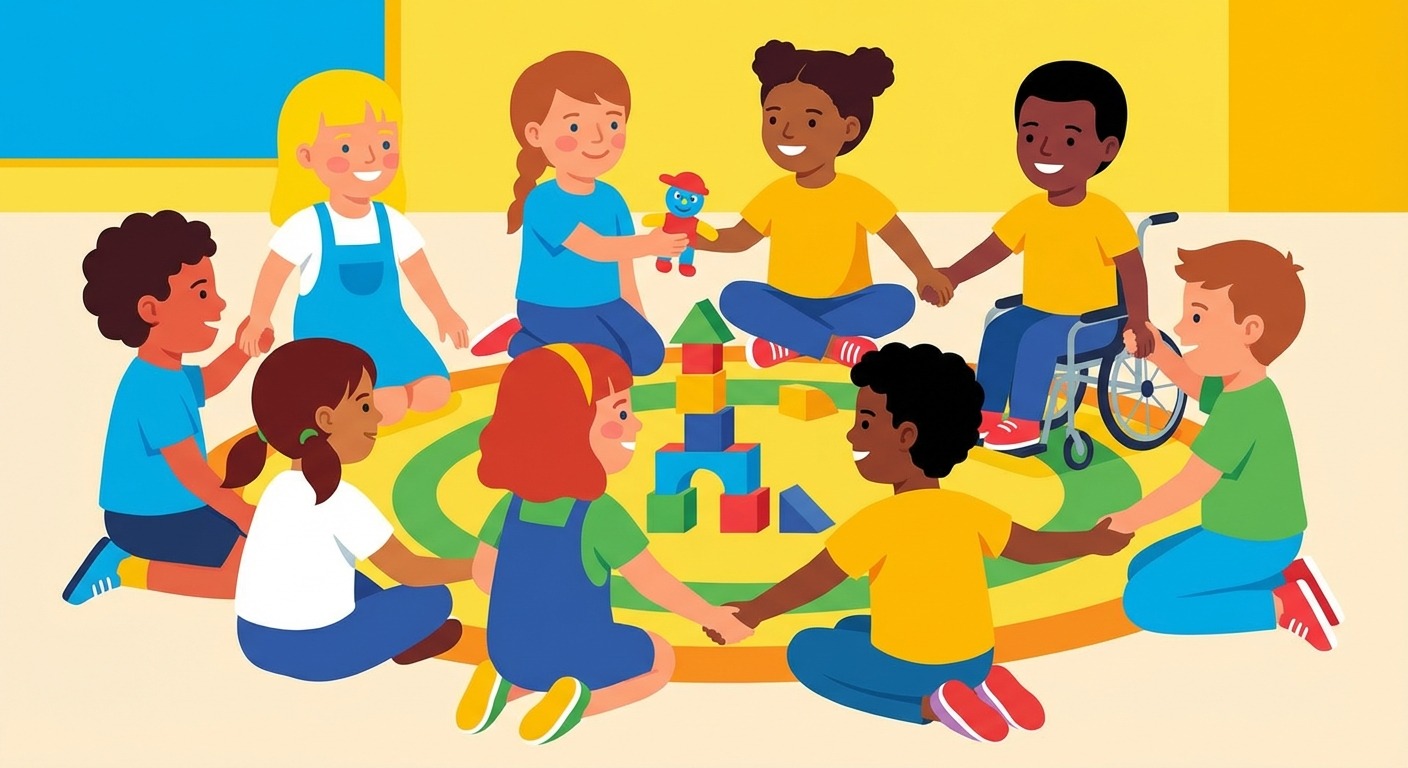
Social Development: Social development of children aged 6-7 years.
At 6-7 years old, social development accelerates and reshapes daily life. Children begin to read others’ intentions, negotiate game rules, and seek group cohesion. At school, a look from peers can change everything. At home, a speaking ritual can resolve a conflict in two minutes. This age range marks a shift: the child perceives themselves as a member of a collective while testing their social autonomy.
This new momentum builds on earlier foundations but now asserts itself in a context of structured social interaction. Thus, a ball game becomes a learning ground for empathy and conflict resolution. Emotions remain intense, but words come. Friend groups form, dissolve, then reform. This sometimes confusing movement forges lasting interpersonal relationships. In 2025, many classes, clubs, and families use role-playing games, children’s councils, and playful supports to transform each meeting into a concrete, joyful, and demanding micro-social laboratory.
| Short on time? Here’s what you need to know ⏱️ |
|---|
| At 6-7 years old, social interaction becomes central, with more stable friendships and the desire to be part of a group 🤝 |
| Key social skills: communication, empathy, conflict resolution 🧩 |
| Speaking rituals, cooperative games, and roles allow progressive social autonomy 🎲 |
| Group cohesion is worked on: clear rules, feedback, and shared responsibilities 🧭 |
| Watch for social fears, support self-esteem, and value daily efforts 🌱 |
Social Development of Children Aged 6-7: Milestones, Challenges, and Concrete Benchmarks
Between 6 and 7 years old, children refine perspective-taking. They can put themselves in a peer’s shoes and anticipate a probable reaction. This ability paves the way for more balanced compromises.
The friend group becomes a social mirror. Peer acceptance influences choices, clothing, even speaking up. Thus, an oral presentation may cause apprehension because the group’s gaze matters.
Observable Milestones and Typical Behaviors
Several positive signs appear. Children collaborate better in pairs, resolve simple disagreements, and propose new rules during play. They try light irony, a sign of finer social awareness.
Emotions remain strong. However, named emotions calm down. “Stop-discussion” rituals provide a framework for de-escalation. Language becomes a tool for calming.
What Theory Illuminates, What Fieldwork Confirms
Social functions build first between persons, then within the self. This dynamic, often mentioned by developmental psychologists, is visible daily. A child learns mediation by playing mediator, then internalizes this stance.
Early fears sometimes affect relational trust. To understand these roots, these resources help: early fears and brain development between 1 and 3 years. The past does not imprison but guides support.
Socialization is not limited to rules. It touches identity, emotion management, and building shared values. Moral awareness in children emerges through discussion and constant example.
The joy of being together remains a driving force. Songs, rhythmic games, and cooperative challenges create bonds. Nursery rhymes and finger games remain relevant as they synchronize voice, gestures, and gazes.
In short, at this age, the group becomes an intensive training ground for relational skills, where enthusiasm is a powerful lever.
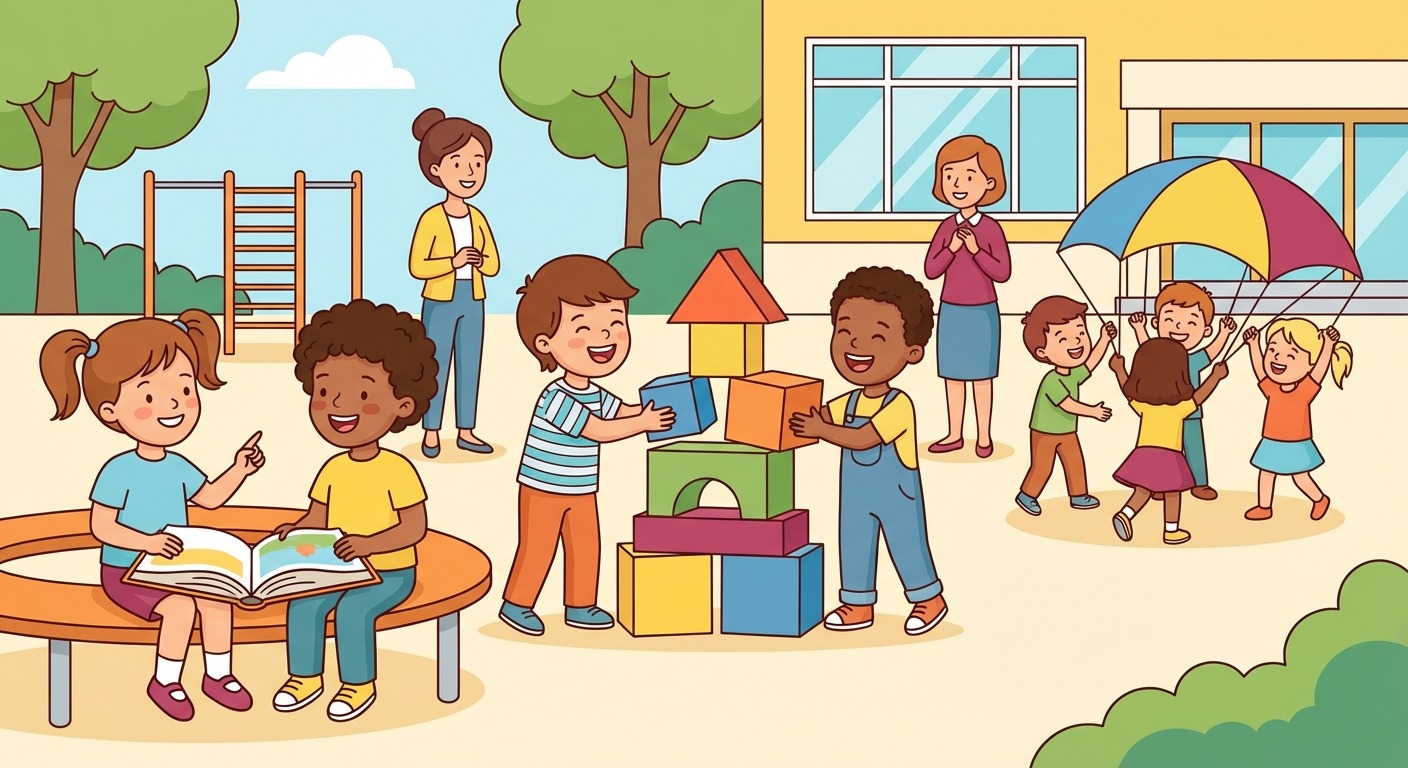
Social Skills at 6-7 Years Old: Communication, Empathy, and Conflict Resolution
Three pillars support the social structure: communication, empathy, and conflict resolution. Each progresses through small everyday victories. Together, they structure social autonomy.
Communication: Clarify, Listen, Rephrase
Children aged 6-7 gain precision. They learn to say what they want, but also to listen. A simple rephrasing, “So you wanted this pencil,” often defuses tension.
A speaking-turn space stabilizes exchanges. Emotion cards, hourglass, and talking stick set a rhythm. The child then knows when to speak and when to listen.
Empathy: Recognize and Act with Care
Empathy goes beyond affective identification. It includes just action. A child may suggest a trade or offer help. This drive nurtures strong interpersonal relationships.
Role-playing games finely work intentions and consequences. The child experiments with scenarios and finds more altruistic outcomes.
Conflict Resolution: Concrete Tools and Examples
A four-step protocol helps: STOP, I explain, I listen, we choose a solution. This structure avoids flight or impulsive confrontation. It reassures and empowers.
Material supports enrich experience. Toys that support development serve as mediators. A cooperation board turns opposition into a shared mission.
- 🎭 Express role-plays: “You are the referee, I am the goalie.”
- 🗣️ Emotion cards + rephrasing: “You feel frustrated, right?”
- 🤝 Cooperative challenges: build a tower with hands tied
- 📦 Solution box: draw “trade,” “take turns,” “help”
- 🏅 Recognition: a Chaminou appreciation certificate to congratulate effort
Practices have more impact if they remain regular. A short ritual is better than a rare long session. Consistency creates robust social habits.
To support motivation, some teachers use responsibility pathways. Each child holds a clear social role. This structure serves group cohesion.
In the end, these three skills intertwine and equip the child for all life’s scenes.
Promoting Social Interaction at Home and School: Rituals, Tools, and Screen Limits
Home and class form a strategic duo. The same principles, applied in two contexts, multiply progress. This synergy reassures the child.
Simple Rituals That Change Everything
A ten-minute family council is enough. Everyone shares a pride and a request for help. The framework remains positive but demanding on listening.
“Cooperation missions” energize daily life. Setting the table as a pair, solving puzzles, planting seeds. Each mission requires turns, gestures, and words.
Games, Toys, and Social Mediations
Playful supports ease relationship entries. A collective game limits face-to-face pressure. The task comes before individual performance.
Many families choose a Fisher-Price awakening toy catalog for younger siblings and cooperative games for older ones. This coherence nurtures the family culture of mutual aid.
Screens: Frame to Better Connect
Screen use among young children impacts attention and relational availability. At 6-7 years old, clear rules maintain priority for real interactions.
A family charter specifies slots, location, and content. The child understands the “why.” They better accept the limit.
Songs and rhythms also create bonds. Nursery rhymes and finger games remain useful to unite siblings and multi-age groups. The body becomes conductor of emotions.
In short, short routines, adapted supports, and clear limits shape a solid social presence.
Group Cohesion and Interpersonal Relationships: Inclusion, Rejection, and Diversity Daily
Group cohesion does not arise magically. It is built through explicit rules and recognition of efforts. Every child must feel they matter.
Preventing Rejection: Vigilance and Quick Actions
Rejection hurts, even if it seems mild. Quick intervention blocks the negative label. A system of “ally pairs” promotes inclusion from the start.
Talking circles address teasing, embarrassment, and shame. The group learns to name facts without blaming. This culture makes games safer.
Encouraging Cooperative Leadership
Leadership can unite or divide. Oriented toward mutual aid, it stimulates social interaction. Rotating roles are proposed: timekeeper, mediator, material manager.
Valuing prosocial behaviors establishes a norm. A chart of help acts captures attention on what works.
The moral aspect strengthens coherence. Moral awareness in children is worked on through adapted dilemmas: “You saw cheating, what do you do?” Criteria are sought, not sermons.
Finally, collective successes cement bonds. A mural painted together or a mini play leaves a shared memory. This memory protects the group during future tensions.
Practical conclusion: securing everyone and sharing common goals ensures fertile ground for social progress.
Measuring Progress and Strengthening Social Autonomy: Indicators, Common Mistakes, Resources
Measuring does not mean labeling. It involves observing specific behaviors and noting changes. This logic better guides help.
Simple and Useful Indicators
Three families of indicators guide observation. Frequency of initiated exchanges, quality of compromises, and speed of recovery after conflict. These benchmarks remain concrete.
A weekly logbook greatly helps. One notes a fact, a quote, and a small victory. Trends appear quickly.
Common Mistakes to Avoid
Confusing shyness with long-term isolation leads to inappropriate responses. Shyness can retreat with predictable social scenes. Isolation requires a more structured plan.
Letting tension fester costs the group dearly. Better to act quickly with a simple protocol. A facilitating adult supports the solution chosen by the children.
Resources and Educational Bridges
Playful works accompany pathways. Toys that support development offer cooperative scenarios. They turn rivalry into shared construction.
For neurodevelopmental basics, these resources complement the view: brain development between 1 and 3 years. They illuminate how the quality of early exchanges prepares current social skills.
Finally, self-esteem is maintained daily. Concrete appreciation, like the Chaminou appreciation certificate, highlights prosocial effort. This attention feeds intrinsic motivation.
Looking to the future: observe, adjust, celebrate. This is the loop that installs lasting social autonomy.
{“@context”:”https://schema.org”,”@type”:”FAQPage”,”mainEntity”:[{“@type”:”Question”,”name”:”Quels jeux renforcent la coopu00e9ration u00e0 6-7 ans ?”,”acceptedAnswer”:{“@type”:”Answer”,”text”:”Les jeux de construction u00e0 deux, les parcours du2019obstacles en u00e9quipe, et les missions u00ab cherche et trouve u00bb coopu00e9ratives. Ajoutez un ru00f4le social par enfant (gardien du temps, mu00e9diateur, responsable du matu00e9riel) pour structurer la cohu00e9sion de groupe.”}},{“@type”:”Question”,”name”:”Comment gu00e9rer la peur de parler devant la classe ?”,”acceptedAnswer”:{“@type”:”Answer”,”text”:”Utilisez des jeux du2019expression spontanu00e9e de 60 secondes, puis augmentez la duru00e9e. Proposez des duos su00e9curisants, un bu00e2ton de parole et des feedbacks positifs. La ru00e9pu00e9tition ru00e9duit lu2019anticipation anxieuse et renforce la communication.”}},{“@type”:”Question”,”name”:”Quelle place donner aux u00e9crans dans ces apprentissages sociaux ?”,”acceptedAnswer”:{“@type”:”Answer”,”text”:”Privilu00e9giez des cru00e9neaux courts, loin des moments de socialisation clu00e9 (repas, trajets, jeux de groupe). Un cadre clair, comme celui rappelu00e9 par les recommandations sur lu2019usage des u00e9crans, soutient lu2019attention disponible pour lu2019interaction sociale.”}},{“@type”:”Question”,”name”:”La phrase u00e0 retenir pour le quotidien ?”,”acceptedAnswer”:{“@type”:”Answer”,”text”:”u00ab Les habiletu00e9s sociales se tissent par des gestes simples, ru00e9pu00e9tu00e9s, et toujours orientu00e9s vers lu2019autre. u00bb”}}]}Quels jeux renforcent la coopération à 6-7 ans ?
Les jeux de construction à deux, les parcours d’obstacles en équipe, et les missions « cherche et trouve » coopératives. Ajoutez un rôle social par enfant (gardien du temps, médiateur, responsable du matériel) pour structurer la cohésion de groupe.
Comment gérer la peur de parler devant la classe ?
Utilisez des jeux d’expression spontanée de 60 secondes, puis augmentez la durée. Proposez des duos sécurisants, un bâton de parole et des feedbacks positifs. La répétition réduit l’anticipation anxieuse et renforce la communication.
Quelle place donner aux écrans dans ces apprentissages sociaux ?
Privilégiez des créneaux courts, loin des moments de socialisation clé (repas, trajets, jeux de groupe). Un cadre clair, comme celui rappelé par les recommandations sur l’usage des écrans, soutient l’attention disponible pour l’interaction sociale.
La phrase à retenir pour le quotidien ?
« Les habiletés sociales se tissent par des gestes simples, répétés, et toujours orientés vers l’autre. »