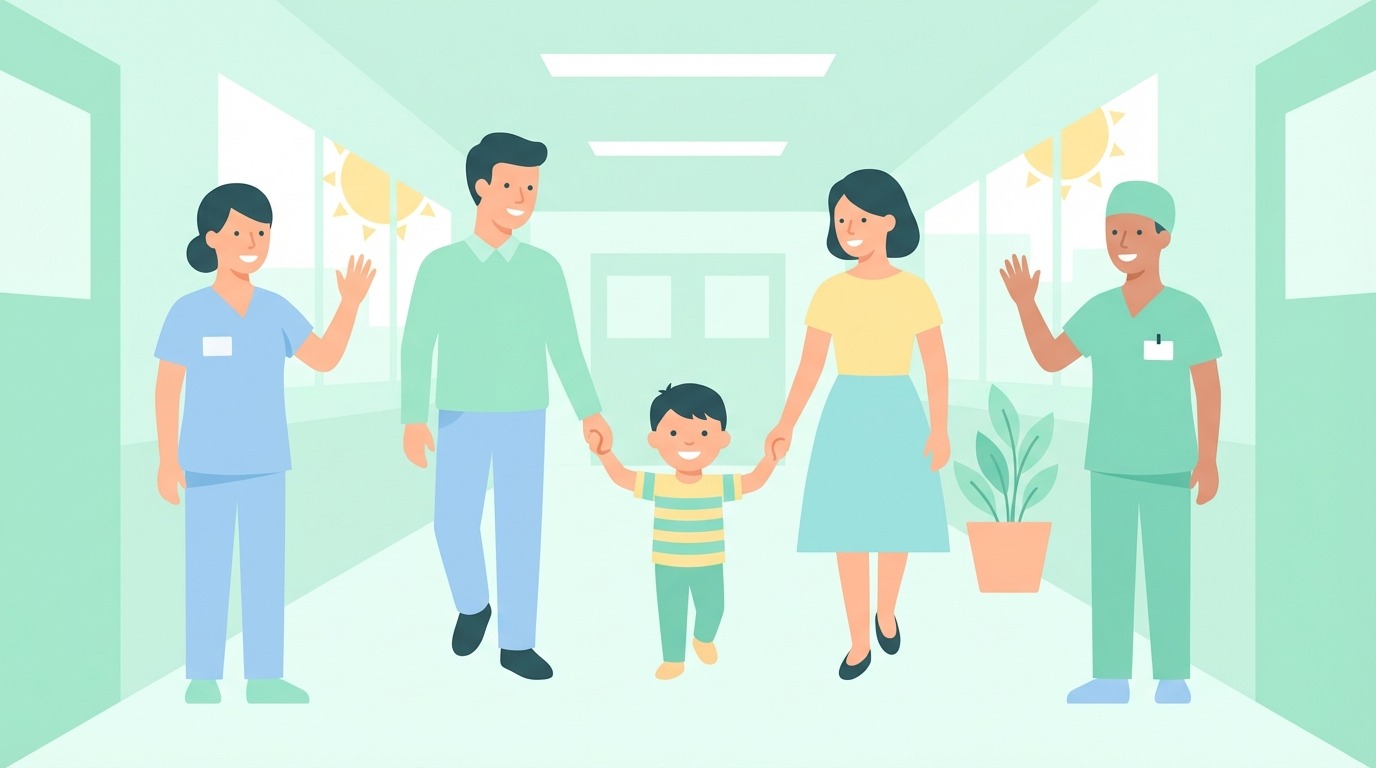
Prepare Child Operation: Preparing your child for an operation or surgery.
| Short on time? Here’s the essentials ⚡ |
|---|
| ✅ Inform early and simply to reduce child surgery anxiety 😌 |
| 🎭 Use educational game for operation preparation to explain without frightening 🧸 |
| 👪 Strengthen parent-child communication surgery and prepare for separation 💬 |
| 🛎️ Anticipate pediatric preoperative care and logistics of D-day 🧳 |
| 💊 Plan pain and awakening for a peaceful return home 🏡 |
When an operation is looming, a child changes environment and habits. The operating room impresses, separations weigh heavily, and the unknown amplifies fears. Yet, a clear, playful, and gradual child operation preparation transforms this passage into a controlled experience. Families who inform early, adapt their words, and rely on validated tools reassure their child better and also soothe their own fears. Science confirms it, and real-life experience illustrates it daily.
Here is a concrete guiding thread with Lina, 6 years old, and her parents. Their journey shows how well-dosed child preoperative information, calming rituals, and a close partnership with the hospital team foster trust. From the anesthesia consultation to the recovery room, every step counts. Available resources, including illustrated guides and educational videos, help give meaning, reduce tension, and restore the child’s sense of agency. The goal is simple: make D-day predictable, humane, and, as much as possible, serene.
Child operation preparation: building trust with clear child preoperative information
The key to a smooth journey lies in child-adapted explanation. The more a child understands, the less they endure. With Lina, the announcement was made a few days before, calmly, in short sentences. The parents named the steps: reception, anesthesia, surgery, awakening, return to the room. This structure reassures and frames emotions. Then, they checked what Lina had actually understood through open questions.
Reliable tools exist. For 30 years, the SPARADRAP association has been distributing free illustrated guides that describe the entire operative journey. The booklet “I am going to have surgery, so you will be put to sleep,” created in 1996, has been widely adopted. More than two million copies circulate, and its impact on child surgery anxiety between ages 6 and 17 is documented. In 2023, an independent award praised its quality. This type of support structures dialogue and secures the child as well as the parent.
Then, the hospital provides concrete instructions. The simple sheets on “rules to follow” and “what to bring” prevent forgetting and misunderstandings. In many departments, these also exist as videos with clear pictograms. Lina’s family thus visualized arrival at the outpatient unit, passing through the operating room, then the recovery room. An educational video, like that of Armand-Trousseau hospital, helps the child project without unnecessary fantasies.
The anesthesia consultation pivots the preparation. The doctor explains options: induction by mask or infusion, depending on age and situation. Sometimes the child can choose, which restores control. Lina’s parents asked all their questions: pain management, presence in the recovery room, feeding schedules. This time clarified sensitive points and reduced mental load.
Finally, a questionnaire like “Knowing you well to help you sleep well” puts the child at the center. It notes their habits, fears, favorite music, comfort object. On D-day, the team uses it to create immediate warm contact. Lina brought her stuffed animal, and the team repeated the family’s words. The atmosphere softened right away.
This first milestone offers certainty: when child preoperative information is concrete, reassuring, and personalized, the child progresses towards surgery with active confidence.

Concrete markers for Lina
To consolidate, the family displayed a timeline of the journey on the fridge. Every evening, Lina stuck a sticker on the understood step. Thus, she visualized the order of moments and the ultimate goal: returning to play at home. This ritual reduced the unknown and gave meaning to the countdown.
Child surgery anxiety: stress management techniques for child operation and parent role before surgery
Reducing emotional tension is not limited to words. The body needs to breathe, and attention must be able to shift elsewhere. Lina learned a short and effective abdominal breathing. Breathe in through the nose, inflate the belly, exhale slowly. This technique, repeated three times, lowers heart rate and promotes calm.
Moreover, well-directed distraction acts as an antidote. Caregivers use bubbles, sound books, tablets. At home, a short playlist with three favorite songs creates a positive anchor. On D-day, the team restarts this routine. The brain recognizes the signal and relaxes faster.
Sleep the night before matters a lot. Bedtime is secured and screens removed. In the morning, preoperative fasting is strictly followed. However, the parents themselves must hold the distance: drink, eat, and organize. These ideas to stay hydrated during waiting support energy and patience. A stable parent soothes the child by emotional contagion.
Here is an effective checklist for child operation stress management :
- 🫁 “3 slow breaths” exercise before each key step.
- 🎧 Short playlist: 3 familiar tracks to anchor relaxation.
- 🧸 Comfort object + reassuring smell (parent’s t-shirt washed fragrance-free).
- 🃏 Visual “find and seek” game in the waiting room.
- 📒 Child’s mini-question notebook to give to the team.
Lina’s parents also established a “courage code”: two secret words to say before separation. This wink strengthens emotional connection and supports the transition. The team often happily aligns with this type of ritual.
In practice, hypnoanalgesia and medical distraction, now common, complement this setup. Nurses guide an imaginary journey during mask placement. Lina “blew out” invisible candles. This micro-story gave a mental direction and reduced the feeling of waiting.
The central message is clear: the parent role before surgery consists of co-building this protective climate, minute by minute, with the team. When fear decreases, cooperation increases.
If tension reappears, go back to basics: breathe, rephrase, validate emotion. A child helped to name their fear can already lower it a notch.
Parent-child communication surgery: child-adapted explanation and educational game for operation preparation
How to explain without dramatizing? The secret lies in simple analogy and tangible tool. Lina “operated” her stuffed animal with a toy stethoscope. The parents showed a bandage on her arm while simulating the infusion with a straw. The child imitates, understands, then asks targeted questions. The educational game for operation preparation converts anxiety into active curiosity.
Building blocks lend themselves well. Building “a hospital,” placing a mini-figure in an “operating room,” moving the figure to the “recovery room,” all create a mental map. For inspiration, these ideas to develop parent-child creativity with bricks offer playful and concrete scenarios.
Speech benefits from staying precise. Say “put you to sleep” rather than “sleep,” say “medicine so you don’t feel” instead of “injection” if the child fears needles. A child-adapted explanation respects age and avoids frightening images. Lina had access to an illustrated “health dictionary.” The words “anesthesia” and “awakening” ceased to be abstract.
The sheet “getting to know you better” was filled out together. They noted Lina’s preferred nickname, her favorite song, and that she likes to count to ten when stressed. In the operating room, the nurse anesthetist used it from the first minute. This relational bridge speeds up trust building and limits crying.
The family also prepared a “courage box”: stickers, mini-book, comfort object, wipes with a soft scent. This box is only opened at key moments. It symbolizes the child’s ability to go through the stage and self-soothe. Such strategies nurture emotional autonomy.
When questions become pointed, rely on the team. Caregivers explain the difference between mask and infusion, answer about pain, and reassure: no, the child does not wake up during surgery. This family-caregiver alliance makes parent-child communication surgery coherent and credible.
Ultimately, the game gives meaning, the right language reassures, and the relationship secures. The child becomes an actor in their preparation, not just a passenger.
Child hospitalization support and pediatric preoperative care: logistics, separation, movements
Practically, anticipation lightens everything. Pediatric preoperative care includes respecting fasting, checking medications, and packing the bag. A compact “D-day” bag avoids scattering. It contains papers, comfort object, comfortable outfit, printed instructions, and the “courage box.”
Movements deserve a plan B. Coming by car with suitable seats and a margin of time reduces stress. These tips for traveling calmly with children help smooth arrival. If the family drives an electric vehicle, thinking about charging stops also reassures; these itinerary charging tips optimize logistics without rush.
The question of siblings matters. Planning solid care so they remain reassured avoids unnecessary back-and-forths. Depending on the situation, regular or occasional care might be useful; an overview of childcare modes for young children provides suitable solutions. When siblings are well taken care of, parents are freer in the OR.
Separation, a sensitive moment, is worked out in advance. The child is told where the parents will be and when they will return. A simple ritual is planned: hand placed on the heart for three seconds, a wink, a color-word. The team willingly agrees to these practices as they ease the transition.
Checklist “what to bring” for child hospitalization support :
- 🧸 Comfort object and small soft blanket.
- 📱 Child headphones or headset for playlist.
- 📄 Medical file, prescriptions, blood group card if useful.
- 👕 Loose and easy-to-put-on outfit after surgery.
- 🧴 Lip balm and spray if authorized by the department.
Sometimes, the hospital allows two adults to accompany the child up to a specific area. Taking turns to catch a breath for a few minutes can save the day. After the intervention, a small symbolic moment can be planned at home. A calm activity, even a mini festive snack later, inspires and motivates; some ideas for decorations and snacks suitable for children help imagine this smooth return.
The operational conclusion is clear: the smoother the logistics, the more the emotional can stabilize. The child feels this stability and cooperates better.
Lina’s case, on the ground
The family left early, playlist ready, bag checked. A five-minute relaxation stop preceded arrival. At the hospital, Lina gave her questionnaire to caregivers, who immediately noted her favorite markers. The separation ritual lasted less than a minute. Everyone felt the difference.
From awakening to returning home: pain, emotions, and resuming routines
Awakening sometimes involves tears and confusion. This is normal. We welcome, name, and shield from overstimulation. The team anticipates pain with protocols adapted to the child. Parents watch for signs: grimaced face, restless hands, tightened speech. Alert promptly to adjust painkillers.
Then reassurance happens through micro-steps: a sip of water if allowed, a hug, a familiar song. Rituals reduce discomfort. At home, the plan is specified: medication, hydration, rest, meal resumption. To conserve energy, parents rely on everyday fundamentals and gentle markers.
Returning to daycare or school is discussed according to age and surgery. A 5-year-old child does not have the same needs as a pre-teen. A guide on development of a 5-year-old child helps calibrate this restart. Teachers are informed of instructions and temporary limitations.
To maintain psychological momentum, a joyful goal helps: a park outing, a reading session, or a small craft workshop. The symbolic matters. Once recovery is underway, a light celebration moment, simple and suitable to fatigue, can be offered. It marks the success of the journey and values the effort made.
On follow-up, watch for warning signs: unusual fever, worsening pain, redness around the bandage, repeated vomiting. Contact the team if any appear. Continuity of care consolidates the trust born during hospitalization.
Finally, debrief with the child. What happened? What helped? This story-style debrief makes the experience understandable and digestible. Lina recounted her journey from “invisible candles” to the final hug. This narration often seals resilience.
One phrase guides the entire return: by balancing rest, rituals, and vigilance, the family protects healing and trust for the future.
Anchor trust over time
After a few days, Lina resumed calm activities. The timeline was completed with a golden star. The story closed positively. The next medical visit will not be as frightening.
“A prepared child does not face the hospital: they enter it with markers and leave it with pride.”
{“@context”:”https://schema.org”,”@type”:”FAQPage”,”mainEntity”:[{“@type”:”Question”,”name”:”u00c0 quel moment parler de lu2019opu00e9ration u00e0 un jeune enfantu2009?”,”acceptedAnswer”:{“@type”:”Answer”,”text”:”Quelques jours avant suffisent souvent. On adapte u00e0 lu2019u00e2geu2009: plus lu2019enfant est petit, plus on se rapproche du jour J. On reste simple, concret, et on vu00e9rifie ce quu2019il a compris.”}},{“@type”:”Question”,”name”:”Masque ou perfusionu2009: peut-on choisiru2009?”,”acceptedAnswer”:{“@type”:”Answer”,”text”:”Selon lu2019u00e2ge et le contexte, lu2019anesthu00e9siste propose lu2019une ou lu2019autre option. Parfois lu2019enfant peut choisir, ce qui renforce son sentiment de contru00f4le. Demandez lors de la consultation.”}},{“@type”:”Question”,”name”:”Comment gu00e9rer la su00e9paration au blocu2009?”,”acceptedAnswer”:{“@type”:”Answer”,”text”:”On pru00e9pare un rituel clair (mot secret, geste, chanson). On explique ou00f9 seront les parents et quand on se retrouve. Lu2019u00e9quipe peut participer pour faciliter la transition.”}},{“@type”:”Question”,”name”:”Quoi mettre dans le sac du jour Ju2009?”,”acceptedAnswer”:{“@type”:”Answer”,”text”:”Doudou, tenue confortable, dossiers mu00e9dicaux, u00e9couteurs, petite trousse ru00e9confort. On ajoute les consignes imprimu00e9es et le questionnaire u00abu2009mieux te connau00eetreu2009u00bb.”}},{“@type”:”Question”,”name”:”Comment u00e9viter la douleur au ru00e9veilu2009?”,”acceptedAnswer”:{“@type”:”Answer”,”text”:”Lu2019u00e9quipe anticipe avec des protocoles adaptu00e9s. Surveillez les signes de gu00eane, signalez-les vite, et suivez les prescriptions u00e0 la maison. Des rituels doux complu00e8tent lu2019analgu00e9sie.”}}]}When to talk about the operation to a young child?
A few days before is often enough. We adapt to the age: the younger the child, the closer to D-day we are. We keep it simple, concrete, and check what they understood.
Mask or infusion: can we choose?
Depending on age and context, the anesthetist proposes one option or the other. Sometimes the child can choose, which strengthens their feeling of control. Ask during the consultation.
How to handle separation in the OR?
We prepare a clear ritual (secret word, gesture, song). We explain where the parents will be and when we will reunite. The team can participate to ease the transition.
What to put in the D-day bag?
Comfort object, comfortable outfit, medical files, headphones, small comfort kit. We add printed instructions and the “getting to know you better” questionnaire.
How to avoid pain at awakening?
The team anticipates with appropriate protocols. Watch for signs of discomfort, report them quickly, and follow prescriptions at home. Gentle rituals complement analgesia.