Dog Bites Protect: How to Protect Your Child from Dog Bites
| Short on time? Here is the essential ⏱️ |
|---|
| Golden rule ✅: active child supervision during any dog-child interaction, even with a familiar dog 🐾 |
| Bite prevention 🛡️: teach children not to run, shout, or hug a dog; respect its space when it is eating or sleeping 🍽️😴 |
| Canine language 👀: repeated yawns, nose licking, pinned back ears, low tail = signs of discomfort; stop the interaction immediately ⚠️ |
| Dog training 🎓: positive socialization, basic commands (sit, stop, bed), frustration management and daily enrichment |
| Protective actions 🧠: still body “statue,” averted gaze, buffer object (backpack); in case of bite, wash for 5 min, antiseptic, consult a doctor 👩⚕️ |
Coexistence between a curious child and a four-legged companion can be magical, but it requires clear guidelines. Dog bites mostly occur during misunderstandings; a sudden move, a too-tight hug, a guarded bowl, and the incident erupts. An approach based on bite prevention, careful observation of dog behavior and education for the youngest turns the relationship into a trusting and safe duo.
In 2026, recommendations converge: child safety relies on child supervision, calming rituals, and consistent dog training. Families who apply a few simple, kindly explained and repeatedly enforced rules significantly reduce bite risks. The following lines offer a precise action plan, applicable today, both at home and in the park.
Dog & Child: How to Avoid Bites and Accidents Daily
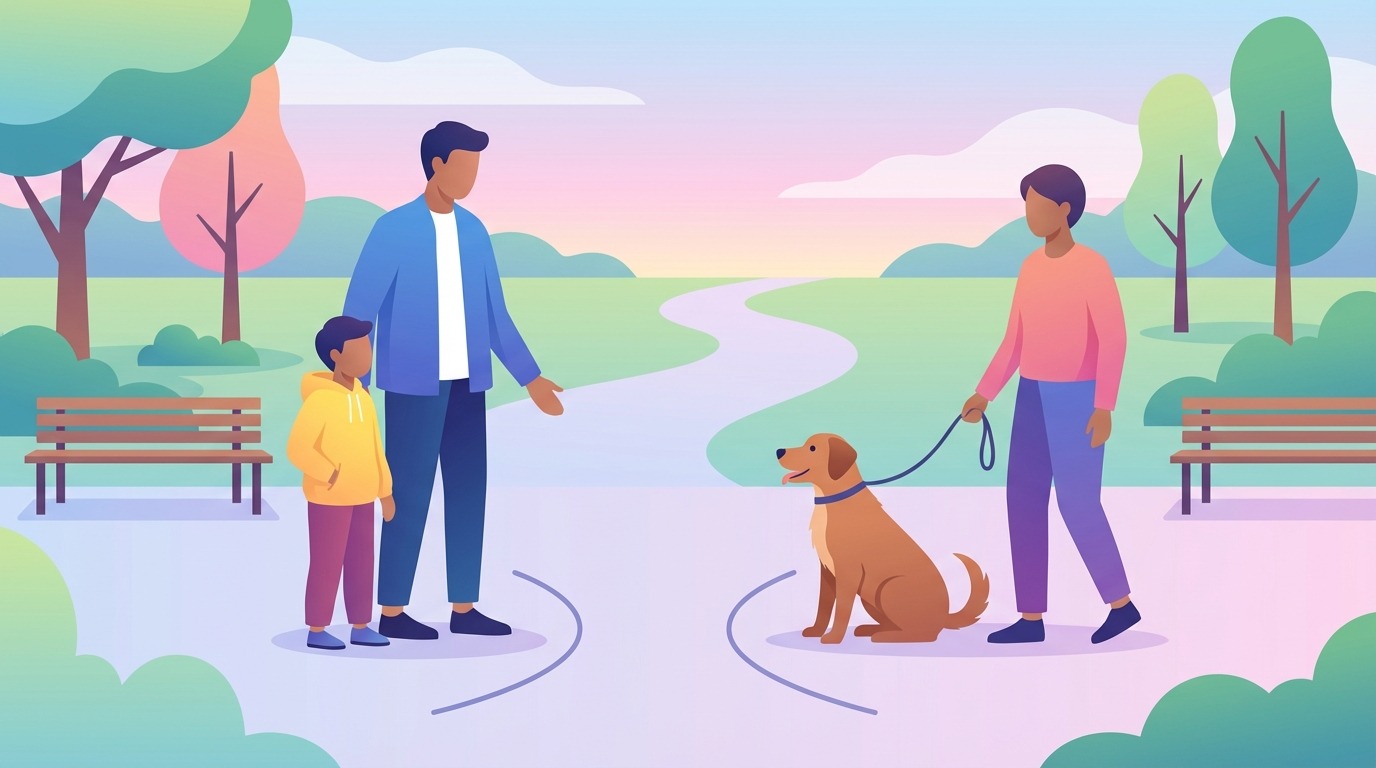
Most incidents stem from a misunderstanding. A child approaches too quickly, the dog freezes, its ears pull back, then things escalate. Reading these micro-signals changes everything: intervention happens before escalation. This vigilance is not just “watching.” It means guiding the interaction, like a caring referee.
Understanding canine language to protect the child
The dog communicates through its body. So-called “calming” signals appear when it tries to avoid conflict. Yawning out of context, head turning away, nose licking, curved walking: these indicators invite slowing down. As soon as they appear, stop the interaction. This simple reflex already reduces bite risks.
Conversely, some signs require a sharp cutoff: stiff body, raised hackles, growling, tense lips. No need to wait for a bite. Offer the dog an escape route, then redirect the child to a calm activity. The key message remains constant: respect the dog’s space as you would respect a closed room.
Educating the child: clear rules, simple words
- 🙋 Always ask permission before touching a dog.
- 🚶 Approach slowly, hand along the body, without staring into the eyes.
- 🍽️ Never disturb a dog that is eating, sleeping or caring for its puppies.
- 🙅 No tight hugs or pulling of ears/tail.
- 🗿 If a dog scares you: stay still “statue,” look at the ground, breathe.
These rules become an educational game. Scripted: “What if the dog were sleeping?” The child picks the right option and earns a point. The playful repetition engrains the protective actions in memory.
Practical case: the Delaunay family
Their son, Éli, 5 years old, loves petting Nova, a mixed-breed female dog. The parents placed a “refuge zone” mat near the couch. Mat occupied, no contact allowed. In three weeks, tensions disappeared. The dog anticipates a safe space, the child understands the visual rule. The household gained lasting peace.
This first foundation establishes a strong idea: prevention relies as much on family codes as on canine knowledge.
Bite Prevention at Home and Outdoors: routines, games and effective supervision
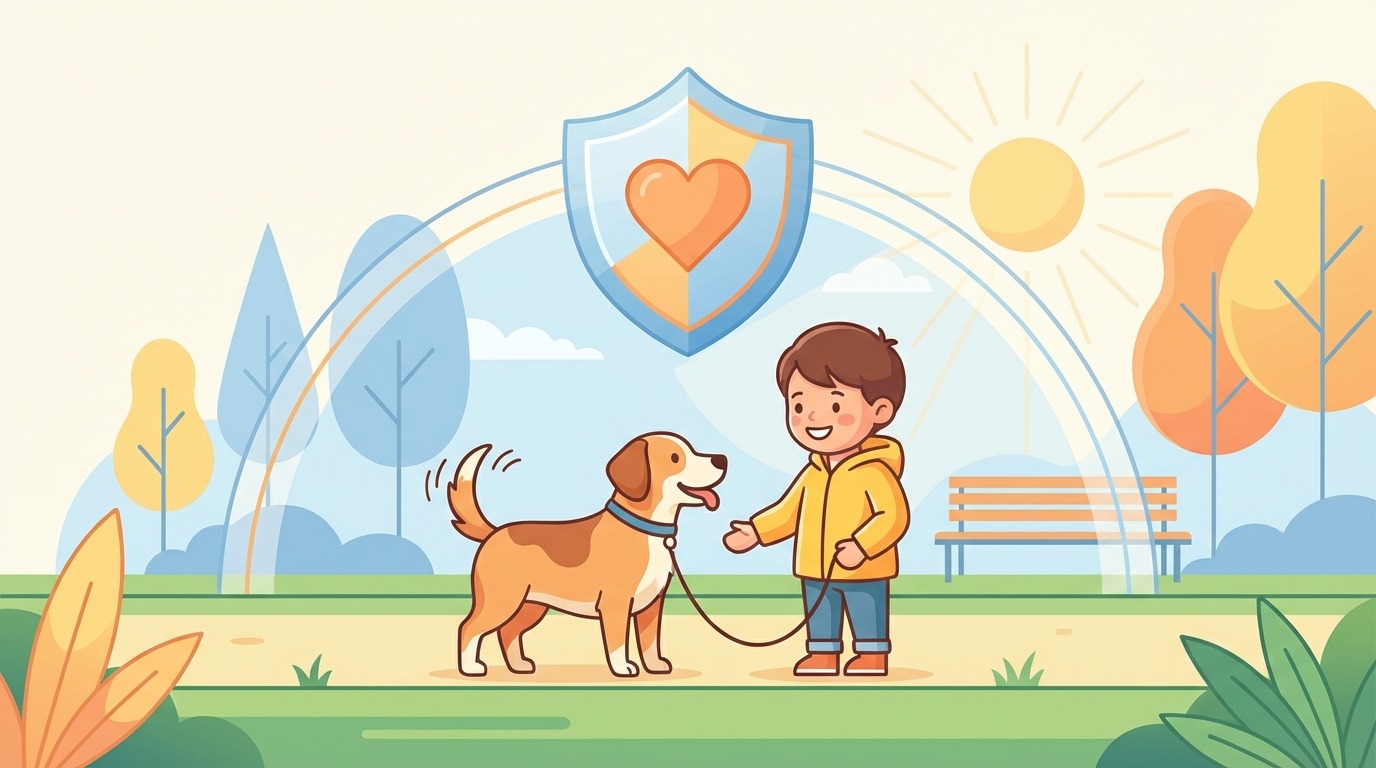
The best bite prevention is built in everyday details. We arrange the space, define routines, choose games compatible with child safety and the dog’s well-being. This invisible architecture avoids friction zones.
Organize spaces and times
An “inaccessible refuge bed” allows the dog to withdraw. Conversely, a “child play zone” limits the dog’s passage. Sensitive moments are managed with removable barriers: meals, naps, guest arrivals. This diffuses the excitement peaks when bite risks increase.
Outside, set the framework before going out: who holds the leash, who watches the child, what rules apply in the park. This 30-second briefing turns the walk into a smooth experience.
Allowed games vs games to avoid
Tug games, chase, or bike chases often trigger predation. Better to favor calm activities: tracking treats in the grass, simple tricks (touch the hand, turn), “sniff walks” to satisfy the nose. The child can toss a treat on the ground, at a distance, to reward calm behavior.
Avoid grimaces facing the dog, sharp screams, “I take your toy” which create possession conflicts. Install a “dog’s treasure box” that no one touches. This ritual clarifies ownership and avoids tensions.
Child supervision checklist
- 👀 Observe the dog’s posture before, during, and after interaction.
- ⏸️ Interrupt at the first sign of discomfort, don’t wait for growling.
- 🔄 Alternate 5 minutes of play, 5 minutes of calm to avoid overheating.
- 🧸 Provide legal chewing solutions (Kongs, licking mats).
- 📵 Avoid parental distraction; phone set aside during key exchanges.
These micro-habits are worth more than grand declarations. In the end, vigilance becomes second nature.
Dog training and positive socialization: building a reliable dog around children
The quality of dog training conditions serenity in contacts. A dog trained to give up, wait, and come when called keeps a clear head in complex situations. The work starts early, but nothing prevents relearning at any age.
Socialization without overload
Exposing the puppy to children is not enough; the experience must remain positive and measured. Favor short meetings, at distance, with a dog free to walk away. Success criterion is not how many children have been met, but the emotional quality of the experience. Aim for a curve: neutral curiosity → relaxation → brief contact.
Key skills to limit bite risks
- 🪑 “Bed” on cue: the dog joins and lies down on it.
- 🛑 “Stop/Wait”: freeze action mid-play.
- 🔁 Object exchanges: teach “leave/take” with reinforcement.
- 🔙 Joyful recall: coming back breaks building tension.
- 🧘 Self-soothing: reinforcing calm behaviors.
These skills replace chance with protocols. A dog who knows what to do responds better, even if the child moves suddenly.
Enrichment and mental fatigue
A frustrated or under-stimulated dog escalates excitement faster. Focus on olfactory work, search games, controlled chewing, and quality walks. This cocktail lowers baseline tension and indirectly protects the child.
For busy families, a professional trainer can condense this journey into a few sessions. The return on investment is massive: fewer accidents, more complicity.
Dogs categorized as “dangerous”: understanding the law and its real effects on child safety
In France, certain breeds or morphological types are classified into regulated categories. Muzzle, access restrictions, insurance obligations: the framework aims for prevention. Yet, risk does not depend only on size. It varies especially with the individual, their history, and the coherence of human supervision.
What regulation changes daily life
The muzzle in public places reassures, but it does not replace education. Lack of social interactions can increase frustration if not compensated at home. So, invest in controlled meetings, targeted learning, and abundant enrichment.
Avoiding the boomerang effect
Limiting dog-child interaction out of total fear isolates the dog. Isolation sometimes increases stress and therefore bite risks. A measured plan is better than banning: well-acclimated muzzle, comfort distances, attention exercises, and predictable rituals. Prevention becomes measurable.
Action framework for families
- 📐 Assess the individual, not the breed label.
- 🧩 Work on sensitive contexts: food, toys, doors, visitors.
- 👶 Adapt the environment: barriers, refuge mats, proximity management.
- 🎥 Film training sessions to better read signals.
- 📚 Record incidents and progress; decide with facts, not fear.
The factual conclusion is this: the law frames, but only a coherent strategy, applied every day, truly secures children.
Protective actions and first aid: what to do before, during, and after a bite
No protocol eliminates all chance. However, clear reflexes reduce the impact of an incident and hasten calm. This toolbox is passed on early, like fire drill instructions at school.
Facing a threatening dog: “statue” mode
Freeze, arms along the body, chin tucked. Eyes look at the ground, no direct eye contact. Breathe slowly and wait for tension to drop. If needed, place a buffer object between you and the dog: backpack, scooter, jacket. This nonviolent barrier channels energy and avoids escalation.
In case of attack: protect the child with simple gestures
Do not scream, do not run. Look for exit while keeping a side profile. The adult guides verbally: “Freeze… back away slowly… put the scooter in front.” If fallen, the child curls up, protects face and neck. After separation, secure the scene before treating.
First aid and medical follow-up
Rinse the wound with water and soap for at least 5 minutes. Apply antiseptic, then a clean compression dressing. Consultation needed if the wound is deep, on the face or hand, or if tetanus vaccination status is uncertain. Depending on the context, document the animal, report the incident, and follow medical prescriptions.
Emotional debrief with the child helps prevent anxiety. Retrace the event, praise successful protective actions, reintroduce canine proximity gradually, with positive experiences. This psychological care is part of child safety.
Reference table: canine signals to know
| Signal 🐶 | Meaning 🧭 | Recommended action ✅ |
|---|---|---|
| Yawning, nose licking 😮💨 | Mild stress, need for space | Calm the play, increase distance |
| Frozen body, hard stare 🧊 | High alert, immediate risk | Stop sharply, separate calmly |
| Low tail, pinned back ears 🐕🦺 | Discomfort, possible fear | End interaction, offer withdrawal |
| Audible growl 🔊 | Explicit warning | Respect, don’t punish, offer an exit |
A household that reads these codes acts quickly and well. It is the best shield against dog bites.
“Prevention applied every day is better than a heroic reaction only once.”
At what age should children start dog education?
From 2-3 years old, with short rules and role-play games; from 5 years old, add calming signals. Brief and frequent repetition anchors safety habits.
Should contact be completely avoided if the dog is stressed?
No prolonged total avoidance, which maintains fear. Reintroduce very gradual contacts, at distance, with rewards, respecting the dog’s choice to move away.
Are categorized dogs more dangerous for children?
Risk depends primarily on the individual, context, and supervision. The law imposes measures; real safety comes from socialization, training and strict supervision.
What to do if a bite seems superficial?
Wash 5 minutes with water and soap, antiseptic, dressing, then medical advice especially if the area is sensitive or vaccination status is uncertain. Watch for signs of infection.
How to choose a dog compatible with children?
Evaluate energy, tolerance to handling, history and ability to recover after stress. A canine education professional can test the individual in a family context.