Learn to Calm: Helping the 1 to 3-year-old child learn to calm down.
| Short on time? Here’s the essentials ⭐ |
|---|
| 👶 Priority to co-soothing: the adult regulates, the child learns. |
| 🧠 Focus on emotional management through play and breathing. |
| 🧺 Create a calm-down box with sensory objects. |
| 🤗 Practice koala breathing belly to belly. |
| 🎵 Establish short, predictable, and musical routines. |
| 🌧️ Visualize a cloud drifting away for stress regulation. |
| 🧩 Avoid hidden causes (hunger, tiredness, itching, noise) and promote kind support. |
The heart of learning between 1 and 3 years is not discipline but co-regulation. When the emotional storm swells, the toddler doesn’t yet have the tools to self-soothe. They then cling to the adult, who becomes a lighthouse, and gradually passes on simple gestures to learn to calm down. This period is favorable because the social brain activates and curiosity explodes. To turn crises into progress, short rituals, stable markers, and sensory gestures anchored in the body are needed.
Effective approaches come together like a puzzle: breathing, movement, imagination, music, and touch. Combined with gentle routines, they nurture emotional development and establish lasting inner calm. The tools offered here rely on field observations and practices validated by early childhood. They respect the nature of the child aged 1 to 3 years, rely on enthusiasm, and guide towards the child’s soothing with patience and serenity.
Understanding the toddler’s brain for lasting calm
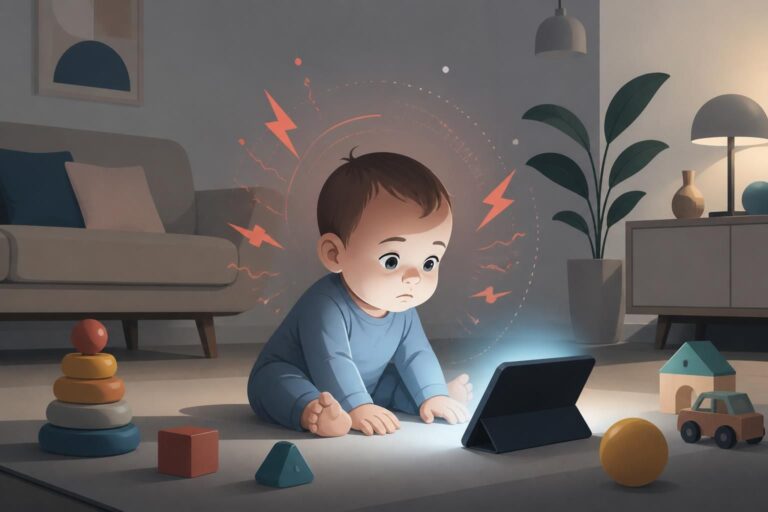
In this age group, the amygdala reacts quickly and strongly, while the frontal cortex, the conductor of inhibition, is still developing. Result: emotion often overflows before reflection. A study published in 2024 estimated that a majority of young children struggle to refocus on their own; in 2026, daycares confirm this finding and reinforce co-regulation protocols. Hence the interest in installing early and simple relaxation techniques, repeated with clear bodily guidance.
First rule: look for triggers. Hunger, thirst, dehydration, fatigue, or noise quickly overload a developing brain. Itchy skin also amplifies irritability; in this case, some useful markers are found here: understanding the child’s skin. By addressing these physical sources, a large part of emotional reactivity is already reduced.
Second rule: secure the environment. A cozy “quiet corner,” cushions, soft lighting, a small hourglass, and a “calm-down box” prepare stress regulation. Routines play a key role here: same welcome ritual, same songs, same breathing gestures. Predictability reassures and reduces anticipatory crises.
Third rule: name without judging. By putting simple words on the emotion (“anger,” “fear,” “sadness”), intensity decreases. The child’s brain relies on the adult’s calm voice, who becomes a resilience tutor. This attitude of kind support is learned and strengthened daily.
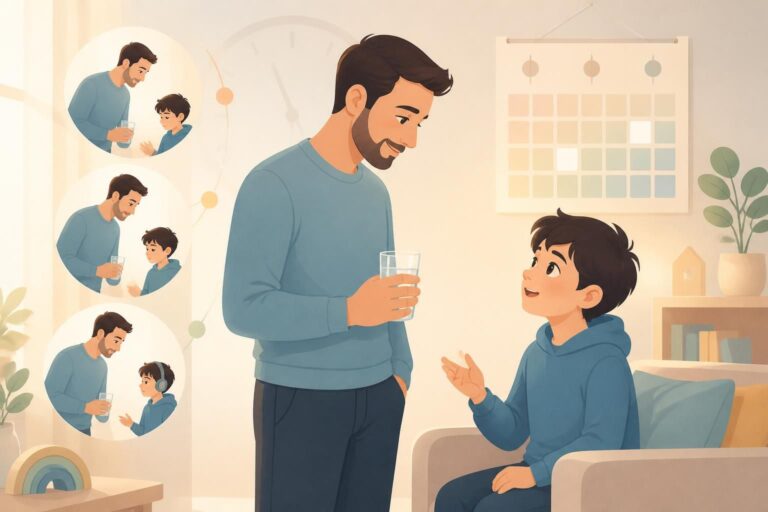
Concrete case: Lina, 2 years old, screams when putting on her coat. Before insisting, the adult crouches down, breathes slowly, offers the “cloud that leaves,” then touches the “calm-down hand.” Within two minutes, breathing slows, the gaze fixes, and the gesture becomes possible. The sequence is short but, repeated, it establishes a bodily memory of calm.
Finally, the adult self-regulates. An exhausted parent overflows faster; there are overall parenting support avenues, for example for fathers whose biology participates in attachment: the hormones of new fathers. By strengthening this base, the household breathes better, and the child follows this regulatory breath.
Practical conclusion of this section: understand causes, secure the setting, and co-regulate first; competence will come later, naturally.
The calm-down box and other essential sensory tools
Assembling a truly soothing box
The calm-down box acts as a shortcut to the child’s soothing. It contains objects chosen with them, carriers of inner calm and softness. One can include: a plush toy to squeeze, a mini pinwheel to blow on, a small water bottle (hydration reduces stress), a 3-minute hourglass, noise-cancelling headphones, crayons and paper for doodling, a family photo, a bubble tube, a favorite small book. To make personalized elements, this guide of craft ideas is valuable: creative activities at home.
The “calm-down hand” and the magic of structured gestures
Tracing the contours of the hand with the fingertip, breathing in on the thumb and out on the index finger, paces the breath. This simple gesture synchronizes breath and attention. One can add reassuring images: heart, sun, mountain. These visual markers guide the child aged 1 to 3 years without long speeches.
Breath ball, bubbles, and “weather pinwheel”
An expandable ball that opens and closes with the rhythm of breathing materializes the air going in and out. Bubbles invite slow blowing to make them float. The “weather pinwheel” associates the image of a black cloud moving away with steady breath: the child “chases” gloom away and “brings back the sun.” Here, breath and image connect, which strengthens emotional management.
The calm die: choosing to regain control
A homemade die offers six options: “blow bubbles,” “jump like a kangaroo,” “squeeze a ball,” “ask for a hug,” “scribble hard,” “say what they feel.” Rolling the die gives a power of choice. This micro-decision supports stress regulation and turns energy into useful action. To vary activities, this dossier complements the kit well: ideas to soothe a crying baby.
Key point: these tools work because they are concrete, quick, and repeatable. The child anchors sequences of relaxation techniques they will reuse everywhere.
Breathe, move, imagine: installing inner calm daily
Koala breathing: the hug that regulates
Belly to belly, the adult and child feel the breath’s movements. Breathe in through the nose, out through the mouth, slowly, in sync. Contact triggers a cocktail of endorphins and oxytocin, which soothes deeply. This ritual nurtures kind support and strengthens attachment.
“Simplified soothing 8”
Trace a small “8” with the finger while the adult guides the inhale and exhale, giving a steady rhythm. The drawing occupies attention and calms impulsivity. For older children, one can name “belly, heart, mouth” to map the path. The important thing remains slowness.
Minute massage and relaxation rhyme
A hand or scalp massage releases endorphins and relaxes mood. A gentle rhyme can be sung for 60 seconds to combine touch, voice, and breathing. This triad secures the nervous system and stabilizes emotion.
Express rituals to slip in everywhere
- 🌬️ Blow a feather onto the pillow to slow down the breath.
- 🐬 “Dolphin jump”: inhale, the dolphin dives; exhale, it jumps out of the water.
- ⭐ “Starfish”: lying down, open/close arms and legs, then stay still like a star.
- 🧸 Stuffed toy rising/falling on the belly to feel the breathing.
- ⏳ Countdown “5-4-3-2-1” closing eyes to mark the pause.
For visual inspiration, a video search guides simple suitable postures for little ones:
Beyond gestures, a sound atmosphere changes everything. Slow and joyful music improves attention and facilitates napping. Playlists adapted to this kind of request can be explored:
This section shows that the body is the most direct gateway to inner calm. Even better, play makes the effort desirable.
Anger, crying, and nighttime fears: kind support protocols
Act in 5 clear steps
1) Get down to their level and place a reassuring hand. 2) Name the emotion. 3) Offer a guided breath (feather, pinwheel, koala). 4) Offer two action choices (“squeeze a ball” or “scribble”). 5) Repair and reconnect with a hug or a phrase of pride. This firm and gentle framing installs patience and serenity, even when the storm roars.
When the night amplifies everything
Panic awakenings destabilize the family. Distinguishing nightmare and night terror prevents inappropriate responses. To see clearly, this practical guide helps adopt the right reflexes: understanding night fears and terrors. A discreet night light, a gentle olfactory routine, and a repeated song secure the night.
Intense crying: prevent then soothe
Prevention involves adapted naps, regular snacks, and paced stimulation. In case of strong cries, concrete and kind tips are gathered here: soothing a crying baby. Even if the child is over 12 months, many ideas remain transferable to support stress regulation.
The strength of the parental duo
A calm adult replaces another when fatigue rises. The co-parent plays a key role, especially since biology favors paternal engagement: how paternal hormones help. Distributing roles strengthens the consistency of kind support.
This section reminds that a simple protocol, applied consistently, turns repeated crises into active learning.
Daily routines, soothing materials, and educational continuity
Morning and smooth transitions
Displaying icons “I dress,” “I eat,” “I brush,” then “I blow the feather” provides predictability. Before going out, 90 seconds of “calm-down hand” prevent escalation. An hourglass marks the end of play without sudden tear-offs, supporting emotional management.
Evening and falling asleep
The trio of warm bath, short story, slow breathing creates a tunnel to sleep. A relaxation rhyme at the end of the ritual reduces micro-resistances. If restlessness persists, check for skin discomfort or pajamas; in case of dermatological suspicion, this marker can guide: signs of irritation and soothing gestures.
Materials and games that calm
Modeling clay, colored rice, board books, gentle instruments (ocarina, chime) nourish curiosity without over-exciting. To renew these proposals, workshop ideas are accessible here: simple craft projects. Let us also recall that between 5 and 8 years, other skills consolidate; this overview offers a useful perspective: later development stages.
Thinking of the family as an ecosystem
When parents go through postpartum, bodily comfort influences emotional availability. Some content, although intended for adults, indirectly supports bond quality with the child, like these resources: positions relieving during childbirth or also recovery after cesarean. A better-supported parent more easily transmits patience and serenity at home.
Last reminder: routine doesn’t stiffen, it frees. A stable framework makes one more available to play, laugh, and improvise relaxation techniques when emotion rises.
“A child learning to calm doesn’t obey silence, they listen to their strength.”
How long should a calm-down ritual last for a child aged 1 to 3 years?
Between 60 and 180 seconds is enough. The essential part is daily repetition, simplicity of the gesture, and the reassuring presence of the adult.
Which objects should be prioritized in the calm-down box?
An object to squeeze (plush), a support to blow on (feather, pinwheel, bubbles), an hourglass, a water bottle, crayons and paper. These elements combine sensory, breathing, and expression.
How to react to an explosive anger outdoors?
Crouch down, secure the area, name the emotion, offer a guided breath and a simple choice. If necessary, move away from noise and return to the ritual once the child is stabilized.
Should one speak a lot during the crisis?
No. Favor short and gentle words, and show the gesture. The body learns faster than language at this age.
Music or silence to soothe?
Both. Slow music helps lower activation; containing silence, with audible adult breathing, also reassures. Alternate according to the situation.