How to effectively protect children from the sun: tips and tricks
The sun is good for the mood, yet children’s skin remains much more vulnerable. Childhood sunburns increase the risk of lasting damage, and dehydration occurs quickly when games speed up sweating. In 2026, heat waves are more frequent in Europe, which imposes concrete guidelines: choose the right protection, organize outings, recognize warning signs, and ritualize each action so that everything becomes simple. Families need reliable tools and easy-to-apply tips at the park, the beach, in the city, or in the mountains.
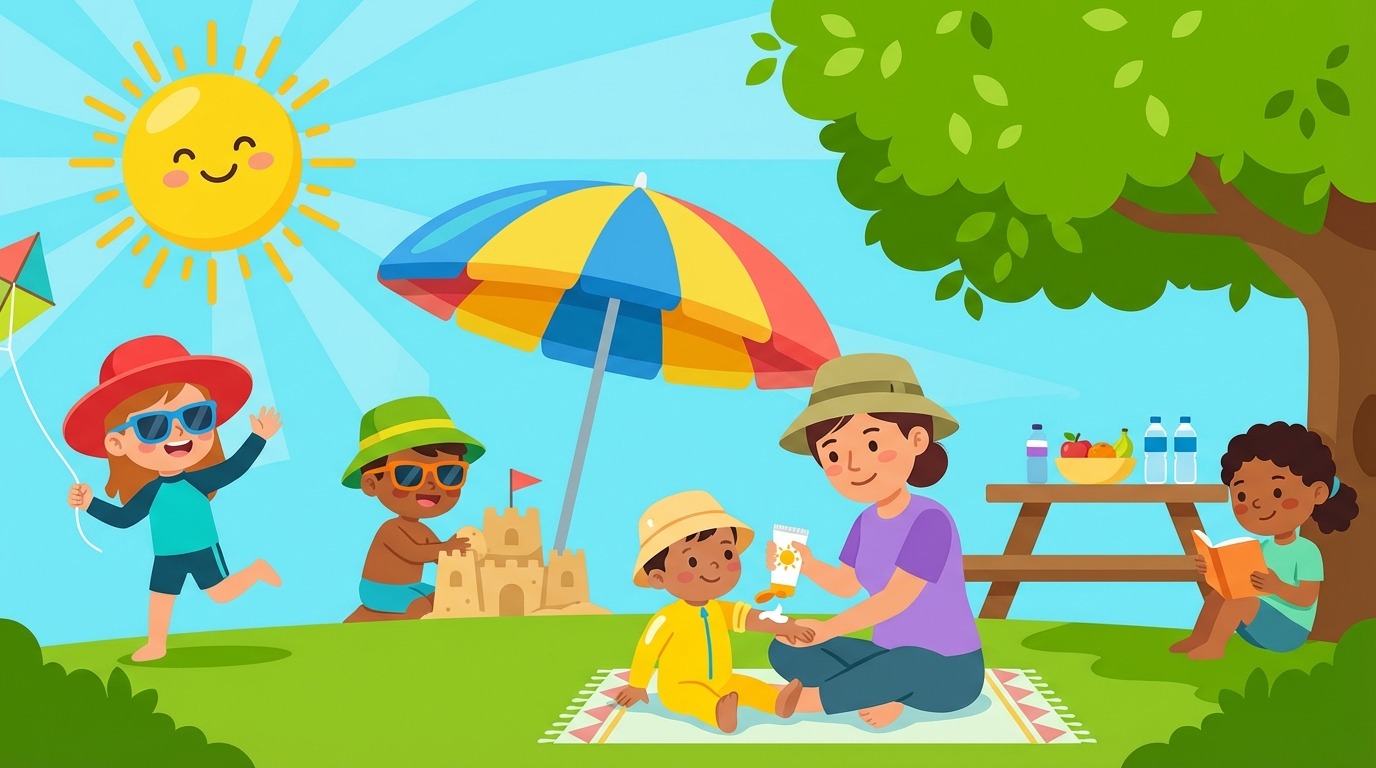
A clear framework reassures children and reduces parents’ mental load. UV-protective clothing, a wide-brimmed hat, certified sunglasses, a SPF 50+ cream applied properly and reapplied, along with regular hydration, form a foundation of safety. Accessories from Poussette Bébé with an extended sunshade, a water bottle within reach, a mist sprayer, and shaded breaks complete the setup. At home, a lukewarm bath at the end of the day soothes and rehydrates the skin. Finally, education through play helps the child understand the “why” of the actions, so they become an active participant in their protection from a very young age.
| In Brief 🌞 |
|---|
| Avoid the sun between 11 AM and 5 PM ⛱️ |
| Broad-spectrum SPF 50+, reapply every 2 hours and after swimming 🧴 |
| Wide-brimmed hat + category 3 or 4 sunglasses 🧢🕶️ |
| Frequent hydration (small sips, cool but not ice-cold water) 🚰 |
| Shade and UV-protective textiles (t-shirt, suit, tent) 👕⛺ |
| Never leave a child alone in a car, even for a few minutes 🚗❌ |
| Check the UV index and air quality before going out 📱🌤️ |
Understanding the risks of the sun for children: UV, heat, and sensitive skin
The sun emits UVA and UVB. UVB burns the skin, while UVA penetrates more deeply and accelerates skin aging. In children, the epidermis is thinner and the pigmentary system still immature. Thus, the same exposure causes more damage than in adults. A redness that appears in the evening already indicates significant aggression.
Heat complicates everything. A child’s body dehydrates faster because the surface-to-weight ratio is higher. Consequently, the internal temperature rises more quickly, increasing the risk of exhaustion and then heat stroke. On the beach, water refreshes but also reflects UV rays. Sand, snow, and even urban concrete reflect part of the rays. A moving shade is therefore not always enough.
Why younger children’s skin burns faster
Before age 3, skin defenses remain incomplete. The hydrolipidic film is more fragile. Moreover, children move constantly, which alters the effectiveness of sun protection. A t-shirt that rides up, a hat that falls off, and the skin is exposed. Twenty minutes of play can equal an hour of poorly protected exposure if the UV index exceeds 7.
Certain profiles require increased caution. Skin with eczema reacts more quickly. Appropriate advice is detailed here: eczema and child’s skin. Birthmarks or pigmentary peculiarities also deserve reinforced protection to avoid irritation. Dermatological follow-up reassures and guides product choices on a daily basis.
UV index, air quality, and urban microclimate
The same sun does not have the same impact according to the time and place. The UV index is easily checked on a weather app. For a safe outing, air quality also matters, as high pollution irritates the respiratory tract and sensitizes the skin. A helpful overview is offered here: air quality and child protection. In cities, heat accumulates in façades and asphalt, creating a “heat island.”
Lila and Samir’s family understood this well. By shifting park visits to 9 AM, then returning after 6 PM, their son’s energy remains intact. They check the UV index every morning. They identify the shaded areas in the playground and limit the duration of play on metal structures, which heat up quickly.
Warning signs to watch closely
Several signals must trigger a pause. Warm, red skin, chills in the sun, unusual fatigue, headaches, or nausea require shade, water, and cooling. If a child becomes drowsy, confused, or vomits, medical advice is needed without delay. A soothing after-sun does not erase severe burns.
This understanding of risks prepares an effective routine. The next step is to equip the child with UV-protective clothing and accessories while organizing shade during outings.
A video resource often helps to visualize the right gestures before holidays or the first heat spells.
Daily anti-UV routine: clothing, hats, glasses, and smart shade
Well-chosen textile protects effortlessly. A UPF 50+ anti-UV t-shirt blocks 98% of UV rays, even when wet. For toddlers, a full suit avoids forgotten areas. Everyday brands, like Petit Bateau and Vertbaudet, offer comfortable and breathable pieces. Specialty stores like Natalys help compose a light outfit that covers shoulders and the back well.
The hat changes everything. A wide-brimmed or neck-flap model remains ideal, especially when the wind rises. Sunglasses must show UV400 protection and category 3 or 4. As for Poussette Bébé, an extendable sunshade or a high worn anti-UV veil creates ventilated shade. A well-adjusted Bébé Confort accessory improves protection during naps on the move.
Compose a simple and pleasant “shield” outfit
A breathable outfit avoids overheating. Light cotton or technical anti-UV fibers suit the activity. Closed shoes protect feet burned by hot sand. For bathing, the suit and a water-repellent bob hat prevent re-exposure during sandcastle play. Children accept an outfit better when it looks like a superhero costume.
Morning express checklist for a peaceful departure
- 🧢 Wide hat + soft chin strap
- 🕶️ UV400 sunglasses category 3 or 4
- 👕 UPF 50+ anti-UV top + long shorts
- 🧴 SPF 50+ cream applied 20 min before going out
- 🚰 Filled water bottle + mist sprayer
- ⛱️ Tent or parasol to create a shaded area
- 🧷 Stroller clip to fix a veil without blocking air
In the playground, fully sun-exposed structures should remain temporary zones. Useful recommendations exist to frame the use of play areas: rules for playgrounds. Priority remains shade, water, and the child’s rhythm.
An optician’s or pediatrician’s video helps spot good sunglasses and appropriate UV clothing. This briefing avoids redundant purchases and forgetfulness on the day.
Thanks to these guidelines, the child stays covered and comfortable. The next section now clarifies the choice of sunscreen and proper application.
Children’s sunscreens: choosing, applying, and reapplying without stress
A child’s sunscreen must show SPF 50+ and a broad spectrum UVA/UVB. Formulas for sensitive skin limit fragrances and favor well-tolerated filters. Textures sometimes leave a slight white veil, useful to avoid missing spots. Guidelines to compare and select exist here: children’s sunscreen guide.
Mineral filters reflect light, while organic filters absorb it. Each family has its preferences depending on tolerance and finish. For babies and fragile skin, brands known for their gentleness, like Mustela, reassure. Additional information is provided here: delicate skin and Mustela. A test on a small area 24 hours before the first outing secures reactive skin.
Precise application: critical areas and actual quantities
The right amount is calculated simply. A “two-finger rule” (index + middle finger) per body zone for children ensures an even layer. Ears, neck, top of feet, and back of knees are often forgotten. After each swim or intense sweating, reapplication is essential. A lip or face stick, such as Dodie, helps for targeted retouches.
The ideal moment? Twenty minutes before exposure. Parents keep the cream near hairbrushes so they don’t forget it. An alarm on the phone or a Avent bottle timer can remind reapplication. During the operation, a short story keeps the child still. A Fisher-Price beach toy distracts the most restless ones.
Age and special situations
Before 6 months, direct exposure is discouraged. Shade, textiles, the Poussette Bébé canopy, and hydration from breastfeeding parents suffice. Between 6 months and 3 years, education begins through play: applying cream like a “magic shield” is greatly enjoyed. A note in The Birth Book allows recording the brand, opening date, and observed tolerance.
- 🧴 Spread a visible layer, then smooth gently.
- ⏲️ Schedule reapplication every 2 hours.
- 🚿 Renew after swimming or sweating.
- 🧢 Cover with anti-UV clothing as soon as possible.
Next step: manage heat and hydration to avoid heat strokes that spoil the day.
Hydration, heat, and organizing outings with a child
Thirst comes late in children. Therefore, water must be offered regularly. Frequent sips compensate better than one large glass. A Avent or Dodie bottle is easily handled by small hands. To vary, lightly flavored water with a slice of fruit entices without added sugar. A lukewarm bath at the end of the day soothes and rehydrates the skin.
Organizing outings structures safety. Before 11 AM and after 6 PM, the UV index decreases and the heat becomes more bearable. Between these times, shade remains the rule. Seasonal recommendations compile good habits: child safety advice. A wet cloth on the neck, light clothing, and regular breaks limit exhaustion.
Recognize and quickly treat a heat stroke
A red face, dry and hot skin, headaches, and dizziness must alert. The child is taken to shade, drinks small sips of water, and cools their body. If symptoms persist, a consultation is necessary. Meanwhile, a mist sprayer and portable fan help. Absolutely avoid a stopped car: the temperature rises in minutes.
The Poussette Bébé must remain ventilated. A veil stuck against the opening blocks air and increases temperature. Better to use an anti-UV canopy open on the sides or partial shading allowing air circulation. At home, a shaded play area, with a water mat and some Fisher-Price toys, encourages calm breaks during hot hours.
A clear video resource on heatstroke helps review emergency gestures as a family, including with grandparents or the nanny.
By consolidating these reflexes, the family gains peace of mind. The last part deals with educating children and coordinating with educational surroundings.
Teaching the child about the sun and coordinating with daycare, school, and relatives
A child adopts a gesture better if they understand its meaning. A role play turns the cream into a “light armor” and the hat into a “portable roof.” A sticker calendar reinforces the routine: a smiling sun for each successful reapplication. Children’s books also help. A notebook like The Birth Book can include a “sun” page, with photos of the favorite hat and the list of good habits.
Coordination with caregivers avoids gaps. With the babysitter or daycare, a written protocol specifies the cream used, authorization to apply it, schedules, and UV clothing. A complete overview of childcare settings is found here: childcare modes for young children. At school, a reminder about hats and water during heat waves is necessary.
Strategies at the park, beach, and mountains
At the park, first spot the cast shadows. Setting up an anti-UV tent near a bench allows adults to supervise comfortably. At the beach, alternate 20 minutes of play with 20 minutes of shade to maintain energy. In the mountains, UV increases with altitude: protection must be reinforced, even in cloudy weather.
For the outing bag, stores like Natalys or Vertbaudet offer light and well-compartmentalized bags. Textiles from Petit Bateau remain easy to wash after sunscreen. A health record and mini first aid kit complete the equipment. Families sometimes note effects observed on sensitive or atopic skin to adjust products throughout summer.
“Sun bag” checklist ready in 30 seconds
- 🧴 SPF 50+ cream + lip stick
- 🧢 Hat + UV400 sunglasses
- 👕 Anti-UV top + long shorts
- 🚰 Water bottle + mist sprayer
- ⛱️ Tent/parasol + clips to fix
- 🧼 Wipes/clean water for hands after cream
- 📱 Weather app for UV and air quality
Before leaving the house, a last check of the UV index and pollution avoids bad surprises. For specific skin profiles, these guidelines complement usual dermatological assessments and knowing particular skin signs, sometimes discreetly mentioned in parental guides.
The rules change depending on place and time, but the framework remains identical: cover, shade, apply cream, hydrate, and pace. With these automatisms, the child enjoys the sun safely, and the family moves forward lighter.
At what age can a baby be directly exposed to the sun?
Before 6 months, direct exposure is discouraged. Favor shade, UV-protective textiles, a well-ventilated Poussette Bébé, and outings during cool hours. After 6 months, keep the 11 AM–5 PM shade rule, and apply SPF 50+ to uncovered areas.
How much sunscreen should be applied to a child?
Use the two-finger rule (index + middle) per large area: face/neck, arms, legs, torso/back. Apply 20 minutes before going out, then reapply every 2 hours and after swimming or sweating. Don’t forget ears, neck, tops of feet, and backs of knees.
How to avoid overheating in a stroller?
Keep side openings for air circulation, avoid thick covers in front of the bassinet, use an extendable anti-UV sunshade, offer water sips regularly, and stop frequently in the shade.
What to do if the skin has already reddened after an outing?
Move to shade, hydrate with small sips, cool the skin with lukewarm water, then apply a soothing care adapted to children. Watch for fever, pain, blisters, or vomiting and consult if these signs appear. Then reinforce clothing protection.
Is shade enough to protect a child?
No, shade reduces intensity but does not eliminate UV reflected by water, sand, or concrete. It is necessary to combine hat, glasses, anti-UV clothing, and SPF 50+. Also check the UV index and adapt playtime duration.