Poor Air Quality: How to protect your child from poor air quality and the heatwave.
| Short on time? Here’s the essentials ⏱️ |
|---|
| Monitor the air pollution index and the heatwave alert before each outing 🛰️ |
| Favor routes away from traffic and avoid rush hours 🚶♀️🚲 |
| Improve indoor air quality by reducing VOCs and ventilating properly 🪟 |
| Hydrate, cool down, shade: winning trio during excessive heat 💧🧢🌳 |
| Spot respiratory allergies early and adopt a personalized action plan 🫁 |
| Team up with the school and daycare for consistent child protection 🤝 |
Poor air quality and heatwaves form a formidable duo for young children. Immature bodies, narrower airways, and high activity rhythms increase exposure to pollutants and heat stress. In 2023, the European Environment Agency highlighted the scale of the challenge, with at least 1,200 child and adolescent deaths related to air pollution each year in Europe. Meanwhile, heatwaves are becoming longer and more intense. By 2026, vigilance is essential daily, especially in dense cities where the air is polluted, asphalt retains heat, and particle spikes occur.
Good news: simple, consistent, and repeated actions build effective health prevention. They lie in trip planning, controlling indoor air quality, organizing physical activities, managing cooling, and regular clinical vigilance. Families cope better when relying on robust routines, monitoring tools, and constant dialogue with schools, daycare centers, and pediatricians. This guide offers concrete and reasoned parent advice to protect children, even during episodes of excessive heat or smog.
Poor air quality and heatwaves: why children pay the highest price
To understand child protection, one must first explain physiology. Children breathe faster, have a high metabolism, and their airways are still developing. Thus, at equal effort, they inhale more pollutants than adults. Their developing immune system also reacts more intensely, promoting respiratory allergies or asthma.
Episodes of excessive heat worsen the situation. Ozone forms more easily when the air warms, and dehydration irritates the mucous membranes. Heat increases the ventilation rate: the child then inhales more fine particles, increasing the toxic load. This heat-pollution synergy explains the rise in emergency visits during urban heatwaves.
Specific vulnerabilities and short-term effects
In toddlers, exposure to air pollution can trigger coughing, wheezing, and unusual fatigue. Headaches, irritability, or loss of appetite may also appear. Yet these subtle signals are sometimes mistaken for mere tantrums. Careful monitoring of behavior, sleep, and breathing provides valuable clues.
European studies describe a strong link between fine particles and pediatric asthma. Meanwhile, an overly warm environment disrupts thermoregulation. The risks of dehydration, heat stroke, and ENT infections increase. Additionally, indoor pollution, often underestimated, plays a major role.
Indoor pollution: VOCs, particles, and scented products
Paints, glues, and some furniture release volatile organic compounds (VOCs), including formaldehyde. In France, the emission label, from A+ to C, guides purchases: aiming for A+ in children’s rooms remains essential. Carpets accumulate dust, VOCs, and dust mites. Even “pleasant” indoor fragrances add unnecessary chemical load.
Knowing these sources allows action at the root. Controlled ventilation, selecting healthy materials, and minimalist cleaning habits with few scented products reduce exposure to pollutants. This first lever sets the stage for more refined outdoor strategies.
To deepen pediatric respiratory basics and risks related to degraded air, an overview on children’s respiratory health helps structure family priorities.
Outdoors in intense heat: routes, pace, and equipment to limit exposure
Protecting a child starts with choosing the right time. Early in the morning, checking the air quality index and heatwave alert guides decisions. Then, scheduling outings before 11 a.m. or after 6 p.m. reduces the double harm of heat and pollution.
Take the family of Léa and Nino, 4 years old. By moving their bike session to 6:30 p.m., choosing a greenway parallel to the boulevard, and adding shaded breaks, their evening wheezing clearly decreased. This timing–route–pace trio also works for school commutes.
Trips and physical activities: the useful detour
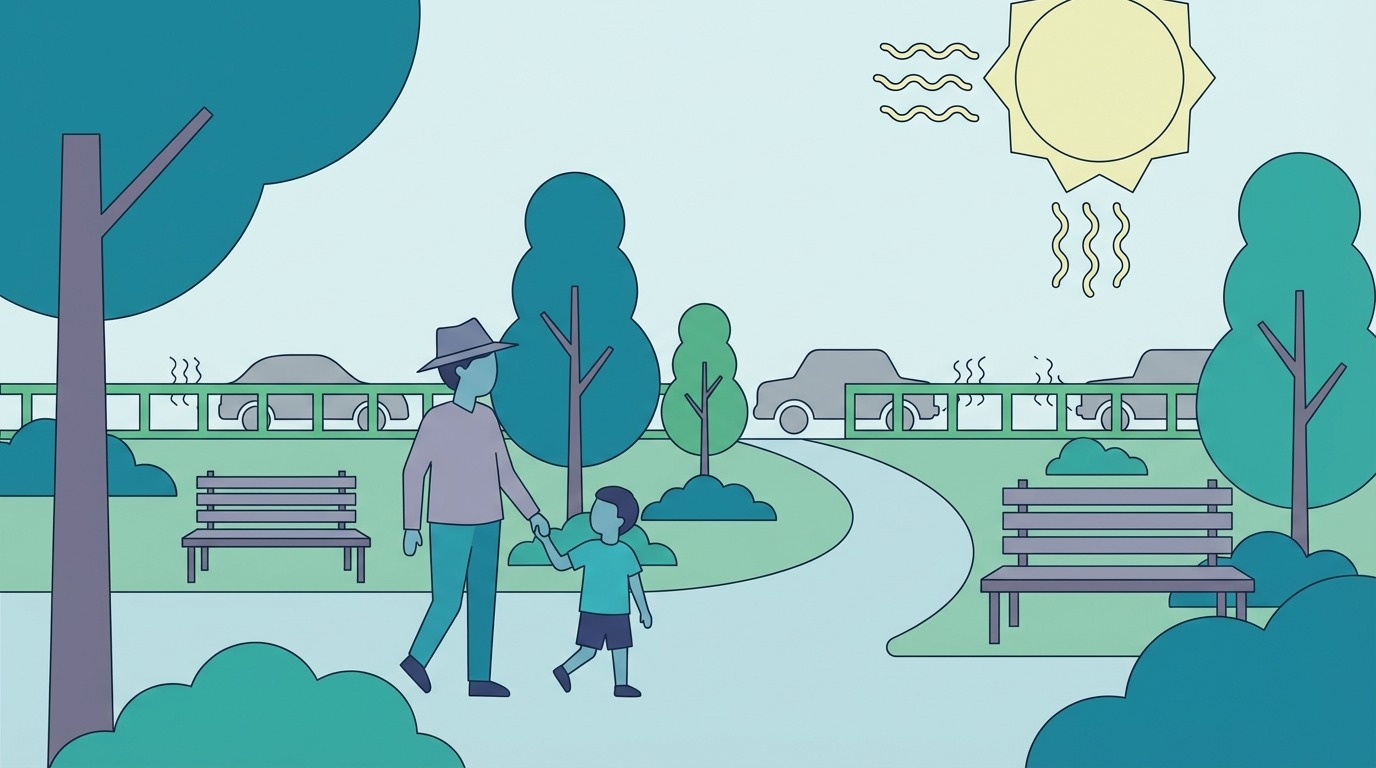
Favor side streets, parks, and riverbanks to stay away from exhaust gases. On foot, keep distance from the roadside to reduce direct inhalation. In strollers, the child is lower, near exhaust pipes: a baby carrier, when possible, can limit this exposure. During smog, reducing exercise intensity protects the bronchi.
Regarding “anti-pollution” masks, their benefit remains uncertain for children in real use, especially against irritating gases. It’s better to invest energy in clever detours, hydration, and shade. Also, not idling engines near schools reduces collective exposure.
Hydration, clothing, and micro-breaks
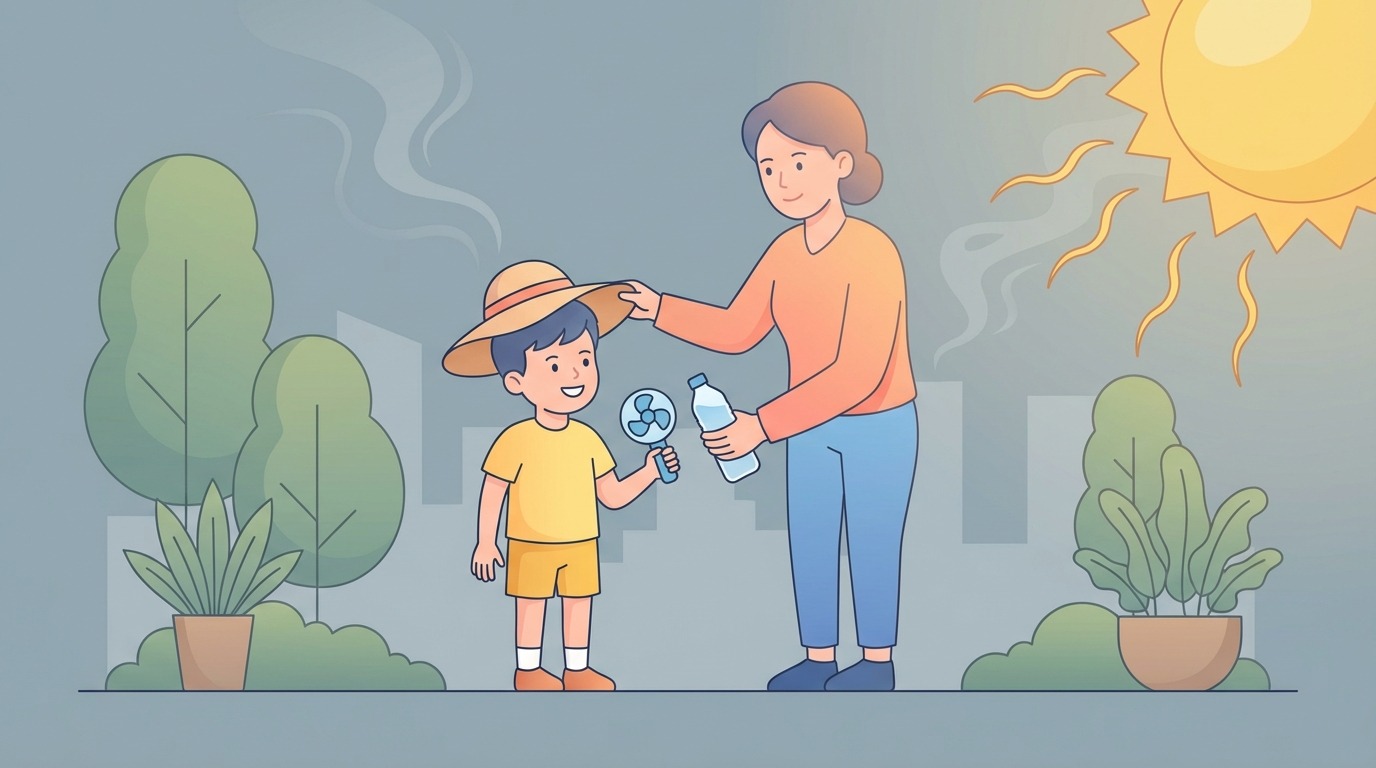
In heat, hydration prevails: small water bottles, frequent reminders, and water-rich foods. A light-colored hat, technical fabrics, and appropriate sunscreen prevent heat strokes. Regular shaded breaks help restore normal ventilation.
For a step-by-step action plan, these city parent tips summarize essentials and facilitate routines.
- 🌬️ Choose low-carbon, leafy routes, even if longer.
- 🕒 Avoid 8–10 a.m. and 5–7 p.m. when traffic peaks.
- 💧 Offer a sip of water every 15–20 minutes.
- 🧢 Plan caps, sunglasses, light and covering clothes.
- 🌳 Schedule shaded breaks every 20 minutes of activity.
- 🚗 Turn off engines immediately when stopped near schools and daycares.
To complement these markers with visuals, targeted video research provides concrete demonstrations.
Finally, in cars, ventilate carefully outside rush hours and use “recirculated air” mode in highly polluted zones to limit pollutant entry. The key idea remains simple: less traffic, more shade, a calm pace.
Indoor air quality: hunting VOCs, effective ventilation, and winning actions
The home is a refuge, provided sources of indoor pollution are tracked. First, apply the principle “less, better, minimal.” Reducing scented products, choosing certified materials, and ventilating efficiently change the situation in a few weeks.
Paints and coatings bear an emission label: aim for A+ in bedrooms and living areas. New furniture off-gases; airing it outdoors before installation reduces smell and VOC load. Carpets trap dust mites and dust: a smooth floor simplifies maintenance.
Priority sources and healthy alternatives
Candles, sprays, and incense add irritants without health benefits. Opting for simple cleaning—hot water, microfiber cloths, diluted vinegar for certain surfaces—avoids solvent aerosols. Certified bedding and anti-mite covers soothe nighttime respiratory allergies.
And “purifying” plants? They bring well-being but do not replace ventilation. Keep this decorative pleasure without entrusting them with the air purification task, maintaining a scientific approach. Meanwhile, controlling humidity (40–60%) limits mold and irritation.
Ventilation, filtration, and organization
Ventilate twice daily for 5–10 minutes to renew the air. In cities, opening windows outside rush hours reduces pollutant entry. In airtight homes, check mechanical extraction and replace filters to improve indoor air quality. A well-sized HEPA purifier can help in a sensitive child’s room.
For a practical reminder, this guide to purify house air lists concrete actions and their impacts.
| Source 🧪 | Pollutants ⚠️ | Signs in the child 👶 | What to do ✅ |
|---|---|---|---|
| Paints, glues | VOCs (formaldehyde, solvents) | Itchy eyes, cough | Choose A+ label, ventilate 72 h |
| New furniture | Formaldehyde | Odors, sore throat | Off-gas in garage, credible labels |
| Carpet | VOCs, dust mites | Rhinitis, wheezing | Prefer smooth floors, HEPA vacuum |
| Candles, incense | Particles, irritants | Headaches | Limit, ventilate after use |
| Kitchen without hood | NO₂, particles | Dry cough | Turn on hood, open window |
A breathable home, minimal materials, and a well-thought ventilation routine create a solid foundation. This is the calm base on which all other protections rely.
Heatwave and early childhood: cooling living spaces and coordinating with school
When a heatwave settles in, the home and care spaces become “cool third places.” The goal: keep the cool in at night, push back heat during the day. Closing shutters and windows during hot hours, ventilating late at night and early morning, then creating air flows with strategically placed fans remain essentials.
Damp laundry in front of an air inlet, a misting spray, lukewarm showers, and naps in the coolest room help. Heavy rugs store heat; rolling them up temporarily reduces inertia. Quiet games replace afternoon sprints.
Cooling without air conditioning and maintaining a calm pace
A thermo-hygrometer guides decisions. Between 26 and 28 °C, reduce effort, increase drinks, and wipe water on forearms and neck. Milks, compotes, and water-rich fruits complete hydration. Babies need light clothing, a dark and cool room, and regular wake-ups to drink.
With Léa and Nino, moving bedtime stories to the coolest hallway, positioning a fan at 45°, and scheduling cross-ventilation at 10 p.m. lowered the perceived temperature. A calming ritual limits crying and heat fatigue.
School and daycare: consistent protection
Coordination with the establishment changes everything. Requesting shaded areas for the playground, quiet games in the afternoon, and accessible water points secures the day. A posted heatwave plan, flexible schedules, and ventilation instructions outside rush hours reinforce health prevention.
For ready-to-use checklists, these practical heatwave resources ease the implementation of simple and effective routines.
After school, offset heat with a cool snack and a walk in the shade to aid recovery. Consistency remains key: same actions, same schedules, same vigilance.
Health prevention, warning signs, and respiratory action plan
Child protection is strengthened by clinical follow-up. Early recognition of respiratory signs reduces complications. Persistent cough, wheezing, intercostal retractions, or unusual fatigue require graduated action.
A family “asthma plan” or “breathing plan” clarifies steps. Green–orange–red colors guide hydration, rest, emergency treatment, and consultation reasons. Recording episodes, time, and context (pollution, heat, effort) helps the pediatrician adjust care.
Monitor smartly and react quickly
During smog, limit intense activity, continue controlled ventilation, and use prescribed devices (inhalation chambers). Heat alerts require increasing drink frequency and monitoring body temperature.
A small pulse oximeter may reassure, but behavior is paramount: alertness, appetite, play, and sleep serve as integrated indicators. Keeping a weekly tracking sheet shared with daycare or school aligns everyone. For synthetic reminders, see this prevention and allergy memo.
Act collectively and sustainably
The neighborhood influences as much as the home. Advocating for calm school surroundings, child-friendly streets, and more trees reduces exposure to pollutants for all. Soft mobility, besides improving air, offers an active and calming environment.
Léa’s family proposed a pedibus on rue des Écoles. In three months, idling cars decreased and morning air cleared. The respiratory benefit was collective. To continue, a comprehensive air quality dossier provides markers to act at family and local levels.
In sum, daily vigilance, reliable routines, and a network around the child create a solid shield, even during peaks of poor air quality and heatwaves.
“Protecting a child means keeping it simple, early, and together: air, shade, water.”
{“@context”:”https://schema.org”,”@type”:”FAQPage”,”mainEntity”:[{“@type”:”Question”,”name”:”Faut-il au00e9rer en cas de pic de pollution ?”,”acceptedAnswer”:{“@type”:”Answer”,”text”:”Oui, mais intelligemment. Au00e9rer 5u201310 minutes tu00f4t le matin et tard le soir limite lu2019entru00e9e de polluants. En journu00e9e, gardez fenu00eatres fermu00e9es si votre rue est tru00e8s circulu00e9e et privilu00e9giez lu2019au00e9ration cu00f4tu00e9 cour.”}},{“@type”:”Question”,”name”:”Les purificateurs du2019air sont-ils utiles pour les enfants ?”,”acceptedAnswer”:{“@type”:”Answer”,”text”:”Un modu00e8le HEPA correctement dimensionnu00e9 peut ru00e9duire les particules dans une chambre, surtout en cas du2019allergies. Il ne remplace pas lu2019au00e9ration, le nettoyage ru00e9gulier et la ru00e9duction des sources de COV.”}},{“@type”:”Question”,”name”:”Comment habiller un bu00e9bu00e9 pendant une canicule ?”,”acceptedAnswer”:{“@type”:”Answer”,”text”:”Privilu00e9giez un body lu00e9ger, des tissus respirants, une piu00e8ce sombre et frau00eeche, et proposez u00e0 boire souvent. u00c9vitez les sorties entre 11 h et 18 h, restez u00e0 lu2019ombre et utilisez un chapeau.”}},{“@type”:”Question”,”name”:”Les masques anti-pollution protu00e8gent-ils les enfants ?”,”acceptedAnswer”:{“@type”:”Answer”,”text”:”Leur efficacitu00e9 reste limitu00e9e en conditions ru00e9elles, surtout contre les gaz. Mieux vaut adapter les horaires, choisir des itinu00e9raires moins polluu00e9s, ru00e9duire lu2019intensitu00e9 physique et hydrater correctement.”}},{“@type”:”Question”,”name”:”Quels produits mu00e9nagers privilu00e9gier ?”,”acceptedAnswer”:{“@type”:”Answer”,”text”:”Des solutions simples : eau chaude, savon doux, microfibres. Limitez les sprays parfumu00e9s, au00e9rez apru00e8s usage, et choisissez des produits sans parfums ajoutu00e9s pour ru00e9duire lu2019irritation.”}}]}Should you ventilate during a pollution peak?
Yes, but intelligently. Ventilating 5–10 minutes early in the morning and late in the evening limits pollutant entry. During the day, keep windows closed if your street is very busy and prioritize ventilation on the courtyard side.
Are air purifiers useful for children?
A properly sized HEPA model can reduce particles in a room, especially in case of allergies. It does not replace ventilation, regular cleaning, and reducing VOC sources.
How to dress a baby during a heatwave?
Favor a light bodysuit, breathable fabrics, a dark and cool room, and offer drinks often. Avoid outings between 11 a.m. and 6 p.m., stay in the shade, and use a hat.
Do anti-pollution masks protect children?
Their effectiveness remains limited in real conditions, especially against gases. It’s better to adapt schedules, choose less polluted routes, reduce physical intensity, and hydrate properly.
Which household products should be favored?
Simple solutions: hot water, mild soap, microfiber cloths. Limit scented sprays, ventilate after use, and choose products without added fragrances to reduce irritation.