Shaken Baby Syndrome: Head trauma related to abuse: shaken baby syndrome.
| Short on time? Here is the essential 💡 |
|---|
| Never shake a baby 🚫: even a few seconds can cause cranial trauma with irreversible brain injuries. |
| When faced with crying, place the baby safely on their back in their bed, breathe, call for help 📞: this is a protective gesture, not a failure. |
| Warning signs ⚠️: unusual drowsiness, vomiting, seizures, extreme irritability, suspected retinal hemorrhage. |
| Absolute emergency 🚑: dial 15/112. Rapid care limits neurological damage. |
| Preventing child abuse involves anticipating difficult moments, a relay plan, and reliable resources 🧭. |
Shaking a baby does not calm crying; it exposes them to a violent and silent cranial trauma. Today, perinatal teams reaffirm a fact often unknown to the general public: shaken baby syndrome is one of the most severe forms of child abuse, with rapid and lasting consequences on the developing brain. The public health issue is major, both to protect infants and to support parents sometimes on the brink of breaking down.
This dossier sheds light on the mechanisms of shaking, the signs that must alert, the shaken baby syndrome diagnosis, and the coordinated medical care. It also offers practical tools for abuse prevention to avoid acting out during peak crying moments. Many hospitals now strengthen training on normal infant crying, a shift that changes daily life.
Shaken Baby Syndrome: Mechanisms, Risks, and Clinical Realities
Shaken baby syndrome occurs when an adult, overwhelmed by crying, repeatedly shakes a baby. The infant has a heavy head, weak neck muscles, and a brain still maturing. These factors make the skull particularly vulnerable to sudden accelerations and decelerations.
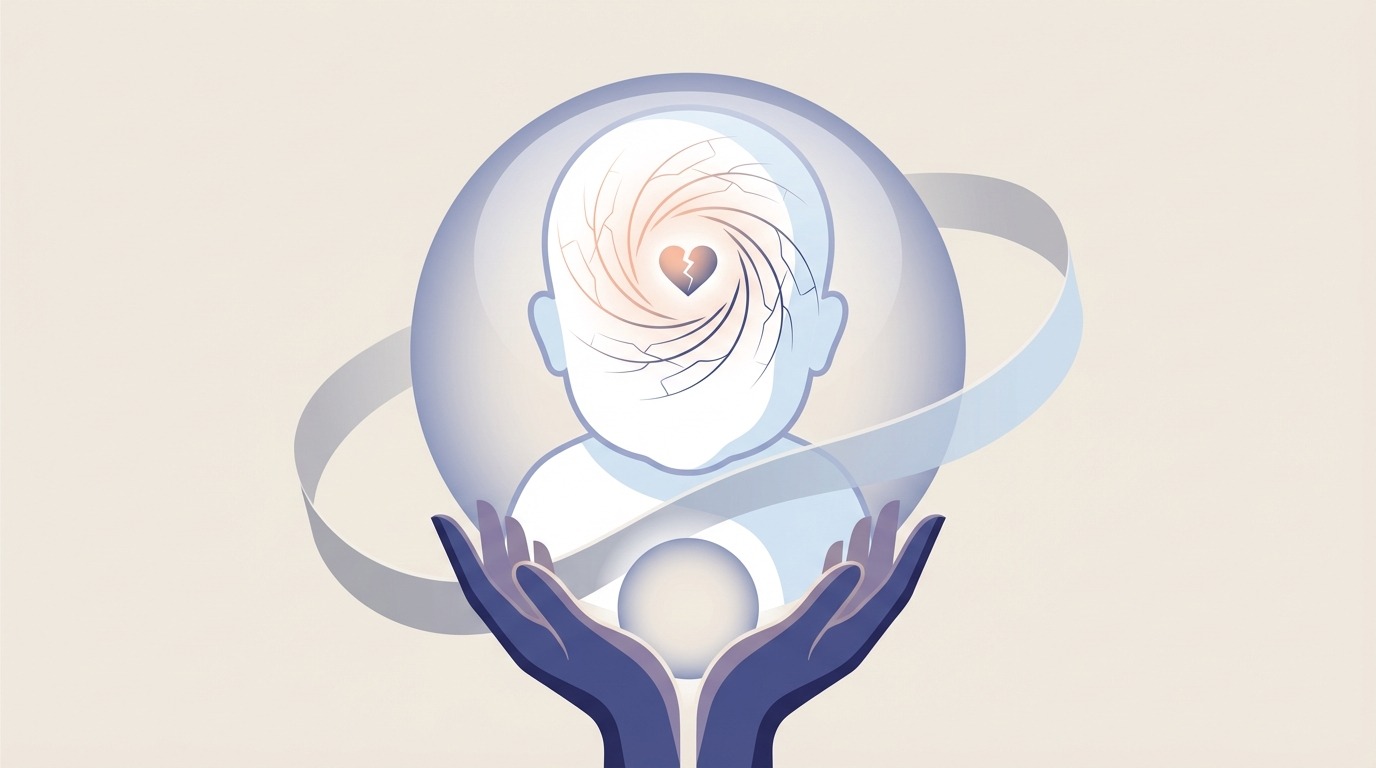
Biomechanically, the shaking causes rapid back-and-forth movements. The brain, suspended in cerebrospinal fluid, hits the inner wall of the skull. The thin and fragile bridging veins may rupture. This mechanism can trigger subdural hematomas, cerebral edema, and axonal micro-tears.
Why a few seconds are enough to cause injuries
Contrary to a common misconception, neither much force nor long duration is needed to cause damage. In just a few shakes, brain injuries form. Their severity depends on the violence, repetition, and sometimes on an associated impact. Even without hitting a surface, inertial forces can cause major neurological damage.
The infant’s physiology makes this exposure critical. Myelination is incomplete, vascular structures are delicate, and cerebral perfusion control remains immature. The outcome can be dramatic in a short time.
Myths to debunk and risk contexts
Certain actions are often confused with dangerous shaking. Gently rocking a baby in your arms, walking with them, pushing a stroller pose no risk. Conversely, the rapid back-and-forth motion of the trunk and head, held by the torso or arms, is the harmful element. A properly used cradle or baby carrier has never reproduced the forces involved in shaking.
Risk contexts are well identified: parental fatigue, isolation, inconsolable crying at the end of the day, stressful return to work, postpartum maternal pain, or precarious housing conditions. In the fictional story of Nora and Malik, young exhausted parents, the sleepless night combined with intense crying nearly broke the camel’s back. Thanks to an anticipated relay strategy, they avoided the worst.
Long-term signs and possible sequelae
Consequences can be immediate or delayed. In the short term, drowsiness, seizures, vomiting, and feeding difficulties dominate. In the medium term, developmental delay, visual disorders, epilepsy, or cognitive impairments may appear. The damage is not uniform but often deep.
Visually, a retinal hemorrhage may occur, often multiple and with a characteristic appearance. It suggests significant shear forces. However, only a specialized evaluation can specify the origin and extent.
Ultimately, the shaking mechanism explains the severity of the cranial trauma. Understanding this mechanism already acts as a prevention barrier.
Recognizing Warning Signs and Establishing a Reliable Diagnosis
Quickly recognizing signals is vital. When faced with an apathetic infant who vomits without fever, convulses, or seems painful when moved, evaluation must accelerate. The medical team follows an emergency protocol to stabilize breathing, circulation, and consciousness.
The shaken baby syndrome diagnosis is based on a set of clinical, radiological, and ophthalmological indicators. No single sign alone is sufficient. Context, examination, and complementary tests methodically overlap.
Clinical signs to closely monitor
- 😴 Unusual drowsiness, decreased responsiveness
- 🤮 Repeated vomiting without other obvious cause
- ⚡ Seizures, tremors, hypotonia
- 😢 Acute inconsolable crying, extreme irritability
- 👁️ Suspected retinal hemorrhage (assessed by ophthalmologist)
- 🧠 Bulging fontanelle, focal neurological signs
These elements guide but do not allow a conclusion alone. The team will then coordinate imaging and biological workups to establish the cause. Caution guides every step, as other diagnoses remain possible.
Central role of imaging and ophthalmology
A non-contrast brain CT scan is often performed first to quickly detect a subdural hematoma, intracranial hemorrhage, or edema. MRI usually follows to specify lesion age and distribution.
The specialized ophthalmologic exam searches for retinal hemorrhages and evaluates the optic nerve. These signs, if associated with intracranial anomalies and evocative context, strengthen suspicion of shaking.
Differential diagnosis and methodological caution
Professionals explore alternatives: coagulation disorders, severe infections, metabolic anomalies, plausible accidental trauma. This approach protects the child and ensures impartial analysis. Medical reasoning clarity matters as much as speed of action.
In practice, multidisciplinary coordination is essential between emergency, radiology, ophthalmology, pediatrics, neurology, and child protection teams. It avoids blind spots and reduces treatment delays.
For relatives, the wait is often distressing. An empathetic accompaniment and simple explanations help understand why each exam matters. Transparency builds trust and supports decision-making.
Medical Care and Coordinated Care Pathway
Medical care primarily aims for vital stabilization. A dedicated team controls breathing, cerebral perfusion, and blood sugar. If needed, ventilation, anticonvulsants, and sedation are quickly initiated.
Surgery may be necessary in case of compressive subdural hematoma. Neurosurgeons evaluate benefit-risk case by case. Every minute gained reduces the risk of sequelae.
Neuroprotection and targeted treatments
Intensive care monitoring includes intracranial pressure control, oxygenation optimization, and seizure prevention. EEG can detect silent discharges. Neuroprotection protocols favor hemodynamic and thermal stability.
An ophthalmologic evaluation documents visual damage. Speech therapy, physiotherapy, and psychomotricity follow. The goal: support brain plasticity and maximize recovery potential.
Medico-psycho-social coordination
The pathway does not stop at technical care. Social workers assess child safety and organize protective measures if necessary. Psychologists support parents and siblings, as the emotional shock is massive.
Over weeks, multidisciplinary assessments punctuate rehabilitation. They adjust goals, prevent family burnout, and value every progress. A clear roadmap reassures and motivates.
Informing without overwhelming
Explaining what neurological damage is and what to expect requires tact. Caregivers use simple diagrams, analogies, and concrete objectives rather than definitive predictions. Therapeutic alliance becomes a prognostic factor.
At hospital discharge, a follow-up plan over several months is provided. It includes appointments, secondary warning signs, and useful contacts in case of decompensation. The course remains unchanged: protect, treat, rehabilitate.
Preventing Child Abuse: Practical Tools and Everyday Strategies
Abuse prevention is based on a powerful idea: crying is normal, but isolation never should be. Anticipating fragile periods protects the child and relieves relatives. A relay plan thought out in advance avoids impulsive reactions.
Effective parental teams prepare an accessible “calm kit.” It is activated as soon as tension rises. This reflex soon becomes a protective habit.
The calm kit to deploy in 5 minutes
- 🪫 Guided pause: place the baby safely in their bed, breathe 10 times, drink a glass of water.
- 📱 Call a relative: agree on a code word to ask for help without explaining.
- 🎧 Soothing sound: white noise, lullaby, recorded running water.
- 🌫️ Reduce stimuli: soft light, aired room, remove distracting objects.
- ⏳ 5-minute timer: check on the baby again, reassess, repeat the cycle if needed.
This organization does not aim to “let the baby cry,” but to prevent dangerous actions. It is taught in maternity wards and pediatrician offices. It saves tense situations.
Lightening the invisible burden
Physical fatigue and postpartum pain increase irritability. Useful resources, even focused on other parental health topics, help feel supported. For example, a practical article on carpal tunnel discomfort during pregnancy can encourage a global well-being approach, as recalled by this guide for expectant and new mothers.
Multiplying supports (family, neighbors, associations) reduces risk zones. A shared calendar with relay slots formalizes mutual aid. Each support gained keeps the temptation to shake a baby further away.
Evening rituals and key messages
Crying peaks often occur at the end of the day. A short, repeatable ritual reassures everyone: warm bath, skin-to-skin, dimmed room, then undisturbed bedtime. Meanwhile, visible reminders on the fridge spread protective mantras.
For further information, other perinatal health content can complement your references, like this article on carpal tunnel syndrome during pregnancy. Prevention benefits from remaining transversal and caring.
Training relatives, babysitters, and grandparents in the same language reduces misunderstandings. When everyone knows what to do, pressure falls and safety rises.
Medico-legal Framework, Ethics, and Collective Mobilization around Shaken Baby Syndrome
Protecting the child requires a coordinated response. As soon as inflicted cranial trauma is suspected, care professionals initiate protection procedures. Reporting does not seek immediate guilt; it secures the child while evaluation continues.
Institutions remind of the protection obligation and respect for the presumption of innocence. This demanding balance secures the care pathway and potential judicial follow-up. Ethics guides the method as much as the law.
Informing without stigmatizing
Effective public communication reforms behaviors without designating culprits a priori. Campaigns encouraging help-seeking and relieving parental guilt achieve better outcomes. The core message remains unchanged: never shake a baby.
Continuing education updates caregivers’ knowledge. National recommendations emphasize rigorous clinical examination, appropriate imaging, and multidisciplinary approach. This shared culture reduces errors and speeds up care.
Schools, daycares, sports clubs: prevention everywhere
Mobilization extends beyond maternity wards. Daycares disseminate “crying and soothing” protocols, maternal and child health centers strengthen home support, and associations equip young parents. In adolescent sports clubs, future babysitters learn good practices.
Companies can also participate. “Return from parental leave” programs include a short module on shaking-related risks. In 20 minutes, critical points are understood, memorized, and shared.
Measuring to improve
Hospitals implement indicators: number of trained parents, imaging delays, coordination quality, regular reassessments. Feedback feeds a continuous improvement loop. Prevention gains effectiveness when based on tracked data.
In the long term, society as a whole benefits. An environment that supports families protects babies, prevents child abuse, and reduces the burden of brain injuries. Collective vigilance becomes the best safety belt.
What are the first steps when faced with inconsolable crying?
Place the baby on their back in their bed, walk away for a few minutes, breathe deeply, reduce stimuli, and call a relative. If a warning sign appears (extreme drowsiness, vomiting, seizures), immediately contact emergency services (15/112).
How do doctors confirm the diagnosis?
They cross-check clinical examination, imaging (CT scan then MRI), ophthalmologic evaluation of retinal hemorrhages, and biological tests. The diagnosis relies on a body of evidence, never on a single sign.
What sequelae can be observed after shaking?
Depending on severity: motor disorders, speech delays, learning difficulties, epilepsy, visual deficits. Early follow-up and rehabilitation improve functional prognosis.
Is there a quick resource for relatives?
Yes: a relay plan noted in advance, support phone numbers, a soothing playlist, and displayed instructions. Maternal and child health services and maternity wards also offer prevention sheets and workshops.
Can a brief shaking already be dangerous?
Yes. A few shakes are enough to cause brain injuries. Any dangerous action must be stopped, the baby secured, and a consultation sought promptly if in doubt.
“Protecting a baby sometimes means stopping, breathing, and asking for help: this reflex saves lives.” ✨