Games Help to Wait: Games to help the child aged 1 to 3 years wait.
| Short on time? Here’s the essentials ⏱️ |
|---|
| 🧠 Patience builds between 12 and 36 months thanks to repeated and ritualized micro-waits. |
| 🗣️ Naming the emotion and describing the wait in steps reduces crying and frustration. |
| ⏳ An hourglass, a visual timer, or a nursery rhyme turns time into play. |
| 🤝 Co-regulation through voice, gaze, and touch to soothe quickly and well. |
| 📈 Assess weekly without labels to adjust educational techniques. |
Turning waiting into a learning opportunity is possible. Between 1 and 3 years old, every moment counts: dressing, trips, waiting rooms, bath time. With simple games, visual cues, and reassuring presence, the child learns to be patient without crying. This topic involves both fine motor skills and language, and nurtures socio-emotional development. The heart of the method? Making time visible, giving meaning to waiting, and ritualizing transitions. Patience is not demanded; it is told and lived, step by step.
This guide offers fun activities and educational games for 12-36 months. It gathers concrete scenarios and smart tools: hourglasses, disc timers, “first/then” cards, clock rhymes. Each proposal targets progressive autonomy, entertainment, and cooperation. Real examples illustrate the expected progression by 3 years old: better turn-taking, tolerating a slight delay, expressing an emotion, then calming down. All fits into a realistic and warm daily life.
Games to help be patient: basics of patience development between 1 and 3 years
Clear neurodevelopmental markers
Patience takes root in the prefrontal cortex, still developing at this age. Very young children act quickly and strongly. They thus need an adult who frames, translates, and supports. Between 12 and 18 months, attention span remains brief. Delays of 10 to 20 seconds suffice. From 18 to 24 months, the child begins to follow a short rule if it is visible. At 3 years, they better tolerate waiting if the script is regular and predictable. These milestones are not rigid norms. They guide adjustment to each temperament.
Making the invisible visible with rituals
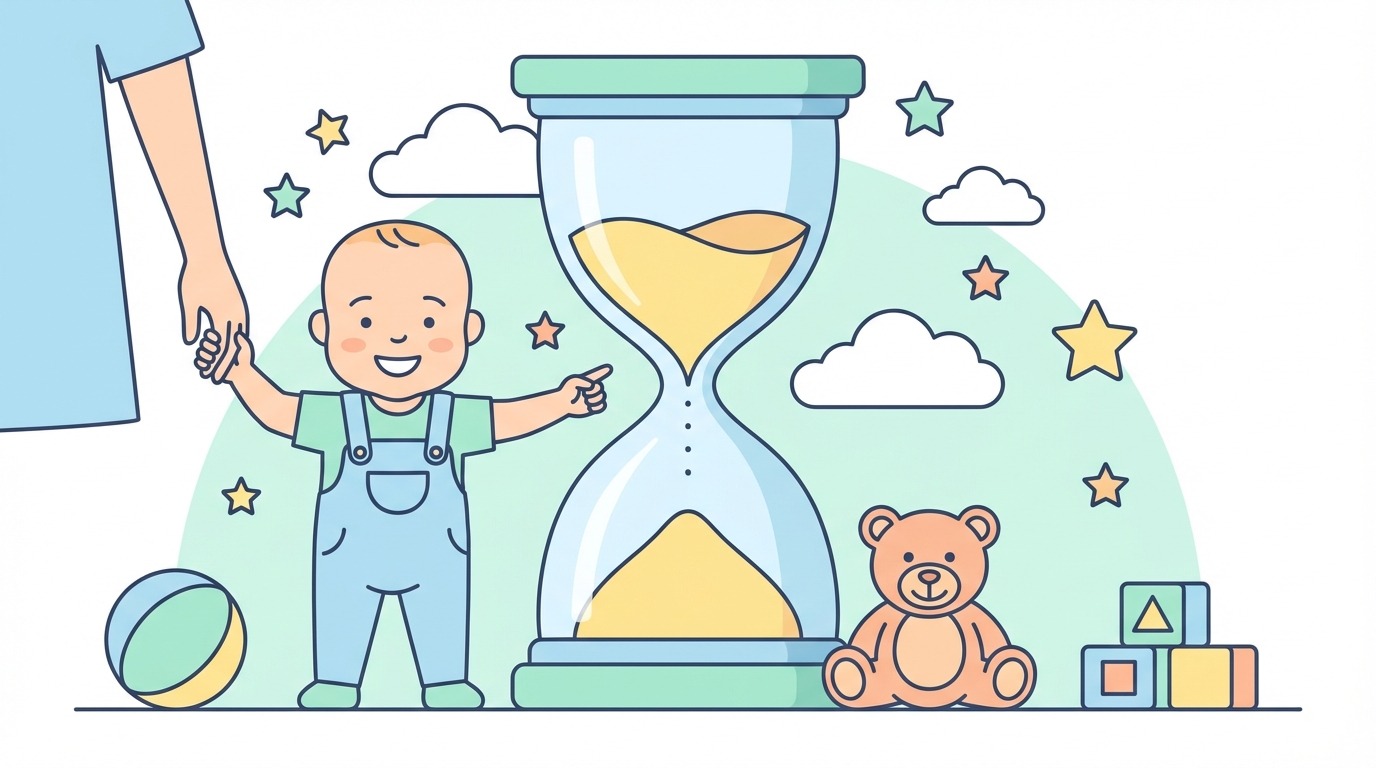
Abstract time becomes concrete thanks to simple supports. A 1-minute hourglass, a 20-second nursery rhyme, or a visual disc timer provide a clear horizon. The “first/then” cards structuring two steps help the child project. Example: “first we put on shoes, then we go out.” This way of speaking, short, precise, and positive, sets a soothing scene. Waiting stops resembling a punishment; it becomes a phase of a regulated game. Little ones find a secure cue there.
Observing signals to dose the wait
Before the storm, the body speaks. An evasive gaze, tense shoulders, a rising voice: these signs announce a limit. Conversely, steady breathing and a grounded gaze validate continuation. Adjusting the delay live avoids tipping into crisis. Take “Lina, 2 years old”. Saying “wait” triggered crying. Replacing it with “watch the sand go down, then we open” extinguished protest. The delay wasn’t longer. It was now readable, thus acceptable. This proves that form matters as much as duration.
Patience builds better in pleasure. Finger games, picture books, small missions (“find the blue sock”) fill the “wait” slot with controlled action. This shift from enduring to acting changes everything. To go further on framing and daily tips, a clear dossier on how to make a child wait offers easy-to-apply markers. The guiding idea sums up like this: meaning, visuals, ritual.
Techniques and educational games to make wait without crying
Speak short, positive, and sequenced
Winning instructions are brief and concrete. “First we close the coat, then we press the elevator.” Concrete time markers reassure: “when the song ends, we leave.” Also, offering guided choice calms impulse: “do you prefer the green or red hourglass?” This language places the child in an active role. Avoid vague formulations (“wait a bit”) to reduce misunderstandings and frustration.
Visual timers, hourglasses, and weather tokens
A red disc that decreases is a promise moving forward. The visual timer supports tolerance to frustration. Short hourglasses work well for “waiting for my turn” or tooth brushing. Weather tokens symbolize effort without judging the person: sun for “successful wait”, cloud for “difficult today”. We describe the action. We praise effort, not perfection. This approach develops intrinsic motivation and lasting patience.
Smart distraction
The best way to be patient is often to occupy the mind with brief fun activities. Flash missions: “put away three cubes”, “find a round object”, “spot a blue car”. These micro-tasks support self-control and anticipation. On the side of structured entertainment, the first educational turn-taking games set a natural waiting framework. They also boost imagination. A useful selection of creative board games offers modular ideas from age 2, to strengthen attention and cooperation.
On the ground, “Noé, 3 years” was pushing at the slide. A clear rule “one slide each, then we switch” and a 30-second disc sufficed. The children aligned on the common rule, not on strength. Pressure dropped. This illustrates a simple mediation, replicable everywhere.
To guide implementation, watching a short demonstration often helps. This video resource shows how to present the timer without dramatizing. It also offers a step-by-step to install the ritual and strengthen adherence, even with very lively children.
Emotional co-regulation and sensory hygiene during waiting
Validate, contain, guide
When emotion overflows, the winning trio applies. We validate: “you’re angry, it’s hard to wait.” We contain: warm contact, breathing together. Then we guide: “look at the arrow, when it reaches the bottom, we go.” This protocol transforms raw anger into channeled energy. It protects the relationship and anchors a bodily memory of calming. The adult lends their calm. The child returns it later, a bit more each day.
Regulatory movements and outdoors
Movement lowers internal pressure. Before a constrained time, offering a 60-second “warm-up” changes the outcome. A few easy and effective ideas:
- 🐸 Jump like a frog 10 times to unload energy.
- 🌬️ Blow out an imaginary candle to lengthen exhaling.
- 🧸 Massage hands with neutral cream to ground oneself.
- 👣 Walk barefoot on a mat for a sensory “reset.”
- 🎯 Gently throw into a basket, three tries then stop.
The outdoors speeds emotional recovery. Time at the park or on a balcony vents tension. Practical cues on how to play outside with baby help plan these breaths. For calm awakening moments, soft sensory toys stimulate without exciting. Some inspiring paths appear in this overview of gentle awakening moments.
Concrete case and prevention
“Milàn, 20 months,” hit when the screen was cut. A three-step ritual reversed the trend: short rhyme, turning off, cuddle near the window. In a few days, the storm became drizzle. The key message remains prevention. Anticipating hunger, thirst, and tiredness avoids escalation. A “serenity” bag helps: water, soft snacks, picture book, comforter, small hourglass.
In real situations, this video allows visualizing the tempo of guided breathing and co-regulation gestures. It also shows the correct bodily distance to support without invading. In the end, waiting becomes an emotional training ground, not a battlefield.
Waiting routines at home and outings: ready-to-use scripts
Meals, bath, bedtime: reassuring sequences
Before meals, assign a mission: “put down three spoons.” Then start a 1-minute hourglass. At bath time, offer a waterproof picture book while the water runs. At bedtime, ritualize “flower scent, candle breath” to soothe. These short and consistent scripts anchor patience. They align body, head, and emotions. A well-planted routine acts like a beacon: it frames, even on restless evenings.
Queues, trips, waiting rooms: the logistical armor
In a waiting room, lay down a “story-mat”: three images to point to in order. On trips, play “I see… a red circle,” “look for a bus,” “rhyme with -ou.” These fun activities make time a material to explore. At the park, announce the end with a timer: “when it rings, we say goodbye to the slide.” This predictability soothes. It also nurtures mutual trust.
Safety remains non-negotiable. Early awareness protects. Facing dogs, the rule “we look, we ask, we stroke gently” is taught through role play. For practical advice, see these useful guidelines to prevent dog bites. Finally, some imitation toys strengthen autonomy and constructive waiting. A concrete overview of benefits is here: imitation material and autonomy. Each tool turned ritual reduces power struggles and encourages calm entertainment.
To further structure these routines, this step-by-step guide on making a child wait details ready-to-use ideas. The goal is not to hold on longer, but to hold on differently, with meaning and play.
Measure progress and adjust techniques with kindness
Realistic and flexible milestones between 12 and 36 months
From 12 to 18 months, aim for 15 to 30 seconds of accompanied waiting. From 18 to 24 months, alternate short turns with visual aid. From 24 to 36 months, chain two small sequenced actions. These goals remain flexible. What matters is the trajectory, not the record. We strengthen the child by valuing every step: “you waited until the beep, well done.”
Simple and motivating tracking tools
A mini weekly chart suffices. Three lines: goal, observation, adjustment. Example: “hand washing hourglass – OK twice – move to 90 seconds.” Add a sun sticker when effort is visible. Above all, ban fixed labels. Describing facts nurtures self-esteem. To enrich this area, a detailed article explains how to avoid behavioral labels. This language hygiene positively changes the home climate.
Flexibility in sensitive periods
In case of moving or baby arrival, temporarily reducing demands protects progress. Keep key rituals. Lower duration. Then gradually increase. Practical markers on managing moving with a 1-3 year old help plan adaptation. This flexibility strengthens cooperation. It reminds the child that the frame remains reliable, even when life shifts.
To stay concrete, here is a short list of micro-skills to track:
- ⏳ Wait 20 seconds with a visual support.
- 🗣️ Say “again” or “after” instead of shouting.
- 👫 Respect turn-taking in a small game.
- 🧠 Refocus with guided breathing.
When these building blocks pile up, patience settles in. Transitions become smoother. Calm returns faster. Then we reap what we sowed: shared pride and a calmer home.
How long can a 2-year-old child reasonably wait?
Between 15 and 60 seconds with clear support (hourglass, timer, nursery rhyme). The delay increases if the child knows what to do during the wait and feels secure. The goal is winning repetition, not performance.
What to do if the child cries despite the hourglass?
Validate the emotion, bring the body closer, breathe together, then shorten the time. Start again with a brief success, praise, and extend later. No need to insist if the emotional wave is too high.
Do screens help to make wait?
They capture attention but do not lead to patience. Better a active and sensory support (book, blocks, picture book). Reserving screens for chosen and short moments limits overexcitation.
Should rewards with sweets be given?
Favor social and symbolic reinforcers: specific praise, stickers, the role of “helper”. Sweets confuse the food message and create external dependence.
How to act in public when waiting derails?
Get down to the child’s level, speak softly, offer a simple task, then step out briefly if necessary. Protecting the child’s and your dignity speeds up calming down.
“Patience is sown in seconds and reaped in trust.” ✨