Chemical Products X-rays Pregnancy: Pregnancy: chemical products and X-rays.
| Short on time? Here’s the essentials 🌟 |
|---|
| ⚠️ Limit exposure to everyday chemicals and favor simple actions (gloves, ventilation, dilution). |
| 🖌️ Low-VOC latex paints yes, oil-based paints and strippers no during pregnancy. |
| 🧴 Avoid air fresheners/room perfumes and aerosol insecticides indoors. |
| 🧪 X-rays only if necessary, with radioprotection and the ALARA principle; otherwise, prefer ultrasound. |
| 🚰 Lead: use cold water, flush 1–2 min, and a NSF certified filter in at-risk areas. |
| 🌿 Pesticides and herbicides to avoid; keep gloves when gardening and delegate flea treatments. |
| 🏥 At work, declare pregnancy early to adapt the workstation and reduce chemical risks. |
Between everyday chemicals and sometimes essential x-rays, safety during pregnancy relies on concrete trade-offs. The goal isn’t to live in a sterile bubble, but to reduce avoidable prenatal toxicity through informed choices. From household cleaners to paint, wood heating to radiation exposure, every action counts to protect the effects on the fetus while maintaining a normal life.
Across situations, a clear guideline emerges: prefer simple alternatives, ventilate widely, read labels, and inform about pregnancy before any imaging. Radioprotection recommendations have existed for years, and home practices can also follow a risk prevention logic. Reliable and easy-to-follow benchmarks now take the stage.
Pregnancy, everyday chemicals, and prenatal toxicity: good reflexes at home
Daily life holds useful molecules but also irritants or sensitizers. During pregnancy, biological barriers evolve and the fetus grows fast. It thus becomes more vulnerable to low doses. The good news? Simple measures significantly reduce exposure.
Cleaners, air purifiers, and detergents: reasoned use and alternatives
Dish soaps, detergents, and all-purpose cleaners are generally safe when following the label. However, it’s better to wear gloves to limit skin absorption and open a window to ventilate. Insecticide aerosols indoors should be avoided as they leave inhalable residues.
Air purifiers, incense, scented candles, or plug-in diffusers release solvents and allergens. They can linger for several hours. The safest approach is to avoid them or choose fragrance-free products. The “clean” smell mainly comes from renewed air, not a fragrance.
So-called “organic” products are not necessarily risk-free. A short formulation without recognized hazardous agents is often preferable. It is useful to favor simple recipes: water, vinegar, baking soda, or black soap, which reduce exposure to complex mixtures.
Paint, strippers, and VOCs: what to prioritize
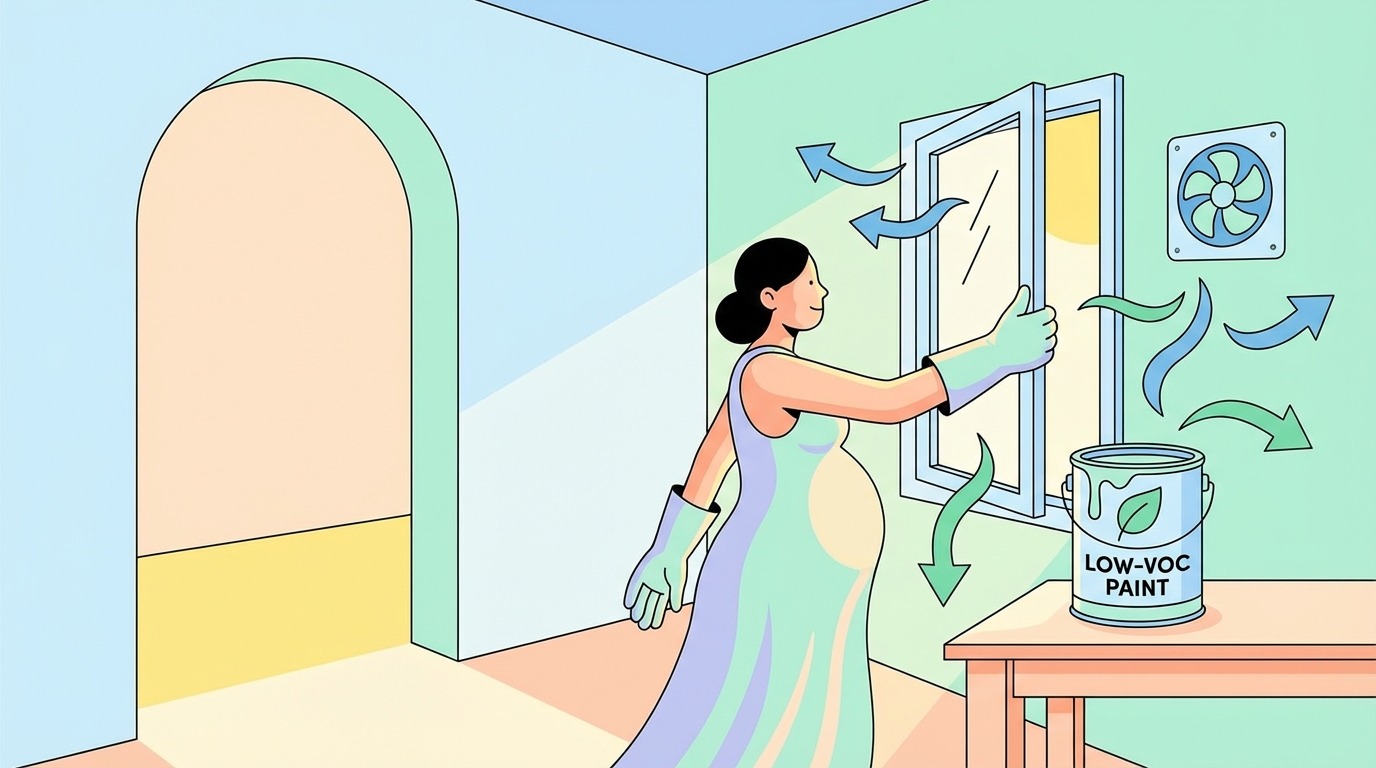
In renovation, latex paints (water-based) are suitable if exposure remains brief and ventilation generous. Ideally, choose products without or with low VOC content. Oil-based paints and strong solvents should be avoided, as well as stripping projects that raise old coatings and spray toxins.
Old houses may contain layers of lead paint, especially before 1991. Without sanding, the risk remains limited. A safe technique is to cover with a new layer or wallpaper, rather than sanding. Caution is advised with turpentine and other strong solvents.
- 🧤 Wear gloves and ventilate 10–20 minutes after use.
- 🪟 Favor simple cleaners (water, vinegar, baking soda).
- 🖌️ Choose low VOC paints and delegate the work.
- 🚫 Avoid insecticide aerosols, strippers, and oils.
- 🌬️ Wait for complete drying before reoccupying a room.
A typical family: Lina wanted to refresh a room. She selected a paint labeled low VOC, entrusted the application to a relative, and ventilated for two days. Result: a quick job, no persistent odors, and well-managed risk prevention.
X-rays and radiation exposure during pregnancy: deciding with method
Should we avoid x-rays? Not necessarily. Diagnostic radiation exposure varies greatly depending on the exam and area scanned. The key rule remains the ALARA principle: As Low As Reasonably Achievable. The exam is done if the medical benefit clearly outweighs the theoretical risk, minimizing dose to the strict necessary.
Radioprotection in practice: ALARA, shielding, and alternatives
Radioprotection relies on three levers: justification, optimization, and limitation. In short, the exam must answer an important clinical question, be done with adapted parameters, and benefit from protective screens when useful. A lead apron or equivalent, adjusted by the team, greatly reduces the incident dose.
When imaging is not urgent, it can be postponed. Otherwise, alternatives exist: the 2nd trimester ultrasound explores many organs without ionizing rays. MRI without gadolinium can also contribute to diagnosis depending on context.
A non-negotiable point: inform the team that pregnancy is ongoing. This simple phrase guides the protocol, exam choice, and shielding. It avoids unnecessary repetitions and reduces cumulative exposure.
A telling example: after a fall, Emma must document a fracture. The team chooses shots limited to the injured area, with tight diaphragm and lead apron. Without this imaging, care delay would prolong pain and recovery. Here, the exam is essential, and the dose remains very low for the fetus.
Dental x-rays and targeted assessments: pragmatic wins
Dental x-rays typically deliver a negligible fetal dose, as the beam is not directed toward the abdomen. Oral health affects overall health; treating infections prevents systemic complications. Better secure the procedure, report pregnancy, and apply appropriate protection.
For reference, thresholds for deterministic effects are well above doses from most standard diagnostic exams. This reassuring data should not trivialize decisions: we follow the logic “clear medical question, optimized protocol, maximum protection.” In summary, caution rhymes with efficiency.
Lead, water, and indoor air: managing invisible exposures
Lead can accumulate in the body. During pregnancy, it crosses the placenta and can cause miscarriage, prematurity, or low birth weight. Old water distribution networks still pose questions. In several cities, including Montreal, lead pipe replacement deadlines are in 2026, but some sections remain locally.
Drinking water: certified filters and simple habits
Concrete actions protect daily: use cold water for drinking and cooking, as hot water dissolves more lead. After a night, run the tap for one to two minutes. In risk areas, add a NSF certified filter at the point of use. These measures reduce ingested dose while maintaining sufficient hydration.
Homes built before the 1970s are more likely to have retained old sections. A water test or contact with the municipality helps decide. In the meantime, a certified filtering pitcher is an economical and quick solution.
Indoor air: wood stoves, VOCs, and room perfumes
Wood heating releases fine particles, carbon monoxide, and hydrocarbons. It’s better to choose electricity when possible, or limit stove use, especially in living spaces. Paints, glues, and varnishes can also emit VOCs; choosing low-emission lines and systematic ventilation reduce inhalation.
Room perfumes and air fresheners do not “clean” the air; they mask odors and add solvents. During pregnancy, a safer strategy is to ventilate and treat the source of odors. A room low in perfumes reduces respiratory chemical load.
| Source of exposure 🌍 | Signs/Examples 🔎 | Risks for the fetus 👶 | Key action ✅ |
|---|---|---|---|
| Lead in water | House built before 1970, metallic taste | Developmental disorders, low weight | NSF filter, cold water, flush 1–2 min |
| Old paints | Flaking, planned sanding | Lead inhalation/ingestion | Cover, avoid stripping |
| Wood stove | Smoke odors, closed windows | Respiratory irritation, hypoxia | Favor electricity, ventilate |
| Air fresheners/perfumes | Aerosols, scented candles | Irritants/persistent VOCs | Avoid, ventilate |
Throughout, air and water require gentle and continuous vigilance. A few routines suffice to protect.
Gardening, pets, and outdoor habits: reducing chemical footprint
The garden seems healthy, yet pesticides and herbicides remain active products designed to destroy organisms. During pregnancy, they are to be avoided when applied. If intervention is unavoidable, gloves, covering clothing, and careful reading of safety sheets become essential.
Pesticides, herbicides, and derivatives: alternatives exist
Manual weeding, thick mulching, or frequent hoeing can replace spraying. Mechanical traps limit insecticide use. Several garden centers offer targeted biological solutions, less volatile and more compatible with a risk prevention approach.
When the soil is turned, animal droppings or parasites may be present. Gloves and rigorous hand washing after the activity reduce infection risk. Clothes worn in the garden will be washed separately.
Pet care and toxoplasmosis: delegate risky tasks
Flea or tick treatments should be applied by another person. Cats can host Toxoplasma gondii. Therefore, litter handling should ideally be done by a third party; failing that, disposable gloves and strict hygiene are mandatory. Absolute risk remains low but avoidable.
In Lina’s story, the vet entrusted flea pipettes to her partner, and litter was managed alternately. Walks were taken away from chemically treated areas. This pragmatism reduces cumulative exposure without giving up the company of a pet.
Finally, beware of unexplained fevers. A fever during pregnancy deserves prompt advice, especially if occurring after environmental exposure. It’s better to document associated symptoms early.
Work, regulations, and safety culture: transforming the professional environment
Informing the occupational physician early allows assessment of chemical risks and workstation adaptation. Adjustments may include product substitution, reduction of exposure tasks, enhanced ventilation, and PPE. Declaring pregnancy is not a mere administrative detail: it’s a powerful preventive lever.
Reprotoxic substances, radiation, and organization
Labor law regulates exposure to agents classified as reproductive toxins (categories 1A/1B under CLP). In some sectors, ionizing radiation is also monitored. Professional radioprotection applies, with dosimetry, screens, and zoned procedures.
A laboratory can replace a solvent with a version having reduced VOCs, move a step to a ventilated enclosure, or split tasks to limit individual dose. This real-world engineering protects health without hampering activity.
5-step action plan at work
- 📝 Declare pregnancy early to trigger measures.
- 🔍 Map jobs and assess exposure (data sheets, measurements).
- 🔁 Substitute or remove major sources (control hierarchy).
- 🌬️ Optimize ventilation, procedures, and team training.
- 🛡️ Provide PPE, monitoring, and regular re-evaluation.
Medical vulnerabilities also matter. Hypertension or diabetes sometimes require schedule adjustments. For pregnancy after 40, safety margins will be increased, without ending in immobility. Anticipation is key.
Finally, the planned ultrasound remains an excellent follow-up benchmark. At the slightest alert, dialogue with occupational health and care teams avoids blind spots. Safety is a team sport.
“Less risk, more control: every informed choice during pregnancy builds a protective environment for the life beginning.”
Are dental x-rays allowed during pregnancy ?
Yes if justified, with a lead apron and optimized protocol. The beam not being directed toward the abdomen, the fetal dose remains very low. Always report pregnancy to the team.
What paint to choose for a baby’s room ?
Choose a low VOC latex paint. Delegate application, ventilate well, and wait for complete drying before occupying the room.
How to reduce lead risk in water ?
Use cold water for drinking and cooking, flush for 1 to 2 minutes in the morning, and install a NSF certified filter if your home is old or in a risk zone.
Are air fresheners problematic ?
They emit solvents and allergens which can persist. It is better to avoid them during pregnancy and rely on ventilation and odor source treatment.
What to do if occupational exposure is unavoidable ?
Declare pregnancy to the occupational physician, request exposure assessment, implement substitution, and enhance ventilation. PPE complements risk control.