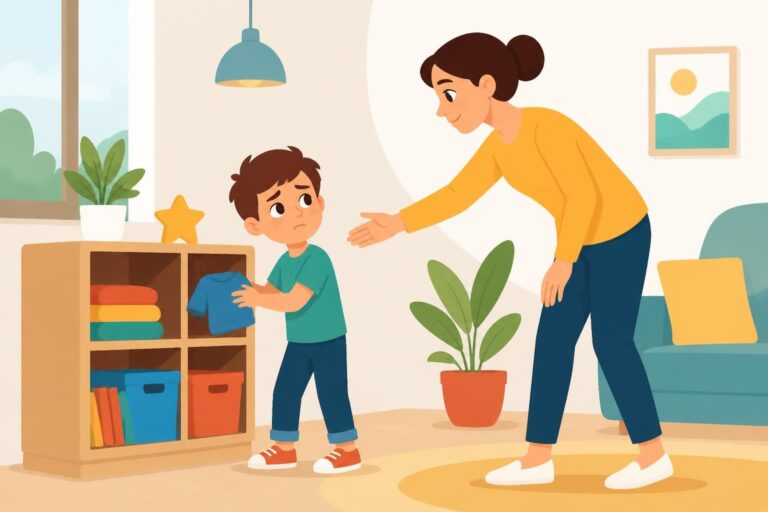
Motivate Homework Child: Podcast GPS: motivate your child to do their homework.
| Short on time? Here’s the essential ⚡ |
|---|
| 🎯 Break down homework into small tasks of 10-15 minutes with micro-breaks. |
| 🧭 Set up a fixed ritual (snack, movement, homework, play) for a focused child. |
| 💬 Use coaching language: “What do you want to start with?” instead of “Come on, hurry up.” |
| 🏆 Rely on a visual progress chart and concrete encouragements, not threats. |
| 🎧 Take inspiration from an educational podcast like GPS to pick validated motivation techniques. |
| 🤝 Establish a school-home partnership to quickly resolve blockages. |
Homework time sometimes feels like an endless climb. Lack of motivation, fatigue, wanting to go play… excuses fly and tension rises. Yet, solutions exist that are accessible, concrete, and already tested by families. Thanks to the landmarks of an educational podcast like GPS, contributions from psychoeducator Solène Bourque, and well-thought homework support, the evening period can become gentler.
In this spirit, the story of Patrick and his daughter Zoé, in first grade, sheds light on the way. With some routine adjustments and simple motivation techniques, the family saw a clear change. The supportive parent transformed into a calm and structuring ally, and the focused child rediscovered the joy of learning. The goal is clear: motivate the child without yelling or blackmailing, aiming for lasting academic success.
Motivating child homework: understand the real obstacles before acting
Before pulling out a new trick, it is strategic to analyze the causes. Without this diagnosis, efforts fade quickly. A child can refuse a task for multiple reasons: fatigue, anxiety, need to move, undetected difficulty, or feeling of failure. Identifying the primary obstacle directs the most effective method.
Fatigue, blood sugar, and end-of-day rhythm
After school, attention naturally drops. The brain has been working for hours, and blood sugar has fallen. A gradual landing is necessary. A protein snack and a glass of water rehydrate and boost energy. This simple step prevents many resistances and facilitates homework motivation.
Then, a 10-minute movement break activates the arousal systems. Hopping, dancing, climbing the stairs twice is enough. The body regulates itself, and the mind becomes available again. Without this break, the child risks collapsing onto the chair. The battle then starts for the wrong reasons.
Play, freedom, and need for self-determination
School imposes a strong framework. At the end of the day, a need for control reappears. Offering simple choices makes the child an actor: “Do you prefer to start with reading or math?” Two options, not ten. The illusion of choice is often enough to reignite engagement. Motivation techniques thus align with the child’s psychology.
Play itself is not the enemy. It is energy. Integrating a playful part into homework organization reduces opposition. A colorful hourglass, a vibrating timer, a pawn progressing with each completed task are all concrete levers. The child sees their progress. The positive spiral starts.
Performance stress and beliefs of incompetence
Many children fear making mistakes. Fear of judgment blocks risk-taking. Yet, learning requires trying, making mistakes, and trying again. Transforming error into information is crucial. Saying “Your idea is good, let’s refine it together” calms the alert system. Academic success then roots itself in inner security.
Another sensitive point: comparison. “Look, your brother finishes faster” extinguishes the flame. It’s better to follow the individual path: “Today, you read two pages without stopping. That’s new and solid.” A targeted attention is worth a thousand vague praises.
Case study: Patrick and Zoé untangle the knot
Zoé, first grade, used to complain, procrastinate, get upset. Patrick was exhausted. With the approach proposed in an educational podcast, the routine changed. Snack, 8 minutes of jump rope, then a short time on the easiest task. The smooth start transformed the atmosphere. The supportive parent regained their place: contain and encourage.
After two weeks, Zoé checks off her missions on a homemade progress card. For each box, she earns playtime. No blackmail, a clear contract. She feels competent, Patrick stays calm. The homework motivation mechanism is being set up.
Highlight: positive feedback from the teacher. “Zoé participates more.” The virtuous circle expands. Homework is no longer a battlefield. It becomes a secure training ground. This first victory opens the door to further optimizations.
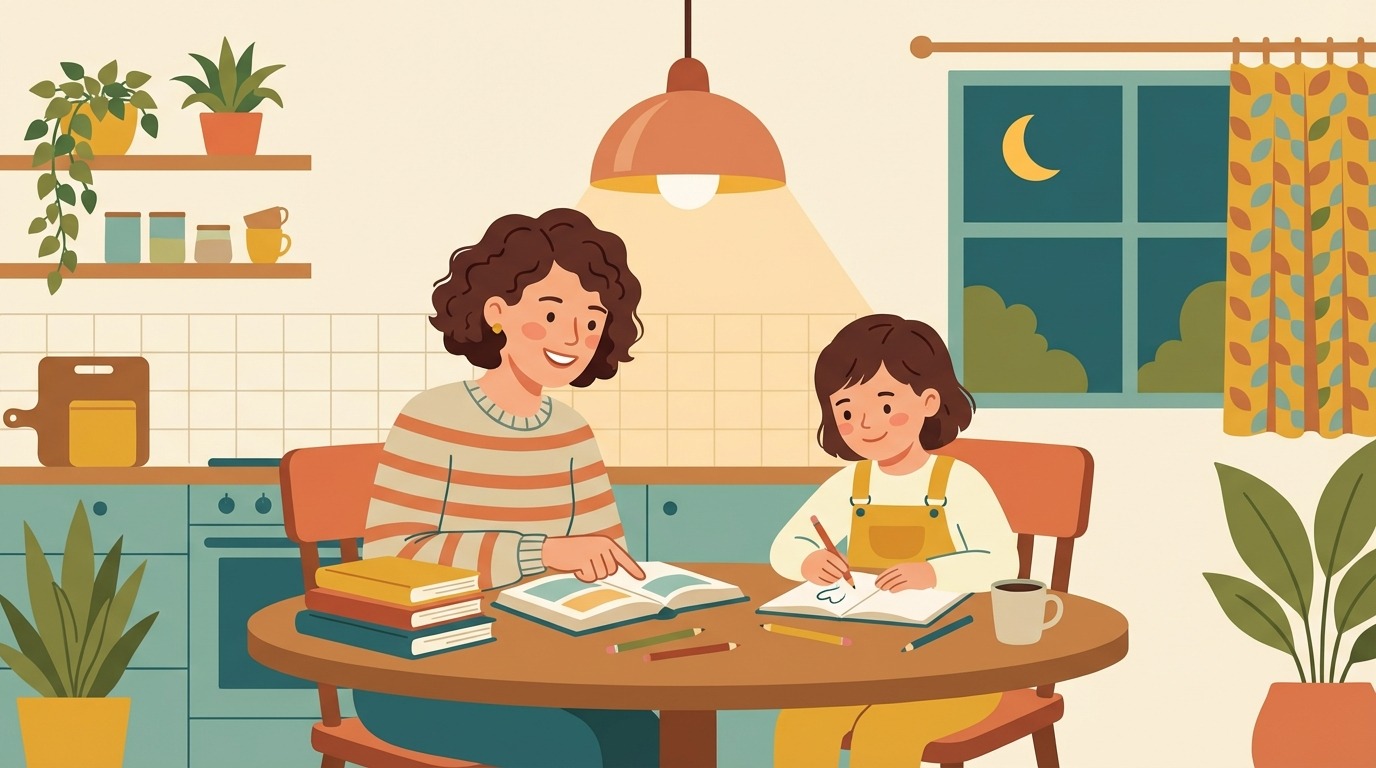
Homework organization and GPS rituals: a framework that frees the focused child
A predictable framework soothes. Attention strengthens when the brain knows what to expect. Building a GPS ritual (Gesture–Pause–Sequence) replaces constant reminders with a gentle automatism. Each step repeats, always in the same order, to secure momentum.
The arrival break at home
Gesture: put the backpack in the same spot. Pause: drink and snack. Sequence: 10 minutes of movement. This simple trio installs an anchor point. The child understands that homework doesn’t fall “on” them, it comes “after” a constant preparation. This clear separation reduces opposition.
A pictogram per step helps younger children. Visual children love following a chart. We place the pictograms at eye level: backpack, apple, water, dance steps, desk. The child checks, progresses, sometimes laughs. Seriousness and play coexist and reinforce homework organization.
A workspace that protects attention
The desk is thought of as a stage. Nothing unnecessary, everything within reach. We avoid hunting for scissors during an exercise. A “mission” box contains the day’s essentials. The pleasure of nice supplies acts as a micro-boost. Notebooks line up, ideas too.
For children sensitive to noise, a lightweight noise-cancelling headset suffices. No music with lyrics during complex tasks. Neutral background noise can work for coloring or routine exercises. The key remains consistency and sobriety.
Clock, timer, and micro-breaks
The clock reassures, the timer stimulates. A 12-minute block, then 2-minute break, is better than a 40-minute tunnel. During breaks, get up, drink, look into the distance. No collapsing in front of a screen. Return before inertia wins.
Some children benefit from a “rocket launch.” Count 3-2-1 and press the timer together. This simple ritual creates a kinesthetic anchor. The brain associates the sound with the task start. Conditioning becomes an ally daily.
Practical checklist to display near the desk
- 🧃 Snack + water = energy restored
- ⏱️ Timer 12/2 = winning rhythm
- 🧰 Complete kit = zero interruption
- 🧩 Start with the easiest = training effect
- 🏁 Finish with a victory = positive memory
To go further, daily reading remains a major lever for motivation and pleasure. A file on the benefits of reading in children offers ideas to enrich this habit without forcing it. This quiet time creates a strong foundation for learning.
Another useful landmark: some refusals to open the notebook are linked to the school itself. This guide on school refusal in 5-8-year-olds helps recognize signals and react without dramatizing. Understanding better is already soothing.
Motivation techniques validated by an educational podcast: from reinforcement to play
The GPS podcast features families and experts to translate theory into simple actions. Lively animation, concrete advice, measurable results: this format fits life. Psychoeducator Solène Bourque’s proposals revolve around a powerful principle: secure, pace, value.
Precise and measurable positive reinforcement
Saying “Well done” is not enough. You need to target the action. “You reread your sentence slowly, that’s exactly what prevents missing the period.” The child understands cause and effect. This is combined with visual tracking, for example a progress thermometer. Each graduation corresponds to a gained habit.
To maintain momentum, privilege competence rewards. Chosen reading time, cooperative play, craft moments. Emphasize effort, not just the grade. The learner identity strengthens, academic success becomes more stable.
Guided autonomy and ability to act
Autonomy does not mean abandonment. Offer framed choices, guide planning, co-construct task order. The supportive parent questions rather than commands. “Which step might be the trickiest? How will you handle it?” These questions open reflection.
A clear contract formalizes commitment. Two signatures, short duration, concrete criteria. No more constant negotiation, place for shared framework. The child becomes a partner in their success. Initiatives multiply, homework motivation feeds itself.
Gamification and motivating storytelling
Re-enchant without infantilizing, it’s possible. A “quest” of the week with an avatar who progresses works very well. Each completed homework earns a star. Five stars unlock a short and quality parent-child activity. The emotional bond becomes the true reward.
Storytelling also motivates the most reluctant. “Today, lightning mission: find the three mistakes hidden in this text.” Curiosity overcomes inertia. Play becomes a bridge to rigor. Balance lies in variety and brevity.
Review on Zoé: a clear before/after
In the homework episode, Patrick tested the “step card” and micro-breaks for three weeks. Zoé felt supported, not pushed. Her attention curve rose, frustrations dropped. The teacher noted more oral participation. Family tensions melted away in the evenings.
To nourish this virtuous circle, the home added shared listening times to youth podcasts. The ear is trained, vocabulary expands, and the desire to learn spreads in everyday life. The effects spill beyond the school setting.
Need other sensory ideas to support attention? Playful resources like music serving children offer simple ways to stimulate without overload. The body also learns through rhythm and melody.
Homework support and supportive parent: communicate without conflict, cooperate with the school
The way we speak to children builds bridges or walls. During homework time, the relationship matters more than the procedure. Poorly chosen words can lead to crisis. Conversely, a soothing word revives effort. The quality of the bond guides work quality.
Coaching language: questions that open, verbs that carry
Replace “Do your homework” with “What do you choose to start with?” and everything changes. The brain doesn’t get defensive. Concrete action verbs guide: “read, circle, underline, check.” Positive formulations keep attention on the task. It seems simple, but it’s remarkably effective.
When the child blocks, an empathetic reformulation helps: “You find this long, and you still want to succeed; shall we do a mini-step?” The yes often comes. Negotiation fades. The feeling of cooperation returns. This approach nurtures homework motivation without raising the tone.
Emotion management: preventing the storm
Guided breathing in 30 seconds, glass of water, stretches: a quick trio to defuse. A calm corner with an anti-stress ball and an hourglass acts as refuge. We don’t exile the child, we give them a tool. Returning to the desk becomes an autonomous choice.
Science explains these benefits: self-regulation reduces activation of the brain alarm system. When the amygdala calms, the cortex takes over. To understand these mechanisms and better adjust support, a spotlight on children’s brain reaction to separation shows how affective security pilots attention.
School-home partnership: clear and brief messages
A concise email to the teacher often opens solutions. Objective: describe a fact, ask a question, propose a lead. “Attention problem in copy. Idea: wider ruling?” Replies come, blockages fall. Adult coherence secures the child.
Requesting a temporary accommodation isn’t “cheating.” It’s adjusting the pace to the child’s leg. We lighten quantity, reinforce quality. The goal remains autonomy, but not at the cost of tears. One step at a time, self-esteem grows.
For inspiration, a field video directory, like these Naître et grandir educational capsules, offers very concrete demonstrations. Observing is already learning. Pick a tip, try it that very evening.
When adults breathe, children learn better. This simple equation acts as a compass. It transforms homework time into a life skills workshop: patience, planning, perseverance. It’s an investment for everything else.
Lasting academic success: connecting homework, reading, arts, and family life
A rich ecosystem supports learning. Academic success is not just at the desk. It builds through stories we read, songs we hum, objects we make. Neurons love variety. Skill transfer becomes possible.
Daily reading: the discreet turbo
Reading aloud 10 minutes a day boosts vocabulary and attention. Children immersed in stories better understand instructions. Reading strengthens working memory and imagination. This duo helps as much in math as in science.
Need ideas for albums and motivating reading rituals? This overview of the benefits of reading for children reveals how to choose captivating texts without pressure. Taste develops by reading, not preaching.
Music and rhythm: concentration in motion
Musical activities refine listening, sense of rhythm, and auditory memory. These skills impact spelling and languages. Integrating a weekly musical time structures attention and amuses the family.
To equip yourself with simple ideas, the page dedicated to musical games for children offers playful leads. Gesture songs, table percussion, improvisations. The brain loves combining rhythm, movement, and language.
Crafting and manipulation: from concrete to concept
Building, cutting, measuring is thinking with hands. Craft projects give meaning to concrete math: length, angle, volume. By making an object, the child experiences perseverance and precision. These skills then transfer to homework.
Ready-to-use ideas? This directory of crafts for 5-8 years olds stimulates creativity while consolidating skills. Half an hour suffices to feel pride in completing a task. That’s exactly what school expects too.
Ultimately, balance between training and leisure remains the best insurance. We dose efforts, respect rhythms, highlight every little step. The evening breathes, the child breathes. And the whole home gains serenity.
Express 7-step action plan
- 🗺️ Define the GPS ritual and display it.
- 🧃 Install snack + movement before any task.
- ⏱️ Set the 12/2 timer and stick to it for a week.
- 🧩 Start with the easiest task to trigger momentum.
- 📊 Create a progress chart with visible goals.
- 💬 Adopt 3 coaching phrases and repeat as needed.
- 🤝 Write to the teacher in case of persistent blockage.
Practical summary tools
| Homework motivation checklist ✍️ |
|---|
| Timer 12/2 → pace that protects attention ⏳ |
| Clear contract → concrete goals + short duration 📄 |
| Precise reinforcement → name useful effort 🎯 |
| Minimalist space → zero visual distraction 🧼 |
| Active micro-breaks → move, drink, breathe 🧘 |
| Calm supportive parent → self-regulation model 🌿 |
“A homework is never just one page; motivation writes the whole book.”
How much time should a child spend on homework in primary school?
Most progress better with 20 to 40 minutes broken into short blocks (10-12 minutes + 2 minutes break). Adjust according to age, daily fatigue, and the actual difficulty of tasks. A brief, focused, and regular work outperforms a long exhausting session.
What to do if my child systematically refuses to open their notebook?
First install the snack + movement ritual, then offer a framed choice: start with reading or math. Activate a short timer and aim for a mini-victory. If resistance persists, explore school or emotional causes and contact the teacher for a joint plan.
Are material rewards a good idea?
In the short term, they sometimes trigger action, but they do not install autonomy. Prefer competence and connection rewards: choose a story, play 10 minutes together, present work to a close one. Self-esteem then anchors in effort, not the object.
Music or silence during homework?
Silence or neutral noise for tasks that require understanding and memory. Soft instrumental music can accompany routine activities (coloring, simple copying). Test and observe: the goal remains the quality of attention, not the ideal theoretical ambiance.
Should mistakes be corrected instead of the child?
No. It’s better to guide with clues: « Reread the instruction », « Check the periods at the end of sentences », « Count one more time ». The child must produce the correction to consolidate learning circuits. Your role: frame, support, value the right effort.