Sugar Toddlers: Chronicle: sugar and toddlers.
| Short on time? Here’s the essentials ⚡ |
|---|
| Sugar is omnipresent in the diets of children and toddlers 😮💨: learn to track added sugars to protect child health. |
| WHO recommends targeting 5% of energy from free sugars (maximum 10%) 🍎. |
| Prioritize whole fruits, plain dairy, and whole grains 🥣. |
| Sweetened drinks and juices promote glycemic spikes and cavities 🚫🥤. |
| Moderate without banning 💚: no reward for sweet taste, educate the palate. |
| Set simple rituals 🌟: water at the table, structured snacks, occasional sweet desserts. |
| Before 3 years old, strongly limit added sugars; afterward, offer with moderation 🍯. |
Sugar fascinates as much as it worries parents. In daycare, at home, with grandparents, it shows up everywhere and even sneaks where you least expect it. This article sheds light on the grey areas: how much to offer toddlers, how to preserve pleasure without harming child health, and what habits to adopt daily. The goal is not to ban but to guide children towards a balanced, joyful, and sustainable diet.
Because habits form early, every action counts. A whole fruit rather than juice, a plain yogurt rather than flavored, homemade pizza rather than ultra-processed dish: these repeated choices become reassuring landmarks. And if the sweet taste is loved, it can also be tamed. With concrete strategies, smart label reading, and clever recipes, parents lay solid foundations. Expected result: more stable energy, fewer cavities, and above all a serene relationship with food. Less sugar endured, more flavors chosen.
Sugar and toddlers: clear guidelines for peaceful nutrition
For toddlers, the preference for sweet taste is innate. This appetite comforts the infant, as breast milk and infant formula naturally contain it. However, palate education starts very early. From diversification onwards, variety of flavors shapes lasting preferences. Children regularly exposed to vegetables, whole grains, and whole fruits accept less sweet tastes better later on.
There are several types of sugars. First, natural sugars found in fruits (fructose, glucose) and milk (lactose). These come with fibers, vitamins, and minerals. Then, added sugars, incorporated in cooking or industry: white sugar, honey, syrups. Finally, free sugars, which include all added sugars plus those in juices, honey, and syrups. A whole apple provides fibers that slow absorption. Conversely, apple juice, even 100% pure juice, delivers free sugars rapidly absorbed.
We also distinguish “fast” and “slow” sugars. The first cause a rapid rise in blood sugar. Candies, pastries, and sweetened drinks mainly contain these. The second, or complex carbohydrates, found in bread, rice, legumes, or whole grains, provide sustained energy. For children’s nutrition, this slow energy base remains strategic.
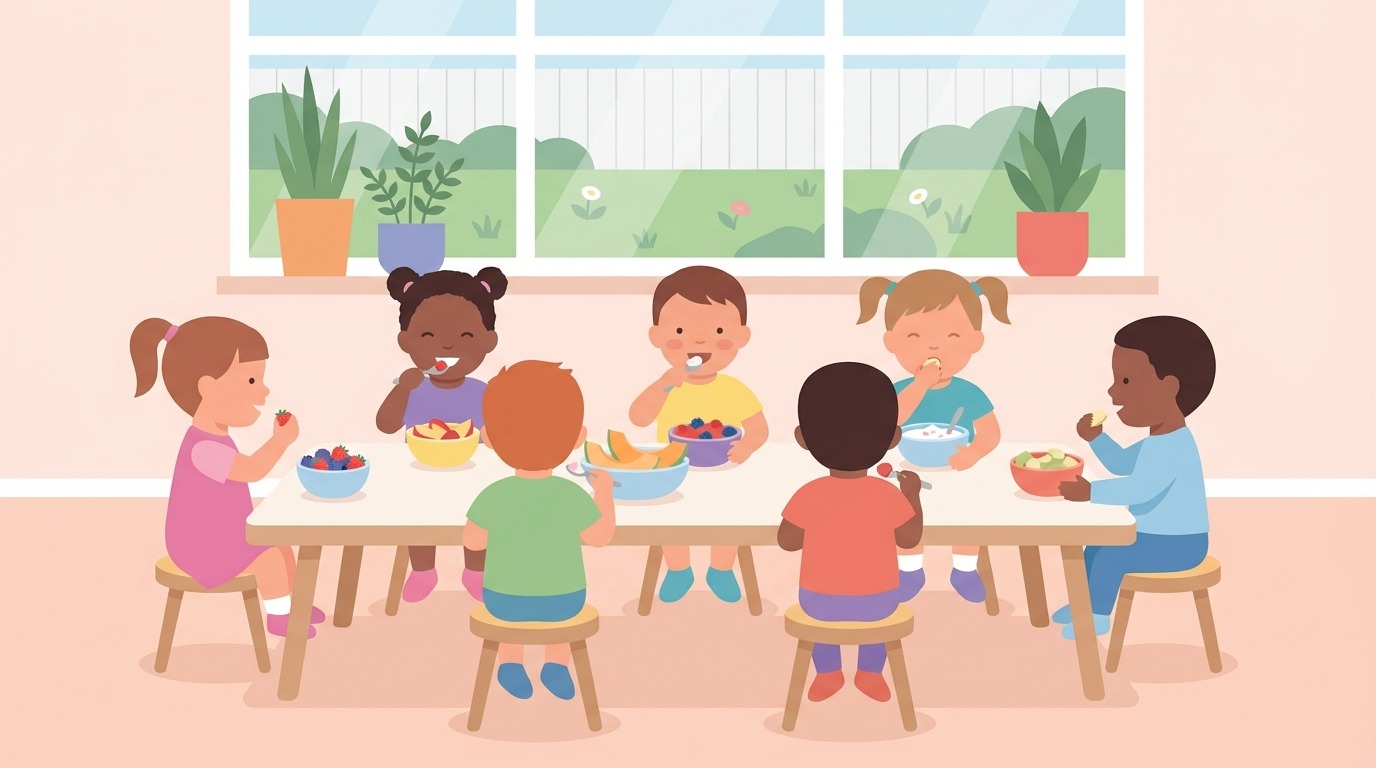
In the fictitious daycare “Seed of Stars,” one simple rule changed everything. Water is the default drink, fruits are served whole, and yogurts are plain. Children first asked for sweets. Then, within two weeks, they adopted these markers with a smile. This shift proves a strong idea: the palate is educated when the environment is consistent and reassuring.
Why such an attraction to sweetness, and how to accompany it?
Sweet taste reassures and rewards instantly. However, used as a currency, it quickly creates conditioning. Conversely, when sweet taste remains just one flavor among others, it loses its aura of prohibition. This approach involves explicit rules. For example, set boundaries for desserts, schedule snacks, and reserve sweet drinks for celebrations.
Parents’ role is decisive. No need for long speeches. Daily example speaks louder. If the family table highlights fruits, vegetables, whole bread, and homemade meals, the child adapts without tension. Pleasure then settles on diversity, not on excessive sugar.
In short, recognizing the natural attraction to sweetness allows action without guilt. The goal is not to ban but to orchestrate a balanced exposure to protect child health.
Recommended quantities and useful thresholds for parents in 2026
International recommendations help set shared benchmarks. WHO advises that free sugars do not exceed 10% of daily energy intake, with an ideal target at 5% for better oral and metabolic benefits. For a child aged 4 to 6, this corresponds roughly to 15–25 g of free sugars per day, or 3 to 5 sugar cubes.
In France, Anses also specifies thresholds for total sugars (excluding lactose and galactose): 60 g/day for 4 to 7 years, 75 g/day for 8 to 12 years, 100 g/day for 13 to 17 years. These values include all sugars, natural and added. However, surveys show many children exceed them. The fault lies with “hidden sugars” present in many processed products.
To get oriented, translate these numbers into concrete portions. A sweetened yogurt may contain 2 to 3 teaspoons of sugar. A glass of juice ranges between 12 and 20 g. An industrial biscuit quickly provides 3 to 5 g per piece. Accumulated over the day, these intakes rise unnoticed.
| Age 👶👧 | Free sugars target 🧭 | Concrete examples 🍽️ |
|---|---|---|
| 4–6 years | 15–25 g/day | 1 whole fruit + plain yogurt + water at the table ✅ |
| 7–12 years | ~25–30 g/day (aim for 5% energy) | Snack: whole wheat bread + unsweetened applesauce + water 🥖🍎 |
| Adolescents | ~30–40 g/day depending on expenditure | Sweetened drinks limited to parties 🎉 |
These benchmarks are not constraints. They help navigate without anxiety. Practically, anchor three levers: water instead of juice, plain yogurt instead of flavored, whole fruits instead of biscuits. With these choices, the remaining margin can accommodate a small programmed treat.
To support this management, anticipate the day. If a cake is planned for a birthday, limit sugars at breakfast and snack. In the family, it becomes a balancing game, not a punishment. Planning soothes: the child quickly understands the framework and feels secure within it.
These thresholds also serve as common language with daycare, school, or grandparents. Sharing the 5 to 10% goal smoothes exchanges. Ultimately, when everyone goes in the same direction, moderation becomes natural.
Sugar in children’s daily lives: where it hides and how to identify it
“Invisible sugar” explains many overruns. It can be found in breakfast cereals, sauces, fruit yogurts, “light” applesauces, juices, and “children’s” biscuits. Even some savory dishes contain it. Hence the importance of decoding labels and spotting sugar aliases.
Decoding labels without getting lost
Sugar also hides under names like sucrose, dextrose, glucose-fructose syrup, maltose, juice concentrate, maltodextrin, honey, agave syrup. When several of these terms appear, caution is advised. On the nutrition table, read “of which sugars.” Ideally, choose products below 10 g sugars per 100 g for regular consumption.
Aim for a short and clear ingredient list. If sugar appears in the first or second position, the product is very sweet. Also, compare real consumed portions with those indicated. A pack may show 12 g “per portion,” but the child eats two.
- 🔍 Tip 1: compare 2 brands in the aisle, choose the less sweet.
- 🥤 Tip 2: replace juice with water + a wedge of squeezed orange.
- 🍶 Tip 3: prefer plain yogurt, add pieces of fruit.
- 🥕 Tip 4: slip a crunchy vegetable into the snack (carrot, cucumber).
- 🧁 Tip 5: reserve industrial cakes for occasions.
To go further on the salt/sugar balance of everyday products, this practical guide helps sort without stress: understanding salt and sugar in children’s foods. And for babies, this dedicated guide provides useful benchmarks: sugar and baby feeding.
Case study: Lina, busy mom, avoids the traps
Lina, mother of two with busy days, thought she was offering “little sugar.” In reality, morning juice, crunchy cereals, and flavored yogurt exceeded the 5% target. By replacing juice with water and a fruit, choosing oats, then a plain yogurt with mashed banana, she reduced free sugars without conflict. The children kept a dessert on Tuesday and Saturday, with full clarity.
To get inspired by winning recipes, the family adopted homemade snacks: these soft apple cookies delight the snack without slipping. And when a sweet condiment joins, a homemade alternative limits free sugars: try this fruit ketchup, mild and fragrant.
Would you like a visual demo to learn how to read packaging with your children? This video research can support the whole family.
In conclusion of this section, keep a simple line: the more a product is processed, the more it risks containing free sugars. Cook, assemble, simplify: homemade cooking makes the path clearer.
Effects of sugar on child health: cavities, metabolism, and behavior
Excess sugar is not limited to cavities. It also weighs on metabolism, energy regulation, and in some children, behavior. Let’s start with the mouth, as it quickly reveals sugar overload.
Cavities: preventing early is winning calmly
Cavities result from a clear chain. Oral bacteria love free sugars and produce acids that attack enamel. When sugary snacking stretches out, the mouth remains acidic longer. The risk rises then. The protective duo is simple: limit free sugars and establish regular brushing with fluoride toothpaste adapted to age.
Beware also of sweetened drinks, including juices and flavored milks. Their liquid sugars coat teeth and infiltrate everywhere. By switching to water and serving plain milk, acid pressure is reduced. During teething, the need for sucking may increase. Offer mild cold, like a refrigerated pear wedge (never icy), or a teething ring, to soothe without accumulating sugar.
Metabolism, energy, and mood: seeking balance
Beyond the mouth, sweetened drinks are linked with faster weight gain and increased risk of metabolic disorders. In adolescence, type 2 diabetes now appears earlier than before. In some children, energy peaks then crashes follow rapid sugar ingestion. These rollercoasters manifest as irritability or attention difficulties.
Conversely, a plate dominated by complex carbohydrates, quality proteins, and good fats stabilizes blood sugar. The child stays focused longer. For this reason, a simple breakfast with whole bread, plain dairy, and whole fruit better supports the morning than a sweetened drink and very sugary cereals.
Note that so-called low-grade inflammation can increase when free sugar intake overruns. In the long term, this raises cardio-metabolic risk. Hence the interest in aiming for 5% when possible. A bit of planning keeps many complications away.
To illustrate these links, a “child health sugar” video research can help share clear explanations with older children.
Last useful marker: sleep. When sugar intake concentrates in the evening, falling asleep sometimes becomes difficult. Moving sweet desserts to festive snacks brings calm to the evening. Aligning meals, brushing, and bedtime acts as a protective trio.
Concrete strategies to moderate without frustrating: recipes, rituals, and alternatives
Diversification, between 4 and 6 months, opens the flavor ball. Introducing vegetables and fruits in parallel helps the child not associate solid and sweet. Avoid adding sugar in compotes, purees or plain yogurts. Offer homemade unsweetened compotes, or fruits in small pieces according to age. Gradually, introduce herbs, mild spices, and varied textures.
Before 3 years, strongly limit added fast sugars. Cakes and sweets should not become routine. Later, alternatives like honey (not before 1 year), maple syrup, agave, or coconut sugar can sweeten a homemade dessert occasionally. Nevertheless, these remain sugars: vigilance is necessary. Whole fruits, rich in fibers, remain the number one allies.
For pleasure without saturating with free sugars, bet on “smart homemade.” Dates or figs blended can sweeten a cake batter. A plain yogurt with mango, a slice of whole wheat bread with almond puree, or a seasonal fruit salad do wonders. When time is short, this quick pita pizza reconciles speed and balance. And for outings, these family picnic ideas help keep the course.
The setting matters as much as recipes. Set clear rituals: water at the table, a programmed sweet dessert twice a week, no bargaining over dessert. By removing the emotional charge of sweetness, the child regains control over sensations. Listening to hunger and satiety refines.
To consolidate a sustainable snack framework, also think about calcium and magnesium through low-sugar foods. This practical reminder on mineral balance can help: bone health, magnesium and calcium. At the table, a plain dairy product or a handful of finely ground almonds (depending on age and safety) complement a fruit well.
Immediate ideas to adopt today
- 🥛 Default drink: water (if needed, fresh water + slice of orange).
- 🍌 Common dessert: whole fruit + plain yogurt, sugar reserved for celebrations.
- 🥯 Smart snack: whole wheat bread + 100% peanut butter + apple.
- 🍓 Birthday: homemade cake sweetened with dried fruits + natural sparkling water.
- 🧂 Labels: aim for “of which sugars” ≤ 10 g/100 g for daily life.
- 🧑🍳 Quick cooking: homemade tomato sauce + herbs rather than a sweet sauce.
Over weeks, note the child’s preferences. Adjust textures, combinations, and colors. Often, adherence comes when the plate is joyful. And when school offers a sweet snack, balance the rest of the day. Moderate without frustrating makes a winning duo long term.
Need a friendly reminder on the first meal of the day? This guide sheds light on misconceptions and helps compose better: myths and realities of breakfast. And for a condiment that pleases, choose the homemade fruity version mentioned above, rather than commercial sweetened alternatives.
In sum, the winning strategy is three words: anticipate, simplify, ritualize. The family gains serenity, so does the child.
Should sugar be completely eliminated from toddlers’ diets?
No. Sweet taste is part of childhood flavors. The goal is to limit free sugars, especially sweetened drinks and ultra-processed products, while allowing a measured place for programmed desserts. We protect child health without depriving of pleasure.
Is fruit juice equivalent to a whole fruit?
No. Whole fruit provides fibers that slow sugar absorption and satiate. Juice, even 100% pure juice, contains free sugars that are quickly absorbed. It is better to reserve juice for occasions and favor water + whole fruit.
Which sweeteners or alternatives to offer after 3 years?
Honey (not before 1 year), maple syrup, agave, or coconut sugar can occasionally sweeten a homemade dessert. They remain sugars and should be consumed in moderation. The best daily allies remain whole fruits, plain dairy, and whole grains.
How to avoid cavities without dramatizing?
Water as the default drink, structured snacks, age-appropriate fluoride brushing, and limiting sugary snacking. A small programmed dessert is better than sugars spread throughout the day.
What to do at birthday parties?
Inform the child that a sweet dessert is planned, then balance the rest of the day (water, whole fruits, plain yogurts). Homemade recipes based on dried fruits or unsweetened compotes are good festive compromises.
“Educating children’s palates is offering tomorrow free choices: less endured sugar, more chosen flavors.” ✨