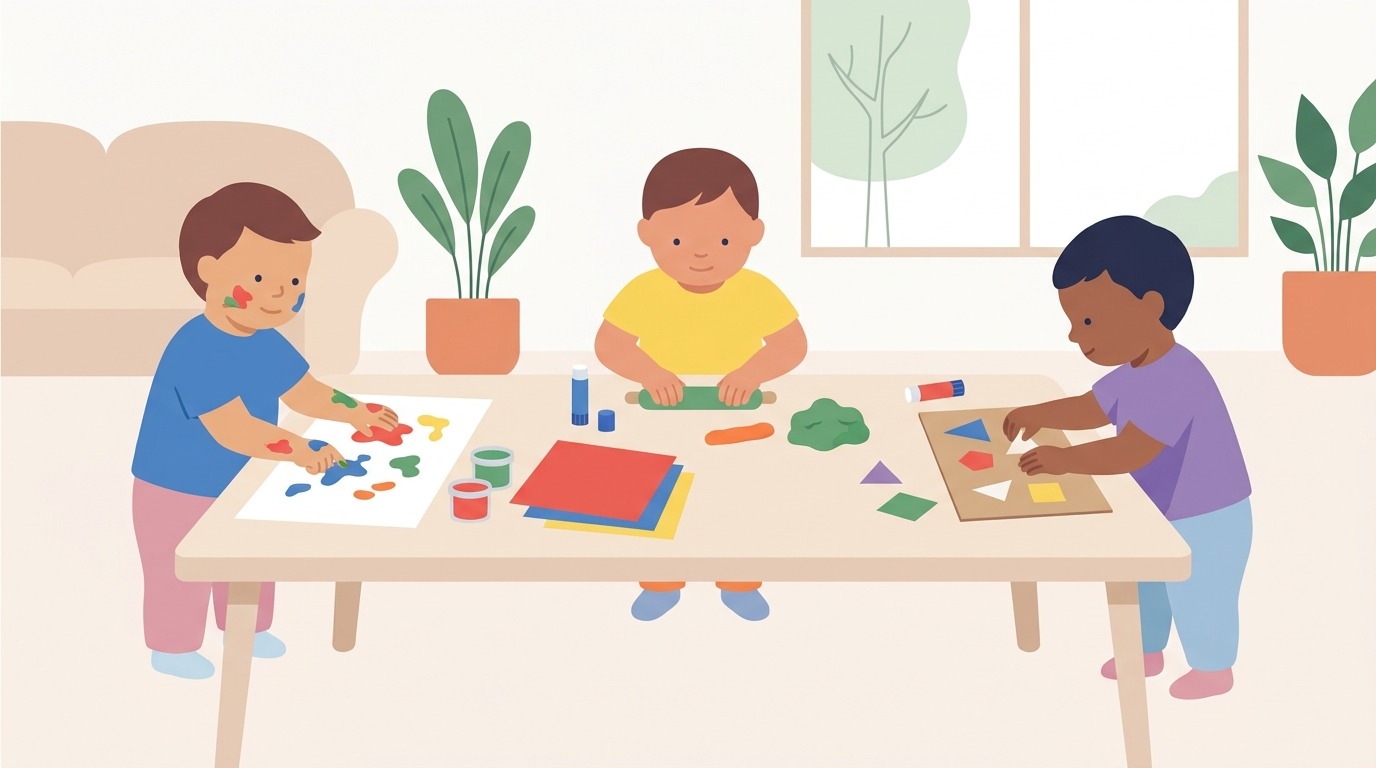
Crafts 1-3 Years: Craft ideas for children aged 1 to 3 years.
When rain shows up or a Wednesday drags on, manual activities become wonderful allies to keep children busy while nurturing their creativity. At 12, 24 or 3 years old, crafting develops curiosity, strengthens motor development and builds confidence. With some clever ideas, safe materials, and a pinch of organization, every home transforms into a lively workshop where painting, molding, gluing, and storytelling happen. Parents, childcare assistants, or facilitators find a simple and stimulating common ground here, without expensive equipment.
The good news lies in simplicity: boxes, rolls, modeling clay, and paper are enough to invite imagination. A zippered pouch, two drops of paint, and magic happens. Puppets born from a sock, an improvised cardboard house, and the living room turns into a theater stage. This guide offers tested ideas designed for emerging autonomy and safety. It emphasizes sensory awakening, educational games, textured collage, and clever recycling. The goal is clear: to turn every shared moment into concrete and joyful learning, while respecting toddlers’ rhythms.
| Short on time? Here’s the essentials ⏱️ |
|---|
| 👶 At 12-24 months: choose safe materials, large formats, no small parts. |
| 🎨 At 3 years: vary modeling clay, painting, collage, sensory bins. |
| 🧠 Focus on educational games that reinforce motor development and attention. |
| ♻️ Recycle cardboard and rolls: imagine a city, a bus or a shadow theater. |
| 🧼 Prepare the space: tablecloth, wipes, water bin; free mind, free floor. |
| ⚠️ Safety vigilance: non-toxic glue, round scissors, and keep button batteries away. |
| 💬 Value the process: praise effort, tell the story behind the artwork. |
Crafting 1-3 years: sensory basics and safety for successful manual activities
Awakening from 12 months: exploring textures and simple gestures
Before 3 years old, sensory exploration guides everything. Hands plunge, crumple, and tap to tame the world. Zipper bags filled with thick paint allow drawing without getting messy, a real hit for the more cautious.
A tray of semolina, wide rice, or large pasta, and discovery begins. We transfer with a spoon, bury a figurine, listen to the crunching. The child gains precision and controls their gesture step by step.
At 2 years: varied manipulations and first instructions
Around two years, curiosity pushes further. Homemade modeling clay becomes an ideal testing ground: rolling, flattening, poking with corks. The gesture refines and finger strength grows.
Introducing collage with large stickers demands attention. Choose a color, peel it off, stick it in a precise spot. Intention precedes movement, and pride lights up faces.
At 3 years: first structured projects and guided autonomy
At 3 years, the child connects actions and results. A torn paper landscape, cotton clouds, a sun made of clay, and the composition already tells a story. Instructions remain short, but success becomes tangible.
We highlight motor development with small challenges. Stick three shapes at the top, paint with a roller, draw connected dots. Each step is a rung toward creative autonomy.
Safety at heart: safe materials, clear gestures, prepared environment
Safe materials are non-toxic, sturdy, and suitable for small hands. Avoid pieces smaller than 3 cm and supervise constantly. Rounded scissors and glue sticks limit risks.
A crucial point concerns button batteries, very dangerous if swallowed. For a useful and up-to-date warning, consult this clear guide: make your home safe from button batteries. Anticipating protects and reassures.
Concrete example: the Tilleuls workshop
At the Tilleuls daycare, Léon, 18 months old, loves tapping paint in a waterproof pouch. His sister Maé, 3 years old, makes a sun from cardboard and colorful clips. We observe, comment, encourage.
The professional prepares everything before the children arrive. The sequence flows, concentration holds. Success does not depend on perfection but on the desire to try again tomorrow.
- 🧴 Quick tip: a basin of warm water and a sponge within reach, freedom to experiment.
- 🧢 Suitable clothing: old t-shirt, tied-back hair, fingers ready to get messy.
- 📦 Smart storage: labeled boxes with pictograms to learn sorting.
By consolidating these foundations, we prepare for more ambitious projects. Next, discover the keys to combining modeling, painting, and collage without stress.
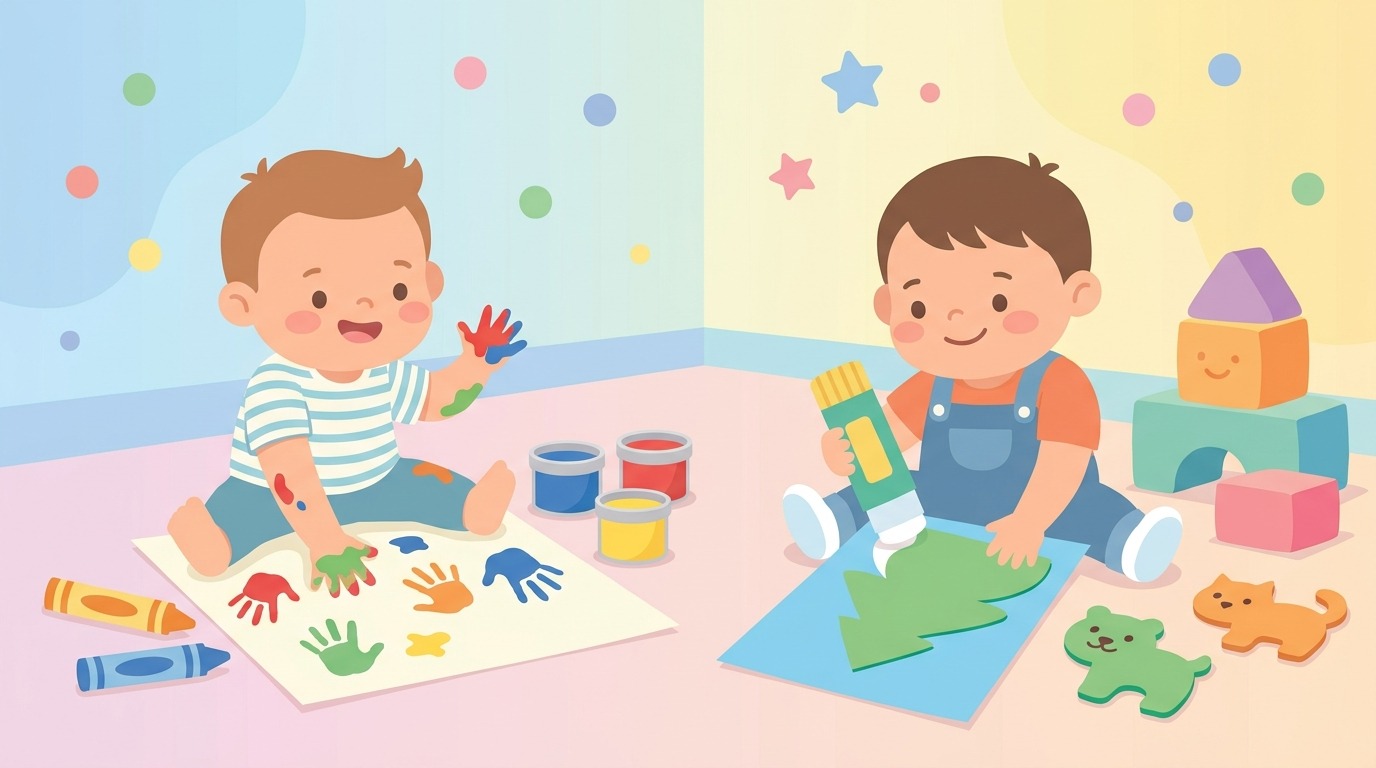
Easy crafts at 3 years: modeling clay, collage, and painting without stress
Modeling clay: foundational gestures and educational games
Modeling clay lays the foundation for pinching, rolling, and crushing. These gestures nurture future writing and hand-eye coordination. Offering large cookie cutters, rolling pins, and big buttons encourages precision.
To energize the activity, invent a small mission. Prepare an imaginary meal, create a colorful zoo, or reproduce emotions with round faces. The child plays and learns without realizing it.
Textured collage: creating paintings that tell stories
Collage offers intuitive storytelling. We assemble cotton, crumpled paper, soft fabric, or foam paper. Textures enrich the sensory vocabulary and make the work more alive.
A simple animal silhouette serves as a base. We stick strips, add sticker eyes, draw dots. The result is told at night, like a pocket story.
Easy painting: immediate satisfaction and obvious colors
Finger painting offers direct pleasure. Washable colors, A3 format, and foam rollers help dare. You can also try painting in a box with marbles, guaranteed marbled effect.
For a lasting variant, discover turning a common ingredient into chalk: making chalk with eggshells. Recycling and creating, a double win.
| 🎯 Activity | 🧠 Objectives | 🧰 Materials | 💡 Tip |
|---|---|---|---|
| 🍝 Flavored modeling clay | Reinforce motor development, sensory vocabulary | Flour, salt, water, coloring agents | Add cinnamon or vanilla for scent |
| 🖼️ Animal collage | Spatial awareness, classification | Papers, cotton, glue stick | Choose 2 textures per artwork to keep it readable |
| 🎨 Painting in a box | Coordination, cause-effect | Box, large marbles, washable paint | Limit colors to 2 to avoid a final brown |
By playing with the variety of supports, attention is nurtured without exhausting energy. Progression becomes smooth, and the desire for “more” marks the success of the workshop.
Creative recycling: turning cardboard and rolls into sustainable educational games
Cardboard houses and dreamed vehicles
Recycling multiplies craft ideas without cost. A box becomes a garage, castle, or store, according to desires. Children paint, glue, and proudly name their creations.
To go further, get inspired by this concrete resource: build a cardboard house. Clear steps secure the process and stimulate autonomy. The work then serves as decor for rich educational games.
Shadow theater and quick puppets
A light sheet, a lamp, and stories light up. Shadow theater invites language, rhythm, and listening. Characters are invented with cardboard silhouettes and sticks.
Puppets often spark surprising dialogues. To understand their relational benefit, explore this insight: the power of puppets. Speech flows better when a paper hero acts as intermediary.
Playing with boxes: paths, hiding spots, and sorting
Aligning three boxes creates an explorer’s tunnel. Adding color-coded stickers turns play into sorting activity. The gesture becomes intentional, and the child controls their strength.
Need simple ideas for the little ones? This guide illustrates quick scenarios: playing with boxes from 1 to 3 years. It offers ready-to-use solutions for gentle afternoons.
- ♻️ Painted rolls as binoculars: tape, colored dots, and off you go.
- 🚌 Box car: cardboard plates for wheels, tape for roads.
- 🎭 Finger puppets: felt scraps, sticker eyes, pipe cleaners.
- 🌞 Clip sun: round cardboard and alternating colorful clips for rhythm.
When an object is born from waste, imagination feels powerful. The child learns that creating also means preserving.
Organizing a calm workshop: safe materials, routines, and motivating progression
Preparing the space: clear landmarks to dare more
A defined corner reassures and invites. A protected table, visible baskets, a ready water bin: everything invites trying. Zones are named: paint here, glue there, wash hands just nearby.
Rotating materials keeps interest alive. Not everything is out at once; textures, colors, and tools alternate. Relative rarity values each discovery.
Rituals that soothe: announce, show, value
Offering three simple choices guides without forcing. “Do we model, paint, or do collage?” The decision feeds engagement. After activity, a mini-exhibition ritual celebrates the effort made.
A visual timer helps manage transitions. The child anticipates the session’s end and accepts tidying better. Autonomy is built through small victories.
Safety and well-being: details that matter
Keep the list of safe materials in mind: washable paints, large items, solid fastenings. Sharp tools remain exceptional and always supervised. The adult accompanies with kindness, never in a rush.
Special vigilance is required toward small shiny objects. Button batteries must remain out of reach and use. Prevention remains the best protection at this age.
Case study: “the 20-minute workshop”
In a nursery class, the educator offers 20-minute sessions. First series: modeling clay with mission “make three pancakes and a roll.” Second series: painting with a roller, two colors only.
Children gain endurance and precision. Family feedback confirms greater daily patience. The workshop becomes an emotional anchor as well as a learning ground.
- 🧽 Quick checklist: tablecloth, cloth, water bucket, trash bin nearby.
- 🧴 Winning trio: glue stick, painter’s tape, biodegradable wipes.
- 🗂️ Fun storage: labels with emojis for early responsibility.
A simple framework frees the momentum. It’s the condition for the workshop to stay a lasting pleasure.
Themed programs: 7 days of creativity for 3-year-old children
Typical week, varied gestures and advancing projects
Monday nature: collecting leaves and small stones, then collage on cardboard. Tuesday colors: painting in a box, two shades only for contrast. Wednesday modeling: imaginary market with modeling clay, round fruits, and twisted sticks.
Thursday recycling: mini shoebox house, windows with tape, painted roof. Friday story: finger puppets and a small stage. Weekend free: sensory bin scented with lavender or controlled water play.
Holidays and seasons: anchoring learning in daily life
Golden autumn: leaf prints with a roller, new words to talk about veins and ribs. Bright winter: shadow theater and paper garlands. Joyful spring: foam paper flowers for windows, colors chosen by the child.
Curious summer: decorated pebbles and box car for living room travels. Projects leave useful traces: kitchen display, shelf of artworks, family mini-museum.
Animal themes and associated educational games
Animal themes captivate and guide storytelling. A cardboard safari, an ocean in crumpled fabric, and words flow. To nurture imagination, here’s an inspiring resource: animal-themed game ideas.
Each theme links to a key gesture. Pinch clothespins for the lion’s mane, roll dough for the snake, stick foil paper scales. Motor skills anchor in the pleasure of the scenario.
- 🦁 Monday lion: yellow clothespins for the mane, pinching practice.
- 🐍 Tuesday snake: dough logs, stick patterns.
- 🐠 Wednesday fish: foil paper scale collage.
- 🦋 Thursday butterfly: folded symmetrical painting.
- 🦉 Friday owl: cardboard roll, contrasted eyes.
Routines don’t enslave. They reassure and let wonder take the lead.
“With next to nothing, we make worlds; with a bit of time, we make memories.”
Quels matériaux sûrs privilégier pour débuter le bricolage avec des enfants de 1 à 3 ans ?
Misez sur des fournitures certifiées non toxiques, gros formats et sans petites pièces : colle en stick, peinture lavable, papiers épais, coton, papiers mousse et grosses perles de 3 cm minimum. Évitez les éléments magnétiques ou brillants susceptibles d’être avalés, et rangez toujours les piles bouton hors d’atteinte.
Comment adapter une activité à 3 ans pour renforcer le développement moteur ?
Proposez des gestes courts et ciblés : pincer des pinces à linge, rouler un boudin de pâte, tamponner avec une éponge, coller trois formes à des endroits précis. Variez la résistance des matériaux et limitez le nombre de couleurs pour soutenir l’attention et la réussite.
Que faire si l’enfant se lasse vite ?
Réduisez la durée, simplifiez l’objectif et proposez une alternative sensorielle : bac de riz, peinture en pochette zippée, collage de deux textures seulement. Laissez-le choisir entre deux options claires et valorisez chaque étape réalisée, même partielle.
Comment intégrer le recyclage sans alourdir l’organisation ?
Conservez une caisse ‘créa’ avec cartons, rouleaux, bouchons et chutes de papier. Planifiez chaque semaine un mini-projet : maison en carton, véhicule simple, marionnette-bâton. Inspirez-vous au besoin de tutoriels pratiques comme la construction d’une maison en carton pour gagner du temps.
Quelles sources consulter pour des idées fiables et progressives ?
Piochez dans des ressources familiales testées : fabriquer de la craie avec des coquilles d’œuf, construire une maison en carton, ou découvrir des jeux d’animaux pour nourrir le langage et la narration. Ces pistes s’intègrent facilement à un planning hebdomadaire et renforcent la confiance des enfants.