Drawing Differently Ideas: Ideas for drawing differently.
| Short on time? Here is the essentials ✨ |
|---|
| Fostering creativity goes through simple alternative techniques: sand, verticality, light, code, and storytelling. 🌈 |
| Varying mediums and unconventional materials nourishes visual exploration and innovative sketches. 🧪 |
| A light easel, a water board, or a drawing robot energize artistic expression. 💡 |
| Mixed techniques open the way to a strong and joyful personal style, without pressure on the outcome. 🎨 |
| Connecting drawing, autonomy, reading, and ecology strengthens lasting learning. 🌱 |
When the desire to dare differently takes over, drawing becomes a wonderful testing ground. Children, but also adults, then gain a space of artistic expression where every gesture counts. The mediums change, the posture evolves, and one discovers alternative techniques that awaken curiosity. Sand becomes a page, light a brush, and movement a language. This change in perspective nourishes creativity, stimulates visual exploration, and establishes useful motor landmarks for writing. And above all, the joy of trying, failing, then starting again regains its place of honor.
In this perspective, the goal is not to quickly produce a “beautiful image,” but to open the game: unconventional materials, experimental drawing, collaborative projects, sensory pathways, and mini-challenges. Lila, 6 years old, and her brother Max, 9, illustrate this journey throughout the proposed examples. Their discoveries invite the building of lasting creative habits, from the living room to the schoolyard. Even better, bridges are woven with autonomy, reading, and ecology, for coherent and joyful learning. Over the course of ideas, innovative sketches take shape and prepare, without stress, the path towards an assumed personal style.
Drawing differently with children: textures, sand, and sensory discoveries for innovative sketches
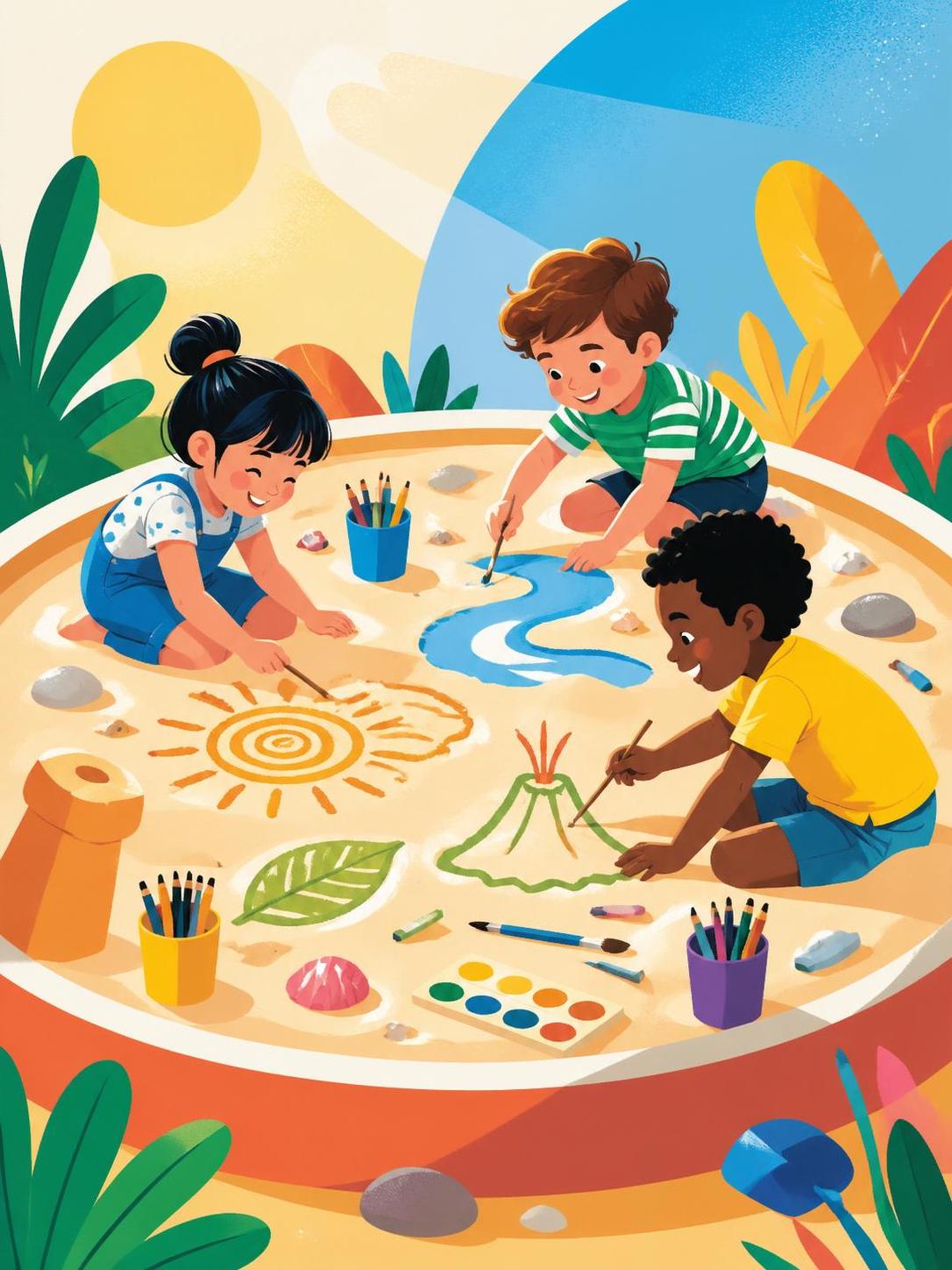
Sand offers rich sensations that awaken the hand and mind. Setting up a discovery tray invites the child to follow tactile trails: smoothing, digging, sifting, then finger drawing. This direct gesture refines pressure, sharpens laterality, and creates an ideal ground for innovative sketches. Lila loves tracing waves there, then erasing them with a swipe. This quick draw-erase cycle avoids the “blank page block.” Thus, the child focuses on the process, and their creativity is freed.
To vary, a simple sand pen becomes magical. The tube is filled with fine sand, then a thin stream is let flow. The lines stretch gently, almost like controlled rain. Max enjoys writing his name in XXL, then retracing the raised letters. This game of speed and precision develops fine motor skills. It also works on gesture anticipation, essential before cursive writing. You can even let the sand flow on the back of the hand: the experience amuses, soothes, and recenters.
Rubbing, imprints, and drawing riddles: visual exploration takes shape
A drawing riddle rekindles attention: slip a coin or a paperclip under a thin sheet, rub with a wax crayon, and watch the object emerge. The eye identifies, the brain compares, the hand refines pressure. This micro-investigation exercises observation. Lila suggests lining up three secret objects and guessing the order of appearance. The game adds a social and joyful dimension, perfect for groups.
Texture drawing gains just as much importance: crumpled foil, corrugated cardboard, bark, dry sand, rough fabric. On each surface, the pencil grips differently. This way, visual exploration is practiced and the hand observes variations in grip. Why not compose a tactile map? Each zone keeps its texture, and a line connects it to others. This composition engages spatial thinking useful in geometry, while maintaining the momentum of play.
Magic drawing: seeing differently to create better
Magic drawing starts with free marks. One then observes to discover hidden characters. Max spots a dragon in an ink cloud; Lila adds a crown. This rereading teaches the child to interpret, choose, and then highlight a detail. It is a major step toward composition. The wonder that arises here stimulates inspiration and lays the foundation for an open personal style.
The sensory section establishes solid foundations: perception, gesture, attention. It naturally prepares the transition to verticality. It’s the perfect moment to straighten the sheet and discover other alternative techniques.
Painting and drawing vertically: easel, water board, and light easel for liberated artistic expression
Verticality changes everything. A desk easel offers a comfortable angle, aligns the gaze, and frees the shoulder. Gestures become broad and posture gains quality. Lila, too bent flat, here raises her arm easily. This freedom feeds artistic expression and reduces fatigue. We get more airy lines, useful for innovative sketches. The body learns to coordinate hand, shoulder, and trunk. It’s valuable before prolonged writing.
The Buddha board pushes it a notch further. One paints with water, watches the pattern appear, then disappear in about thirty minutes. The ephemeral trace defuses the fear of failing. Max then allows himself bold experiments, explores shadow contrasts, then starts again. This back-and-forth develops intuition, fosters inspiration, and encourages quick decision-making. In a short cycle, many tests are done, so progress is fast.
Magic Light Easel: when light becomes a brush
The Magic Light easel transforms the studio into a stage. Sixteen lighting colors change the perception of the same strokes. Lila paints a forest with washable markers, then changes the easel’s hue. The clearing seems to move. This “laboratory” encourages mixed techniques: markers, finger painting, erasable markers. Light acts as a fourth dimension and enhances visual exploration. In pairs, children compose a double-sided mural and negotiate the placement of each element. Cooperation comes into play, as does language.
To support these moments, linking drawing to daily autonomy helps. This resource on games that encourage independence can inspire studio rituals: concrete approaches to gain autonomy. Giving simple roles – color master, brush keeper – empowers, soothes transitions, and values effort.
Verticality and language: telling what one sees
In front of the easel, speech flows better. Children name the place of elements, justify a light choice, compare two trials. One then works on argumentation without weighing down the activity. This verbalization solidifies inspiration and structures thought. It prepares graphic storytelling, key for what follows. Ultimately, verticality articulates broad gesture, active gaze, and vocabulary in context. A perfect springboard for more technical projects, including code-based drawing.
The goal is clear: after the sensing hand and the choosing eye, make way for the brain that codes movement. Direction: drawing robot and magnetic tablet.
Drawing with a robot and a magnetic tablet: code, geometry, and guided visual exploration
Entering code through the line is incredibly motivating. Artie 3000, a Wi-Fi compatible drawing robot, traces what is programmed. The drag-and-drop interface simplifies access to loops, angles, and sequences. Max codes a square, then a star. He observes how a small angle change transforms the figure. The hand does not freeze: the sheet is repositioned, the marker changed, notes added. This algorithmic-manual mix opens the door to alternative techniques linking mathematics and artistic expression.
The Magpad complements this duo. A magnetic tip attracts metal beads and makes light points appear. Lila practices tracing letters and numbers, but also inventing patterns. This ink-free medium reassures, erases the fear of stains, and makes the gesture repeatable. By varying, a personal style emerges. One then thinks of composition, balance, and rhythm of points. This micro-choreography finely nourishes visual exploration.
Car-crayons and living geometry
A marker taped to a small car creates surprising paths. The tool rolls, leaves a trace, then hits an obstacle. One talks about speed, curves, angles. Max sets up book tunnels and tracks direction changes. The sheet becomes a circuit. This playful detour prepares geometry through the body, without jargon. Then, Artie 3000 takes over to formalize a close pattern with sharp commands. The play-code link solidifies learning.
These technological solutions flirt with concrete art and current STEAM approaches. In 2026, the rise of creative-educational kits confirms the place of code in artistic workshops. The message remains simple: programming is composing. The child chooses, plans, adjusts, then contemplates the result. The trial loop offers quick satisfaction. It gives rise to joyful rigor, precious for all disciplines.
From algorithm to notebook
To anchor progress, a tracker notebook collects models, failures, and discoveries. The Magpad figure is glued, the shape coded by Artie slipped in, comments added. This reflective feedback installs a method. It guides future innovative sketches and encourages inspiration. Next step? Vary again, with accessible, tactile, and clean mixed techniques.
After code logic and magnetic points, painting and unusual tools rekindle gesture energy. Head towards liquid textures and surprising stamps.
Mixed techniques and unconventional materials: clean painting, happy fingers, and unusual tools
Spongy changes the game. These gouache bottles with sponge tips do not drip. One stamps, stretches, overlays. Lila overlays yellow and blue, then watches green appear. Control is sufficient to avoid mess while leaving room for trial. It’s perfect to install mixed techniques without stress.
Finger crayons are for the youngest. Slip the finger in and draw directly. The hand experiences the dynamic of the stroke in a frank way. This approach links sense and gesture, reinforcing preparation for writing. It frees artistic expression for little hands that still struggle to pinch a classic pencil.
Stamp balls and paint feather dusters: rhythms, patterns, and sensory massage
Stamp balls roll varied patterns. Max uses them to create a mountain chain, then a field of dots guiding the eye. Paint feather dusters, on the other hand, deliver surprising textures. Dipped in paint, they become effect brushes. Without paint, they are used in mini-massage to soothe, then revive concentration. The ritual “breathe-touch-draw” installs a positive and lasting framework.
To structure these explorations, a checklist helps keep the course without breaking momentum.
- 🎯 A simple goal: today, test two textures and one bright color.
- 🧪 A creative constraint: no more than three tools, to better tame them.
- 🧭 A final look: choose what pleases, say why, note a lead for tomorrow.
- 🧼 A clean ritual: cloth at hand, apron, prepared water point.
- 📸 A record: photo the stages to compare and learn.
This workshop hygiene avoids overload. It values progress more than the result. Little by little, the child dares mixes, invents formats, and builds a personal style. The ground is ripe to link drawing, story, and living world.
Drawn stories, environment, and autonomy: linking storytelling, gestures, and meaning for lasting creativity
Storytelling through images strengthens engagement. A “collective painting” invites everyone to add a detail linked to a shared story. Nadia, workshop leader, launches: “Does our forest change with the rain?” Children place blue drops with Spongy. Max then codes, on Artie, a spiral to symbolize the wind. Lila adds a path with the feather duster. This shared storytelling strengthens cooperation, structures time, and establishes a visual dramaturgy.
Reading also supports creation. An album can trigger a pattern, a palette, a scene. This resource details concrete leads: the benefits of reading for children. After a story, proposing experimental drawing on the water board helps anchor the emotion. The trace fades, but the idea remains. One then follows up with a version on paper, fixing a few choices: three colors, one format, one shape constraint.
Creative ecology and unconventional materials
Creating with the living encourages respect for the world. Bark, leaves, sand, seeds: these unconventional materials stimulate the senses and bring closer to nature. A clear lead is here: raising children’s environmental awareness. Lila composes a leaf mandala, Max takes sole prints and compares textures. A photo of the result is pasted in the notebook, two lines are written about the weather. Drawing then fits into a global, documented, and living approach.
Autonomy, finally, is built through small missions: prepare water, choose tools, clean the table. These routines make the child an actor. They stabilize the atmosphere, improve gesture quality, and allow concentration on inspiration. Nadia reminds: “Fewer objects, clearer choices.” Constraint guides without imprisoning. The result? Innovative sketches, more readable, carried by an assumed intention.
From storytelling to portfolio
Closing a cycle with a mini exhibition transforms the trial. Three images are displayed: a research, a meaningful failed attempt, and a completed piece. A short text explains the choices. This distancing shapes critical viewing without sterile judgment. It highlights mixed techniques and strengthens confidence. The journey counts more than the arrival. Here lies the key to a lasting, joyful, and enlightened practice.
| Key ideas for a “drawing differently” workshop 🌟 |
|---|
| Alternate sensory, verticality, code, and storytelling to maintain creativity 🌀 |
| Choose 2-3 alternative techniques per session to avoid dispersion 🧭 |
| Favor unconventional materials and mixed techniques to nourish visual exploration 🧪 |
| Document attempts and failures to affirm a personal style 📚 |
| Link drawing, reading, autonomy, and ecology for a coherent artistic expression framework 🌱 |
“Dare to vary gestures, mediums, and lights: the stroke will show you the way.”
How to start a drawing session differently without much material?
Choose a sand tray or a water board, set a constraint (two tools, three colors), and a short time. Add a final observation moment where everyone names what works. This simple structure frees creativity without disorder.
What benefits for writing?
Sand, verticality, and the Magpad strengthen fine motor skills, posture, and spatial perception. Loops, angles, and pressures settle in through play, which then facilitates cursive writing movement.
Does the drawing robot risk replacing the hand?
No, it complements it. The child programs, observes, and adjusts. They manipulate the sheet, change the marker, annotate. Code becomes an extension of the hand, not a substitute.
How to avoid “too much material” which disperses?
Plan thematic trays: textures (sand, foil), verticality (easel, markers), code (Artie, Magpad). Two to three tools per tray, no more. Alternate trays from one session to another.
Quick ideas for a Wednesday?
1) Rubbing drawing riddle, 2) water board and brush, 3) car-crayon on large paper. Thirty minutes is enough to experiment, observe, then display 3 steps on the fridge.