Learning to Write: Learning to write at school (5-8 years).
| Short on time? Here’s the essentials ⏱️ |
|---|
| 🎯 Writing and reading progress together: associating sounds, letters, and meaning from age 5. |
| ✍️ Graphic gesture first: posture, pencil grip, regular strokes, then words and sentences. |
| 🧩 Alphabet → syllables → frequent words: a clear progression to gain fluency. |
| 📚 Short daily rituals: 10 minutes are better than a long weekly session. |
| 🛠️ Varied supports: worksheets, games, calligraphy, graphic art, craft activities. |
| 🤝 Kind pedagogy: valuing every step builds the desire to write. |
Between 5 and 8 years old, learning to write shapes thinking, memory, and expression. In elementary school, students discover letters, then assemble them into syllables, words, and finally sentences. This build-up works if the hand, eye, and ear work together, within a structured and warm pedagogy.
Educational research and field feedback agree. A short, frequent, and motivating training establishes lasting skills. Thus, activities in graphic art, calligraphy, and guided reading create an ecosystem energized by pleasure. The goal is clear: legible writing, spelling that strengthens, and ideas that unfold with confidence.
Learning to write at school (5-8 years old): effective gestures, living alphabet and the joy to dare
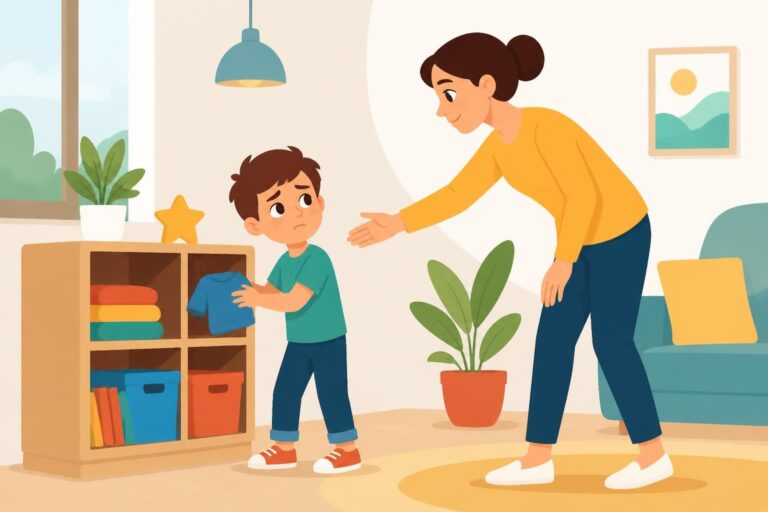
At these ages, everything starts with the body. Stability of the torso, feet support, then fine finger mobility determine line quality. A stable seated posture, relaxed shoulders, and a slightly tilted notebook create conditions for a smooth gesture. Then, the pencil grip is adjusted: thumb and index pinch, middle finger supports, the hand glides without tension. This discreet trio lightens fatigue and prepares for enduring writing.
Graphic art establishes precision before the letter. Loops, waves, bridges, and spirals guide the movement. We play with varied sizes then shrink to aim for the line. Thanks to these routines, calligraphy builds up like choreography. Each gesture has a direction, from top to bottom or left to right, and the brain remembers better when the movement remains regular.
To enliven the alphabet, classrooms use sensory activities. Rough letters, strokes in sand, or paint reproductions enhance exploration. Moreover, daily words come into play. First names, days, classroom objects provide context that speaks to children. Repetition becomes lively, as every success is visible and useful.
A fictional story helps understanding. Lila, 6 years old, grips the pencil too tight and tires quickly. Her teacher offers a two-minute timer for wide loops, then active breaks stretching fingers. After two weeks, cramps disappear. Her speed increases slowly, but above all legibility improves. Motivation follows, as Lila now reads her own sentences and proudly displays them.
Rituals accelerate learning. First, one minute of breathing to relax shoulders. Then, three lines of the same pattern. Finally, one letter, then one syllable. This short but regular sequence establishes a sure habit. Teachers notice that such a framework reduces spelling errors caused by haste, while soothing the gesture.
Simple activities for a confident gesture
Play engages body and mind together. Motor circuits with ribbons to follow on the floor train directionality. Precise cuttings strengthen digital pinch. Manual creation workshops finally stimulate eye-hand coordination. To vary, proposals of 5-8 years DIY ideas serve as a springboard. The child writes the label of their creation, then reads it aloud, which completes learning.
- 🎲 Drawing roads for miniature cars → left-to-right sense.
- 🖍️ Coloring without going outside → fine control of the gesture.
- ✂️ Cutting geometric shapes → precision and rhythm.
- 🧩 Pairing objects with a categorization game such as pairing objects → visual identification.
In short, writing wins when the body stays mobile, the task clear, and joy present. A ready hand is already a sentence in the making.
From the alphabet to words: sounds, syllables and decoding that give meaning
The richness of French lies in the agreement between what is heard and what is written. Concretely, about 36 sounds combine with 26 letters to form a mosaic of graphemes. Thus, the same sound can be written in several ways. The sound /an/ becomes “an”, “en”, “am”, or “em”. The sound /in/ is written “in”, “im”, “ain”, “ein”, or “aim”. Rather than memorizing lists, students learn to observe regularities in context.
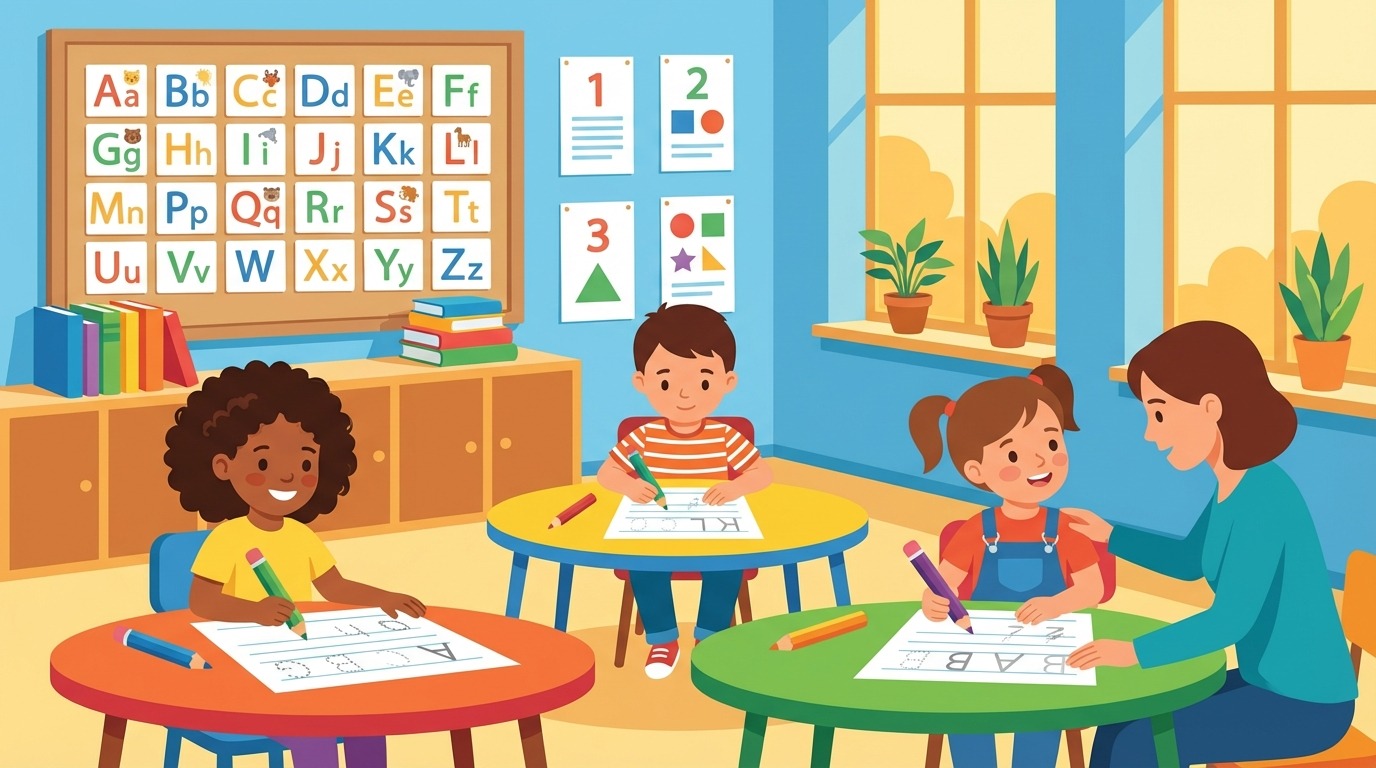
Syllabic decoding structures progression. We join a consonant and a vowel, then assemble. “Ma” + “mi” + “mou” become bridges to “maman” or “amour”. Then, each syllable associates a reading gesture with a writing gesture. The child pronounces, traces, then rereads. This loop strengthens phonological and visual memory, essential for fluency.
Frequent words speed up understanding. Items like “mais”, “une”, “dans” appear everywhere. Knowing them by heart frees attention for meaning and syntax. In classrooms, flashcards and word bingo games make training appealing. To strengthen the link between mental image and written word, activities to connect word to image work very well at the beginning of the cycle.
The argument is simple: without decoding automation, comprehension stalls. Conversely, when reading becomes fluent, writing follows the movement. Moreover, shared reading nurtures vocabulary and syntax. Families who establish a daily reading time offer a measurable advantage to their children. For concrete benchmarks, the positive effects are summarized in this article on the benefits of reading in children.
Sound games and encoding strategies
The brain loves listening games. We hunt rhymes, segment syllables by clapping hands, replace one sound by another to create a new word. Then, we code: we write what we hear, relying on grapheme-phoneme correspondences already seen. This alternation stabilizes phonetic spelling before tackling peculiarities such as silent letters.
An exemplary case illustrates the method. Tom reads “to/ma/te”. The teacher asks him to imagine the object, then write “tomate” using syllables. Tom rereads, spots the silent final “e”, and corrects. This back-and-forth activates code awareness and establishes habits. As a result, reading feeds writing, and writing clarifies reading.
Ultimately, mastery of sounds, syllabic splitting, and frequent words opens the door to short texts understood and proudly reread. Phonological clarity precedes writing ease.
Structuring clear sentences: spelling, meaning and legible calligraphy
Going from word to sentence changes the ambition. We organize an idea, choose an order, place punctuation marks. From first grade (CP), a short sentence with subject, verb, and complement serves as a model. Then, we enrich with an adjective, a connector, or a more precise noun group. Each addition must remain legible and meaningful.
Spelling consolidates in stages. Phonetic regularities come first. Then, we address number and gender agreements with oral manipulations: switching from singular to plural and listening to changes. This detour through voice prevents the rule from remaining abstract. Guided rereading finally targets one point at a time: capital letter, period, then agreement.
Calligraphy supports comprehension. Regular writing lets the child reread themselves, thus self-correct. Working on alignment, spacing, and cursive joins clarifies the visual units of the word. Moreover, cursive reinforces letter chaining and can make speed smoother. Print script remains useful for titles or some copying activities. The choice depends on the cycle project, the essential being coherent guidance.
Workshops for sentences that stand tall
Short and targeted workshops yield concrete results. We display an image and suggest three sentence beginnings. Students choose, complete, then compare. We cut word labels and reorder. We rewrite a sentence replacing a key word with a synonym. Gradually, they gain precision without weighing down the text.
- 🧠 One goal per rereading → capital letter, then punctuation, then agreement.
- 📝 Reviewing in pairs → reading aloud and checking coherence.
- 🔍 Framing the verb → spotting the subject and choosing correct agreement.
A real classroom example sums up the issue. In CE1, a group writes “Les chats noir court vite”. After highlighting verbs and subjects, discussion begins. “Who runs?” “The cats.” “So, what must the verb do?” “Run (plural).” The correction anchors because it responds to sense logic, not only to a rote rule.
In short, short sentences, focused rereading, and neat calligraphy create a winning trio. Meaning, form, and legibility progress together.
Differentiated pedagogy in elementary school and at home: tools, rituals and resources
Each class brings together multiple profiles. Some students already write full sentences, others are still consolidating letter formation. Differentiated pedagogy grants each the right challenge. Printables, progressive worksheets, and digital pathways build customized courses. At home, ten daily minutes at a fixed time suffice to keep the flame alive.
Concrete supports reassure. Evolving ruling guides letter height. Arrowed models recall stroke direction. Short dictations of syllables, then words, then sentences keep attention. To stimulate desire, mixing writing and creative projects works very well. Tutorials for children’s DIY videos can serve as a start: watch, make, write the instructions.
Digital tools offer levers, as long as they stay at the service of the gesture. Controlled tracing apps or frequent word generators structure training. Yet, paper and pencil remain central to install motor memory. A simple balance proves effective: discovery on screen, automation on notebook.
For inspiration, here is a useful video research on writing gestures in first grade. It enlightens progression from basic shapes to cursive, with posture and rhythm advice.
Families often ask where to start. A three-step plan works well. First, review two target letters in 3 lines. Then, write three words of the day, including one frequent word. Finally, create a short sentence with a simple connector such as “and”, “but” or “because”. The trace is read aloud, with a smile at each progress.
Reading feeds everything else. Albums read aloud, then re-read by the child, increase vocabulary and sentence structure. Teachers and parents can pick themes that excite the group, then write a label, a title, or a caption. This synergy “I read, I write, I speak” installs automatisms without forcing.
In the end, tools are only as good as regularity and kindness. A clear ritual, quick feedback, and motivating framework keep the promise of secure writing.
Supporting diversity: left-handers, dysgraphia, bilingualism and self-esteem
In the same class, needs vary. Left-handers, for example, benefit from placing their paper tilted to the right, hand under the line to avoid hiding writing. A model positioned on the left of the copy reduces contortions. These simple adjustments prevent the wrist from breaking and improve legibility.
Dysgraphia is detected by great slowness, gesture pain, recurring discomforts or illegible writing despite efforts. Rather than imposing more volume, priority goes to quality: very short sessions, reinforcement of basic shapes, and frequent positive feedback. An occupational therapist can complement follow-up to retrain fine motor skills. Tools such as finger guides or triangular pens lighten effort.
Bilingualism brings cognitive assets but can disturb spelling at first. Students sometimes transfer regularities from the other language. Explicit pedagogy compares specificities of the systems. We compare letter values, complex graphemes, and agreement rules. With short contrasting texts, ambiguities dissipate and mental flexibility is trained.
Motivation remains the engine. Authentic projects give meaning: writing a card for the media library, a recipe for the class, a game rule made in workshops. The child sees the social usefulness of writing, which multiplies desire to learn. Additionally, a portfolio system values progress: keeping a loop line from the first trimester, then comparing it to a recent line. Progress is obvious.
Sibling relationships also play a role. When an older child reads a story to the younger, then helps write a key word, cooperation nurtures esteem. Ideas to value these shared times are found in articles on the links between older and younger siblings, such as big sister and little brother. These moments create natural opportunities to write without pressure.
Finally, mental health matters. Emotions influence the quality of the gesture and cognitive availability. Simple questioning tools help open dialogue, for example “20 questions” type resources on well-being, like this reflection grid. When the child feels safe, the learning curve rises quickly.
Implicit conclusion: adapt, encourage, and make writing useful to class life form a winning trio for all profiles.
5-8 years progression plan: from gesture to text, step by step
A clear progression reassures students and adults. At 5 years, we consolidate pencil grip, basic shapes, and alphabet recognition. At 6 years, letters are linked into short words, decoding by syllables, and a base of frequent words is memorized. Around 7-8 years, sentences are written completely, reread with precise objectives, and speed improves without losing legibility.
This roadmap benefits from flexibility. Each child progresses at their own pace, but the goal remains the same. Quick weekly checkpoints ensure coherence. A class chart can be displayed where each colors the reached step: letters, syllables, words, sentences, short text. This visualization stimulates effort without competition, as milestones are common.
Rituals support the course. Monday, graphics and gesture. Tuesday, syllables and decoding. Wednesday, frequent words and copying. Thursday, guided sentence. Friday, short dictation and rewriting. This distribution balances technical skills and meaning production. To vary, we mix with craft projects, oral readings, and categorization games.
On the family side, playful micro-tasks maintain momentum. We label household objects in cooperation. We play “seek and find” letters in a poster. We copy the shopping list together, with drawings for support. And when attention wavers, we move, we laugh, then return. Seriousness never prevents joy.
To complete the setup, evolving resources guide adults. Content on child development from 3 to 5 years sheds light on the pre-gesture phase and prepares the next steps. The goal remains constant: legible writing, reading that becomes automatic, spelling that strengthens, and a pedagogy that inspires desire.
Ultimately, a visible, ritualized, and joyful progression allows each student to dare to write, often and better, to think further.
“When the hand finds its rhythm, ideas find their wings.”
How to help a child who reverses letters?
First reassure: these reversals are common at the beginning of learning. Work on directionality with arrows and models, strengthen visual recognition (p, q, b, d) through sorting games, and read aloud. Short and frequent sessions quickly correct these confusions.
Cursive or print: what to choose in first grade?
The choice depends on the school’s project. Cursive helps link letters and can smooth the gesture; print remains useful for legibility and titles. The essential is coherence: clear stroke direction, stable models, and regular practice.
How much time to practice each day?
Ten to fifteen minutes suffice to progress without fatigue. Better a short daily ritual than a long weekly session. Alternate graphics, frequent words, and short sentences, with rereading focused on one point at a time.
Which games gently reinforce spelling?
Frequent word bingo games, labels to recombine, connecting word–image, rhymes and syllable hunts. The goal is to encode what is heard, then check with a reliable model to fix spelling.
How to manage motivation throughout the year?
Vary supports, display progress, give real usefulness to writings (labels, recipes, cards), and offer immediate positive feedback. Creative projects and shared readings nourish momentum over time.