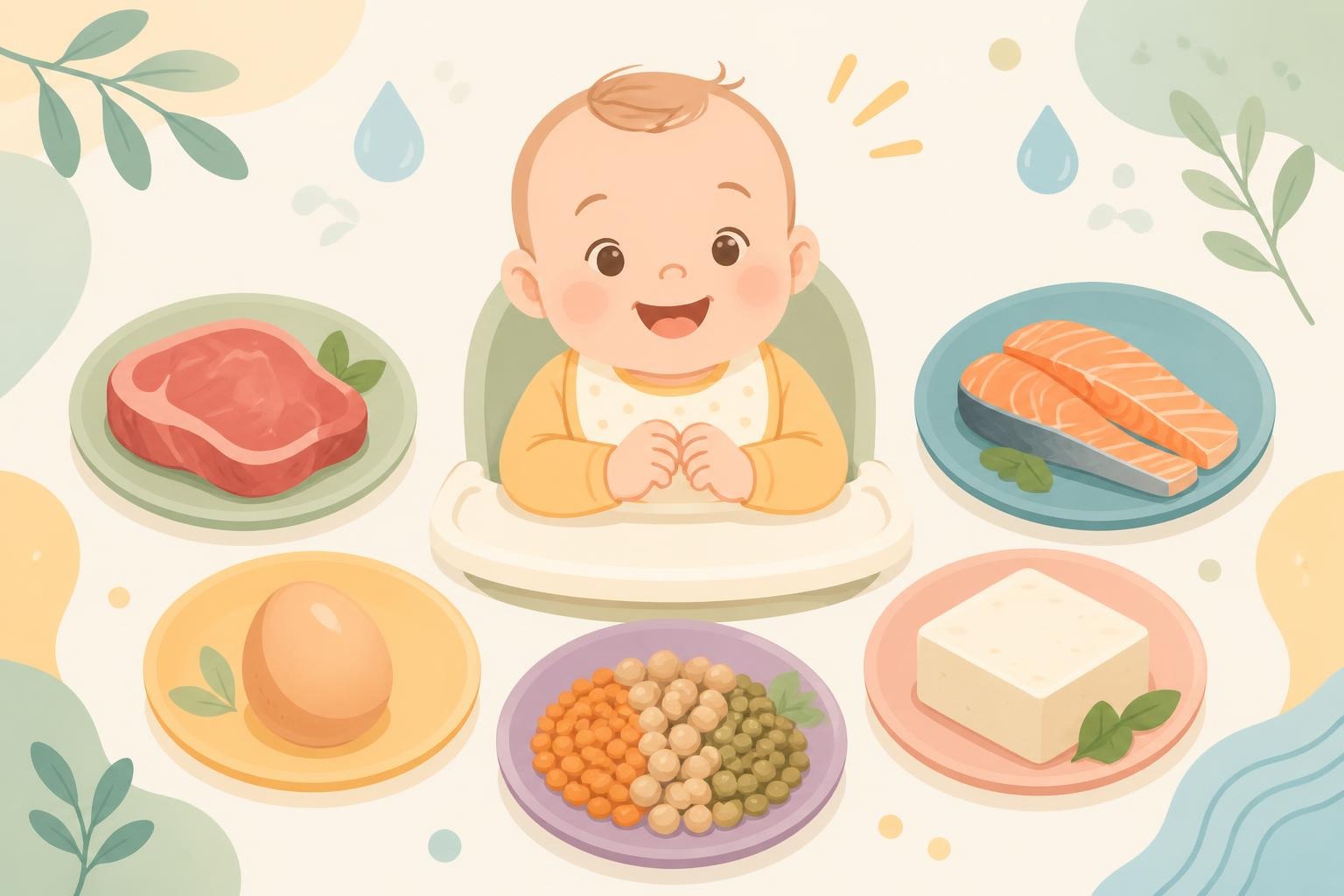
Meat Fish Egg Baby: Meat, fish, egg, legume, tofu: introduction for baby 0-12 months.
| Short on time? Here’s the essential ⏱️ |
|---|
| Start baby protein foods as soon as your child eats, around 6 months 🍼➡️🥄 |
| Portions at 6-8 months: 10 g of baby meat or baby fish (≈ 2 teaspoons) or 1/4 of a hard-boiled baby egg |
| Always well cooked through to avoid any health risks ✅ |
| Also introduce baby legumes and baby tofu for baby plant proteins rich in iron 🌱 |
| Advance in small amounts, one new food at a time, observing reactions 👀 |
| Textures: smooth, then mashed, then small soft pieces, depending on age and motor skills 🧩 |
| A drizzle of omega-3 rich vegetable oil with each puree for brain development 🧠✨ |
| Stay zen, no added sugar or salt; listen to the child’s appetite 🧘♀️ |
Food diversification builds lasting habits. Between 0 and 12 months, the gradual introduction of baby meat, baby fish, baby egg, but also baby legumes and baby tofu, supports growth and contributes to iron stores. Recent research agrees: starting baby protein foods as soon as the child discovers the spoon around 6 months is relevant, as long as quantities remain modest and cooking is impeccable. Families benefit from proceeding calmly, one new food at a time, in a safe environment, respecting the toddler’s appetite and pace.
To guide daily decisions, a simple thread reassures: prioritize natural taste, play with suitable textures, and ensure the balance between animal proteins and baby plant proteins. A pinch of organization, a dash of creativity, and a lot of observation are enough. This period then becomes a beautiful sensory adventure, where one discovers the basics of baby nutrition 0-12 months with confidence, curiosity, and shared pleasure at the table.
Food diversification 0-12 months: reliable basics to introduce meat, fish, egg, legumes, and tofu
Start early, but not randomly. The baby food introduction of proteins begins when the child sits with good posture, turns the head to indicate a “no” and coordinates hand-to-mouth. Around 6 months, these cues often appear. The right time also comes when milk no longer suffices to satisfy appetite over 24 hours. The first spoonfuls invite discovery of simple tastes, without trying to “feed” immediately.
Safety comes first. Foods must be well cooked through. Avoid rare meats, raw fish, runny eggs. Remove bones and hard pieces. The cold chain is respected exactly, as baby’s immune system remains immature. Strict hygiene of hands and work surfaces limits risks. This clear framework frees culinary creativity.
A tiny portion is enough. Between 6 and 8 months, offer 10 g of meat or fish, about two level teaspoons, or 1/4 hard-boiled egg. This amount is ideally mixed with a very smooth vegetable puree. The trick that changes everything: add a drizzle of rapeseed or walnut oil. Lipids help the absorption of vitamin A from vegetables and support the developing brain.
What about protein-rich plants? Baby legumes (well-cooked coral lentils, finely pureed chickpeas, white beans) and baby tofu are introduced as soon as the spoon is accepted. Their non-heme iron is better absorbed with a vitamin C-rich food, such as broccoli puree or a piece of ripe clementine. This complementarity paves the way for varied menus, even for flexitarian families.
The emotional framework matters as much as the recipe. Seat the child upright, under continuous supervision. Offer food when the child is alert, without forcing. If refusal occurs, try again a few days later, in a different form. To understand the gesture, parents can explore baby-led weaning, even starting with spoon-DLW combination, with soft and safe shapes.
Concrete cues and useful signals
- ✅ Ready for the spoon: head held steady, interest in food, mouth opening 🙂
- 🍽️ Frequency: a small portion of protein per day is sufficient at first
- 🔥 Cooking: always “well cooked through” for meat, baby fish, and baby egg
- 🌱 Balance: combine animal proteins and baby plant proteins
- 🧴 Fats: add a drizzle of omega-3 rich oil to each puree
These cues organize the beginnings and ease hesitations. What next? Delve into details of choices, cooking, and quantities according to age.
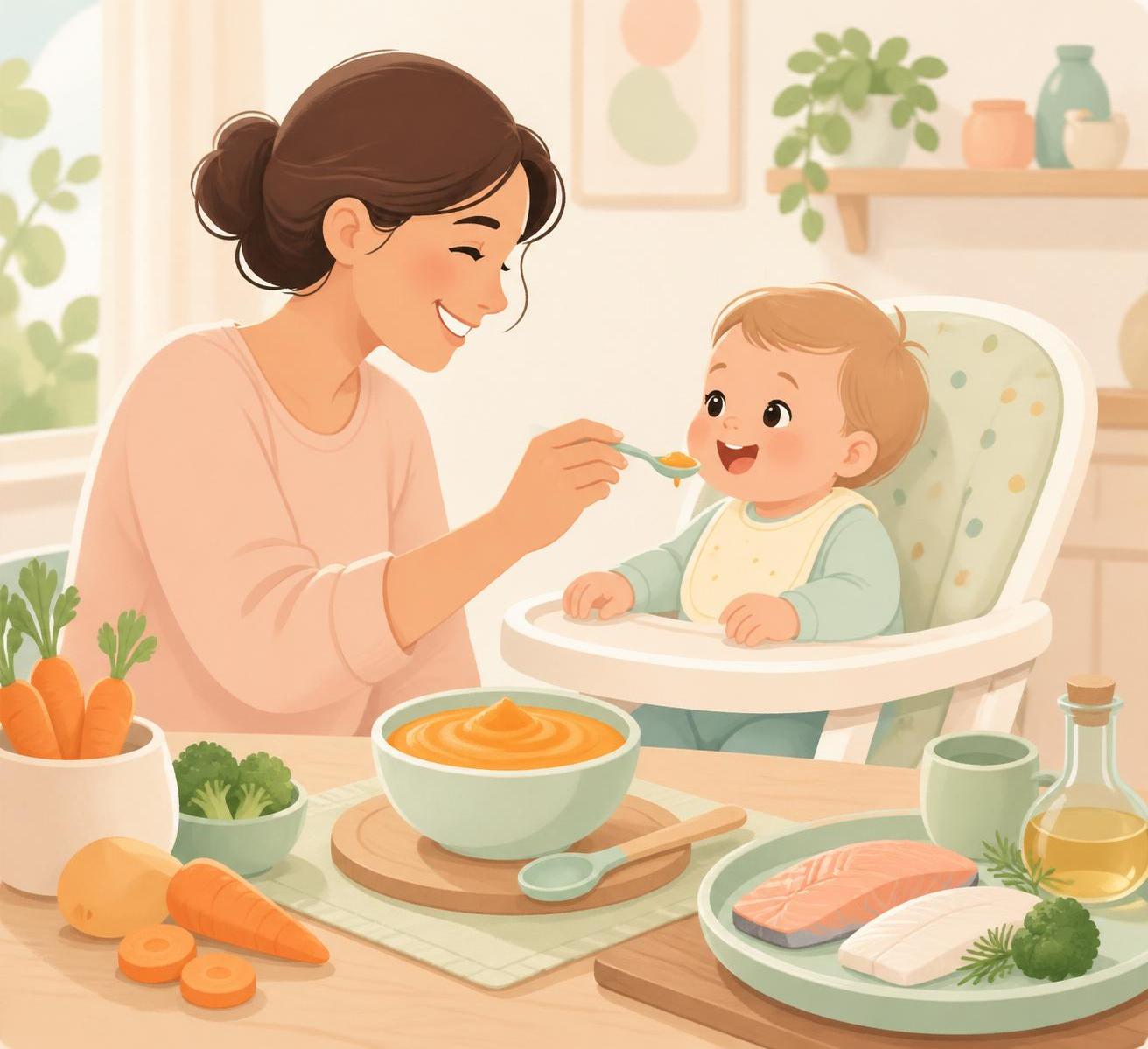
Baby meat, baby fish, and baby egg: when, what portions, what cooking?
Baby meat, baby fish, and baby egg provide iron, zinc, iodine, and B vitamins. Introducing these foods early supports motor and cognitive awakening, as the bioavailable iron from animal products meets the infant’s high needs. The goal is not to “fill the plate,” but to aim correctly with adapted quantities and controlled cooking.
At 6-8 months, keep in mind the following cues: 10 g of lean meat (skinless poultry, well-cooked veal), boneless fish (hake, cod, trout), or 1/4 hard-boiled egg. At 8-12 months, the portion can gently increase up to about 15 g, not exceeding once per day. The secret lies in regularity rather than volume. Taste is trained by calm repetition.
In the kitchen, avoid frying and salty sauces. Mild herbs and spices (thyme, parsley, turmeric) flavor without aggressiveness. Chop very finely or blend with soft vegetables. Monitor internal temperature: “through cooking” secures the plate. For fish, carefully remove bones and prefer low-contaminant species, alternating sea and freshwater.
Sugar does not make proteins “more likeable.” On the contrary, it masks flavors and maintains an unnecessary preference for sweetness. To understand why this habit harms taste learning, see this clear file on sugar in baby food. It is better to enhance a puree with a touch of oil than with an early sweet dessert.
A useful caution concerns supplements. Vitamin D remains necessary, but overdoses are avoided. Proteins do not compensate for excess additives or vitamins. To stay informed, read the practical alert on vitamin D overdose in infants. Good nutrition does not replace medical advice, it complements it.
Portion cues by age and types of cooking
| Age 👶 | Daily portion 🍽️ | Safe examples 🔥 |
|---|---|---|
| 6-8 months | 10 g meat/fish or 1/4 hard-boiled egg | Pureed poultry, steamed cod, mashed hard-boiled egg |
| 8-10 months | 10-12 g or 1/4-1/3 egg | Very tender meatballs, homemade unsalted fish rillettes |
| 10-12 months | 12-15 g or 1/3 egg | Soft pieces, very well cooked shredded beef |
A routine is worth establishing: protein at noon, varied vegetables, soft starch, quality fat. Keep the evening lighter if the nights are calmer. Each child remains unique; observation guides adjustments without pressure. The important thing remains preserving shared pleasure.
If in doubt about a texture, revert to fork-mashed. The palate learns quickly, but motor ease is established in small steps. This caution does not prevent offering new flavors each week.
Baby plant proteins: baby legumes and baby tofu, iron allies daily
Baby plant proteins enrich the plate without impoverishing taste. Coral lentils, chickpeas, white or red beans, split peas, and baby tofu provide iron, gentle fibers, and micronutrients. As soon as the child accepts the spoon, one or two spoons of ultra-smooth, well-cooked, skin-free legume puree can be offered. Texture makes the difference.
For coral lentils, soaking is optional, but thorough rinsing reduces anti-nutritional factors. Chickpeas and beans benefit from soaking overnight, then long cooking to extreme tenderness. A prolonged blender passage, with some cooking water and a drizzle of oil, yields a creamy texture, perfect for starting. Combining these purees with pumpkin or carrot softens the flavor and often pleases immediately.
What about tofu? Its neutrality either appeals or confuses. It absorbs flavors well. It can be steamed, then blended with vegetables and a mild herb. For deeper insight, explore this practical resource on discovering tofu with toddlers. Silken tofu, very soft, serves as a binder to create reassuringly tender textures.
Iron from plants is better absorbed in the presence of vitamin C. A puree of sweet bell pepper, a splash of freshly squeezed orange juice added after cooking, or some very ripe kiwi cubes stimulate this absorption. Varying these combinations colors the plate and encourages curiosity. The balance between animal and plant sources also protects the child’s gustatory environment.
Allergens? Legumes are among potentially allergenic foods, as are egg, fish, and soy. There is no need to delay their introduction without medical advice. Present a very small quantity, observe for 48 hours, then gradually increase. This cautious approach helps identify a possible reaction, rare but to watch for.
Simple ideas to introduce protein-rich plants
- 🥣 Ultra-smooth chickpea hummus + steamed carrot + rapeseed oil
- 🌱 Coral lentil cream + sweet potato + mild cumin
- 🍚 Silken tofu blended with zucchini, served warm, velvety texture
- 🍋 Add vitamin C (sweet pepper, ripe citrus) to boost iron
Some babies prefer to grasp, others enjoy the spoon better. Both paths lead to the same learning if safety is respected. If marked interest in finger feeding occurs, the cues from baby-led weaning inspire soft sweet potato or polenta sticks, to be combined later with a touch of legume puree. Everything unfolds gently, without forcing.
This plant aspect of baby nutrition 0-12 months strengthens families’ culinary arsenal. It brings within reach economical, nourishing, and creative recipes. The ultimate goal remains the same: to make each meal understandable, safe, and pleasant, with one protein per day, a vegetable, a starch, a quality fat, and a fruity note.
Textures, progression, and autonomy: from smooth to soft pieces safely
The texture adventure structures sensory-motor awakening. Start with very smooth purees, then move to coarse mashed, then small soft pieces between 8 and 12 months. The transition adjusts to overall and fine motor skills. A child who handles objects well and sits upright in a high chair manages texture changes better.
Touch development supports this learning: fingers explore, the tongue directs, the gums mash. Even without teeth, a baby can mash tender pieces. Regular sensory cues improve tolerance for new foods. Avoid round, hard, or slippery pieces at first (whole grapes, nuts, hard raw vegetables).
Living example: Lina, 7 months, accepts 2 spoons of broccoli puree with 10 g of pureed cod. One week later, she discovers mashed sweet potato with 1/4 crumbled hard-boiled egg. At 9 months, she grasps parmesan polenta sticks, soft, while her parents add a bit of coral lentil cream to the spoon. Her appetite varies; the family adapts without pressure.
Safety remains non-negotiable: sitting upright, constant supervision, soft formats, no bones, thorough cooking. Offer water in a cup. Avoid salt and delay raw milk cheeses. Foods rich in free sugars remain unnecessary. For useful cues on sweetness and limits, this guide on sugar in baby food helps establish a calm course.
The body follows the rhythm. Strengthening posture and coordination improves grip and chewing. Observing, encouraging, proposing simple gestures daily accelerates progress. Ideas for useful games and positions are available in this file on gross motor skills, ideal for linking table and motor skills.
Typical progression, simple and effective
- 🥄 Weeks 1-2: very smooth purees + small portion of protein
- 🍽️ Weeks 3-4: fork mashed + mild herbs
- 🧩 Month 3: small soft pieces + secure grip
- 💧 Always: hydrate, stay seated, watch calmly
This rise in textures develops confidence and pleasure at the table. A successful meal is seen more in the child’s calmness than in the quantity swallowed.
Sample menus and practical ideas for baby nutrition 0-12 months
Composing a typical day avoids improvisation and stress. At 6-8 months, a simple scheme works: morning, usual milk; noon, vegetables + starch + 10 g protein (meat, baby fish or baby egg) + drizzle of oil; snack, cooked or ripe fruit; evening, vegetables or small mild soup. At 8-12 months, keep this base while slightly increasing texture and protein portion, up to 12-15 g depending on appetite.
Concrete ideas for lunch at 6-8 months: carrot-sweet potato puree + pureed poultry, or zucchini-potato puree + hake, or broccoli + 1/4 mashed hard-boiled egg. At 8-12 months, mashed green beans-potatoes is enriched with soft pieces of very cooked trout, or a small coral lentil shepherd’s pie flavors the plate. Rapeseed, walnut, and olive oils alternate happily.
Outings do not interrupt good habits. An insulated thermos and a soft cooler make it possible to carry safe purees. Time at the park becomes a social learning opportunity. For festive and practical ideas, this file “family picnic” offers tips for eating outdoors without giving up balance.
A targeted shopping list saves time. Buy white fish without bones, lean meats, quality eggs, an assortment of legumes, digestible starches, seasonal fruits and vegetables, quality oils. Plan two “reference” recipes per week, which the child sees in several forms, to build familiarity and reduce refusals.
Quick weekly plan
- 🗓️ Monday: zucchini + hake + rapeseed oil
- 🗓️ Tuesday: carrot + poultry + olive oil
- 🗓️ Wednesday: sweet potato + smooth hummus + walnut oil
- 🗓️ Thursday: broccoli + 1/4 hard-boiled egg + herbs
- 🗓️ Friday: pumpkin + silken tofu + parsley
- 🗓️ Saturday: green beans + trout + rapeseed oil
- 🗓️ Sunday: coral lentils + potato + mild cumin
For snacks, prioritize cooked fruit, unsweetened compotes, and water. “Adapted” biscuits will wait until the child is well seated, manages pieces, and progresses in teething. Simplicity gains serenity, day after day.
“A small step of flavor today, a big step of autonomy tomorrow.”
Should proteins be given every day between 6 and 12 months?
Yes, a small daily portion is enough: 10 g of meat or fish (≈ 2 teaspoons) or 1/4 hard-boiled egg, always well cooked through. Alternate with legumes and tofu to diversify protein and iron sources.
How to reduce choking risks?
Seat baby upright, straight back, under supervision. Serve smooth then soft textures, without bones or round/hard pieces. Adjust size to chewing abilities and return to simpler texture if hesitation arises.
Can we start with legumes and tofu?
Yes. As soon as the spoon is accepted, one or two spoons of very smooth legume puree or silken tofu are suitable, combined with vegetables and a vitamin C source to improve iron absorption.
My baby refuses meat: what to do?
Do not force. Offer again in another form a few days later (mousse, shredded, very tender meatball), or alternate with fish, egg, or plant proteins. Habituation is built by small positive exposures.