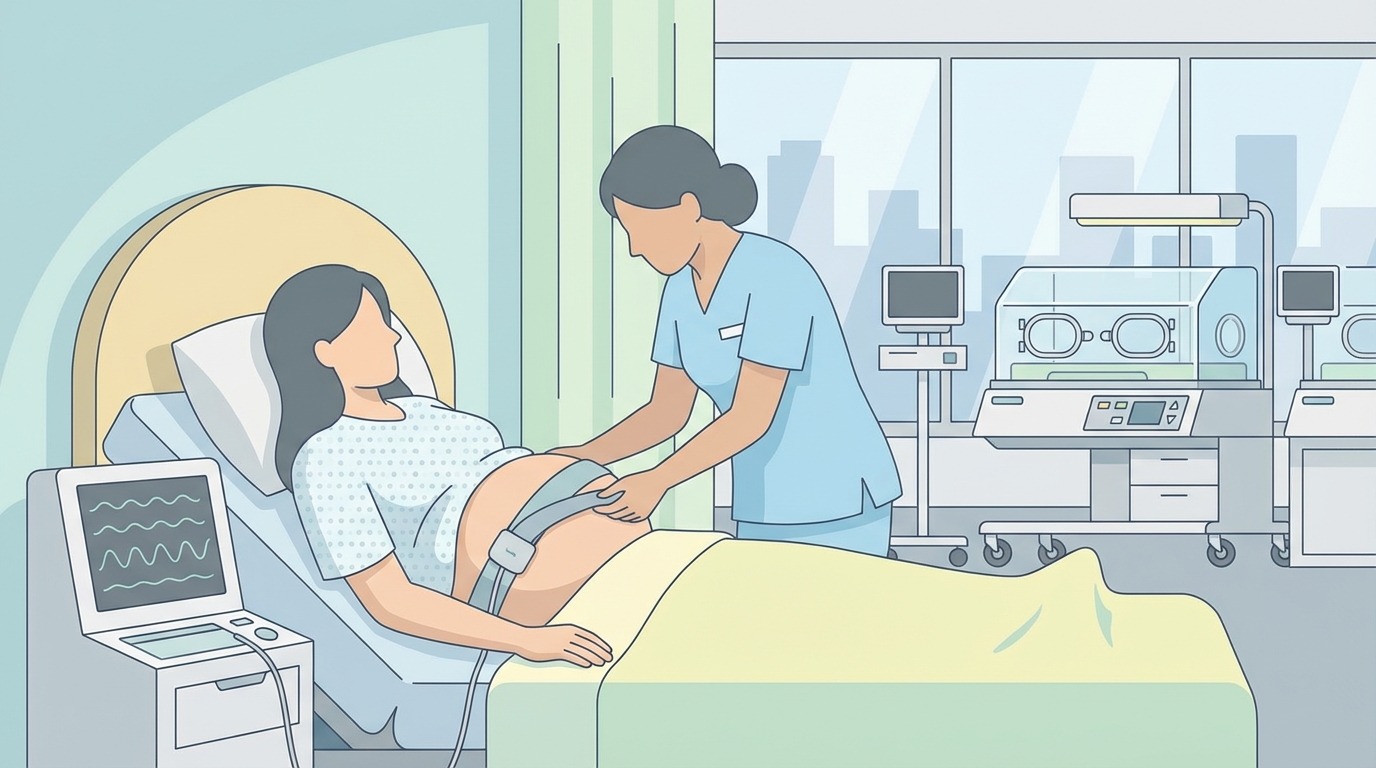
Premature Labor Pregnancy: Premature labor during pregnancy and delivery.
Preterm labor disrupts the benchmarks of a peaceful pregnancy. When uterine contractions alter the cervix before 37 weeks, a race against time begins to protect the fetus and gain precious days. The benchmarks evolve as prematurity progresses in many countries, and perinatal teams adapt with refined protocols. Between personalized prevention, detection of warning signs, and highly technical neonatal care, the goal remains simple and demanding: to secure the mother and offer the newborn the best chances from the very first minutes.
The figures highlight the stakes. In Europe as in North America, premature birth concerns nearly one baby out of twelve. Higher maternal age, multiple pregnancies after ART, and certain pathologies increase the risk. Yet, a portion of premature births remains without an identified cause. Hence the importance of concrete clinical tools: assessing cervical length, monitoring contraction frequency, relying on fetal monitoring as soon as signs become clear, and activating treatments that slow labor when appropriate. This article offers a clear and reasoned reading to act quickly, without excessive anxiety, with concrete gestures and informed decisions.
| Short on time? Here’s the essentials ⏱️ |
|---|
| Preterm labor occurs before 37 weeks, with effective contractions on the cervix. ⚠️ |
| Seek urgent consultation if contractions become regular, painful, or if the water breaks. 🚑 |
| Shortened cervical length and elevated fibronectin increase risk but don’t predict everything. 🧪 |
| Tocolysis, corticosteroids, and magnesium protect the fetus if preterm birth is imminent. 🛡️ |
| Early neonatal care (skin-to-skin contact, adapted nutrition, monitoring) changes the outcome. 👶 |
| Prematurity prevention targets smoking cessation, infection treatment, and management of comorbidities. ✅ |
Preterm labor during pregnancy: definition, thresholds, and early detection
Preterm labor corresponds to the onset of labor between 20 and 36 weeks + 6 days of amenorrhea. Uterine contractions settle in, become regular, and cause cervical changes. The challenge is twofold: to distinguish false alarms and to quickly recognize the true start of labor.
Why this 37-week threshold? Pulmonary and neurological maturity progresses rapidly in the third trimester. Each week gained reduces the risk of complications. Thus, a preterm birth at 35 weeks does not expose the child to the same challenges as a premature birth at 28 weeks.
Differentiating uterine contractions from false labor
Braxton-Hicks contractions are often irregular, brief, and disappear with hydration or rest. Conversely, contractions that occur at least every 30 to 60 seconds, intensify, and are accompanied by pelvic pressure require evaluation. This early sorting avoids unnecessary trips and speeds up care when necessary.
Unusual vaginal discharge also raises alerts. Bleeding or clear fluid evoking premature rupture of membranes requires immediate consultation. A simple marker: any episode of bleeding deserves evaluation, especially when a low-lying placenta was suspected by ultrasound.
Viability window and care trajectories
Viability has expanded thanks to advances in neonatal care. However, the care trajectory varies according to gestational age. Between 24 and 28 weeks, the goal is to gain days under close monitoring, with frequent fetal monitoring and a protective pharmacological strategy. After 34 weeks, decisions increasingly incorporate estimated weight and maternal condition.
A concrete example: at 32 weeks with a shortened cervix and regular contractions, a short tocolysis aims to delay preterm birth by 48 hours, allowing time to administer corticosteroids to accelerate fetal lung maturation. This seemingly modest delay significantly improves the newborn’s respiratory outcome.
Overall, early recognition of preterm labor allows activation of targeted measures. The earlier the signal, the wider the action window.

Causes and risk factors in pregnancy leading to preterm labor
Prematurity responds to multiple causes. Some situations trigger contractions, others weaken the membranes, and some remain unexplained. Understanding these mechanisms guides prematurity prevention and refines follow-up.
Obstetric and anatomical factors
A placenta praevia or partial abruption can cause bleeding and a reflex uterine contraction. A short cervix measured by transvaginal ultrasound in the second trimester increases risk, especially with a history of preterm delivery. Twin pregnancies or hydramnios stretch the uterus, stimulating contractility.
Previous cervical abnormalities or lesions, such as after certain interventions, influence cervical integrity. In these cases, a close-monitoring strategy is necessary, possibly including vaginal progesterone or cerclage depending on evaluation.
Infectious and inflammatory factors
Genito-urinary infections trigger inflammatory cascades. They release mediators that activate contractions and weaken membranes. Rapid detection and treatment reduce this risk. Vigilance rises with fever, abdominal pain, and foul-smelling discharge.
Medical, behavioral, and social factors
Smoking, intense stress, exhausting work hours, exposure to violence or food insecurity create an unfavorable environment. Certain chronic pathologies add to pregnancy risks, such as poorly controlled diabetes and hypertension. A dedicated file details these issues: managing diabetes and hypertension during pregnancy supports primary prevention.
With the increase in conceptions after age 40 and the use of IVF, multiple pregnancies are more frequent. This demographic evolution contributes to observed preterm birth rates in recent years, including in high-income countries.
Bleeding and placental abnormalities
Even moderate blood loss justifies evaluation. It may indicate a threat of preterm delivery, placental insertion abnormality, or infection. To identify these situations, consult simple benchmarks: what to do with bleeding in the first, second, or third trimester and placenta-related risks at birth.
- 🧪 Untreated urinary or vaginal infections
- 👶 Multiple pregnancies or hydramnios
- 🧬 History of preterm delivery
- 🚬 Tobacco and exposure to toxins
- 🫀 Hypertension, diabetes, or autoimmune diseases
- 🧘 Chronic stress, precarious living conditions
Finally, despite these known factors, many cases remain idiopathic. Hence the value of regular follow-up and clear education on warning signs.
Identifying the cause guides action, but the absence of a cause never forbids prevention: it strengthens it.
Warning signs, self-monitoring, and triage exams in case of preterm labor
The recognition of early signs changes the outcome. A useful marker: more than six contractions per hour, increasing in intensity, should alert. A weight in the pelvis, dull lower back pain, a change in vaginal discharge, or the sensation of an “electric shock” in the vagina may precede sharp pain.
When to call without delay
Call the maternity service if contractions become regular, or if there is bleeding, fever, water breaking, or decreased fetal movements. Fetal monitoring in the delivery room measures the baby’s response and uterine activity. It complements cervical examination and ultrasound.
A useful example: Lina, 30 years old, 32 weeks gestation, has felt contractions every eight minutes for two hours. Hydration and rest do not change anything. Upon arrival, the cervix is at 1 cm, shortened, and membranes are tense. A short tocolysis begins, with corticosteroids, under fetal monitoring. Two days later, the contractions cease, and the pregnancy continues.
Triage tests: cervical length and fibronectin
Ultrasound measurement of cervical length structures the assessment. A long cervix is often reassuring. A shortened cervix requires increased vigilance. The fetal fibronectin test, performed on a vaginal swab, helps estimate the risk of preterm birth within the week.
A negative fibronectin has a strong reassuring value: immediate risk is low. Conversely, a positive result does not equal an inevitable start of labor. It is interpreted according to context, clinical presentation, and ultrasound.
What can be done at home without losing time
The first action is simple: stop, lie on your side, breathe deeply, and hydrate. Record the time, duration, and intensity of contractions to clarify the picture. In case of doubt, better to call; no team will reproach prudent vigilance.
- 🕒 Note the frequency of contractions over 60 minutes.
- 💧 Drink two glasses of water and urinate to relieve the uterus.
- 📞 Contact the maternity ward if contractions persist or intensify.
- 🧼 Avoid intercourse if suspicious discharge or bleeding occur.
- 👜 Prepare medical documents for a quick evaluation.
These actions do not replace medical evaluation. They avoid wasting precious time and structure dialogue with the team.
Strong signal: sudden rupture of the membranes requires immediate consultation, without delay.
Hospital management of preterm labor: protocols, benefits, and limits
At the hospital, the approach is standardized and personalized. Priorities: confirm diagnosis, stabilize, protect the fetus, then decide on the best place and time for delivery. Each decision weighs the benefits and risks for mother and child.
Targeted tocolysis and lung maturation
Tocolysis aims to temporarily slow contractions. Molecules such as nifedipine or atosiban buy time to administer corticosteroids. A course of betamethasone or dexamethasone accelerates lung maturation and reduces respiratory complications in the newborn.
This strategy works better before 34 weeks. Beyond that, the benefit-risk balance shifts, and decisions become more individualized based on gestational age, estimated weight, and fetal condition.
Neuroprotection, antibiotic therapy, and placental strategy
Magnesium sulfate, administered before a highly probable premature birth, reduces the risk of cerebral palsy. If infection is suspected, appropriate antibiotic therapy is added to protect the mother-child dyad. If a placental problem persists, the team anticipates the timing of preterm delivery and prepares the operating room, anesthesia, and neonatal resuscitation.
Severe preeclampsia, poorly controlled diabetes, or hemorrhage alter the course. Maternal safety takes priority. Useful resources help prepare for the unexpected: reacting to an unplanned delivery provides benchmarks to decide quickly.
Organization and in utero transfer
When premature birth is very likely, delivering in a maternity hospital with an appropriate neonatal care unit improves outcome. In utero transfer is preferred because it avoids newborn transfer after birth, which is always riskier. Continuous fetal monitoring combined with ultrasound guides timing and mode of delivery.
Vaginal delivery remains possible if the maternal-fetal condition allows. Cesarean section is discussed according to gestational age, presentation, growth, and obstetric emergencies. The objective: safe preterm birth, in the right place, at the right time.
The alliance between the team and family is decisive: clear information reduces stress and improves adherence to care.
Preterm birth: neonatal care, parenting, and the postnatal trajectory
At birth, the priority is respiratory transition. Neonatal care begins in the delivery room with thermoprotection, oxygenation according to protocols, and sensor placement. Coordination between obstetricians, anesthetists, and neonatologists ensures rapid stabilization.
Neonatology course and parent-child bonding
Skin-to-skin contact as soon as possible promotes thermal regulation, cardiorespiratory stability, and emotional bonding. Breastfeeding, even if delayed, offers major immune benefits. Lactation consultants support initiation, including with breast pumps.
Over days, the team adjusts oxygen therapy, enteral nutrition, and infection prevention. Parents become full members of care. They participate in diaper changes, bathing, and learn to read their child’s signals. This active involvement reduces anxiety and improves development.
Transition home and follow-up
Discharge is organized when the child maintains temperature, feeds efficiently, and breathes unaided. Coordinated follow-up detects needs for rehabilitation, ophthalmology, hearing, and neurodevelopmental support. Play remains a powerful awakening driver; practical resources inspire daily life: the benefits of play for the child highlight simple and stimulating activities.
Returning home can be emotionally overwhelming. Parent associations, psychologists, and PMI teams support this period. Families build routines, note feedings, and monitor weight curves.
Looking ahead: growing after prematurity
Most late preterm children catch up quickly. The most premature progress at their own pace. Multidisciplinary follow-ups anticipate needs and prevent delays. As school approaches, gentle preparation matters; playful ideas help secure this stage: on the way to kindergarten through play offers concrete suggestions.
Each story is unique, but one theme remains: early support changes the trajectory. Prematurity does not extinguish possibilities; it requires strategy and allies.
“Gaining one day is already changing a life; anticipating is offering a future.” ✨
When do we talk about preterm labor?
Preterm labor is defined as regular contractions that change the cervix before 37 weeks of pregnancy. The diagnosis combines clinical data, cervical examination, ultrasound, and sometimes a fibronectin test.
What signs require urgent consultation?
Frequent and painful contractions, bleeding, water breaking, fever, decreased fetal movements, or ongoing pelvic pain. The rule: if in doubt, call the maternity ward without delay.
Can preterm birth be prevented?
The risk is reduced by quitting smoking, treating infections, controlling hypertension and diabetes, and monitoring cervical length in at-risk women. Progesterone or cerclage are discussed case by case.
Is strict bed rest recommended?
Prolonged strict bed rest is no longer routinely recommended as it carries risks (phlebitis, muscle wasting). The doctor adapts activity: relative rest, work adjustments, and close monitoring depending on the situation.
What is the outlook for a baby born at 32 weeks?
At 32 weeks, the prognosis is generally favorable with appropriate neonatal care. A short hospitalization is common for feeding learning and respiratory maturation, followed by growth monitoring.