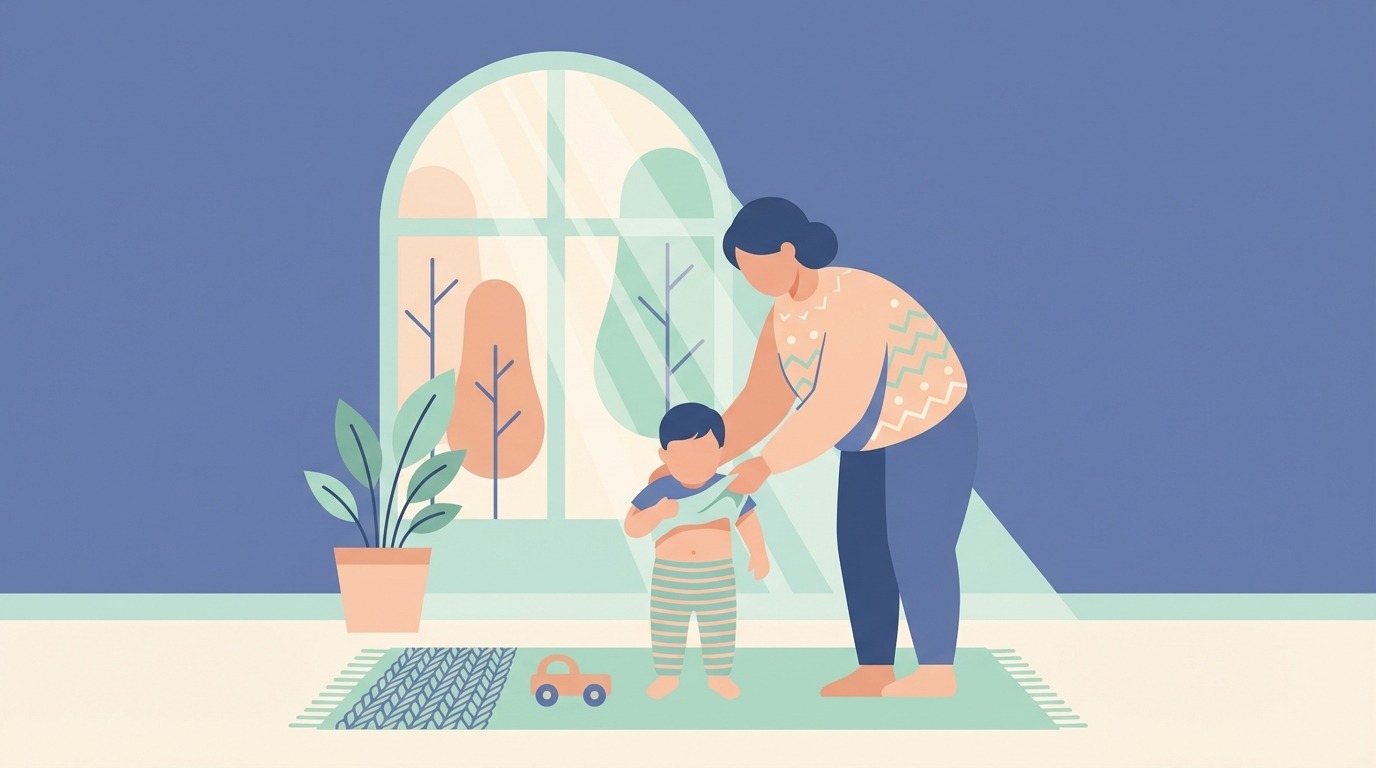
Difficult Morning Stress: Managing Stress and Difficult Mornings for the 1 to 3-Year-Old Child.
| Short on time? Here’s the essentials ⏱️ |
|---|
| 🧭 Prepare the outfit the night before a complete set approved by the 1- to 3-year-old child to limit stressful difficult mornings. |
| 🎯 Offer a maximum of 2 choices (sweater A or B) to preserve autonomy without overloading. |
| ⏳ Visual timer 10–15 min to pace the morning routine and clarify the wake-up → dressing transition. |
| 🫁 4-4 breathing (inhale 4, hold 4) to calm the child’s anxiety before dressing. |
| 🧸 Soft fabrics, cut labels, ergonomic clothes easy to put on to smooth the child’s behavior. |
| 🌤️ Fixed order wake-hug-water-light-dressing for a calm, predictable morning. |
| 🧠 Regulated parent = regulated child: 3 breaths 3-3-6 before intervening. |
| 📚 5 minutes of reading on waking to anchor soothing habits and start the day gently. |
Mornings with a 1- to 3-year-old child often feel like a race against the clock. Yet another way exists. By understanding emotional development in early childhood and adjusting a few simple levers, it becomes possible to transform a difficult morning into a smooth sequence of actions. The goal is not perfection, but stress reduction, clarity of instructions, and the establishment of soothing habits that secure both child and adult. Expected result: a realistic calm morning, without shouting, and more frequent on-time departures.
The major lever is played out even before waking. The night before, structuring the morning routine, selecting ergonomic clothes, and anticipating peaks of child anxiety set the scene. At wake-up, the wake-up transition must be gentle and predictable. When the child understands what is expected, cooperation increases. And when the adult self-regulates, emotional contagion finally works in favor of serenity. Here are concrete strategies, tested daily, and adjusted for the small storms so typical between 1 and 3 years.
Understanding difficult mornings of toddlers: triggers, brain, and real needs
The brain under construction explains many resistances
Between 1 and 3 years, the prefrontal cortex is just beginning its long maturation. The child feels deeply but regulates little. Their child behavior thus reflects immediate needs. Facing constraint or urgency, they struggle, cry, fidget. Not out of whim, but because their brain perceives parental acceleration as an alert. When the adult raises their voice, the amygdala inflames and the crisis intensifies. Conversely, when the parent lowers their own physiological activation, the child finds a point of anchorage.
This gap between adult expectations and capacities of a 1- to 3-year-old child fuels most difficult mornings. Even a simple “put on your socks” can exceed their attentional resources if the instruction is unclear, if fatigue is gnawing, or if the garment itches. Hence the interest of stress management upstream and ultra-simple instructions.
Typical triggers of a difficult morning
Several sparks come back day after day. Rapid transitions, hunger, sensory discomfort, or an overload of choices create a fertile ground for explosion. Sometimes a tight tight or an itchy label is enough to disorganize cooperation. Fear of being separated from the parent at daycare also plays. A too abrupt wake-up transition feeds child anxiety and makes dressing impossible.
- 🧃 Hunger or thirst at wake-up: priority to a sip of water and a mini-snack if needed.
- 🧦 Tactile discomfort: rough materials, seams, labels, too stiff shoes.
- 🎛️ Too many stimuli: TV on, restless siblings, pressing dishwashing noise.
- 🌀 Too many choices: ten sweaters offered, the child freezes and gets upset.
- 🔁 Unstable rituals: one morning yes, the other no; the child loses their bearings.
These factors add to emotional contagion. The more the adult accelerates, the more the child resists. It is not a challenge, it is a signal: “reassure me, guide me, simplify”.
Case study: Lina’s family, 2 years old
Every morning, Lina screams in front of the pajama drawer. Parents think it’s a “free” opposition. After observation, the trigger turns out to be double: the legging’s label irritates and the instruction changes day by day. One week of adjustments is enough: ergonomic clothes without labels, two visual choices, 12-minute timer, and an opening hug. The crying drops by 80%. The key: a clear demand, calmly delivered, always repeated in the same order.
Step conclusion: understanding precedes soothing. Once triggers are identified, every morning action regains meaning.
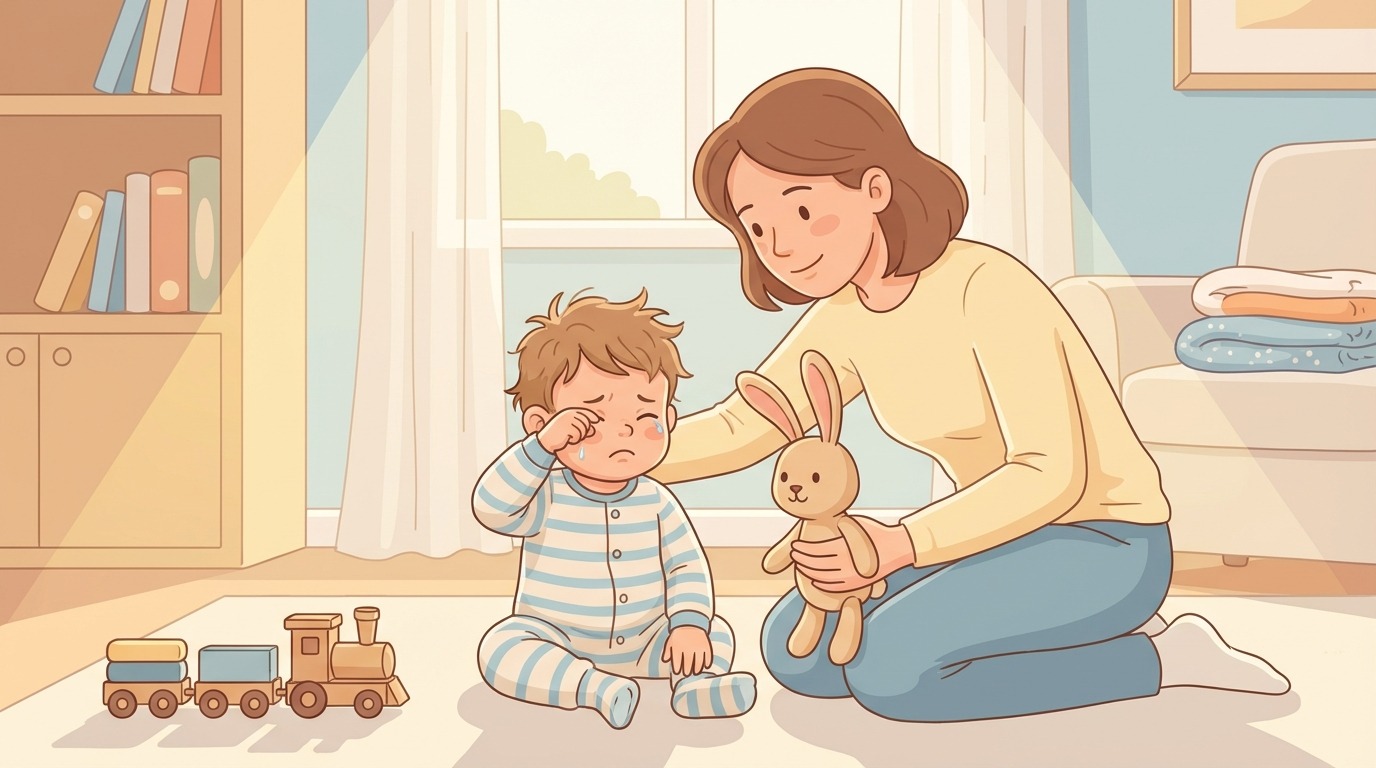
Dawn routine without screams: structure, sensory rituals and tools that reassure
The night before that changes everything
An easy morning starts the evening before. Preparing a complete outfit on a low shelf creates a visual cue. A photo card of steps is added: wake up, drink, toilet, dress, breakfast, leave. Two clothing options suffice. More than two choices reignite stress. Sliding in a sensory attention (soft socks, loose sweatshirt) strengthens bodily security.
Regular sleep weighs as much as logistics. A coherent evening routine reduces grumpy wakings and makes cooperation more likely. When the child sleeps better, the morning routine mechanically becomes smoother.
Sensory rituals that soothe and speed up
The body needs stable signals to switch from bed to action. Gently open the shutters, drink lukewarm, rub hands with a neutral cream, propose a recurring song. Each of these gestures sends a message to the nervous system: “you can move forward, it’s predictable.” Soothing habits and efficiency grow together.
A powerful track: 90 seconds of joint breathing. Inhale 4, hold 4, exhale 6, three times. The adult guides without demanding. Then, name the next step with a short phrase: “socks, then pants.” Linguistic clarity becomes a tool for stress management.
Time games, visual timers and action language
Abstract time does not yet exist at this age. A 5-minute hourglass or a color timer replaces “hurry up.” We transform constraint into a game: “the sand is running, catch your socks!” Instructions remain positive: “put your arm in the sweater sleeve” rather than “don’t dawdle.” Proposing to act together for 30 seconds often triggers subsequent autonomy.
For a visual and motivating overview, here is a useful video search.
These tools only work in a constant framework. We avoid changing method at the slightest glitch. Repetition creates security, even when a morning stumbles a bit.
Dressing without tears: ergonomic clothes, seasons and guided autonomy
The garment, the first sensory regulator
A rough fabric is enough to sabotage good energy. Betting on comfortable clothes, soft, stretchy, with wide necklines, is a winning bet. Cutting labels, choosing flat seams, backing soft leggings shortens dressing time. Ergonomics sometimes cost a minute extra at the store but gains ten each difficult morning.
Autonomy progression also counts. A jacket with wide closure, shoes with Velcro, pants with elastic waist encourage “I do it myself.” The more the child acts, the less they resist. The adult supervises, reformulates, celebrates effort: “you slipped your foot in alone!”.
Overview of practical solutions
To see clearly, this table compares some common options. It aims for simplicity, not advertising. The idea: quickly find what will suit the child’s body and temperament.
| Option 👕 | Benefit for a calm morning 🌤️ |
|---|---|
| Body or T-shirt with wide neckline | Quick dressing, less tugging over the head 🙂 |
| Elastic waist pants | Immediate autonomy, no complicated button 🚀 |
| Soft zip-up sweater | Easy thermal regulation according to weather ☁️ |
| Seamless socks | Less irritation, fewer crises 🧦 |
| Velcro shoes | Quick closure, pride in doing it alone ⭐ |
Thinking “weather” the night before avoids many reversals. A windbreaker ready if needed, a discreet hat, and thin, layerable clothes. The child moves; the clothes adapt.
Making selection playful and clear
Two hangers for two outfits. The child points, the adult validates and praises. One can tell a micro-story: “today, your puffer jacket goes on an adventure.” The game focuses and makes tension disappear. A magnetic checklist at child height serves as a self-reminder. We show, say little, smile often.
Need practical inspiration to encourage autonomous dressing? The search below gathers concrete ideas.
Key point: less struggle, more structure. When the outfit is simple and chosen, the rest aligns.
Soothing emotions: naming, co-regulating and building lasting soothing habits
Naming to tame
A calm word often calms impulsive gesture. “You are frustrated, these tights bother you.” Naming does not ratify, it structures. The child feels seen, their nervous system reorganizes. We follow up with a clear alternative: “we cut the label, then put it back on.” This validation-solution duo defuses the spiral.
To deepen understanding of toddlers’ reactions, this file offers a clear overview: understanding young child stress. Better knowing these mechanisms immediately changes the adult stance.
Guided breathing and micro-pauses
Before helping, the adult helps themselves: three breaths 3-3-6. Then, a short coherence breathing with the child: inhale 4, exhale 6, three times. You can use a stuffed toy on the belly to visualize the air. These rituals are worth more than a long speech and support an embodied stress management.
Micro-pauses prevent overheating. Twenty seconds looking at a soft object, a sip of water, a silent smile. Paradoxically, slowing down saves time when emotion rises.
Reading and naps: the two forgotten allies
A short story at wake-up or bedtime feeds the child’s internal security. Shared reading improves attention, enriches emotional vocabulary, and weaves a bond that resists stress. This article summarizes the benefits well: the benefits of reading in children. Five minutes suffice to reduce the next morning’s tension.
Without adjusted sleep, the tools fall flat. Stable landmarks in the evening, a tempered room, and a repeated ritual make wakings smoother. This comprehensive guide enlightens the approach: implementing a bedtime routine. Sleeping better means cooperating better when putting on pants.
And parental stress?
Children absorb adults’ states. Training, supporting oneself, forgiving oneself has a direct impact on quality of departures. To explore this crucial aspect, a useful file addresses issues and courses of action: managing parent stress. When the adult stays the course, the child willingly follows the path.
Remember: co-regulation first, instruction second. Calm emotion, instruction finally finds its place.
Empower without pressure: family organization, educational choices and fair letting go
Guided autonomy rather than constraint
At this age, the child responds better to responsibility than blunt orders. Offering the choice of “who does” (you, me, or each one an arm) deflates opposition. A routine chart designed together, with pictograms and magnets, replaces tiring repetitions. Say less, show more shortens battles.
The rule of “2 instructions, 1 support” works well: announce the step, notify the time, provide brief help, then let do. Praise progress, never perfect result. This stance increases adherence and prepares the following years.
When everything blocks: the bet on reasoned letting go
If despite all, tension rises, dare the strategic pause. Close the dressing room door, breathe, come back with a simple offer. In rare cases, accepting a child to leave in pajamas one day can solve the problem faster than a hundred injunctions. Pressure dissolves, the desire to do “like the grown-ups” regains ground.
This flexibility does not mean giving up. It affirms a compass: security, clarity, consistency. Occasional delays are better than repeated screams. In 2026, care structures value emotional regulation more than simple mechanical punctuality. Better a serene child than a torn departure.
Organization protecting the morning
Some tips reduce mental load. Prepare the bag the night before, group clothes by complete sets, place shoes near the door. A common timer for the whole family creates a shared rhythm. We ban screens at wake-up, too exciting and time-consuming.
Express memo list to post at adult height:
- 🧺 Take out the next day’s outfit before the bath.
- 🧴 Put hand cream and brush near the mirror.
- 🪄 Stick 4 pictograms: drink, toilet, dress, breakfast.
- ⏲️ Set the common timer to 15 minutes.
- 📚 Provide a mini-story to anchor calmness.
Last reminder: serenity is decided the night before. The morning only executes the plan.
How to react to a dressing crisis at T−5 minutes ?
Slow down first: three breaths 3-3-6. Validate the emotion: “I see these tights bother you.” Offer a quick binary choice: ‘soft leggings’ or ‘elastic pants.’ If the crisis persists, help physically for 10 seconds, then let finish alone. Better to leave with an imperfect outfit than with prolonged cries.
How many choices to offer without reigniting anxiety?
Two and no more. Beyond that, the developing brain freezes. Two hangers, two photos, the child points, the adult confirms. This simplicity speeds up dressing and lowers stress.
What clothes most avoid sensory blockages?
Flat seams, cut labels, cotton or bamboo materials, elastic waist, wide necklines, seamless socks, Velcro shoes. Testing the outfit on the weekend before school reduces Monday surprises.
My child refuses the timer: what to do?
Replace the timer with an hourglass or a ritual song. Make time visible without threat: “When the song finishes, we put on pants.” Associating the timer with something pleasant (sticker, checklist to tick) restores adherence.
“ The morning becomes simple when each gesture reassures the heart before dressing the body. ”