Self-control Child: Developing self-control in children from 1 to 3 years old.
| Short on time? Here’s the essentials ✨ |
|---|
| From 1 to 3 years, self-control slowly emerges: the brain is still learning to curb impulsivity 🧠 |
| Reducing triggers (fatigue, noise, overstimulation) cuts 50% of daily outbursts 🔇 |
| Favoring Stop & Go games, controlled obstacle courses and battles to train self-regulation 🎯 |
| Supporting emotions with routines, breathing, gentle yoga, and soothing nursery rhymes 🌿 |
| Modeling a simple inner language (“I breathe, I wait”) prepares self-discipline 🗣️ |
| Being consistent in rules and preventing crises with clear transitions ✅ |
| Patience is a skill practiced every day, not an innate trait ⏳ |
Self-control in a child aged 1 to 3 is not a straight line, it’s a living curve. During this crucial period, the brain refines self-regulation, and every moment of play, waiting, frustration or soothing becomes a building block of development. Well supported, these ordinary moments shape behavior and build self-discipline. Families who adjust the environment, model calm reactions, and ritualize transitions see visible progress, sometimes within weeks. What if every “no” or tear was seen as training, not failure?
Practically, the levers are accessible. Short routines to tame emotions, targeted games to curb impulsivity, and an adult posture that supports without over-controlling form a winning trio. At 3 years, the child doesn’t become “well-behaved” by chance: they rely on clear, repeated, warm markers. And when the house buzzes, a simple plan—breathe, name, wait—can be enough to restore calm. This is where the most precious learning happens: choosing what to do with what we feel.
Self-control in children aged 1 to 3: understanding self-regulation to act better
Talking about self-control at 3 requires going back to the basics. The prefrontal cortex, which inhibits impulsivity, is still under construction at this age. Thus, waiting one’s turn, tolerating frustration or calming down without help remain normal challenges. Rather than judging, it’s helpful to observe milestones: signs of irritation, escalation of cries, need to move, then possible calm if guided by an adult.
One principle stands out: the environment often accounts for 50% of the reaction. Fatigue, hunger, noise, unexpected changes, and late screen time increase outbursts. Conversely, a stable routine, announced transitions, and sensory breaks prevent many clashes. With Lina, 2 years old, ten minutes of quiet play after daycare reduced evening tantrums in three days.
Another determining factor is the adult model. Children copy what they see. A parent who breathes deeply, verbalizes their state (“I’m angry, I’m calming down”), and offers a coherent solution teaches an internal roadmap. This emotional mirror builds patience without lecturing.
Involuntary reinforcement also plays a role. When a cry gets what it wants, the brain records “it works.” Breaking this cycle means paying attention to adapted behaviors and sticking to the announced rule. You can validate the emotion, but keep the frame: “You’re angry, you can hit the cushion, not your friend.”
Self-regulation is nourished by gradual learning. Waiting is broken down (10 then 20 seconds), micro-choices are ritualized (this cup or that one), steps are announced (“Two more turns, then we tidy up”). These micro-victories add up and shift the behavior curve.
Finally, it’s important to distinguish crisis from need. A child rolling on the floor isn’t trying to manipulate: they’re overwhelmed. Helping them “come down” with few words, a stable posture, and a safe space is more effective than long explanations. Once soothed, the reminder of the rule becomes audible.
At heart, the goal remains clear: making success possible. When the environment is adjusted, the child can practice without drowning. The next section shows how to turn this goal into concrete games.
Games to train self-control: Stop & Go, obstacle courses, and controlled battles
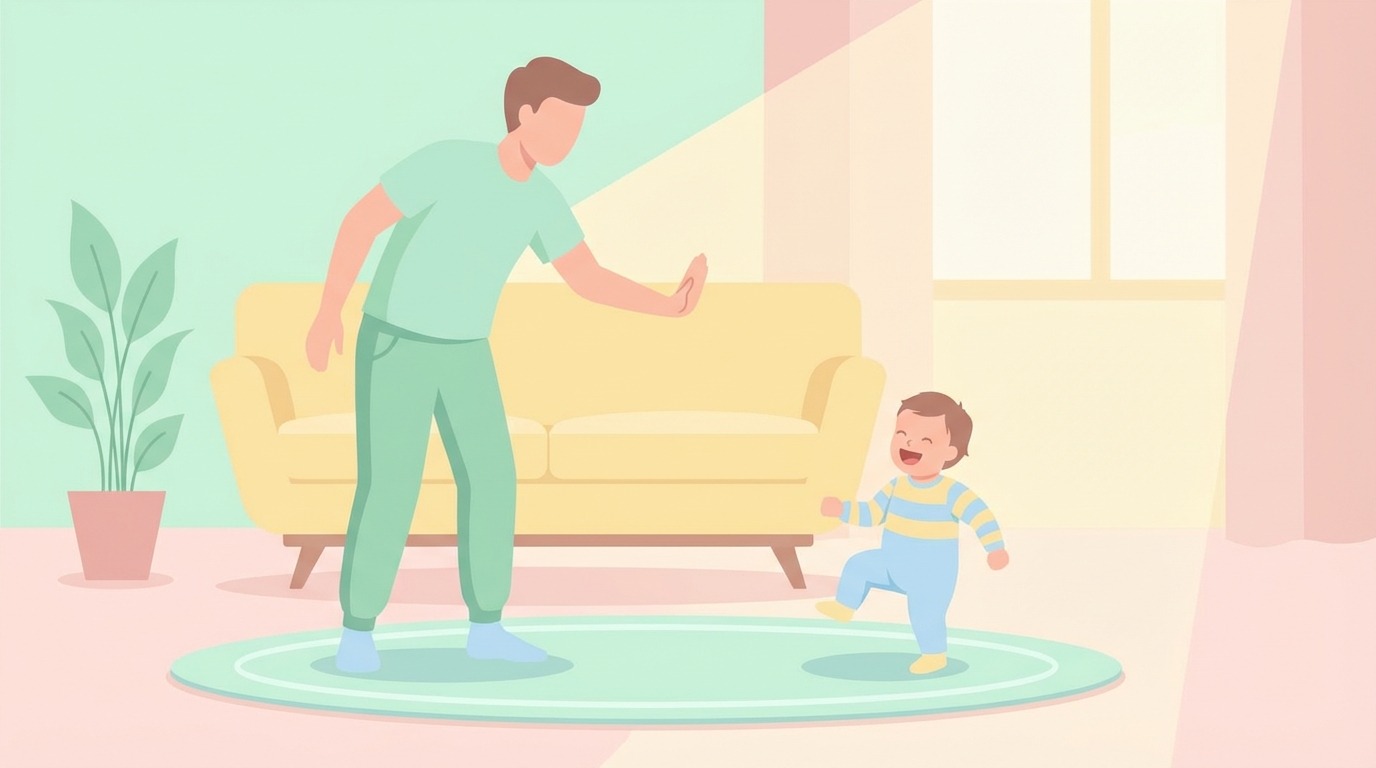
Training through play remains the royal road. Stop & Go games teach starting and stopping on cue, which strengthens motor inhibition. For example, one dances, then freezes like a statue when the music stops. You can vary with traffic lights: green run, yellow walk, red stop. This simple sequence develops self-regulation without tension.
On rainy days, it’s easy to adapt the living room into a learning ground. For inspiration for varied and joyful sessions, here are game ideas at home for 1-3 year olds. You’ll find short formats, with little material, perfect for keeping the pace without overwhelming the child. Limited time, clear rules, an end ritual: the recipe fits in three steps.
The obstacle course with a ball on a spoon is formidable for adjusting speed, precision, and breath. At 2 years, the distance is shortened and “falls” accepted. At 3 years, a tunnel, a low step, or a soft mat can be added. The goal isn’t performance, but granular mastery of movements.
And controlled battle games? Well supervised, they offer a safe arena to tame strength, distance, and excitement. A STOP word is set, authorized contact zones (shoulders, hands), and frequent breaks. Pool noodles become perfect tools to moderate energy without risk.
To guide the organization, this quick list helps pace an effective session:
- 🎵 5 minutes of musical warm-up (walking, stretching, blowing)
- 🟢 3 Stop & Go cycles, increasing intensity
- 🥄 2 runs of the ball course, slow then medium speed
- 🤼 2 minutes of controlled battle with STOP word
- 🧘 1 minute of “comfort” breathing to calm down
- 👏 Final ritual with targeted praise (“You waited, well done!”)
The key lies in the balance. Too long, the child loses focus. Too fast, they get excited without training to slow down. With slices of 2 to 5 minutes, progress remains visible and motivating. For Éden, 3 years old, adding the STOP word halved outbursts during games in fifteen days.
Finally, think “integration.” Bring STOP into daily tasks: stop before the street, put the spoon down when drinking, freeze to listen. Linking contexts, the skill migrates from play to real life. Next step: learning to calm down after excitement.
Soothing emotions: breathing, sensory routines, yoga, and nursery rhymes
To support intense emotions, nothing beats a simple trio: breathe, settle, ritualize. The “flower-candle” breathing works very early: “smell the flower” through the nose, “blow the candle” through the mouth. Three slow cycles already reduce tension. This routine, repeated daily, becomes a soothing reflex.
The calm corner structures inner space. Place a cushion, a soft book, an hourglass, a sensory bottle. The child learns they can go there to calm down, without punishment. At 3 years, they pick a tool: purple hourglass to wait, comfort toy to cuddle, bottle to watch glitter fall.
Yoga for toddlers, with 3 to 4 animal poses, strengthens self-regulation. Cat rounding, butterfly flapping slowly, solid mountain: these simple images support the body and guide the mind. A two-minute sequence suffices before bath or bedtime. Children love to imitate and naturally refocus.
Music opens a quick path to calm. Slow tempo nursery rhymes, sung softly, help regulate heart rhythm. A repetitive gesture, like tapping the shoulder, can anchor the ritual. After two weeks, many children anticipate the calm just by hearing the first notes.
At the heart of the setup, the state is named: “Your body is angry, it’s all red.” Validating opens the door to learning. Then a direction is proposed: “We’ll breathe, then drink water.” By reducing the number of words, the message passes better in the storm.
Some days, everything goes too fast. In those moments, dimming lights, reducing sounds, and taking out a 1-minute hourglass often suffice. Micro-breaks recharge attention and raise tolerance levels. With Naya, 2 and a half years old, the combo “flower-candle + hourglass” calmed daycare returns.
To guide families, a well-chosen video capsule helps visualize gestures and sequences. It serves as a living reminder during more restless evenings.
Golden rule to conclude this step: repeat gently, often, joyfully. The brain learns by frequent exposure. Now, focus on inner language and the adult posture that awakens it.
Inner language, self-discipline, and patience: supporting without becoming a “helicopter” parent
Inner language prepares self-discipline. From 2 and a half years, short scripts can be whispered: “I stop. I breathe. I wait.” The child repeats, sometimes silently, relying on it when tension rises. At 3 years, they can choose their favorite phrase. This small tool smooths self-regulation.
The temptation to prevent everything lurks. Yet, too much help stunts learning. The middle way is to support without over-controlling, let the child try, then adjust if needed. To explore this delicate balance, you can read this nuanced article on the “helicopter” parent and its possible advantages. The challenge is not to disappear, but to dose scaffolding.
A clear method helps stay on course: PREP. Prevent (“Soon we tidy up”), Remind the rule, Encapsulate the choice (“Do you want to start with cars or blocks?”), Then praise the right action. This progression nurtures patience and avoids power struggles.
Precise reinforcement speeds up the self-control curve. Saying “You waited your turn for thirty seconds, well done” is better than “Great.” The child understands what counted and repeats it. You can even stick a “breathe” sticker when they breathed before acting, materializing the effort.
Mistakes serve as trials. After a slip, the scene is restated with three simple images: before, during, after. Then the “successful” version is acted out. By replaying the situation, the brain encodes the better path. With repetitions, the path becomes faster than before.
Finally, the adult observes themselves. When the voice rises, a water break and three breaths are better than a long speech. The silent model weighs heavily. In an educational team, passing the baton at the right time protects the relationship and the rule. This way the framework remains reliable, without rigidity.
In short, less control, more tools. This balance makes the child an actor in their calm. Next stop: prevention and management of big waves, especially at 2 years.
Preventing and managing tantrums at 2 years: action plans, environment, and educational consistency
The “terrible twos” are not fate. You can manage a tantrum at 2 years by preparing the ground. Start by scanning the day: sleep, hunger, transitions. Then install simple visual cues, like an “out / in” picture. Announcing what’s coming reduces unpredictability, the sworn enemy of self-control.
An action plan in three steps structures the response. 1) During the buildup, reduce stimulation and repeat the rule in one sentence. 2) At the peak, stay beside, grounded, with few words. 3) After, repair: water, blow the nose, hug if accepted, then replay the calm scene. This framework avoids escalations and protects the bond.
The location matters. At home, a thick rug in a corner limits shocks and signals a “storm allowed” space. Outings include spotting a refuge (bench, stroller, car). The child perceives that their emotions have a place and are welcomed. The framework reassures and speeds up calming down.
Consistency among adults makes all the difference. If Tuesday “it’s allowed,” but not Wednesday, the child tests endlessly. Better a simple rule, identical for all, adjusted to reality. For example, “We hit the cushion, never the person.” Focus on the permitted action rather than piling up forbiddances.
Case study. Noah, 2 years and 8 months, yells in a supermarket for a biscuit. Parent and child step outside for 60 seconds, do “flower-candle” breathing, drink water, then negotiate a mini-choice: apple now, biscuit after the meal. Return is calm. Through repetition, the scenario becomes automatic, even after a long day.
To support progress, keep a weekly “barometer.” Note three victories (waiting, STOP, breathing) and an area for improvement. This positive snapshot motivates the family team and makes the steps taken visible. Often within weeks, the trend reverses in favor of a smoother daily life.
Final reminder of this step: plan, simplify, repeat. Consistency isn’t boring, it’s the fuel of learning at this age.
Concrete tools to pace daily life without outbursts
To anchor these principles, here’s a mini toolkit focused on action. It aims to translate ideas into effective micro-gestures, from waking up to bedtime. To be used as a dynamic memo, not a rigid injunction.
| Daily tool routine 🧩 |
|---|
| Morning ⏰: 1 minute of “flower-candle” breathing + choosing their water bottle = peaceful start |
| End of day 🌇: 10 minutes of Stop & Go games to “empty” energy before bath |
| Before meals 🍽️: 1-minute hourglass “I wait” + wash hands with song |
| Conflict between children 🤝: STOP word + each names their want + offer alternation |
| Bedtime 🌙: 3 yoga poses + gentle lullaby + dim light |
Tested day after day, these tools lighten adults’ mental load and transform the home into a caring training ground. Children gain patience and pride in succeeding, which fuels their desire to learn more.
At 3 years, my child still doesn’t wait their turn. Is it worrying?
Not necessarily. Inhibition is still developing at 3 years. Break down waiting (10, then 20 seconds), use Stop & Go games, and reinforce every small success. Over a few weeks, endurance improves.
How to react during a big tantrum in public?
Reduce stimulation, stand beside them, speak little and softly. Wait for the calm to return before reminding the rule. A short outing then return is better than a prolonged power struggle.
Do screens harm self-control at this age?
Late and unsupervised exposure increases excitability. Favor short windows, away from bedtime, and compensate with active play, outdoor time, and breathing rituals.
My child copies my reactions. How to model better?
Announce your emotion (“I am frustrated”), show your strategy (“I breathe”), then verbalize the regained calm. This mirror guides their inner language and self-regulation.
Should I punish after a tantrum?
Better to repair and teach. Once soothed, replay the scene with the right strategy, then praise the adapted behavior. The goal is to learn, not to punish.
“Little by little, breath after breath, the child learns to choose their calm.”