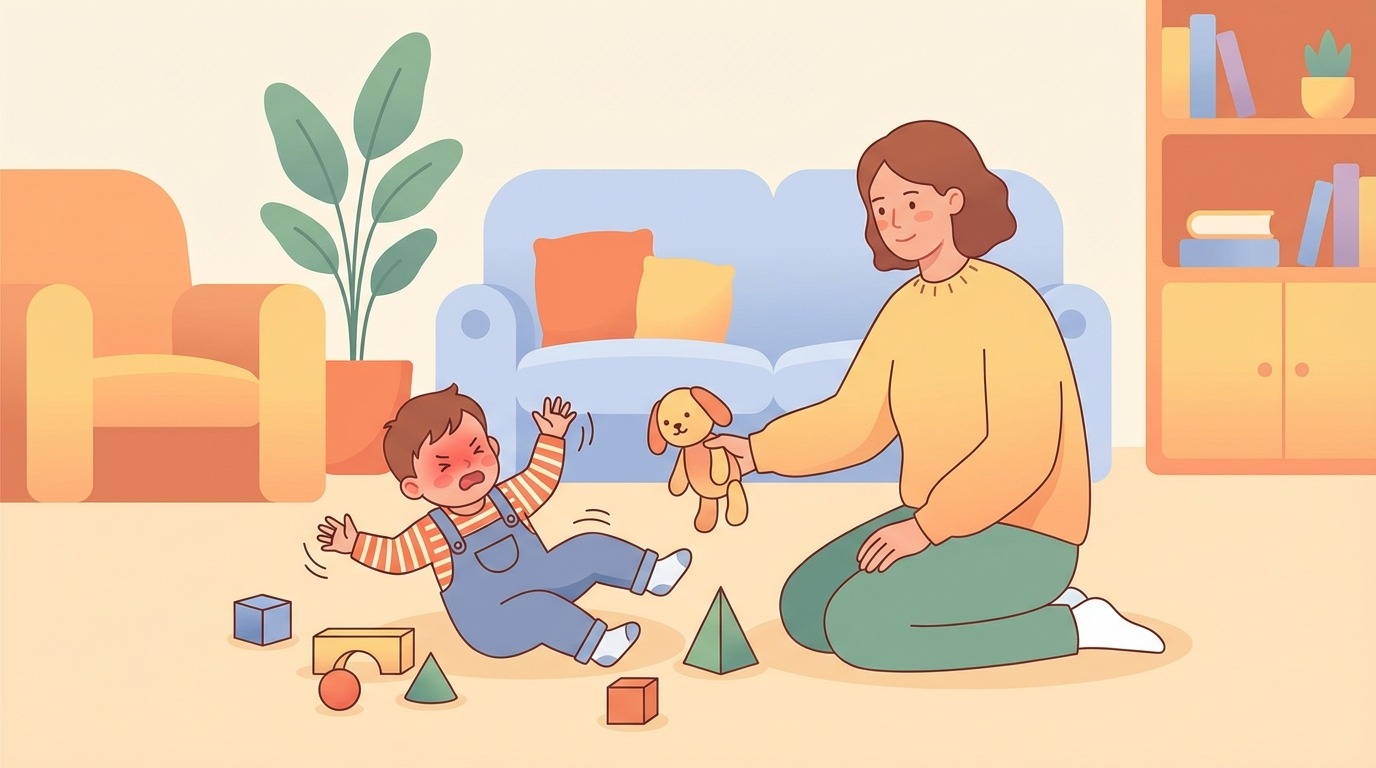
Tantrum Children 2 Years Old: Managing tantrums in 2-year-old children
| Short on time? Here’s the essentials ⏱️ |
|---|
| ✅ Understanding the toddler tantrum phase at age 2 helps ease 70% of daily conflicts. |
| 🧠 Child psychology explains outbursts related to an immature brain managing emotions. |
| 🗣️ Focusing on child communication (naming the emotion + clear limit) reduces the duration of a tantrum. |
| 🧩 Managing child tantrums relies on simple soothing techniques: validate, contain, offer a choice. |
| 📅 Routines + announced transitions = fewer triggers (hunger, tiredness, surprises) 🍎😴 |
| 🪴 Parental patience is a skill to cultivate: breathe, take turns, ask for help. |
| 🎯 Clear rules > vague prohibitions: the structure secures and supports child development. |
| 🌈 A tantrum is a learning opportunity, not a failure. 💡 |
At age 2, everything speeds up: language emerges, autonomy explodes, and emotions overflow. The scene is familiar: a “no” rings out, a small body stiffens, anger rises. Yet, this turmoil is neither a permanent tantrum nor an educational failure. It’s the expression of a brain under construction, seeking boundaries. To navigate these storms, concrete markers exist: understand the phase, set routines, practice emotional communication, and keep a frame that is both firm and gentle. A simple guiding idea runs through: a child who feels understood cooperates better.
Imagine Lina, 26 months old, who wants to do everything alone and refuses her jacket. Her parent crouches down, names the emotion, offers two options, and announces the next step. The tension often lowers a notch. It’s not magic, it’s methodical. Because managing child tantrums is not a stroke of luck, but an accessible and coherent toolbox. The key: more serenity in daily life and a stronger relationship even in the heart of the storm. Here are methods that work, tested in living rooms, kitchens… and toy aisles of supermarkets.
The terrible two decoded: toddler tantrums at age 2 and developmental mechanisms
The famous toddler tantrum at age 2 fits into a key stage: self-awareness. The child realizes they are a distinct person, with their own desires. They experiment with opposition as a tool to exist. This loud “no” is not directed against the adult; it asserts a developing identity. This tantrum phase is normal and transitional.
Neurobiologically, the prefrontal cortex, the conductor of impulse control, is still under construction. Emotions, however, trigger quickly and strongly. This gap creates the storm. Hence the importance of containing without breaking, as relational safety helps the brain mature. In other words, child psychology enlightens intervention: relationship first, instruction next.
Typical triggers are similar: tiredness, hunger, surprise transitions, sensory overload. A late outing, a quick activity change, and the explosion seems inevitable. It’s better to prevent: announce steps, keep regular rhythms, and adjust expectations. When the context is mastered, the storm passes faster.
Some behaviors at age 2 surprise: rolling on the floor, biting, hitting. Rather than seeing provocation, we read a signal of overload. We then set clear limits without humiliating. For example: “You can be angry, but we don’t hit.” We then offer an acceptable physical alternative, like hitting a cushion.
The phenomenon is not isolated. Around ages 3 to 4, tantrums often decrease because language develops and self-control progresses. To look ahead, a useful insight describes how outbursts evolve after early childhood: see this marker on the tantrum between 3 and 4 years. This perspective reassures and encourages maintaining a consistent frame today.
Finally, peripheral factors can amplify moods: itchiness, broken sleep, stress. Skin episodes like eczema disrupt emotional regulation; a practical overview on skin and eczema in children helps reduce these invisible stresses. When the body feels better, emotion calms. The central message fits in one line: understanding the terrain already soothes the storm.
Reacting during child anger: soothing techniques and communication
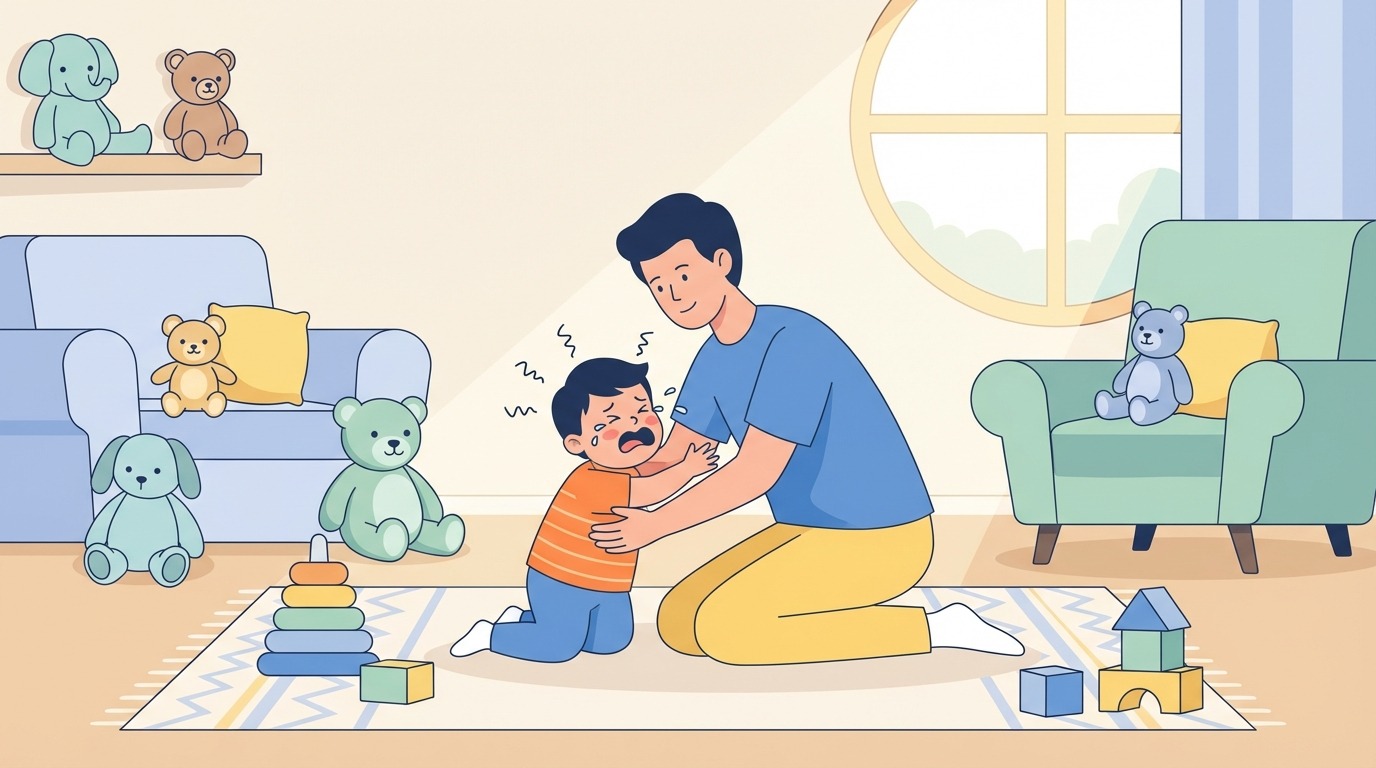
When child anger erupts, the first move is internal: calm your own rhythm. Slow breathing, shoulders dropping, eyes at child’s level. By adopting this posture, the adult becomes a tutor of calm. Words come next, simple and rooted in the emotional reality of the moment.
Validate, name, contain: the effective trilogy
Validating the emotion defuses the power struggle. Saying “I see that you’re very angry” acknowledges the experience without endorsing the action. Naming the emotion next builds emotional vocabulary. Containing finally protects: “I stop you, we don’t bite.” This sequence supports child communication and installs a reassuring frame.
Soothing techniques combine into simple gestures. Offer an alternative: paper to draw instead of the wall, cushion to hit rather than the table. Create a calm corner, not punitive, but resourceful: cushion, stuffed toy, cardboard book. Guide breathing with a playful “candle breath”.
Immediate little toolbox
- 🫶 Crouch down and speak softly: the child feels secure.
- 🗣️ Name the emotion: “You are frustrated because…”
- 🚧 Set the limit: “We don’t throw toys.”
- 🔁 Offer two acceptable choices: “Red shoes or blue?”
- 🧸 Offer an outlet: cushion, modeling clay, stress ball.
- 🎵 Change state with singing: inspiration via these children’s rhymes and songs.
These gestures gain power with consistency. If the adult gives in to the scream, the child learns that tantrums work. If, on the contrary, the rule stays constant, cooperation rises. Parental patience here acts like a muscle: the more it’s exercised, the more it supports.
Some children need a sensory mediator. A heavy-light blanket, a tent corner, or some emotion cards. For going further, a concrete guide on how to learn to calm a child offers simple rituals to integrate.
Last marker: don’t ridicule, don’t threaten, don’t shout. The child imitates our management styles. Showing that strength is self-control turns the scene into a life lesson. A firm and gentle message is better than a losing-losing power struggle.
Preventing the storm: routines, guided choices, and kind rules
Anticipating is better than fixing. Tantrum prevention rests on three pillars: rhythm, predictability, and framed agency. A regular evening, meals at close times, and announced transitions simplify life. The child bears frustration better when the setting is stable.
Visual routines and micro-choices
A routine chart with photos of the child in action becomes the daily GPS. The child ticks, sticks, and finds their way. This support avoids stressful improvisation. Offering micro-choices strengthens the sense of control: green or blue pants, book A or B. Channeled agency lowers resistance.
Questions that open reflection
Rather than ordering, ask: “It’s raining, what can you wear to keep your feet dry?” The child reasons, finds, and owns the decision. This cognitive detour values the child and defuses opposition.
Describe consequences without dramatizing
Concrete description sheds light on the choice: “Without a coat, you’ll be cold and want to come back quickly.” No threat, no lie. Reality suffices. This approach builds judgment and responsibility without crushing.
Play remains a cooperation accelerator. We put on the jacket like a rabbit race, tidy up on a firefighter mission, laugh imitating a cleaning robot. Sometimes letting the child “win” supports engagement; a useful insight on this here: should children be allowed to win games? Playfulness turns friction into shared challenges.
For quiet times, lullabies and familiar rhythms soothe. We get inspired by songs and rhymes to anchor a calming ritual. If nights are troubled, understanding fears and parasomnias helps better prevent tears: useful resources on night fears and terrors.
Ultimately, prevention means giving calm a head start. Each micro-preparation saves a macro-tantrum. This invested time pays off, and the home breathes better.
Linking prevention and play, cooperation becomes a habit, not an exception. Daily life calms because it becomes clear and participatory, at the child’s level.
Concrete experiences and mistakes to avoid: supermarket, bedtime, outings
Three situations sum up the challenges well. First, the toy aisle. Lina sees a colorful box, screams, throws herself to the ground. The adult will breathe, get down to her level, say: “You want it very badly, it’s hard to wait. We don’t scream in the store.” Two options: look, then take a photo “for the list,” or choose a small toy planned in advance. The announcement at the entrance helps: “Today, we buy fruit, no toys.”
Next, bedtime. Resistance rises when the day was intense. We secure the sequence: bath, story, cuddle, soft light. A visual timer announces story’s end. For restless wake-ups, exploring hidden causes – heat, itchiness, fear – brings targeted solutions. Useful markers on somatic aspects and nighttime soothing overlap with previously mentioned points.
Finally, the park outing. Announce the last slide, offer to choose the return song, and give an active task (hold the keys, push the small bag) to ease transition. We welcome frustration, hold the frame, walk.
Four frequent traps
- ❌ Shouting or threatening: child’s intensity mirrors and rises.
- ❌ Systematically giving in: tantrums become a negotiation tool.
- ❌ Ridiculing: shame cuts the bond and teaches nothing.
- ❌ Punishing without meaning: without explanation, the child doesn’t understand the rule.
To nourish perspective, it’s reassuring to know these turbulences slow down as language progresses. A concrete support point is given by this guide on the 3-4 year tantrum. Moreover, a very shy child may experience frustrations differently. Relational hints exist in this file on the shy child and how to help.
These case studies demonstrate a simple moral: consistency calms. The best “anti-tantrum” remains predictability, supported by fair words and a stable frame.
Parent resources: emotional endurance, monitoring and educational continuity
No adult soothes if they are exhausted. Parental patience regenerates through micro-breaks and real support. Taking turns, asking for help, and maintaining good sleep hygiene support stability. A ten-minute walk can suffice to recharge inner availability.
To track progress, a “trigger” notebook helps: note time, context, intensity, outcome. Trends emerge. Then adjust schedules, snacks, or screen times. This simple analysis turns chance into strategy.
Educational continuity builds from birth. Understanding infants’ needs sheds light on what follows: a basic resource on newborn development and care helps articulate stages. Education appears like a dance: guide, follow, readjust.
It’s also useful to expand the soothing kit with sensory rituals: gentle massage, guided breathing, and musical routine. Compose a “calm box” with a soft ball, picture book, and scarf for breath. In case of disturbed nights, revisiting emotional security and fear management remains a priority; the resource on night terrors complements day and night approaches.
Final reminder: consistency doesn’t exclude letting go. A non-essential decision can sometimes be left to experience if safety is ensured. The child then learns natural consequences. Choosing battles protects the bond and everyone’s energy.
To anchor these markers and gain autonomy daily, remember one axis: name, frame, propose. This triad aligns firmness and kindness, and nurtures mutual trust.
Daily action checklist
| 🧭 Key steps for a calm day |
|---|
| 🌅 Announce major transitions in advance |
| 🍎 Provide a snack and water before outings |
| 🗣️ Name the emotion + recall the rule in 10 words max |
| 🎲 Offer 2 acceptable and precise choices |
| 🧸 Use the “calm box” when energy overflows |
| 📓 Note triggers and successes to adjust |
This roadmap fits in few lines but changes everything: fewer surprises, more cooperation, and a calmer home.
“Holding firm without holding heads is the quiet strength that learns to grow.”
At what age does the terrible two tantrum usually ease?
The frequency and intensity often decrease around 3 or 4 years, as language and self-control progress. The pace varies depending on the child and the consistency of the family setting.
Should a tantrum on the floor be ignored?
Ignoring the emotion doesn’t help. It’s better to validate the feeling, remind the rule, and offer a calm-down space. Protect if necessary, then redirect when the storm passes.
How to avoid tantrums during outings?
Announce the plan, provide a snack, limit stimuli, and offer an active role (carry an object, choose the song). Two choices maximum help keep the course.
Are punishments effective at 2 years old?
Automatic sanctions without explanation teach little. A clear framework, described consequences, and concrete alternatives prove more educational and reassuring.
What to do if my child doesn’t talk much?
Support with simple words, gestures, and images. Language comes with practice; the essential thing remains to be understood. Meanwhile, offer rituals and keep a stable framework.