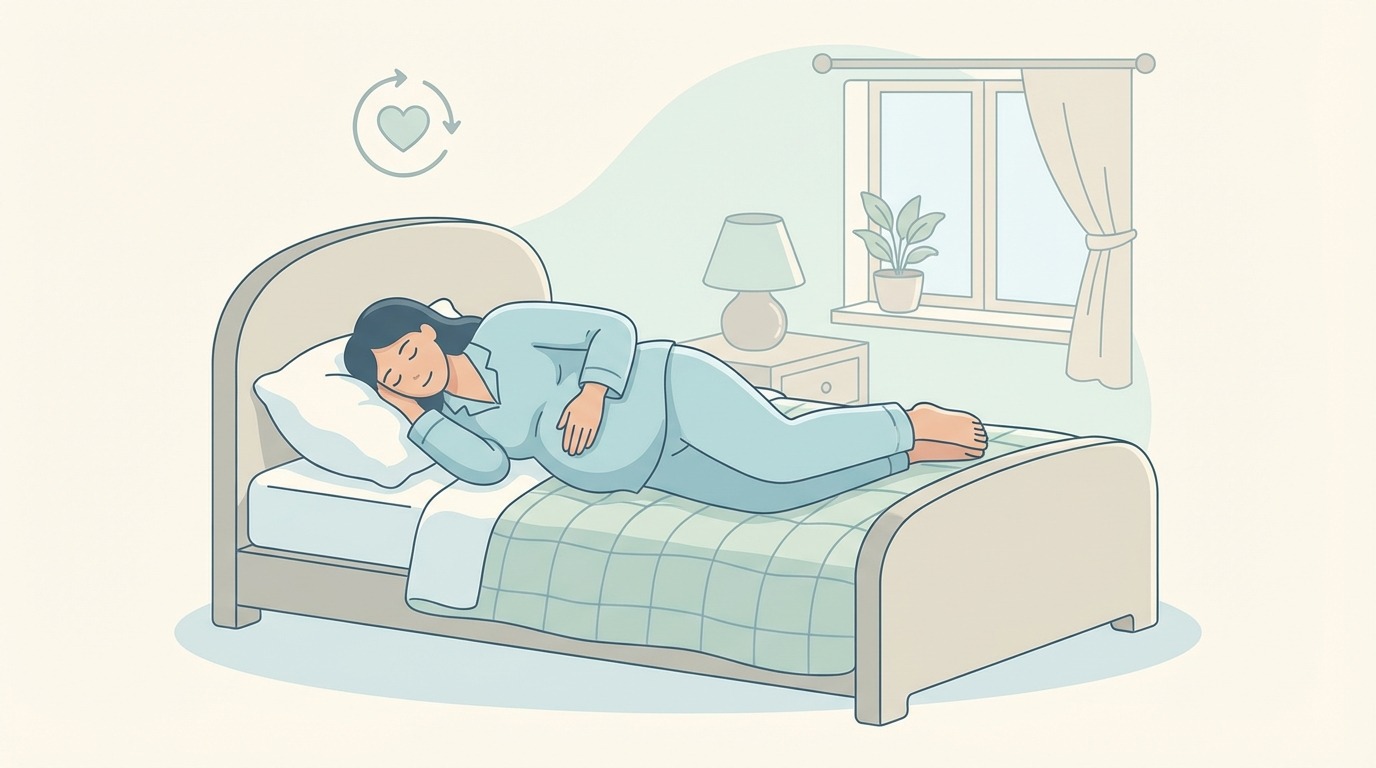
Sleeping Side Pregnancy: Pregnancy: is it better to sleep on the side?
| Short on time? Here’s the essentials ⚡ |
|---|
| The left side is often the best sleeping position for pregnant women, as it promotes blood circulation to the uterus and kidneys 🫀. |
| The right side remains acceptable if it’s more comfortable. Listening to the body’s signals reduces the risks of discomfort 🤰. |
| In the 3rd trimester, avoid staying on your back for long. A pillow under the flank prevents compression of the vena cava 🛏️. |
| Maternity pillows, gentle stretches, and a soothing routine significantly improve well-being and comfort 🌙. |
| Occasionally waking up on your back is not serious. Returning to a side position at night is sufficient in most cases ✅. |
The question preoccupies many expectant mothers when going to sleep: which sleeping position best serves prenatal health and comfort? Weeks pass, the body changes, and every detail matters. Between popular advice and clinical recommendations, a clear line emerges: sleeping on the side, especially the left, optimizes blood circulation and limits the risks of discomfort in late pregnancy. Yet, reality is more nuanced. Listening to the body, flexibility of advice, and trimester adaptation make the difference.
This guide presents simple arguments without alarmism. The physiological mechanisms will be explained, with concrete benchmarks and precise examples. Then practical adjustments will help restore lasting nocturnal well-being. Useful accessories, positions to prioritize or avoid, and trimester-specific strategies complete the overview. The goal is clear: to turn the night into an ally, for the pregnant woman as well as for the baby.
Why it’s better to sleep on the left side when pregnant
The left side often wins the match for a simple reason. This position relieves the pressure exerted by the uterus on the inferior vena cava, the large vessel that returns blood to the heart. Thus, blood circulation remains fluid, and oxygen flows better to the uterus and placenta. The benefit is especially noticeable from the third trimester onward.
The kidneys also work more smoothly in this posture. They filter better, reducing edema and heavy leg sensations. When a woman finds her ankles swollen in the evening, she often notices improvement after a few nights on the left side. This practical sign helps measure the real gain of this sleeping position.
Blood circulation and fetal oxygenation
Venous return from the legs occurs more efficiently on the left side. Maternal cardiac output is better maintained, and placental perfusion follows. This smooth circuit supplies the baby with oxygen and nutrients. By consequence, the mother experiences fewer dizziness episodes upon waking and reports less nighttime nausea.
Some worry about the right side. Should it be absolutely avoided? No. Data mainly show superior comfort on the left side. However, if the right side soothes night tensions better, it remains a valid option, especially in the second trimester. The key is to avoid signs of discomfort: dizziness, shortness of breath, palpitations.
What to do if the left side is uncomfortable?
The body changes fast, and sometimes one side is bothersome. A simple compromise often helps. Placing a long pillow from knee to ankle stabilizes the pelvis. Sliding a small pillow under the left flank slightly tilts the uterus and frees the vena cava. The upper torso can also be elevated to calm acid reflux.
An example explains better. Camille, in early third trimester, feels pressure on the left ribs. Adding a pillow behind her back, she adopts a “three-quarters left” position. The discomfort disappears, and sleep becomes restorative again. This small rotation often suffices to keep the benefits of the left side without pain.
- 🧩 Simple tip: pillow between the knees to align hips and lower back.
- 🌙 Fine adjustment: pillow under the flank for gentle and stable support.
- 🍃 Digestion: inclined torso to reduce nighttime heartburn.
- 💤 Routine: slow breathing for 2 minutes before turning.
Ultimately, the left side forms a solid base. Success mainly depends on intelligent support positioning and constant listening to body signals.

What is the best side to sleep on during pregnancy? Nuances and priorities
The best side is the one that combines safety, comfort, and effective sleep. In practice, the left scores points for blood circulation. Yet the right is not forbidden. The third trimester brings an additional challenge: the uterus becomes large and more easily compresses vessels if the mother lies flat on her back.
The famous “vena cava syndrome” often impresses. It manifests as discomfort when lying on the back. A simple turn onto a side is enough in most cases. The reassuring message: the body alerts quickly, and changing posture turns off the signal. No need to fear every micro-nap.
When to favor the left and when to tolerate the right
Favoring the left at bedtime sets a reliable framework. Tolerating the right occasionally remains reasonable, especially in the second trimester. If costal stretching or sciatica bothers the left side, the right sometimes provides better relief. The key marker is the immediate sensation of well-being.
Heavy legs require adjustments. Sleeping with calves slightly elevated reduces swelling. To deepen edema management, a clear guide on swelling of legs and feet during pregnancy details good reflexes to combine with side sleeping.
Preventing pain and adapting bedding
The back protests quickly if the pelvis lacks alignment. A mattress that is too soft accentuates the curve. A medium topper and a firm pillow between the knees limit strain. Simple mobilizations before bed also help.
To target recurring low back pain, exercises against back pain during pregnancy complement the adjustment of the sleeping position. Daytime postural hygiene often enhances sleep quality.
Morphological changes shape the strategy. A clear article on physical changes during pregnancy helps anticipate the coming weeks. The goal remains constant: securing prenatal health while protecting nighttime energy.
Ultimately, the best side is the one that allows uninterrupted cycles without alarming symptoms. The left remains the anchor. The right serves as support when the body demands it.
How to sleep well at night during pregnancy: effective techniques and accessories
Quality sleep rests on three simple pillars. First, the sleeping position that reduces strain. Then stable supports that free the joints. Finally, a soothing routine to relax quickly and well. Combined, these levers improve well-being from the first week.
A nursing pillow often changes everything. Placed across the body, it supports the knee, belly, and arms. The pelvis aligns, the diaphragm breathes. Adding a small pillow behind the back makes the “three-quarter” tilt natural and prevents rolling onto the back at the end of the night.
Useful accessories and practical setup
Effective solutions are often simple. A soft foam topper distributes pressure. A medium-height cervical pillow stabilizes the neck. In case of reflux, elevating the head of the bed rather than stacking pillows offers a stable angle respecting the back’s curve.
Sensitive breasts also need precise care. A soft bra for the night reduces pressure points. A useful reference is in this guide on breast changes during pregnancy. Better supported, the pregnant woman moves less and sleeps more deeply.
Bedtime routine and breathing
The routine is a formidable ally. Fifteen regular minutes suffice: gentle stretches, warm shower, 4-6 breathing, dim light. The brain associates these gestures with letting go. Falling asleep gains speed and stability.
A notebook near the bed welcomes persistent thoughts. Writing them down pacifies them. A calm playlist, without vocals, avoids rumination. Meanwhile, putting away the phone reduces blue light and nighttime micro-stimulations.
| Tip 🌟 | Main Benefit ✅ | When to Use ⏰ |
|---|---|---|
| Pillow between the knees 🧘 | Pelvis-lower back alignment | At first tension signs |
| Elevated head of bed 🛏️ | Less reflux and better breathing | On evenings with heartburn |
| 4-6 Breathing 🌬️ | Calmed heart rate | At bedtime and nighttime awakening |
| Night bra 👗 | Reduced pressure points | For sensitive or large breasts |
Regular follow-up reassures and marks the path. A concise file on pregnancy follow-up steps highlights key moments. Understanding the schedule relaxes the mind and opens the door to more peaceful sleep.
The duo “adapted positions + consistent rituals” produces the sought cumulative effect. Night after night, the body settles into a restorative trajectory.
Is it bad to sleep lying on your back during pregnancy? What you really need to know
Sleeping on the back is not “forbidden.” It mainly becomes unfavorable in late pregnancy. The weight of the uterus can compress the vena cava and hinder venous return. Warning signs are simple: dizziness, cold sweat, shortness of breath, nausea. In these cases, turning onto the side usually solves the problem within seconds.
Occasionally waking up on the back is not a cause for panic. Sleep moves naturally. Returning to the left side at night, or placing a pillow against the back, suffices. The important thing is to avoid prolonged flat sessions, especially in the third trimester.
The “gentle slope” strategy
A slight incline changes everything. A pillow under the right flank, even thin, tilts the uterus and frees the vena cava. A wedge under the mattress at the head of the bed provides a constant angle, more comfortable than unstable pillow stacking.
Heartburn and acid reflux calm down with this gentle slope. Breathing opens and relaxation follows. This compromise keeps the mind at ease without turning the bedroom into a laboratory.
Useful clinical benchmarks and when to consult
A new symptom or persistent discomfort deserves a consult. An unusual moisture sensation can warn. In case of doubt about a leak, this guide on possible amniotic fluid loss recalls concrete elements to check before calling.
Lower, lateral pains also intrigue. A comprehensive article on ovarian-like pain during pregnancy helps distinguish ligament tension from reasons to consult. Better informed, the pregnant woman sleeps with peace of mind.
The final message on sleeping on the back remains pragmatic. Falling asleep on a side, securing a slight incline, and adjusting as soon as discomfort occurs. This method protects prenatal health without stiffening the nights.
Positions to avoid and prioritize: trimester-by-trimester guide
Each trimester has its logic. The first tolerates most postures because the uterus remains discreet. The second becomes the “comfort zone” for sleep. The third requires fine adjustments. A guiding thread is essential: favor the side left, remain flexible, and follow early body signals.
First trimester: gentle adaptation and reflux prevention
At the start, sleeping on the stomach remains possible if natural. Sensitive breasts demand delicacy. A pillow under the shoulder and hip creates a cavity for the torso. In case of nausea, elevating the head of the bed and avoiding lying down right after dinner improve comfort.
Fatigue strikes hard. Short naps, before 5 p.m., help stay alert without disturbing the night. The left lateral position soothes digestion. It becomes an easy habit to develop from this period onwards.
Second trimester: optimization and reinforcement
Sleep becomes more stable. It is time to fine-tune the sleeping position and consolidate the routine. Extending the lower leg and bending the other opens space for the belly. A nursing pillow positioned in “C” shape supports the whole.
Gentle flank and glute stretches improve nighttime mobility. Preventively, benchmarks on expected morphological changes allow adjusting supports before discomfort sets in. The goal is simple: zero unnecessary pressure points.
Third trimester: stability, tilt, and micro-breaks
Here, precision pays off. The three-quarters left posture becomes the major ally. A firm pillow prevents rolling onto the back. Micro-awakenings happen more often. To fall back asleep quickly, two minutes of slow breathing suffice, without changing side.
In cases of low amniotic fluid volume, vigilance increases. A file on oligohydramnios and its consequences recalls follow-up priorities. These specific situations require a position that does not hinder placental perfusion, hence the reinforced interest in the left side.
Case study: Lina’s journey
Lina, 29, loved sleeping on her stomach. In the second trimester, she shifted to a “C” support. In the third, a simple wedge behind the back solved her early morning dizziness. In seven nights, her awakenings spaced out, and her daytime vitality followed.
Her example illustrates a golden rule. Build an adaptable routine, listen to sensation, and aim for stability rather than perfection. The priority remains clear: optimize maternal well-being while securing prenatal health.
- ✅ Priority: left side at bedtime for blood circulation 🫀.
- 🔁 Flexibility: allow the right side if more peaceful.
- 🛡️ Prevention: avoid long periods on the back.
- 🧘 Recovery: slow breathing during micro-awakenings.
- 🛏️ Stability: pillow behind the back for the whole night.
This step-by-step guide anchors simple habits. Daily consistency transforms nights and prepares a calmer end to pregnancy.
Is sleeping on the right side dangerous in the third trimester?
No, it is not intrinsically dangerous. The left side remains preferable to optimize blood circulation, but if the right side soothes better one night, it can be tolerated. In case of discomfort (dizziness, cold sweat), turn to the left and adjust pillows.
What to do if I wake up on my back?
Do not panic. Simply change sides, ideally to the left. Placing a pillow behind the back at the beginning of the night limits returning to a flat position. A slight torso inclination can also prevent this scenario.
Can I still sleep on my stomach early in pregnancy?
Yes, in the first trimester, if it remains comfortable. With belly growth and breast sensitivity, create space by elevating one leg and placing a small pillow under the shoulder to avoid direct pressure.
Which accessories really help nighttime comfort?
A maternity pillow in ‘C’ or ‘U’ shape, a firm pillow between the knees, a medium topper, and a slightly elevated head of bed. These elements stabilize the pelvis, facilitate breathing, and reduce pressure points.
When should I consult regarding nighttime discomfort?
If persistent dizziness when lying flat appears, unusual pain, or a sensation of moisture suggesting a leak, seek advice. To recognize signs, read dedicated resources like amniotic fluid loss, then follow your medical team’s recommendations.
“Sleeping on the left side is not a rigid rule: it is an anchor point. The real guide is the body — and the night remembers it.”