Snack Lunch School: Snack and lunch at school: who decides what the child can eat?
| Short on time? Here’s the essential ✨ |
|---|
| No snack is mandatory at school ⏰; the official framework favors structured meals (breakfast, lunch, snack). |
| Parents prepare the lunch box 🥪; the child chooses what and how much to eat according to their hunger and satiety. |
| The school informs and educates 🎓; it may set rules of authorization for safety (allergies, PAI) and hygiene reasons. |
| The 10 a.m. snack is discouraged 🚫 because it disrupts rhythms and nutrition; a proper breakfast remains a priority. |
| School-parent dialogue 🤝: local regulations are clarified, school meals and the lunch box are adapted without stigmatizing the child. |
| Special cases 🧾: PAI, allergies, chronic illnesses, cultural restrictions require written and shared adjustments. |
Who decides what the child can nibble at school? This question arises in every family, especially when the “snack” sneaks into bags. Recent public texts recall a simple rule: the snack is neither systematic nor desirable in the morning, while lunch and the afternoon snack structure the day. Meanwhile, the role of parents remains central in composing the lunch, but the child must keep control over the quantity according to their internal signals. Thus, a shared responsibility emerges, upheld by regulations and refined through dialogue.
In 2026, schools seek a balance between nutrition, inclusion, and calm in the classroom. Allergy prevention, the quality of food, the organization of school meals, and the banning of snacking require fine coordination. In practice, teams want to inform without blaming. Parents want to remain decision-makers without turning the lunch box into a power struggle. And the child learns to regulate their appetite. Finding this “middle ground” requires clear rules, framed exceptions, and concrete tools, from PAI to occasional authorization notes, through positive pedagogy.
Who decides at school? Regulations on snacks and lunches, rights and limits
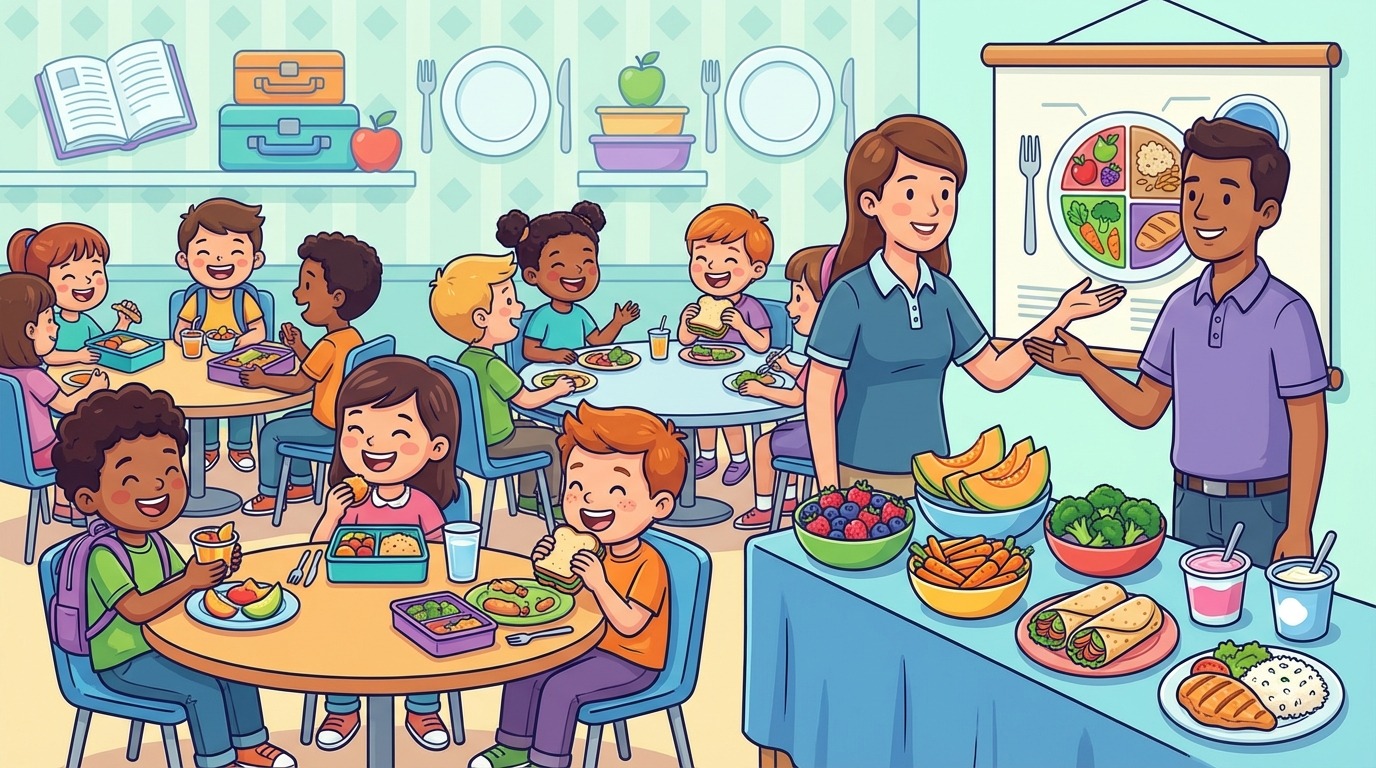
The French framework is clear: the morning snack is not mandatory and should not become routine. Health authorities remind that a 10 a.m. snack disrupts hunger rhythms, delays lunch, and encourages sugary foods. Conversely, a complete school meal, breakfast, or snack remain structured moments where balance is built. The school, for its part, does not impose the exact composition of family lunches. It does allow rules of authorization and hygiene, notably to manage allergy risks or limit highly sugary products in class.
So, who decides? Specifically, parents decide what is offered in the box. Then, the child decides what and how much to eat from those options. This approach teaches listening to internal signals and reduces conflict around “imposed” bites. The school mainly informs: it can disseminate recommendations, lead workshops on nutrition, or organize projects around taste. It does not replace the family but supports it, preserving domestic autonomy.
National framework and local realities
On the ground, differences exist. Some municipalities tolerate a fruit for the youngest at morning reception; others prefer a glass of water and nothing else. This remains consistent if the goal is balance and safety. Teams also remind rules against sharing food to avoid accidental exposure to allergens. This point concerns both regulations and common sense.
Consider Lina, 6 years old. Her school bans biscuits and candies during recess but allows an unsweetened compote late in the afternoon. Parents make up the lunch with sandwich, raw vegetables, fruit, and water. At noon, Lina sometimes chooses to eat the fruit first. This choice is respected as part of learning food autonomy. The framework protects, the child learns. This is the spirit of recent texts.
When the school can restrict
Limits apply for legitimate reasons: safety (severe allergies), hygiene, waste management, calm in class. In such cases, instructions are announced in advance and adapt to needs. A clear document avoids misunderstandings. Preconceptions fade when simple, reasoned information circulates. This shared foundation becomes the basis of peaceful cooperation.
In brief, decisions are made with three voices: family, school, child. Each has a role; no one has all the power. This guarantees a coherent and peaceful daily life.
Balanced nutrition and lunch box: offer, then let the child decide
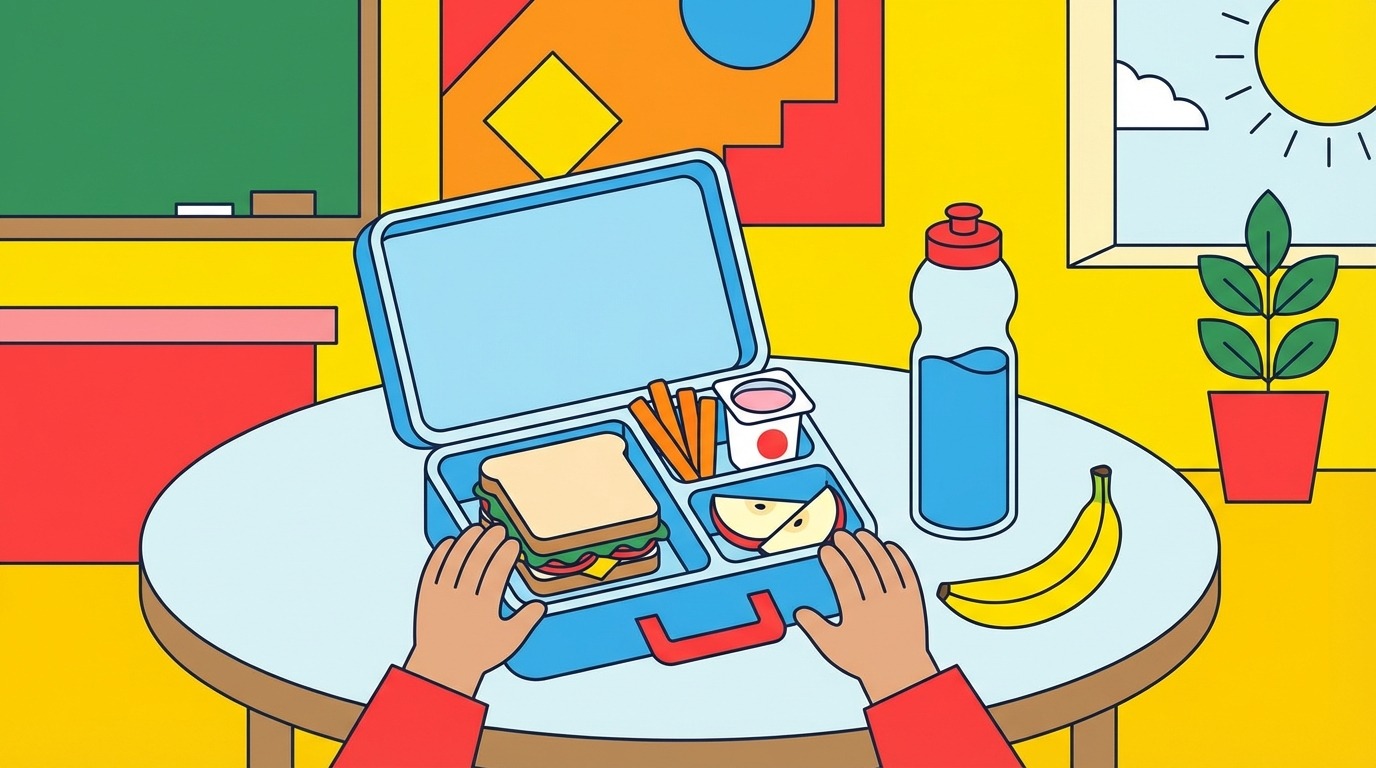
Designing an attractive lunch is not a competition. It is an intelligent routine, based on moderation. The key principle is simple: parents offer, the child disposes. They choose, stop when full, and learn. This “division of roles” respects physiology and defuses pressure. Consequently, we seek a varied composition without demanding everything at every meal. Over the week, balance is built.
To support nutritional vigilance, reliable resources help sort choices. A useful read on iron in children’s nutrition sheds light on protein and plant-based choices. Additionally, a health A-Z index guides frequent questions. These tools don’t replace the doctor; they nourish discussions with the school and cafeteria.
Snack ideas and winning habits
A snack should remain simple and targeted, especially in the afternoon. In the morning, it should be avoided except in particular situations. Here are practical, easy tips focusing on hunger awareness and snacking prevention.
- 🥕 Vegetable sticks + light hummus: crunchy, fibers, satiety.
- 🍎 Whole seasonal fruit: handy, hydrating, no unnecessary packaging.
- 🧀 Natural cheese + wholemeal bread: proteins and complex carbs.
- 🥜 Nut butter on rice cake: lasting energy, mini portion.
- 🍶 Still water, sometimes plain milk: hydration without added sugars.
For the school meal or lunch box: a cereal base, a protein source, vegetables, a fruit, and water. Ultra-sugary desserts that distract appetite are limited. Juice boxes are replaced by water. This framework is not a prison: it provides guidelines. The child chooses the tasting order.
Practical example over a week
Monday: chicken wraps, salad, corn; Tuesday: pasta salad, tuna, tomatoes; Wednesday: hard-boiled eggs, bread, raw vegetables; Thursday: lentils, diced carrot, feta; Friday: rice, chickpeas, cucumber. Each time, a whole fruit and water. If the child leaves part uneaten, no drama. Observe and adjust portion tomorrow. Autonomy grows without friction.
Want visual ideas and step-by-step? The video search below helps vary sensibly.
Ultimately, offering well allows the child to decide calmly. It also teaches that hunger is not an emergency but a signal to respect.
Allergies, PAI, and authorizations: when and why the school can ban a food
Safety comes first. In some classes, a PAI (Individualized Care Plan) manages allergy or chronic disease risks. Within this framework, the school may refuse specific foods (peanuts, sesame, milk, egg) to protect a vulnerable child. These decisions are proportional, justified, and communicated. They do not aim to standardize lunches but to prevent accidents. The rule then becomes a conditional authorization: permitting what does not endanger anyone.
Birthday parties often raise questions. Many schools ask to avoid homemade cakes and candies, for health caution. The solution? Prefer shareable fruits or avoid food sharing and celebrate differently (song, collective card). This shift seems strict but reassures families exposed to allergies. It also frees the class from waste and ubiquitous sugar. The intention is protective, not punitive.
Special cases and pathologies
Beyond allergies, certain diseases require adjustments. Celiac disease, pediatric diabetes, or IBD may need precise accommodations. Health teams then follow an established protocol. To understand current pediatric health issues, this file on the rise of Crohn’s cases in children clarifies individualization needs. Close coordination between family, doctor, cafeteria, and teacher ensures safety and inclusion.
Moreover, premature children may exhibit particular growth and fatigue patterns. Entering group care is anticipated, including on nutrition. This reference on preschool and preparation for premature babies highlights the need for support. In all cases, a written and dated note formalizes the authorization to bring certain foods or have medically justified snacks.
Local regulations and traceability
Directors often remind: what is forbidden must be explained, and what is allowed must be clear. Simple posting at the entrance, a memo to parents, and a labeled lunch box prevent 90% of misunderstandings. The cold chain and hand washing are also considered. Rigorous organization prevents accidents without unnecessary restriction.
Practical conclusion: when a ban exists, understand its cause, document it, and provide an acceptable alternative. The child feels safe, and the class remains inclusive.
School-parent dialogue: how to build lasting food rules
The quality of adult-child relationships plays out in clear words. A framework email, a pictogram on the lunch box, a short meeting at the start of the year, and cooperation sets in. Teachers need available students, not to arbitrate every bite. Parents want a stable framework. The child benefits from understanding expectations. The trio works if everyone knows what to do and why.
Here is an effective method. First, the school explains its “snack and lunch” policy in two pages: objectives, regulations, exceptions (PAI), waste logistics, water in class, and the cafeteria’s role. Then, the family fills a simple form: food preferences, suspected allergies, right to an afternoon snack if needed, consent or not to sugary products during school trips. Finally, the child has a visual marker: green for “as much as desired,” orange for “small portion,” red for “reserved for parties.” This code avoids oral chain commands.
Case study: a neighborhood school
In an elementary school, the team set three rules: no snack in the morning, water available all day, snack allowed only after 4 p.m. After two months, teachers notice more focused students and less greasy paper. Parents appreciate the stability. A child, Hugo, never finished his lunch; his parents cut portions and added whole bread. In weeks, Hugo ate more calmly, without anyone insisting. Result: more energy in sports, fewer conflicts at the table.
Family tensions also matter. When organization overflows, external support can help put things in perspective. This file on parental stress offers practical tips. On their side, early childhood professionals know these issues; understanding their role aids in coordinating practices, as explained in the job sheet for parental assistants. A broadened team means lighter mental load.
To extend reflection and see examples, this video search is helpful and inspiring.
In the end, a rule is only effective if understood. Adherence follows clarity, and clarity stems from dialogue.
Morning snack, after-school snack and sport: eating rhythms, exceptions, and common sense
Health authorities consistently remind: systematic morning snacking unbalances the day. It reduces lunch appetite and encourages fast food choices. Better to reinforce breakfast. When a child arrives without having eaten, local arrangements sometimes exist. A supervised breakfast on site is worth a thousand scattered snacks. It secures the morning and respects classroom rhythms.
And sport? After an intense session, water and, if needed, a fruit or plain dairy product suffice. No need to add sugary bars. Fast sugars give illusion, then fatigue returns. Anticipation is preferred: a lunch with complex carbohydrates sustains better than improvised snacking. Regularity always wins.
When exceptions are necessary
Some children have specific needs: medication, diabetes, gastrointestinal disorders. In such cases, a snack authorization may be granted, framed by the PAI. The nature of the food, time, quantity, and place of consumption are defined. Clarity avoids perceived inequalities and loopholes. Thus, the school protects without stigmatizing, and the child keeps dignity.
Let us recall, finally, that the “end-of-day snack” is a real light meal, not an excuse for piling sweets. Bread, fruit, plain dairy product, and water form a winning trio. Recommendations are followed: simple, minimally processed foods and age-appropriate portions. This sobriety provides stable energy and prepares for dinner without excess.
In sum, common sense prevails: structure, anticipate, and reserve exceptions to documented situations. The child learns to feel hunger, the adult sets the framework, the class breathes.
Quick tools to keep on track
To keep track throughout the year, a family chart of snacks and treats, a reusable bag for waste, and a labeled water bottle work wonders. Add a “first aid box” in the infirmary for PAIs, and daily life becomes simple. These modest gestures support a coherent, visible, and sustainable policy. Habits settle in when easy.
“At school, a clear framework feeds better than a full cupboard: offer well, let the child decide, and trust will do the rest.”
Is the 10 a.m. snack allowed at school?
No, it is neither mandatory nor recommended. Texts favor structured meals like breakfast, lunch, and snack. Except for medical exceptions or supervised local organization, morning snacking is avoided.
Who decides the content of the lunch box?
Parents propose the content. The child then decides what and how much to eat, according to hunger and satiety. This shared responsibility promotes autonomy and prevents conflicts.
When can the school forbid a food?
In case of allergies or PAI, for hygiene, safety, or waste management reasons, the school can limit certain products. The decision is reasoned, communicated, and accompanied by alternatives.
What to put in a snack compatible with school?
Favor a whole fruit, water, sometimes plain dairy or whole bread. Avoid sugary drinks and ultra-processed products. The goal is to support focus, not disturb it.
How to handle a child who never finishes their lunch?
Reduce portions, vary textures, let them choose the order of foods. Observe over a week. If concern persists, discuss with the teacher and school doctor, then adjust gently.