Swimmer’s Ear in Children: Swimmer’s ear in children: prevention and treatment.
| Short on time? Here’s the essentials ✨ |
|---|
| • Swimmer’s otitis externa occurs when water stays trapped in the child’s ear canal 🏊 |
| • Pain, redness, itching, and sometimes discharge indicate an ear infection ⚠️ |
| • Otitis prevention = protect, dry, avoid cotton swabs, monitor nasal congestion 🛡️ |
| • Otitis treatment = antibiotic/corticosteroid drops + keep ear dry + painkillers 💧 |
| • Emergencies: high fever, intense pain, hearing loss, very irritable infant 🚑 |
Every summer, water games bring back smiles. However, in the child, an ear inflammation related to swimming can quickly spoil the fun. Swimmer’s otitis, also called otitis externa, targets the skin of the ear canal. It occurs when water remains trapped, encouraging bacteria or fungi. Good news, it can be prevented and treated well if acted on early.
This guide offers a clear and motivating strategy. First, understand why the child’s ear is more exposed. Then, identify the signs to avoid confusing it with another ear infection. Next, adopt simple habits for effective otitis prevention. Finally, learn the appropriate otitis treatment and follow-up actions. One goal dominates: protect hearing, prevent recurrences, and keep the joy of swimming intact.
Swimmer’s otitis in children: causes, mechanisms, and risk factors
The ear canal of little ones is narrower. Water stagnates longer and brings germs. This moist environment irritates the skin, cracks the protective barrier, and opens the door to ear infection. In this context, otitis externa develops quickly after repeated swims.
The type of water matters. The sea, often saltier and more turbulent, traps less. Warm pools and calm lakes more often promote ear inflammation. Water quality, heat, and immersion time modulate the risk. The longer the bath, the more water seeps in.
Other factors add up. A stuffy nose reduces middle ear ventilation. Pressure changes poorly, which increases discomfort during jaw movements. Dermatoses, such as eczema, also weaken skin in the canal.
Cotton swabs create false “clean ears.” They push cerumen deep and scratch the skin. Thus, water accumulates and bacteria multiply. By contrast, normal cerumen protects. It lubricates, acidifies, and traps impurities. It should be respected.
A common scenario illustrates this. Leo, 7 years old, loves diving board jumps. After three days of warm pool swimming, he complains of pain on the right side. The canal is red, pulling the auricle triggers sharp sensitivity. This pattern matches swimmer’s otitis. The swimming acted as a trigger.
Signs align here. One-sided pain, discomfort chewing, internal itching, and sometimes discharge. Fever is not systematic. If fever is pronounced, better to assess it with a reliable tool. This guide on fever and thermometer in children helps interpret the numbers.
Last key point: age. Babies do not localize pain. They cry, sleep poorly, and rub their cheek. An ear pulled back and mood swings should alert. The earlier otitis externa is identified, the simpler and faster the treatment.
Remember this key prevention principle: less stagnant water, fewer micro-lesions, fewer infections. It’s the essential focus all summer long.
Recognizing symptoms of otitis externa in children
Typical signs follow each other. Pain on touching the auricle often starts first. Then the feeling of a blocked ear sets in. Itching, sometimes intense, makes the child scratch.
Redness and local warmth are observed with an otoscope. Sometimes, a small yellowish discharge appears. Chewing can worsen the stabbing pain. Ear inflammation also disturbs sounds, causing slight hearing loss.
In infants, reading signs is more delicate. Sometimes unnoticed otitis in babies remind us of this difficulty. Crying when undressed, head tilted, screams when water touches the bath can be indicative. A watchful parent spots these subtle clues.
At school, the child may say “it itches” or “it burns.” Discomfort when swimming combined with a recent cold strengthens the likelihood. The timeline helps: we swim, water runs, then it hurts. Symptoms follow this logical thread.
To distinguish from middle ear otitis, several markers help. Pain when pulling the auricle points externally. Purulent discharge without high fever also does. Doubts should be resolved by a professional. The health A–Z directory can guide useful research.
Another more discreet sign concerns speech. If hearing decreases, speech can slow in toddlers. Resources on children 1–3 years who do not speak shed light on this ear and vocabulary development link. Don’t panic, but act.
The right reflex is to objectify severity. Assess pain, check temperature, observe discharge. With intense signs, consult quickly. Sensory cells are precious. They do not regenerate.
Early identification avoids the downward spiral. It’s the key to a serene summer.
To go further, an educational video shows the examination and proper daily care. It reassures the child and clarifies the steps to follow.
Prevention of swimmer’s otitis: concrete actions before, during, and after swimming
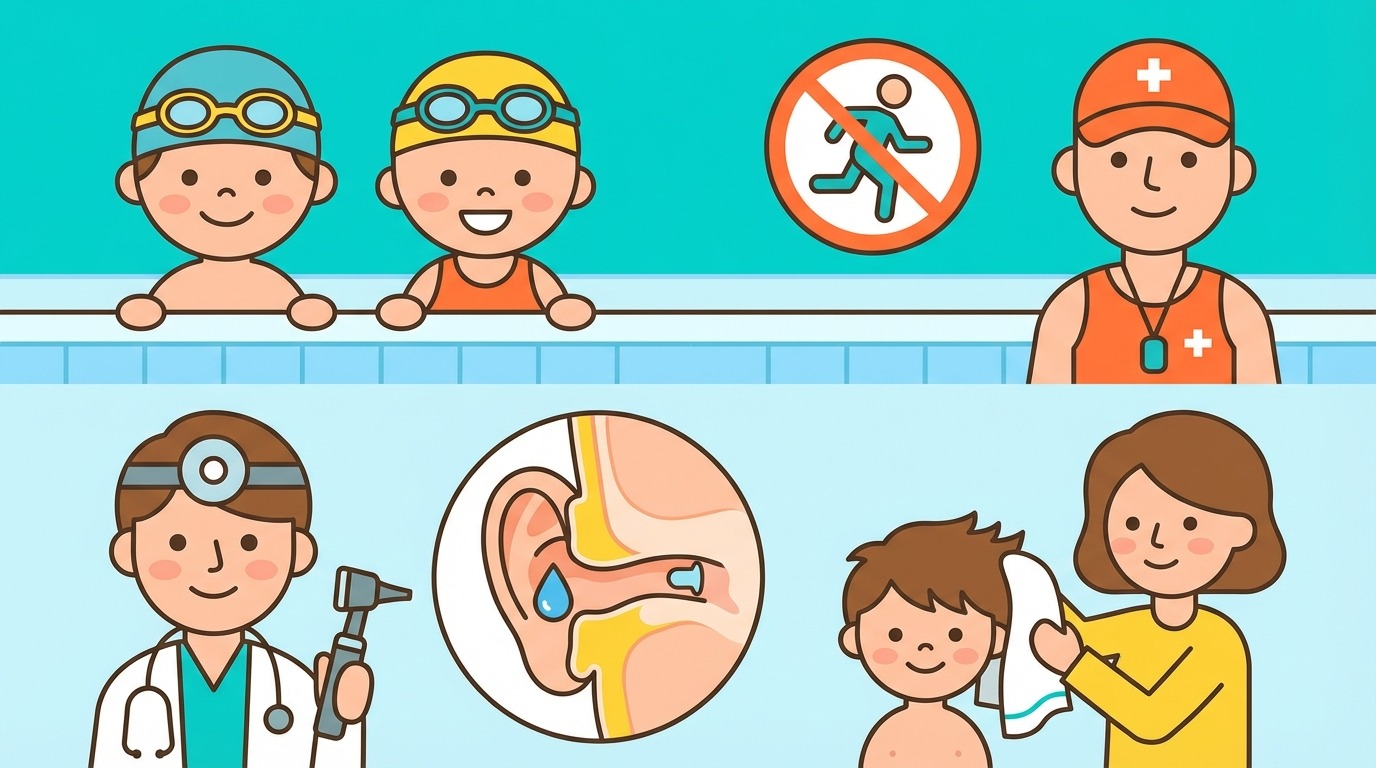
Prevention is learned and ritualized. It follows three key moments: before, during, and after swimming. Well-orchestrated, these actions significantly reduce the risk of swimmer’s otitis.
Before getting into the water
Make sure the child is not congested. If the nose runs, accompany with a suitable spray and gentle blowing. This guide on preparation for winter illnesses in children reminds the importance of respiratory routines. A clear nose ventilates the ear better.
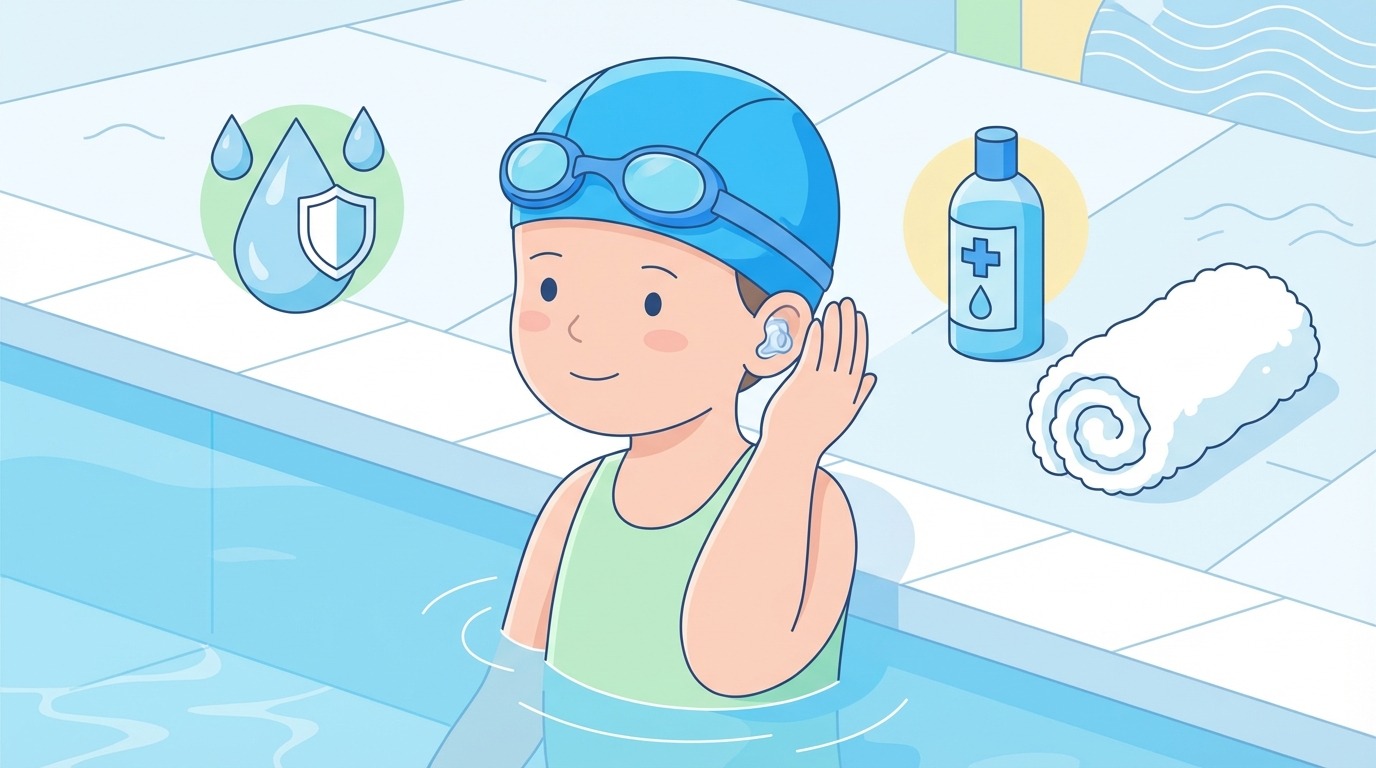
You can apply a drop of neutral oil at the canal entrance, gently. The goal is to facilitate water evacuation. Equip according to activity: well-fitted waterproof plugs and earbands in case of diving.
During water play
Avoid prolonged immersions. Favor regular breaks in the sun, hydration, and light walking. Encourage avoiding scratching the ear. Cotton swabs remain banned.
After leaving the water
Tilt the head to each side. Gently pull the auricle backward to release water. Dry the auricle with a soft towel. Never insert objects in the canal.
- ✅ Tilt head and yawn/chew to drain water 😮💨
- ✅ Dry the auricle and canal entrance with a soft towel 🧴
- ✅ Wear plugs and an earband if the child’s ear is sensitive 🧊
- ❌ Avoid cotton swabs and harsh objects 🚫
- ✅ Monitor nasal congestion for better ventilation 👃
In some cases, preventive acetic acid/alcohol drops after swimming help, but only if the eardrum is intact. A medical opinion confirms the indication. The goal is to restore an unfavorable pH for microbes.
Adopting these actions means turning swimming into worry-free pleasure. A simple ritual makes a big difference.
Otitis externa treatment: what to do and when to consult
Faced with ear pain after swimming, act quickly. First, stop immersions. The ear must stay dry during healing. A swimming cap can protect during showers.
Then a doctor confirms the diagnosis. He checks for absence of perforation. He cleans the canal of debris. Most often, he prescribes local drops, antibiotics and/or corticosteroids. This otitis treatment targets infection and ear inflammation.
Age-appropriate painkillers relieve simultaneously. Follow the recommended doses. In severe cases, an oral antibiotic may be added. Irritating home remedies are to be avoided without advice.
Follow-up is organized within 48 to 72 hours. If pain persists or discharge worsens, return to the doctor. Packing or closer monitoring may be proposed. The health index resources help prepare the consultation.
Errors to avoid
No cotton swabs, no water in the ear. No pure alcohol or peroxide injected without approval. No early return to swimming. Patience pays off.
Healing timeline
Pain decreases over a few days. Discharge stops afterward. The ear regains comfort in one to two weeks. Swimming resumes only when everything is back to normal.
A therapeutic education video reinforces safe gestures. Seeing cleaning and drop application reassures the child. It increases treatment adherence.
At the core, early treatment, keeping dry, and monitoring is the winning formula.
Follow-up, hearing, and prevention of recurrences in young swimmers
Protecting hearing remains the priority. Poorly treated otitis externa can temporarily affect hearing. Rarely, chronic inflammation complicates healing. No unnecessary risks should be taken.
When hearing discomfort persists after healing, testing is needed. Language disorders in toddlers must be taken seriously. In this regard, the link between hearing and speech is detailed in the article on children 1–3 years who do not speak. Early screening improves support.
Follow-up is long term. A growing young swimmer will have a personalized plan. It includes molded plugs, earband, drying rules, and rest periods. One alert: colds = caution about swimming.
The family can keep a diary of episodes. Date, type of water, symptoms, treatment. This memory helps identify triggers. It allows prevention adjustments as the season progresses.
For babies, vigilance remains high. Subtle signs of otitis serve as a compass. Irritability after bath, difficulty sucking on the painful side, broken sleep should not be trivialized.
Knowledge-wise, current recommendations remain stable in 2026. The triad education – protection – follow-up holds strong. Innovations mainly concern protective materials and earplug ergonomics for children.
Practical case: Aya, 9 years old, swims four times a week. After two otitis episodes, she adopts molded plugs, earband, and acidifying post-bath drops (verified healthy eardrum). Zero recurrences all summer. Consistent actions change the course.
One last tool can help: knowing how to take temperature and record clinical evolution. The guide “measuring fever in children” complements the monitoring kit. Because the better we observe, the better we protect.
Preventing relapses means establishing simple and lasting habits.
Practical checklist for otitis care and good habits
This checklist summarizes the essentials to post near the pool bag. It is used as a reminder before and after each swim. It promotes autonomy in older children.
- 🟢 Before: clear nose, plugs/earband ready, drops kit checked
- 🟡 During: regular breaks, no scratching, no sharing plugs
- 🔵 After: head tilted, auricle dried, swimming paused if pain
- 🟣 Day 2: if pain/discharge persists, medical recheck
This simple routine secures the swimming season. It reassures parents and empowers the child.
“Protecting from water today is preserving hearing tomorrow.”
When to resume swimming after swimmer’s otitis?
Wait until pain, itching, and discharge have completely disappeared. Generally, one to two weeks are enough. A doctor can approve for intensive swimmers. The ear must remain dry throughout treatment.
Are vinegar drops useful?
Acetic acid-based solutions can help prevent after swimming if the eardrum is intact. Never self-medicate if there is sharp pain or purulent discharge. Medical advice is essential before any use.
Should cotton swabs be used for drying?
No. Cotton swabs irritate the skin, compact cerumen, and promote infection. Only the auricle and canal entrance should be dried with a towel. Let the interior self-clean.
My child has pain and fever: is it an emergency?
Fever can occur, but if it is high, persistent, with severe pain or hearing loss, seek emergency care. Proper temperature measurement helps decide.
How to avoid recurrences all summer?
Protect, limit prolonged immersion, dry properly, treat colds, and consult quickly at the slightest alert. Molded plugs and an earband are effective for very aquatic children.