Newborn: Development and care of the newborn from 0 to 12 months.
| Short on time? Here is the essentials ⚡ |
|---|
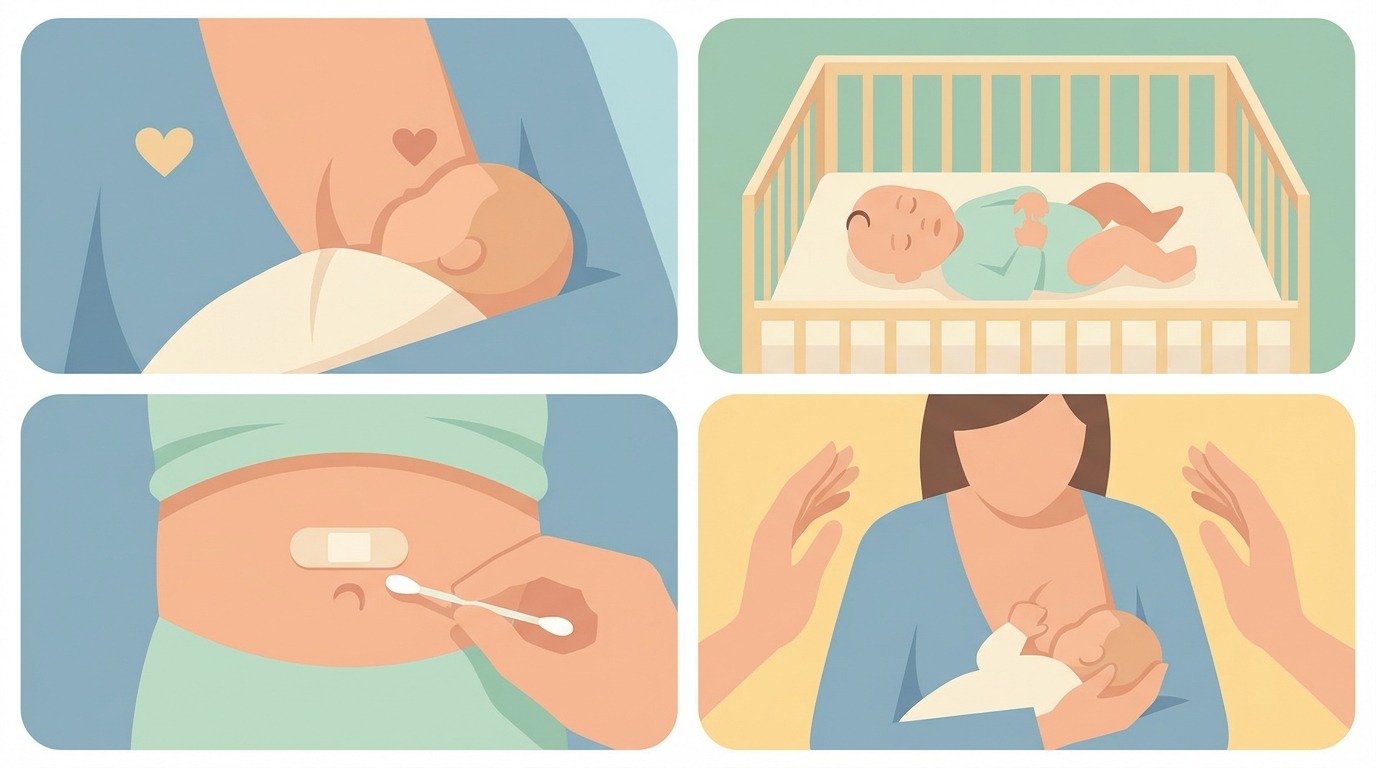
| Always put the newborn on their back 💤 to reduce the risk of SIDS. |
| Favor skin-to-skin contact 🤱 for thermoregulation and parent-child connection. |
| Breastfeeding on demand or well-prepared bottle 🍼 according to the baby’s needs. |
| Clean and dry umbilical cord 🧼, daily monitoring. |
| Up-to-date vaccination 💉 and regular follow-up with the pediatrician. |
| Gentle sensory awakening 🎈 and supervised tummy time. |
| Impeccable newborn hygiene 🙌, systematic hand washing. |
| Watch for signals 👀 of hunger, sleep, and discomfort to act quickly. |
The first year shakes up landmarks, but opens fascinating horizons. Between precise baby care, rapid infant development, and legitimate doubts, each day is won with method and gentleness. Reliable markers help decide quickly, especially about newborn hygiene, infant sleep, breastfeeding, and vaccination. The goal is clear: secure the foundation, then enrich sensory awakening without overstimulation. Here, practical advice is paired with realistic examples, as daily situations require concrete choices.
A guiding thread shapes the reflection: little Aya, born full-term, and her parents, Lina and Marc. Between the maternity ward and home, their compass remains the parent-child connection. They discover the benefits of skin-to-skin, establish simple rituals, and follow a precise care schedule. They rely on trusted resources and attentive professionals. At every step, one rule dominates: fewer gestures, but better targeted. This approach reduces stress and protects the family’s energy, day after day.
Baby 0-3 months: first newborn care, skin-to-skin, and daily safety
Immediate care and reassuring environment
At birth, the team dries the baby, checks breathing, and encourages skin-to-skin. This contact stabilizes temperature and stimulates the sense of smell, already very active. It also supports early breastfeeding, as the sucking reflex is at its peak during the first hour. To prepare, understanding the stages of labor helps parents anticipate the sequence of gestures and first needs.
The umbilical cord remains clean and dry. A gentle cleaning with water and air drying usually suffice. Any unusual odor, widespread redness, or oozing requires consultation. Thus, Aya kept a healthy navel within ten days thanks to a simple routine and diapers adjusted under the belly button.
Newborn hygiene and fragile skin
The infant’s skin is thin and permeable. A mild soap without fragrance protects the hydrolipid film. After washing, it is better to dab rather than rub. In case of patches or pimples, an opinion is necessary, as some eruptions are benign but others require treatment. To spot signs and adopt the right reflexes, consult this practical guide on infant pimples and redness.
Hand washing before each change remains decisive. It limits infections, especially during the first weeks. At home, Lina and Marc set up a simple changing station: warm water, cotton pads, diapers, barrier cream, trash bag. This fixed point reassures, avoids unnecessary gestures, and reduces forgetfulness.
Parent-child connection, carrying, and safe handling
Babies read our gestures. Slow movements, a soft voice, and physiological carrying quickly calm. To avoid risky positions and support the neck, here are reliable markers to hold a newborn properly. Aya relaxes instantly when held close to the chest, pelvis tilted, and head aligned.
The second parent has a precious role from the delivery room. Managing logistics, skin-to-skin, night relief: their presence changes everything. This analysis helps position better: the father’s role in the delivery room already impacts attachment and care organization.
Prevention and useful medical markers
The vaccination schedule protects against several serious diseases. In the perinatal period, certain measures further strengthen the family barrier. For example, the whooping cough vaccine during pregnancy reduces the newborn’s exposure risk. This type of strategy, validated by health authorities, forms part of a comprehensive prevention.
Lina and Marc note feedings, diaper changes, and temperature. This simple journal allows the pediatrician to quickly spot any discrepancies. Three questions guide sorting: does the baby wake up to drink? Does he/she wet enough diapers? Does he/she maintain alert tone between naps? A clear yes to all three puts them on the right path.
With these foundations laid, feeding becomes the major focus in the following weeks, as every intake influences sleep, growth, and infant soothing.

Breastfeeding, bottle feeding, and baby nutrition: focus on calm and effective markers
Breastfeeding on demand: mechanism, positions, and effective signs
Breastfeeding adjusts better when it follows demand. Good milk transfer is seen by the regular rhythm of swallowing and post-feeding relaxation. The latch is wide, lips curled, chin tucked. When Aya slips or pinches, Lina repositions herself, then waits for a mouth yawn before bringing the breast closer.
Colostrum then mature milk cover nutrient and antibody needs. The breasts adapt to the rhythm, often preventing engorgement. Between feedings, gentle compression relieves without completely emptying. In case of persistent pain, a specialized opinion quickly corrects the cause.
Well-prepared bottle: strict hygiene and adapted flow
Some parents choose bottle feeding from birth, others combine. In all cases, preparation requires impeccable hygiene. Clean bottles and nipples, exact dosing, and proper water prevent digestive infections. The nipple flow matches the baby’s age and behavior, without forcing the end of the bottle.
The “pace feeding” method lets the infant guide the rhythm. The bottle remains almost horizontal, pauses are frequent, and burping is eased. Aya drinks better this way, as she manages the flow like at the breast. This technique reduces colic and promotes natural satiety.
Hunger, thirst, and hydration: clarifying the essentials
Hunger signs arrive in stages: waking, searching for the breast, hands in mouth, then crying. A feed is then offered without waiting for a crisis. Regarding water, a simple principle reassures: before 6 months, a healthy baby, exclusively breastfed or bottle-fed, does not need additional water unless medically advised. To delve deeper, read this clear point on water and thirst in babies.
After solid foods introduction, water becomes useful. Small sips from a training cup suffice at first. Caution remains in hot climates or during febrile episodes; medical support adjusts volumes.
Diversification step by step: textures, allergens, and pace
When maturity signs appear (head control, interest in foods, disappearance of the protrusion reflex), diversification begins. Smooth purees, then lumpy textures, and melting pieces under supervision. Major allergens are introduced early, in very small quantities, if confirmed by the pediatrician.
The pace follows the baby’s curiosity, not an empty plate. One explored spoonful is better than a forced meal. For Aya, one spoonful of sweet potato at lunch sufficed the first week, then two. Milk remains the base until the end of the first year.
Practical checklist to soothe meals
- 🕒 Respect internal signals: hunger, pause, satiety.
- 🧴 Strict hygiene: washed hands, clean equipment, dedicated surface.
- 🥄 Introduce one new food at a time, in small amounts.
- 🪑 Stable sitting position, eye level with the parent.
- 😊 End with a cuddle moment, to strengthen the parent-child connection.
When feeding stabilizes, sleep follows suit; it’s time to organize consistent and safe nighttime routines.
Infant sleep and safe sleeping: simple methods that work
Sleep ritual: consistency, signals, and environment
Infant sleep relies on a small ritual, always in the same order. Warm bath, massage, then story or lullaby. The room stays dark, aired, at 18–20 °C. A firm mattress bed without pillow, bumper, or stuffed animal imposes a safe setting.
They are put to sleep on their back, head free, snug sleeping sack. When Aya shows signs of tiredness (vacant stare, yawns, jerky movements), putting her to bed is not delayed. This responsiveness avoids overtiredness, which complicates falling asleep.
Progressive autonomy: soothe without overstimulation
Babies learn to link their cycles. We intervene less, but better. A soft “shush,” a hand on the chest, then step back. If crying rises, we return, reassure, and lay down again. The goal isn’t to let them cry it out, but to make support measurable and regular.
To follow rhythms without becoming screen-dependent, wisely chosen tools help. These options compare features and limits: sleep apps for babies. Yet a simple paper journal remains very effective.
Naps, night, and advanced safety
Naps vary by age. They are better protected from sudden noises and direct light. When traveling, a stable and empty travel crib follows the same rules. Room sharing is recommended initially while keeping separate sleeping surfaces.
In case of mild cold, the mattress is elevated respecting safety instructions and consulting if needed. A properly sized sleeping bag prevents overheating. Hydration remains suited to feeding, with no extra water for exclusively breastfed infants.
When nights structure, the freed energy can nourish sensory awakening and games supporting infant development.
Sensory awakening and infant development: games, interactions, and monthly progress
0–3 months: emotional security and first markers
The brain builds through repeated and secure experience. Soft voice, mirrored gaze, rhythmic caresses: these micro-gestures lay the foundation. Very short tummy time, several times a day, always supervised. A firm mat suffices to train cervical extension.
Calming music, black-and-white visual contrasts, then bright colors stimulate without saturating. Aya tracks a mobile with simple patterns for two minutes, then rests. Observe, then offer again, never the opposite.
4–6 months: coordination and curiosity
Grasping refines. Light rattles, crinkly fabrics, and unbreakable mirrors work wonders. Positions alternate: back, side, tummy. The child discovers their feet, a key step for body schema. Laughter comes quickly if the parent synchronizes their voice with the rhythm of gestures.
Facing-the-world carrying is short and adapted to tone. Board books with large images establish a reading ritual, even before language. The routine nurtures the parent-child connection and prepares shared attention.
7–9 months: mobility, exploration, and clear limits
Mobility explodes: pivoting, crawling, sometimes on all fours. The home is secured: outlet covers, barriers, cleared rooms. A firm “no,” coupled with an alternative, structures rules. A soft tunnel and shape sorter offer suitable challenges.
Social interactions expand. An older sibling can join with simple symbolic games. Managing rhythms remains vital. This file sheds light on family dynamics: age gap between siblings and daily balance.
10–12 months: intentional gestures and first words
Pointing, waving goodbye, and onomatopoeia open the door to language. Objects are named, a response expected, attempts celebrated. Nesting boxes and ring towers train planning and patience.
Daily help routines (putting away a cube, wiping the table with a mini sponge) develop autonomy. Play remains the main vector, never performance. When enthusiasm guides the session, the child progresses without tension.
Simple and powerful activity ideas
- 🎶 Lullabies and nursery rhymes, 5 minutes each evening, for listening and bonding.
- 🎨 Sensory bag: fabrics, sponges, soft rings, under supervision.
- 📚 Reading contrasting images, finger following, shared gaze.
- 🧩 Object permanence box, brief presentations, frequent returns.
- 🤝 Turn-taking games: giving, receiving, smiling thank you.
As horizons widen, public health frames protection; vaccination and pediatric follow-up set the safety line.
Vaccination, medical follow-up, advanced hygiene, and first outings: protect without overprotecting
Vaccination and reasoned prevention
The vaccination schedule covers diphtheria, tetanus, whooping cough, poliomyelitis, hepatitis B, and other pathogens. Each booster strengthens immune memory. A discussion with the pediatrician specifies rare contraindications and reassures about expected reactions (moderate fever, local pain).
The cocooning strategy remains relevant, especially when the baby is born during an epidemic. The whooping cough booster for close adults is discussed. The marker remains collective safety based on high vaccine coverage and simple barrier gestures.
Newborn hygiene: daily infection prevention
Handwashing, surface cleaning, and frequent changing form the winning trio. Eyes are cleaned with a different compress for each eye, from the inner corner outward. The diaper area stays dry, protected by a barrier cream if needed.
In case of unusual skin rash, quickly compare to reliable markers on baby redness and pimples. Warning signs requiring consultation include fever, lethargy, inconsolable crying, or rapid breathing.
Outings and ready-to-go kit
Initially, outings remain short and targeted: calm walks after feeding, away from crowds. A stable stroller or physiological baby carrier suffice. Direct sunlight is avoided, even in winter, and clothing layers are adjusted according to wind and humidity.
Aya’s outing kit contains five essentials: diapers, wipes or water and cotton, change of clothes, light blanket, small trash bag. A spare bottle if she’s fed artificial milk, otherwise a discreet spot is preferred to breastfeed.
Safety checklist for outings
- 🚗 Approved car seat, installation checked twice.
- 🕶️ Indirect sun protection: parasol, hat, no full sunscreen before medical advice.
- 🧼 Hand sanitizer reserved for adults, dry hands before contact.
- 🧣 Layered clothing easy to remove to avoid overheating.
- 🫶 Front-to-front carrying outdoors to preserve the parent-child connection.
Parents gain serenity thanks to centralized information. A practical solution is to create a single account for a newsletter and an app that follow the child’s age, with weekly content, adjustable due date, and a compassionate experience for the whole family. These tools complement medical follow-up without ever replacing it.
To end misconceptions and keep a clear compass, a last marker closes the loop: get good information, act simply, observe a lot, and consult early if doubts persist.
Calm parenting: organization, roles, and continuity of home care
Concrete daily organization
Light routines free mental load. A visible chart gathers meal, nap, and outing times. Tasks are divided: one person prepares the meal, the other changes and checks the bag. This smooth mechanism creates a reassuring framework for the newborn.
At night, relay shifts are planned. Marc takes the first half, Lina the second, or vice versa. Parents’ micro day naps become non-negotiable. Result: more patience and finer responses to baby signals.
Communication of the parental duo and close circle
Expressing what’s fine, what’s stuck, what changes avoids accumulation. A short end-of-day meeting refocuses priorities. Errands or cleaning are delegated to relatives. The family thus organized better protects the child’s playtime and sensory awakening.
Beyond birth, the role of the second parent remains structuring. Skin-to-skin, care, bedtime reading… all count. From maternity, this article usefully highlights the father’s contribution and inspires balanced presence from the delivery room to home.
Warning signs and when to consult
A mental checklist helps: high temperature, refusal to eat, repeated vomiting, breathing difficulties, unusual drowsiness. At doubt, the family doctor or pediatrician responds. Better a call too many than a late worry.
Small daily questions also find reliable answers thanks to specialized resources. The key remains to avoid network contradictions and favor professional and up-to-date sources.
Micro-tools that really ease the load
- 🗒️ Feeding and nap logbook, paper or app format.
- 🧰 Mobile care basket: thermometer, saline solution, compresses.
- 📦 Diaper and infant milk stock for one week.
- 📱 Shared family app for medical appointments.
- 🔄 “Rule of three”: simplify three tasks per day to save energy.
This living organization creates a solid base. It supports infant development without exhausting parents, which remains the best predictor of a harmonious daily life.
{“@context”:”https://schema.org”,”@type”:”FAQPage”,”mainEntity”:[{“@type”:”Question”,”name”:”How long should a newborn sleep in 24 hours?”,”acceptedAnswer”:{“@type”:”Answer”,”text”:”Most infants sleep 14 to 17 cumulative hours, with short cycles. They are put on their backs, in an empty bed, and a stable ritual is created to consolidate nights.”}},{“@type”:”Question”,”name”:”Should water be given to a breastfed baby?”,”acceptedAnswer”:{“@type”:”Answer”,”text”:”Before 6 months, a healthy, exclusively breastfed baby does not need additional water. Needs are covered by milk. After solids begin, small sips are offered.”}},{“@type”:”Question”,”name”:”How to recognize a skin problem in an infant?”,”acceptedAnswer”:{“@type”:”Answer”,”text”:”Watch for widespread redness, oozing, bad odor, or fever. To distinguish benign rashes from risky situations, rely on reliable guides and consult at the slightest doubt.”}},{“@type”:”Question”,”name”:”When to start tummy time awakening?”,”acceptedAnswer”:{“@type”:”Answer”,”text”:”From the return home, 2 to 3 times a day, a few minutes, always supervised. Increase progressively according to tolerance and baby’s interest.”}},{“@type”:”Question”,”name”:”Which sleep apps to choose?”,”acceptedAnswer”:{“@type”:”Answer”,”text”:”Choose simple tools without over-stimulation. Compare alerts, confidentiality, and ergonomics. A paper journal remains a very effective alternative.”}}]}How long should a newborn sleep in 24 hours?
Most infants sleep 14 to 17 cumulative hours, with short cycles. They are put on their backs, in an empty bed, and a stable ritual is created to consolidate nights.
Should water be given to a breastfed baby?
Before 6 months, a healthy, exclusively breastfed baby does not need additional water. Needs are covered by milk. After solids begin, small sips are offered.
How to recognize a skin problem in an infant?
Watch for widespread redness, oozing, bad odor, or fever. To distinguish benign rashes from risky situations, rely on reliable guides and consult at the slightest doubt.
When to start tummy time awakening?
From the return home, 2 to 3 times a day, a few minutes, always supervised. Increase progressively according to tolerance and baby’s interest.
Which sleep apps to choose?
Choose simple tools without over-stimulation. Compare alerts, confidentiality, and ergonomics. A paper journal remains a very effective alternative.
“Small steps, great confidence: simple gestures, repeated gently, build a lifetime of security.”
Useful resources to explore: stages of labor, holding a newborn safely, recognizing skin redness, all about water and thirst, baby sleep apps, father’s role, insights on age gap, whooping cough prevention during pregnancy.