Discovering the Kangourou Kids 7 Families Game: a revisited classic for children
| In Brief ⭐ |
|---|
| The Kangourou Kids 7 Families Game modernizes a classic and stimulates language, memory, and cooperation 👨👩👧👦 |
| Revised rules to mix ages and levels, with cooperative variants and current themes 🎯 |
| A teaching tool for classroom and home, easy to adapt and make ✂️ |
| Proven benefits for language, attention, socialization, and fine motor skills 🧠 |
| Ideal with family, with baby nearby in the Baby Stroller or by video call with grandparents 📱 |
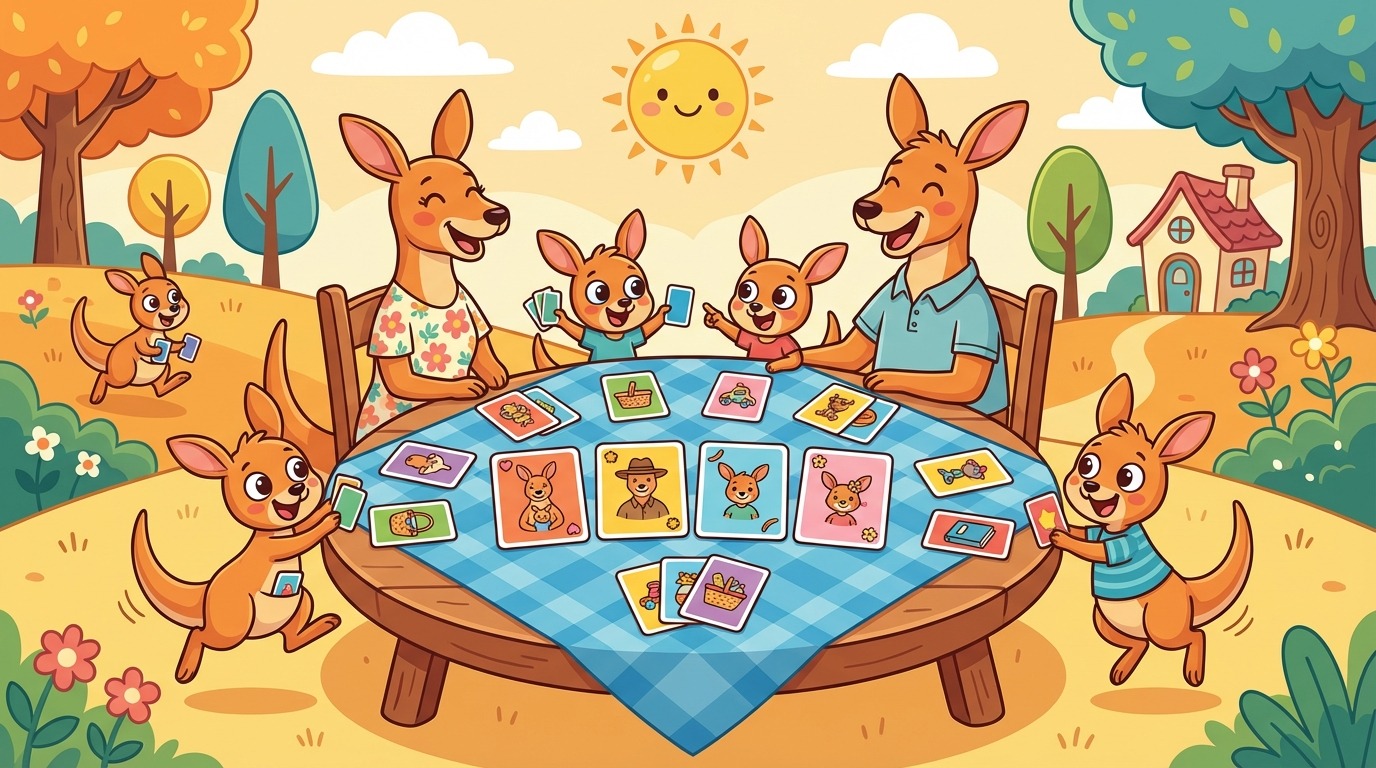
The Kangourou Kids 7 Families game invites children to dive into a familiar universe, but reinvented with flexible rules and warm illustrations. The goal remains clear: to gather members of the same family, while strengthening listening and strategy skills. However, the updated mechanics make the game more inclusive and better suited to age gaps. It enhances the joy of playing, as well as joint attention, a cornerstone of early learning.
In most households, this game naturally joins other childhood essentials. Between two bedtime stories, placed near an Avent bottle or a Dodie kit, the cards circulate. The youngest learn turn-taking, while older ones learn to make precise requests. This moment becomes a ritual, just like a bath with the gentle scent of Mustela or a stroll with a Baby Confort stroller. The shared time builds trust, humor, and a sense of rules.
Kangourou Kids 7 Families Game: revised rules and preparation for smooth games
The heart of the game relies on a simple mechanic: collecting the six characters of a family and laying them face up. With the Kangourou Kids version, setup is quick. Shuffle, deal seven cards to each player, and the draw pile completes the setup. This base reassures. It allows quick entry into the action, without reading a thick booklet or multiplying exceptions.
Essential rules to start calmly
Each player asks a specific card from another player: “In the Ecology family, I would like the Mom.” The request must stay targeted because precision leads to auditory attention. If the opponent has the card, they give it. Otherwise, the requester draws. When a family is complete, it is placed in view of all. This placement highlights planning effort and memory. At the end of the game, families are counted. The highest total wins, but the important thing remains the shared experience.
To encourage concentration, clear pictograms are shown under each card. They remind the family members, reducing cognitive load. Beginner children no longer have to memorize the whole structure. They learn to check, anticipate, and find their way. This visual aid speeds autonomy and limits frustrations. Thus, the youngest participate without feeling overwhelmed.
Modern variants to energize groups
Several variants exist depending on the mood. The cooperative mode, inspired by “Familou,” offers a team challenge: all players try together to complete a set of families before the draw pile runs out. The “Double Seven” variant adds bonus families and creates twists. “Mix Family” encourages thematic assembly, with surprise categories. These adaptations offer progressive challenges and sustain engagement over time.
In mixed-age groups, a gentle rule helps: older children can formulate their request by giving a hint. For example, they specify the symbol or the color. The little ones then gain success and vocabulary. This discreet cooperation preserves everyone’s motivation. It proves useful when siblings play after school, between a snack and tidying notebooks.
Material, storage, and useful little rituals
The material requires little space. A soft pouch slipped into a Baby Stroller or a changing bag is enough. Textile cases from Vertbaudet or Petit Bateau protect the cards. After the game, a wipe with a soft cloth, like those often included in Natalys kits, keeps the illustrations in good condition. To promote autonomy, children sort families by colors. A Fisher-Price tray with edges prevents cards from falling under the table.
Creating a start-of-game ritual establishes calm. One minute to wash hands, a sip of water, a quick check of rules, then go. These landmarks encourage regularity and confidence. By playing regularly, children learn to stay available, listen, then act at the right moment. This solid foundation will pave the way for more ambitious variants.
Underlying, the Kangourou Kids version respects the heritage of 7 families, while adapting it to children’s current needs. Fun comes first, learning closely follows.
Educational benefits of the Kangourou Kids 7 Families game: language, memory, and living together
This game develops a common core of essential skills. Language progresses with each well-formed request. Working memory is exercised during series planning. Finally, social interactions are refined in turn management and emotions. For further reading, a file on children’s intellectual development sheds light on these mechanisms.
Language, vocabulary, and spontaneous narration
The repetitive structure “in the X family, I would like Y” provides a framework. Children enrich their sentences and dare to speak more. Older children introduce synonyms or reformulation strategies. They learn to specify, to prompt again, to clarify. This habit spills over into table conversations and bedtime readings, such as with The Birth Book consulted as a family to tell a personal story.
Beyond requests, children comment on the game. They describe illustrations, compare families, invent mini-scenarios. This constructive chatter nurtures narrative awareness. It also supports budding reading: spotting visual clues, anticipating actions, understanding links.
Memory, attention, and executive functions
Noticing who holds which card mobilizes vivid episodic memory. Players remember who gave or denied a card and adjust their choices. This exercise develops mental flexibility and inhibitory control. One waits for their turn, despite the urge to intervene. The cards’ clean design helps sort information. This regular practice pairs well with fine motor activities, to strengthen eye-hand coordination.
Social skills, cooperation, and emotional regulation
The game channels energy and teaches how to lose without devaluing oneself. The clear framework reassures lively temperaments. A cooperative variant strengthens solidarity: we win together, we think together. These learnings support social development: respect for rules, consideration of others, empathy.
- 🎯 Verbal precision: formulating a clear, short, and respectful request.
- 🧩 Strategy: memorizing, deducing, choosing the right person to ask.
- 🫶 Empathy: encouraging a younger one, accepting a refusal without tension.
- 👐 Autonomy: managing one’s cards, anticipating the next action.
- 🌈 Creativity: inventing stories around illustrated families.
These benefits appear quickly, from the first carefully guided sessions. They consolidate over weeks, like gentle and joyful training.
A short video often clarifies the rules and inspires new variants to try on weekends. Children like reviewing these landmarks before inviting friends.
Ultimately, the Kangourou Kids 7 Families game becomes a simple testing ground to practice speaking, thinking, and living together. Progress is discreet but lasting.
Workshops at home and in class: create your thematic 7 families inspired by Kangourou Kids
Making a home game engages children in a complete process: choosing a theme, defining seven families, selecting members, drawing, then playing. This progression develops project sense. It gives meaning to academic learning. The activity suits quiet times at home, but also classroom workshops, with simple differentiation.
Ideas for current and rich themes
Several avenues work very well. Mythology remains a success: families of Gods, Goddesses, Heroes, Monsters, Mythical places, Artifacts, Events. Kings of France favor historical anchoring: Merovingians, Carolingians, Capetians, Valois, Bourbons, Bonaparte, House of Orleans. Arts also seduce: one painter per family, and paintings as members. In sciences, astronomy pleases: planets, stars, constellations, astronomers, instruments, missions, discoveries.
In primary school, linguistic variations help: word families, complex sounds, adverbs, conjugation. This playful anchoring reactivates notions seen in class. To enrich imagination, a detour to resources dedicated to board games and creativity offers concrete, reusable, and inspiring models.
Accessible step-by-step making
The method stays simple. Prepare a template on cardboard or on computer. Create seven families with six cards each. A reminder of members is shown at the bottom of the card. Images come from authorized manuals or original drawings. Printing is laminated to last. A rigid Vertbaudet box or a Petit Bateau pouch holds everything, ready to travel.
The digital version is designed quickly with standard software. After export, cut out with safe scissors. The youngest color while the older check family coherence. This cooperation values everyone. It streamlines the final step: testing the game and adjusting visuals based on feedback.
Example of a test session with siblings
In one family, Lina (6 years old) chooses the theme of emotions. Her brother Noé (9 years old) structures the seven families: Joy, Sadness, Anger, Fear, Surprise, Pride, Serenity. They draw faces with color codes. The reminder of members appears at the bottom, to guide the youngest cousins. The first game reveals a slight imbalance, corrected by adding symbol hints on each card.
Short breaks help maintain focus. A Madeleine and a milk in an Avent cup, a Mustela hand wash, then the game resumes. The children laugh playing mini-scenes corresponding to emotions. They then generalize these words to daily life. This back and forth between game and family life anchors emotional understanding.
For distant relatives, an online version with camera allows playing at a distance with loved ones. Cards are shared by scans, and the draw pile stays with the host. Children keep enthusiasm, even when grandparents live far away. The family tradition continues, without losing the warmth of the ritual.
In the end, creating then playing strengthens knowledge ownership. This double movement consolidates confidence and encourages personal expression.
A step-by-step making video reassures adults and speeds up project implementation. Children love recognizing their drawings in the next game.
Practical advice for calm games with 3-8 year olds and toddlers nearby
Games benefit from following a gentle rhythm. For 3-4 year olds, reduce to four families with four cards. 5-6 year olds return to six complete families. 7-8 year olds already test a strategic variant. Meanwhile, a toddler can snooze in a Baby Stroller, a Baby Confort stroller, or play with a Fisher-Price rattle. The family atmosphere remains harmonious and inclusive.
Rituals and emotion management
An hourglass calms the game and limits outbursts. A visual timer reassures young players. When frustration rises, a “color time” invites choosing the felt emotion and breathing out. A soft Mustela wipe, a Petit Bateau comforter, or a hug quickly soothe. Adults model simple phrases: “I am disappointed, but I continue.” This language regulates affects while validating disappointment.
Adapting material to age
Slightly larger cards help small hands. Non-slip supports prevent falls. Natalys or Vertbaudet boxes protect the set in the entryway. To structure the space, three zones suffice: draw pile, discard, placed families. This organization reduces confusion. Children then focus on strategy, not logistics.
| Age 👶🧒 | Adjusted rules ⚙️ | Educational objective 🎓 |
|---|---|---|
| 3-4 years | 4 families x 4 cards, guided requests | Simple language, turn-taking, first choices |
| 5-6 years | 6 families x 6 cards, color hints | Working memory, attention, inhibitory control |
| 7-8 years | Strategic variant, moderate bluff | Planning, deduction, fair-play |
This table helps calibrate difficulty without losing playful momentum. Children progress in steps, without disengagement.
Small practical tip: a Dodie pouch to store cards, a stable table plan, and a small towel to dry hands before the game. To mark memories, some slip a note on the first box, next to The Birth Book. This symbolic attention strengthens attachment to family rituals.
When the evening stretches, a last quick round suffices. Announce the stop before fatigue. Children leave serene for bath, then pajamas, ready for a story and peaceful sleep.
2026 selection and variants around the 7 families game: Kangourou Kids and play companions
To vary pleasures, several references perfectly complement the Kangourou Kids game. “Familou” offers immediate cooperative mode: we talk, we plan, we help each other. “Mix Family” revisits mechanics with original combinations. “Double Seven” adds a tougher management challenge, while staying accessible. An “Egypt” themed game awakens historical curiosity with documented and bright cards.
Certain publishers explore tender universes. Auzou Editions offers modern and inclusive families, ideal for discussing diversity. Educational brands, like PEDIAKID, also design games that anchor learning in pleasure. These offerings alternate with Kangourou Kids without redundancy.
Clever accessories make life easier. A waterproof pouch slipped into the Baby Stroller protects cards at the park. A tray with edges prevents losing a card under the bench. For a pajama party, a Vertbaudet weekend bag carries all necessities: cards, hourglass, and a nightlight for ambiance. This setup makes games nomadic and simple.
In times of separation, video calls keep the link. Families organize a “mirror” table, each with identical games. The speaking turn is displayed on a post-it. Advice on card games like battle also shows how to vary formats, depending on age or available energy. The important thing is to preserve pleasure, even at a distance.
On Saturdays, a “make your own 7 families” workshop works very well in media libraries. Print templates, color, laminate, play. Parents appreciate this low cost. Children leave proud, with an object they designed. This virtuous model combines creativity, language, and sociability in one shared time.
When choosing, three criteria guide the decision: the theme that captivates the child, the clarity of icons to find one’s way quickly, and the possible presence of a cooperative mode. With these landmarks, the family game library stays lively and adapted to current desires.
To nourish creative momentum, a resource dedicated to hands-on children offers ideas for ancillary activities around cards. These extensions transform a simple game into a complete learning adventure.
From the living room table to the schoolyard: structuring successful sessions with Kangourou Kids
Moving from an improvised game to a structured session nurtures children’s confidence. A clear sequence works well: playful warm-up, short game, active break, long game, return to calm. This architecture values effort and progression. It suits both neighbor playdates and classroom or afterschool workshops.
Quick and effective warm-ups
A vocal game prepares the mouth and breath. Each child reads a model request, then invents their own. A mini visual memo lists families and is displayed in the center. This entry time warms up working memory. It establishes shared attention. Children become available and curious.
Then, launch a “micro-game” with only two families. Rules consolidate without overload. Mistakes are calmly analyzed. Adults reformulate positively: “Try to ask more precisely.” This kind posture creates a climate of trust that supports the session.
Active break and focused resumption
A two-minute break oxygenates the group. We drink, walk, do finger games to loosen motor skills. The resumption proposes the full game. A 30-second hourglass per turn paces exchanges. Children learn to speak without rushing. They choose a clear request, then formulate it calmly.
At the end of the activity, each names a success: “I remembered better who had the card.” This brief feedback anchors progress. A simple wall display follows session progress. Children visualize their trajectory, which strengthens commitment.
Small resources and extensions
Practical articles on board games and creativity offer turnkey variants. For families who like cooking after the game, a quick muffin omelette recipe turns snack time into a sensory workshop. This sequence calms minds and extends shared pleasure.
At home, a play corner prepares quickly. A washable cloth, a sturdy box, hand gel, and wipes. Essentials are stored near daily care, between Avent supplies, a Dodie kit, and Mustela products. This logistical proximity reminds that play is part of life rhythm, just like reading or walking.
Over a school year, progress becomes visible: quality of request, attentive listening, respecting turns, memory of elements. These milestones are observed both in class and living room. They confirm that a simple pack of cards can support deep and lasting learning.
From what age can you play the Kangourou Kids 7 Families game?
From 4 years old with reduced families and visual clues, then the complete version from 5-6 years. 7-8 year olds already enjoy strategic or cooperative variants to keep a real challenge.
How many cards to deal at the start?
Seven cards per player in the classic version. For the youngest, you can start with five cards and four families to encourage success and concentration.
How to avoid frustration in the youngest?
Establish a ritual, use a short hourglass, offer color clues and allow help from older children. Value each progress and plan a two-minute active break if tension rises.
Can you play remotely with family?
Yes. Via video call, each household uses an identical game. The draw pile is synchronized and requests are announced aloud. This format keeps the pleasure of the game and maintains intergenerational connection.
Which themes to choose to create your own game?
Rely on children’s interests: mythology, kings of France, emotions, astronomy, animals, or ecology. A reminder of members on each card makes it easier to get started and speeds up the first game.