Children Bite: Understanding and Managing Children Who Bite (1-3 years).
| Short on time? Here’s the essentials |
|---|
| Children aged 1 to 3 bite mainly to explore, communicate, or release emotions. 🧠 |
| Act quickly, care for the victim, use simple words, then guide communication. ⏱️ |
| Prevent by adjusting the environment, training patience, and offering alternatives. 🧩 |
| Replace biting with an acceptable behavior: say “no,” ask for help, or bite on a teething ring. 🦷 |
| Consistent management among adults and gentle discipline for lasting progress. 🤝 |
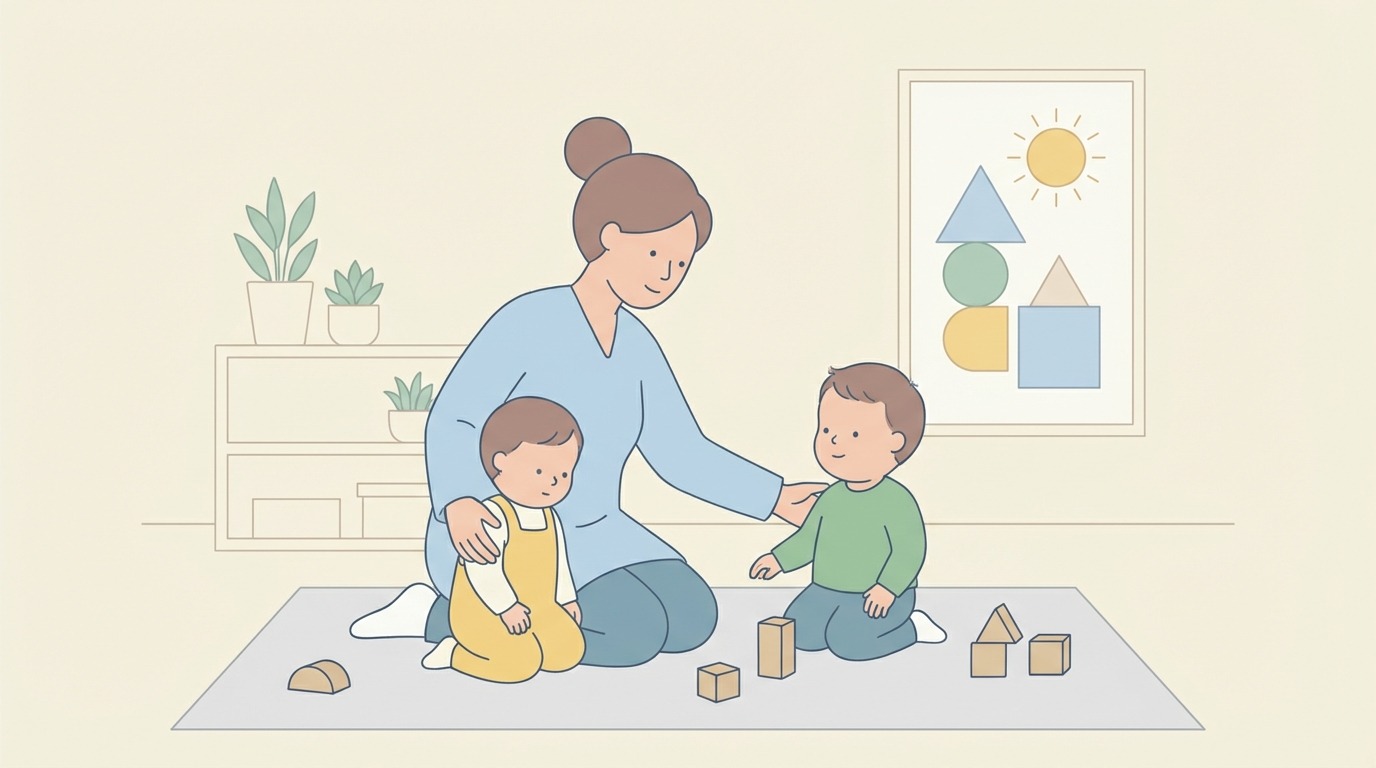
Between 1 and 3 years, an ordinary situation can escalate in a second: a disputed toy, a strong emotion, and suddenly, children biting. This gesture shocks, yet it has an explanation. In daycare as at home, the mouth is first used to explore, then it becomes a tool to express oneself when words are lacking. A fine understanding of this phase helps better guide daily management, without labeling a toddler as “aggressive” or “naughty.”
In a group, the magnifying effect intensifies tensions. Léa, 28 months, sometimes copies what she sees; Noé, 2 and a half years, bites mainly when tired; Mila, 22 months, seeks contact and can be overwhelmed by joy. Each child has their own story. In 2026, practices of positive discipline and contributions from neuroscience converge: act quickly, set clear limits, and offer alternative paths of communication. This dossier gathers concrete actions, realistic scenarios, and easy-to-deploy tools.
Children who bite (1-3 years): understanding causes and development
Why do children bite, even when they receive attention and affection? The answer lies in development. Before age 2, the mouth is primarily an exploration tool. It tastes, sucks, gnaws, then tests the impact of firmer contact. At this age, the emotional brain leads the dance and inhibition is still immature.
Between ages 2 and 3, intention changes. Frustration becomes more readable, demands become clearer, but words struggle to keep up. Biting can then arise from impulse, like a rough attempt at communication. Some children use this shortcut because it works: they get the toy, attract the adult, or release tension.
Oral exploration and teething
Teething often begins around 6 months, then recurs in waves. Biting massages the gums and relieves discomfort. A clean and appropriate teething ring offers a safe alternative. This bodily need is not a moral aggression. It signals a search for comfort and emerging self-regulation.
During painful phases, young children put more objects in their mouths. In practice, providing chew toys helps avoid skin-to-skin contact. The best moment to offer this object? At the first signs of irritation, before escalation reaches the point of no return.
Frustration, emotion, and impulsivity
When vocabulary is limited, emotion quickly overflows. An adult who uses concrete words helps the child name the internal state and connect “what I feel” to “what I can do.” For example: “You are angry. Say: no.” This repeated micro-communication becomes a bridge between feeling and action.
Children bite more when tired, hungry, overstimulated, or during routine changes. An overly noisy space or crowded group amplifies emotional load. Anticipating these vulnerability windows mechanically reduces biting frequency.
Social learning and imitation
Seeing a bite, receiving one, or causing a big reaction from an adult can reinforce the behavior. Toddlers learn by imitation. If they notice that biting triggers screams and lively exchanges, the act gains social power. Conversely, a firm, calm, and brief reaction cuts the “performance” effect.
After age 3, frequent biting becomes rare. It then calls for targeted support for frustration management and social skills learning. The key idea: biting is not a character trait; it is a shortcut that fades when other tools work better.
Managing a bite at the moment: concrete actions and language to adopt
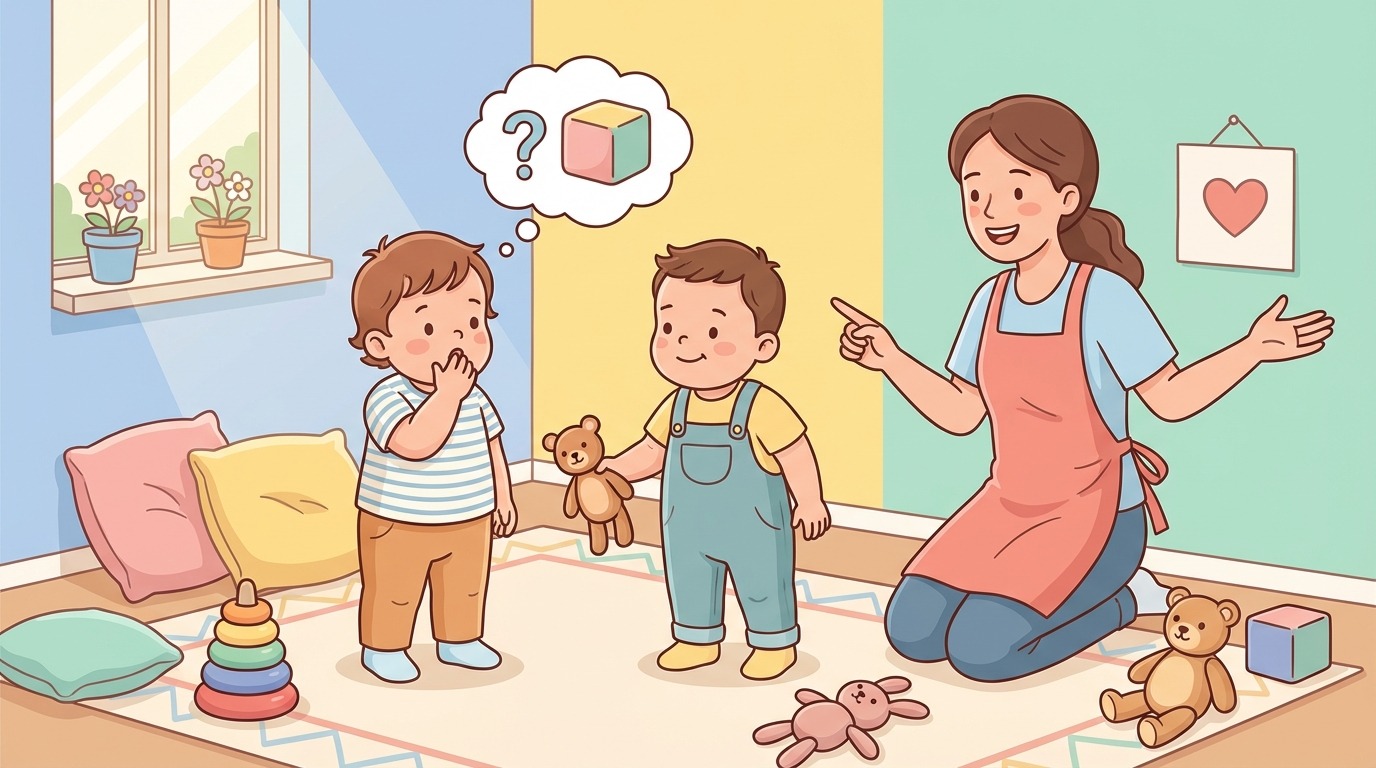
A bite has just occurred. The absolute priority remains safety. The adult separates, protects, and gives a clear framework. Then, they care for the victim and briefly speak to the child who bit. This consistent sequence anchors expected behavioral markers.
Priorities in 60 seconds
Start with the bitten person. Check the skin, clean with water and soap if necessary, then apply cold. During this phase, the biting child understands that biting does not command attention. This simple chronological order changes the power dynamic.
A short sentence suffices: “Biting hurts. You can say: no.” Clear instructions, delivered in a soft but firm voice, calm more than a long and vague speech. If the child remains overwhelmed, offering a comfort object or a quiet moment near the adult helps them calm down.
Words and gestures that soothe
Useful phrases share three qualities: simplicity, immediacy, and alternatives. Example: “You wanted the truck. Say: it’s mine, or ask for help.” The adult can then guide the repair: bring a compress, a comfort object to the injured child, or say “I didn’t like that” with the adult’s help.
When a second bite threatens, the child should be taken away from the group, without anger or shame. A clear message suffices: “You can come back to play when you can keep your teeth for food.” The gesture protects others and shows a firm but kind boundary.
What to avoid
- ❌ Forcing immediate apologies: the word means nothing at 2 years and adds tension.
- ❌ Shouting or dramatizing: the scene becomes a spectacle that can reinforce the behavior.
- ❌ Biting “to show off”: the child learns by example, not by corporal punishment.
- ✅ Value alternatives: “You said no with your mouth, good job.” 🎉
To visualize the typical scene and calm gestures, this video research can help anchor the steps.
A simple protocol, repeated flawlessly, quickly becomes the new frame of reference. The final message must remain clear: safety first, relationship second, learning always.
Preventing bites daily: routines, games, and environment
Preventing a bite starts long before the conflict. Three levers make a difference: anticipate triggers, train communication, and arrange space and time. When these pillars hold, children less often fall into impulse and gain autonomy.
Anticipate triggers
Spot the “red hours” (hunger, fatigue, overstimulation) and adjust the schedule to reduce friction. Short transition periods, calm corners, and baskets of chew toys reassure the most vulnerable. Observe for 3 consecutive days and note “where, when, with whom” often reveals a hidden motive.
To support waiting skills, practical ideas exist. One can, for example, draw inspiration from these proposals to make a child wait and set playful markers that reduce tension before it explodes.
Train communication
Learn some gestures or images to say “no,” “again,” “stop,” “help,” which changes everything. Repeating these tools during play strengthens their use in tense situations. To go further on the overall developmental framework for 1-3 years, see this guide on behavior of children aged 1 to 3.
Mini-scenes played with figurines also help. Act out disputes, stage help requests, then fixes. Children learn better when they laugh and when their hands are active.
Arrange space and time
A sensory corner with cushions, board books, sensory bottles becomes a refuge. A “busy mouth” basket (rings, soft toothbrushes, reusable straws) is a safe alternative. Introducing micro-active breaks after intense group time reduces accumulated pressure.
Waiting games smooth risky moments. One can draw ideas from games to make children wait to occupy hands and attention. In parallel, securing the space avoids bumps; clear markers already help protect a child aged 1 to 3.
| Common trigger 😣 | Prevention or alternative 😀 |
|---|---|
| Fatigue late morning | Snack + quiet corner + short book 📚 |
| Disputed toy | Visual timer + say “it’s mine” + ask for help ⏳ |
| Teething | Teething ring + cool water + reassuring cuddle 🦷 |
| Overstimulation | Small group + soft lighting + sensory activity 🧩 |
| Seeking attention | Reinforce every verbal or gestural request 👍 |
To prevent is mainly to make the “bite” option less effective than other paths. When alternatives pay off faster, the child chooses them spontaneously.
Home, daycare, and nanny: adult coordination for consistent management
A child lives in several worlds. When management varies from one place to another, behavior slips through the cracks. Consistency among parents, professionals, and nanny reduces biting simply by clarity. The message becomes predictable and thus reassuring.
Inform without stigmatizing
Talking about an episode without labeling the child protects self-esteem. Describe the scene, share the adult response, and agree on key phrases. During adaptation periods, separations can increase tension; this guide on first separation with the nanny offers useful markers to stabilize routines.
Keeping a simple follow-up notebook helps. Note the time, context, child’s state, and response given. Three columns suffice to reveal a trend usable by all.
Common protocol and monitoring
Set a four-step protocol: secure, care, name the emotion, offer an alternative. This framework must remain short, observable, and replicable by every adult. Avoid exceptions; the child quickly spots a loophole, especially if it gives immediate advantage.
A quick meeting every two weeks aligns observations. Adjust sensitive schedules, expand the box of alternatives, and reward progress. Consistency then wins over time.
Manage other children and parents
Involving the group builds relational safety. Peers learn to say “stop” and call the adult. In case of repeated conflict, these resources to intervene between children support a structured and fair stance.
With parents from both sides, transparency and respect soothe. Details of care are shared, measures explained, and the goal reaffirmed to increase social competence. A video can also illustrate the expected adult stance.
A coherent adult alliance transforms the group’s atmosphere. When the rule doesn’t change from door to door, biting loses its usefulness.
Positive discipline and emotional communication to transform behavior
Transforming a behavior means replacing a shortcut with a skill. Positive discipline structures the framework without humiliating. It combines clear limits, skill training, and recognition of progress. The trio works because it respects the learning mechanics of the young child.
Concrete replacements for biting
The best alternatives are simple and quick: say “no,” raise a hand to ask for help, offer a chewable object, or propose an exchange with a timer. The adult models the action and provides the words. Then praises the use, even if imperfect, of the chosen tool.
When a child bites to express joy, guide them towards “butterfly kisses,” a high five, or a joyful scream into a cushion. The energy remains lively, but becomes social and non-hurtful. This redirection preserves the bond.
Reinforcement and empathy
Every attempt at non-biting communication deserves a positive signal. A smile, a “you said stop with your mouth” makes one want to try again. Guided repair strengthens empathy: bringing a compress, a stuffed animal, or describing the mark left helps understand the other.
If external stress fuels outbursts, acting on the cause stabilizes conduct. These markers regarding stress in young children usefully complement educational action.
Measure progress and when to consult
A simple 4-week follow-up quickly shows the curve. We count not only bites but also alternatives used. If frequency does not decrease or other aggressive signs appear, professional advice is necessary. Better to act early to consolidate good tracks.
At home, one can reread markers related to the 3-4 year transition to anticipate the new emotional phase. The child grows, their world expands, and their tools evolve; adjusting support maintains the winning dynamic.
Implied throughout is one idea: when the adult makes the alternative more effective than biting, the child chooses it. This is the shortest strategy toward lasting improvement.
Is it normal for a 2-year-old to bite?
Yes. Between 1 and 3 years old, biting is frequent. It mainly reflects exploration, frustration, or seeking attention. By guiding communication and setting a clear framework, frequency generally decreases quickly.
What to do if the skin is marked or open?
Clean with water and soap, apply cold, then monitor. If the skin is open, consult if necessary. Always comfort the victim first, then firmly remind: “Biting hurts.”
Should apologies be demanded?
Before 3 years, the word “sorry” often lacks meaning. It is better to guide a repair gesture (bringing a compress, a stuffed animal) and name the emotions of both children to build empathy.
How to prevent it from happening again?
Anticipate triggers (hunger, fatigue, overstimulation), set up calm corners, train short phrases (“no”, “stop”, “help”), and value every communication attempt. Offer a chewable object if needed.
When to ask for help?
If bites persist for several months despite consistent strategies, if accompanied by other aggressive behaviors, or if the child injures themselves. Professional support refines the response.
“Teeth that bite today can become, with a fair framework, words that build tomorrow.”