Tap In There: Game: Tap in there for ages 3-5.
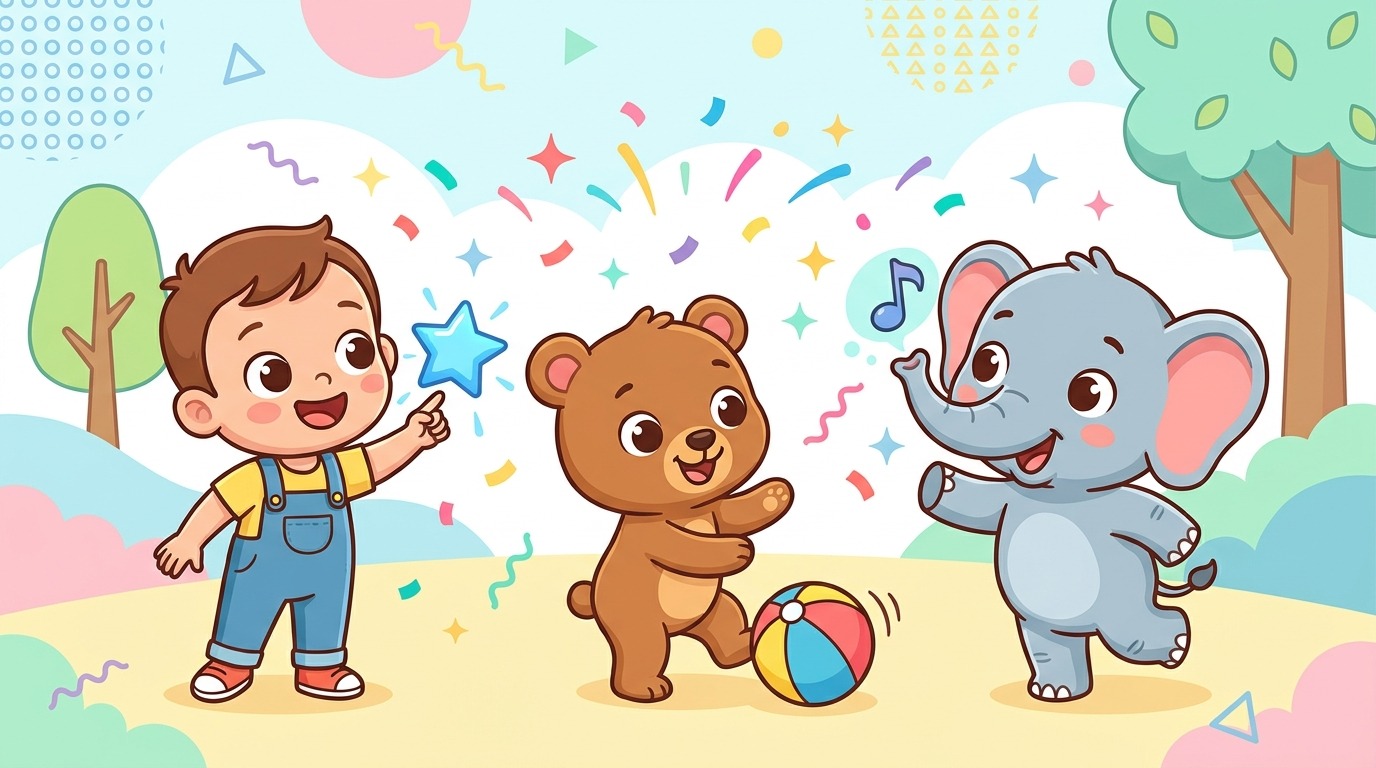
In recent years, a simple observation has emerged in kindergarten: when little hands meet in a “high five,” a smile follows, and so does learning. This children’s game, as brief as a clap, captures attention, nurtures interaction, and establishes reassuring routines. It sets the body, gaze, and listening in motion. Thus, a simple joyful clap becomes a playful activity structured to serve awareness, motor development, and fine motor skills. In 2026, early childhood teams integrate it into sensorimotor pathways, with rhythmic variations and reinvented nursery rhymes. Depending on the context, the instruction changes, but the dynamic remains the same: to create an educational game that combines cooperation, listening, and pleasure.
The benefits go beyond mere entertainment. First, children aged 3 to 5 years refine eye-hand coordination. Next, they learn to wait their turn, orient themselves in space, and respect a clear rule. Finally, the teacher or educator modulates the intensity to channel energy, support learning of rhythm, and work on the voice. This ritual can be included anywhere: morning reception, transition between workshops, start of a singing circle. Each session becomes a springboard for language, gesture control, and conscious entertainment. Result: a micro-sequence lasting two minutes, but laying down lasting skills.
| Little time? Here is the essential ⏱️ |
|---|
| “High five” serves as a quick and effective educational game 🤝 |
| A motor ritual that supports motor development and fine motor skills 🧠 |
| Simple rules, great interaction, lots of laughter 😄 |
| Ideal for 3-5 years, at school, daycare, or at home 🏡 |
| Variants with nursery rhymes, directed gestures, left/right 🎵 |
| A real lever for learning rhythm and taking turns 🎯 |
| Little material, lots of entertainment and awareness ✨ |
High Five for 3-5 Year Olds: Rules, Safety, and Educational Objectives
Clear rules that encourage movement
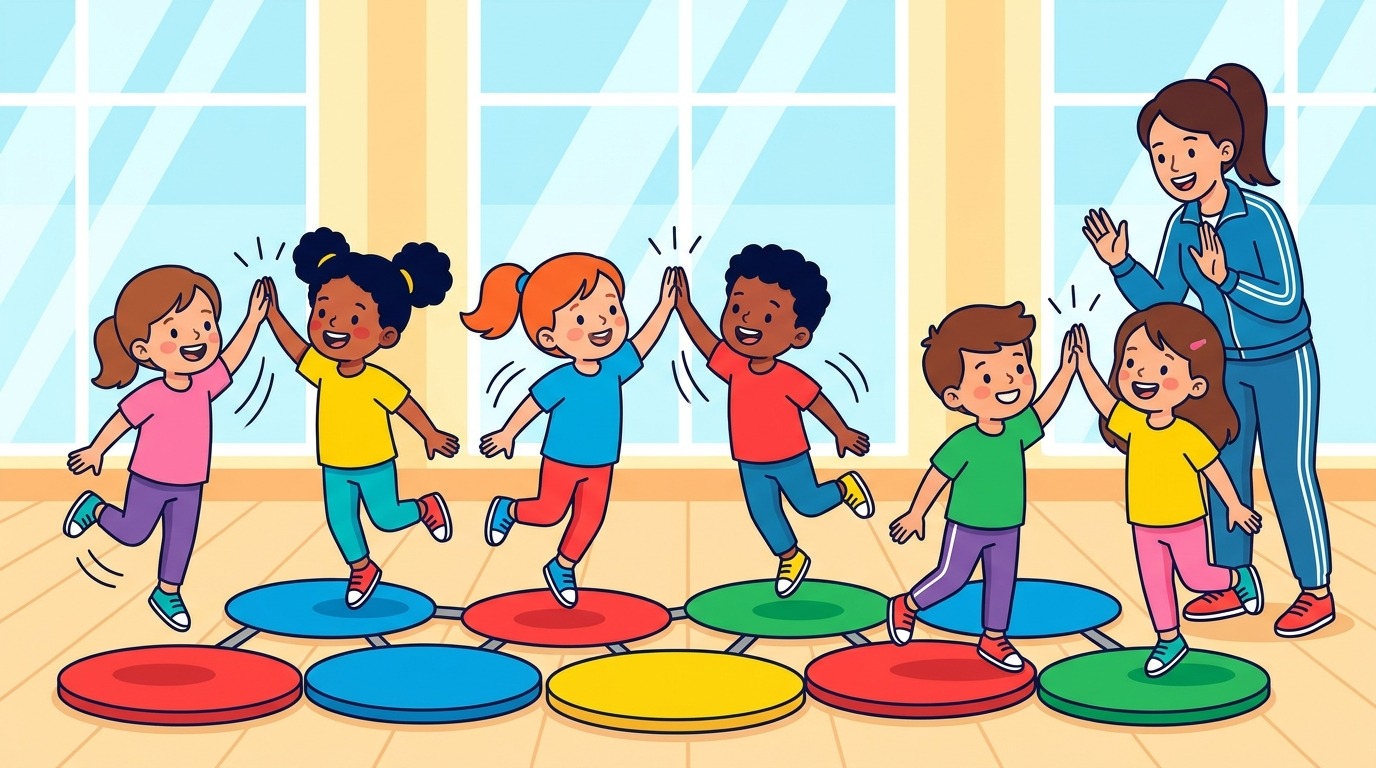
The principle is clear: an adult or peer presents their hands, the child comes to touch palm to palm on a simple signal. Thus, the rhythm induces listening, and the arm stretch prepares the gesture. The instruction must remain short, visual, and joyful. For example: “When you hear the tambourine, come clap my hands, then return to your hoop.”
Children like to vary. So, the support changes: hands up, down, front, then sideways. Each placement stimulates spatial cues. To avoid confusion, we first show, then let a child be “conductor.” This passing strengthens confidence and initiative-taking. It also establishes a rich interaction.
Safe setting, energy well channeled
“High five” requires a cleared zone. However, little space is enough. Simple ground markers are drawn: hoops, ribbons, cones. Everyone knows where to stand, where to pass, where to return. This avoids collisions and reassures the shyest. Moreover, a calm demonstration always precedes the dynamic action.
Safety also passes through the gaze. The duo searches each other’s eyes before the hand clap. This contact reduces too sharp momentum and prevents clumsiness. Then, a golden rule is proposed: fingers closed, palm open, soft strike. The hand becomes a tool, not a weapon. Thus, joy remains intact.
Concrete and measurable educational objectives
This mini-ritual creates a real transfer of learning. First, it establishes a common tempo. Children wait, act, then reposition. So, self-regulation builds through play. Then, the palm-to-palm clap works on body symmetry and bilateral coordination. Finally, repetition transforms the gesture into an automatic skill.
“High five” fits well with other motor games. For example, a course where one crawls, jumps, then finishes with a celebratory clap. Each step inscribes an intention. We do not “make noise,” we carry out a joyful mission. The children’s game gains meaning, and the class gains calm.
Examples of quick sequences
Scenario 1: line up four stations. At the end, the child meets the adult, adjusts posture, and claps hands on a musical signal. Repeating two rounds is enough. Pleasure arises from shared success. The clap seals the effort. It even motivates the most reserved.
Scenario 2: mirror duo. Two children face each other. One suggests the height, the other adjusts and comes to touch. Then reverse. This cooperation nurtures body language. It anchors the idea of taking turns. The challenge is clear: to agree, not to “win.”
In short, this simple tool condenses learning, socialization, and energy management.
Motor skills, lateralization, and body awareness with High Five
Global coordination and common rhythm
The meeting of palms triggers a useful sequence: knee flexion, trunk alignment, controlled arm extension. Thus, the whole body is involved. The music supports this bond. A regular tambourine clarifies the tempo. A bell marks the end of the cycle. This sound code stabilizes the routine.
To reinforce body schema, we play on levels. Clapping “up high” solicits posture and core strength. Clapping “down low” invites bending, then rising without imbalance. The vestibular circuit awakens and guides the head-trunk axis. Result: a harmonious motor development.
Fine motor skills, precision, and hand-eye coordination
At first glance, “clapping hands” seems coarse. However, the intention to aim at a precise palm requires fine eye-hand coordination. Fingers naturally close after the clap. This moment develops clearer grasps. It later benefits cutting, drawing, and manipulation games.
We can also refine the target. Sticking a sticker on the “to be touched” palm forces the child to aim small. The index points, the thumb stabilizes, the hand organizes itself. Thus, fine motor skills strengthen without technical sheets or costly materials. Pleasure makes effort forgotten.
Spatial orientation and lateralization
Between 4 and 5 years, left/right distinction develops. The “high five” is a practical lever. Announcing “right hand,” then “left hand,” and varying height sets cues. A colored bracelet can be worn on the right wrist. The visual sign guides success.
This logic matches circle games that involve moving in rhythm. Turning, stopping, miming, resuming. Each step anchors spatial orientation. We then link the hand clap to lateral movement, then to pivoting. The child connects word and action. Body awareness progresses.
Gentle progression, lasting effects
Repetition counts more than duration. Better three short, well-lived cycles than one long exhausting session. Thus, the child collects successes. Motivation rises. Then, one variable is increased: speed, distance, left/right instruction. This gradualness protects confidence.
Finally, a collective celebration fixes emotional memory. A victory shout, a superhero gesture, then calm return. Neurons better remember what moves. The “high five” becomes a marked motor and social memory.
Practical conclusion of the section: the more precise the gesture, the more learning takes root effortlessly.
Nursery rhymes and circle games to associate: from the pancake to the ferret
Circle songs, gestures, and coordinated rituals
Circle nursery rhymes are natural allies. We walk in a circle, sing, then punctuate the refrain with a joyful clap. A famous garden song invites “planting” with different body parts. The mime can be replaced by a hand clap at each keyword. This word-gesture link clarifies the instruction.
Another classic loved by toddlers: a circle where everyone crouches at the “yooh” signal. Synchronised crouching promotes core strength and breath control. After rising, a “high five” seals the moment. The dynamic alternates up/down, silence/voice, clap/movement. Pleasure follows the rhythm.
Seated circle games that enhance listening
Sitting in a circle, a “postman” game involves passing an object discreetly. Children sing the days of the week, then open their eyes on signal. The one who received the object stands and chases the “postman.” At the end, a friendly “high five” replaces the victory tag. Tension drops, but attention stays sharp.
With a ring slipped on a string, a “ferret” travels hand to hand. The child in the center must spot the ring at the end of the song. A discreet hand clap signals direction change. This trick establishes a rhythmic key and group code, without unnecessary shouting.
Ready-to-use combination ideas
- 🎵 Sung circle + crouching + final “high five” = winning trio for coordination.
- 🧩 Seated postman + clap on signal + calm return = enhanced listening and turn-taking.
- 🥁 Slow tambourine → fast + synchronized clap = work on tempo and motor inhibition.
- 🟢 Hoops on the floor + directional claps (left/right) = solid spatial cues.
To expand the range of songs and rhythms, targeted video research helps visualize sequences.
It is also useful to observe sessions of educators who use the ritual clap as code. These demonstrations inspire and reassure before launching a series with a larger group.
Key point: combining singing, movement, and clapping strengthens common rhythm and interaction among peers.
Organizing a typical session in daycare, school, and at home
Express sensory warm-up
Start with 3 minutes of exploration: walking, stopping, listening to a sound, imitating a gesture. Then set two visible rules: move in the same direction, raise a hand if you want to speak. A welcoming “high five” seals the start. The atmosphere becomes cooperative and clear.
To nourish the senses, vary textures and supports. A soft ribbon, a flexible cone, a firm mat. This diversity builds useful sensory bridges. For complementary ideas, the sensory activities for children suggest short and well-targeted workshops.
Progressive workshops and smooth rotations
Offer three simple stations: aim at a palm at shoulder height, then above the head, then sideways. Each success concludes with a marked clap. Then, rotate. Rotations maintain attention and avoid passive waiting. Children become actors, not spectators.
For a motor and skill mix, a fourth station can be added: targeted throw to a soft basket, then “high five.” At home, replace the basket with foam skittles. For other convivial variants, this family skittles game ideally complements the session.
Adaptations for inclusion and small spaces
In a restricted space, limit to two pairs at once. Others mimic the gesture from their place. Thus, everyone stays engaged. For a child hypersensitive to noise, replace the sound clap with a silent “butterfly touch.” The code remains identical, the atmosphere calms down.
With a child in a wheelchair, adjust the height of the presented palm. Success comes from shared gaze, not strength of gesture. Textured gloves can even be used to enrich sensory feedback. The essential is to keep the rule simple, the victory shared.
Calm down loop and verbalization
Close with a mini body story: “putting hands on the heart,” breathing out, then naming a success. This verbalization fixes the experience. To recall that play fosters growth, a detour via the benefits of play anchors the legitimacy of these times.
At home, an evening routine can include three slow claps, then a short reading. The bridge to language naturally forms. The result fits into one sentence: ritualizing the clap is ritualizing the relationship.
Idea to remember: short workshops, clear rotation, and shared entertainment secure the group.
Monitoring, progression, and bridges with language
Observe without recording, but with valuing
The evaluation remains discreet. A mental checklist suffices: “left/right cue?”, “aims at a stable palm?”, “waits their turn?”. Then, praise the strategy, not speed. For example: “You looked before clapping, that’s clever.” This encouragement nurtures autonomy and avoids hurtful comparisons.
A photo log of gestures can illustrate progress. Stick two images: before/after. Children comment on what they see. Awareness widens. Thus, learning gains visibility without numerical pressure.
Progression 3, 4, 5 years: from simple to complex
At 3 years: a single height cue, one hand offered, and return to the hoop. The goal is to dare and aim wide. At 4 years: two heights, change hand, and a musical signal. The regularity of tempo structures the sequence. At 5 years: left/right, crossed laterality, and a short move before the clap. Complexity remains playful.
To vary, we integrate a theme: animals, cooking, season. A “turtle” palm is clapped slowly; a “rabbit” palm clapped quickly. The theme guides the rhythm. To enrich imagination, ideas of games around animals provide ready-to-play scenarios.
Bridges with vocabulary, reading, and associations
The hand claps, the mouth speaks. One can name color, shape, or action at the moment of the clap. This gesture-word coupling nourishes lexicon. After the session, a pair activity associates image and word. This game to match pairs of objects extends the visuomotor link.
Then, linking word and image solidifies phonological awareness. For siblings, a support such as link word and image can serve as a dining extension. Finally, concluding with a short story creates a soothing space. On this point, a reminder of the benefits of reading confirms the interest of associating movement and narrative.
To inspire class rituals, video searches showing transition routines with high fives and visual cues help refine sequences.
Final point of the section: progressing means complicating one variable at a time, without losing sight of the educational game.
“A simple ‘high five’ can open wide the door to the world: moving body, awakening tongue, hearts connected.”
How long should a “high five” session last?
Five to eight minutes is enough for the core session, with micro-rituals of 60 to 90 seconds during transitions. Short and frequent sequences are better than a long block that tires attention.
Is specific equipment needed for this children’s game?
No. A cleared space and a few ground markers are enough. Simple accessories (tambourine, ribbons, hoops) add variety without complicating the rule. The essential remains the ritual clap and the quality of the gaze.
How to adapt the game for a child sensitive to noise?
Replace the sound clap with a “butterfly touch” or a slowed palm-to-palm contact. Also offer noise-cancelling headphones during first sessions. The gesture code stays the same to preserve learning.
What skills does this game primarily support?
Bilateral coordination, spatial orientation (up/down, left/right), motor inhibition, joint attention, action language. It combines motor development, fine motor skills, and social interaction in highly motivating entertainment.