Video Bedtime Routine: Establishing a bedtime routine for children.
| Short on time? Here’s the essentials 🌙 |
|---|
| ✔️ A short bedtime routine (15-20 min), regular and predictable makes falling asleep easier 🕒 |
| 📚 Following simple and comforting actions: pajamas → teeth → story → hug → bedtime 🛏️ |
| 🔕 Screens off at least 1 hour before bedtime; avoid excitement and caffeine 🍫 |
| 💬 Plan a soothing transition before the evening ritual: tidying up, soft music, bath, reading 🎵 |
| 🌟 After age 5, aim for 10 to 11 hours of sleep to support learning and child well-being 📈 |
| ⏳ Signal the end: announce the last story or use a timer ⏲️ |
| 🧠 A child who falls asleep alone falls back asleep faster at night and gains autonomy 💪 |
Because good sleep conditions mood, concentration, and growth, the bedtime routine stands as families’ number one ally. On weeknights, a stable evening ritual defuses tensions, reduces prolonged requests, and establishes contagious calm. It is neither a rigid protocol nor a magic recipe. It is a reassuring framework that invites the child to slow down, ground themselves, and go to bed with less resistance.
Specifically, sleep habits are built layer by layer: a soothing transition, a clear sequence of actions, a calm bedroom, and consistent parental responses. Neuroscience confirms it: memory and language consolidate at night, especially when the body knows what to expect. So, how to orchestrate these precious 20 minutes so they become a moment of connection rather than confrontation? The answer lies in concrete details, in actionable parenting tips, and in micro-adjustments that, cumulatively, change everything for the child’s well-being.
Bedtime Routine Video: why a regular evening ritual transforms children’s sleep
Evenings often feel like a race. Yet, a predictable evening ritual slows the pace and prepares the brain for sleep. When the same actions repeat, the internal clock anticipates bedtime. Arousal level decreases, the sleep hormone rises, and the child lets themselves drift. They are not obeying an arbitrary order; they follow a rhythm they know.
Research is clear: after age 5, the bedtime routine remains decisive. School-age children sleep better when the evening is organized around expected steps. Their brain consolidates the day’s learning more effectively. Simple actions — pajamas, teeth, story — send coherent signals: the day ends, the night begins.
What quality sleep changes as early as the next day
A sufficient night, in duration and quality, fuels visible progress. Teachers observe this calm demeanor from the moment children arrive. Parents too, in their ability to cooperate at wake-up. The child feels stable energy and a sharp mind. Hours gained at night translate into victories during the day.
- 🧩 Learn and memorize more easily (language, motor skills, problem-solving strategies)
- 🧠 Strengthen logical reasoning and creativity
- 🙂 Better manage emotions and cooperate
- 👀 Stay alert, concentrate longer
- 💪 Support growth, immunity, and physical recovery
Generally, a schoolchild needs about 10 to 11 hours of sleep per night. This varies according to temperament and evenings. However, the consistency of bedtime often makes the difference in falling asleep and the stability of nighttime awakenings.
Practical case: when the routine becomes the language of soothing
In the Roussel family, 6-year-old Noah resisted lights out. At night, he made repeated requests. A visual calendar with pictograms clarified the order of steps. An hourglass timed the story. Soft music replaced stimulating games. In one week, tension dropped. Noah anticipated the end without negotiating. In the morning, he woke up more smiling.
Why does it work so quickly? Because the bedtime routine is a clear contract: the rules are known, parental attention is guaranteed at a fixed time, and soothing is no longer by chance. The child feels contained without being rushed. The brain understands that the pleasure of hugs is part of the program, then sleep will come.
To nurture the imagination while lowering activation levels, a bedtime story soothes and makes the day’s separation easier. Likewise, the resource Trop beau dodo offers concrete ideas to strengthen this key moment. The goal is not perfection, but kind repetition.
Underlying this is a simple principle: a good night is earned before turning off the light.

Building an effective bedtime routine in 20 minutes: steps, timing, and environment
A successful routine is short, stable, and flexible at the same time. The goal is not to occupy the child, but to lead them toward soothing. To achieve this, every minute must send a coherent signal to the body. The key lies in order, not quantity.
The soothing transition before the evening ritual
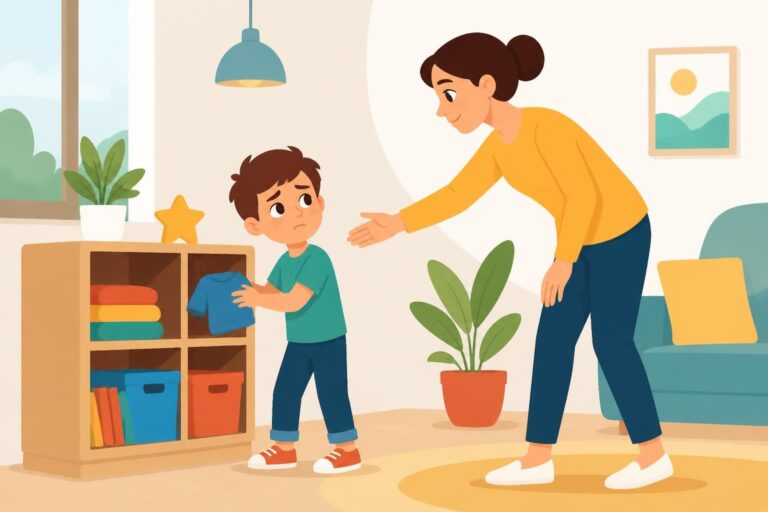
Setting aside 15 to 30 calm minutes before the main sequence changes everything. This buffer prevents the child from arriving excited at toothbrushing. Tidying, a warm bath, dimmed light, and soft music already prepare the ground. Talking about the best moment of the day strengthens the connection without opening conflicting topics.
Keeping screens away at least one hour before bed reduces cortical arousal. Also close the door to caffeine after late afternoon. Ideally, 2 hours separate dinner from bedtime, allowing digestion to calm. In this buffer, the body understands the direction to take.
The sequence of actions: simple, repetitive, reassuring
Children cooperate better when the chain is clear. Here is an example that works from kindergarten. Just adjust it at home, then stick to it every night. The child’s involvement reinforces adherence.
- 🧼 Go to the toilet and wash hands
- 🦷 Brush teeth with a small 2-minute hourglass
- 👕 Put on the pajamas chosen in advance
- 📖 Shared reading or short educational video about sleep off bright screens
- 🤗 Hug, ritual phrase, and lights out
A timer signals the end: “5 minutes of story left.” This avoids frustration from a sudden stop. The brain likes to know when an activity ends. Announcing the “last story” prepares the child for separation.
Bedroom and lighting: a setting that invites sleep
The room matters as much as the sequence. A temperate temperature, stable dimness, and few visible toys encourage calm. A trusty comforter, soft sheet, fixed nightlight: all sensory landmarks. For the more sensitive, a light white noise masks household sounds.
Pictograms on the door guide without repeating. They give the child power to check the next step. Gradually, they perform the routine with less help. This spares requests and boosts self-esteem.
To expand your ideas, explore useful video formats through this targeted search.
This reliable foundation allows adjustments for special evenings. On trips or after outings, the routine condenses but keeps key markers. Even shortened, the bedtime routine remains recognizable.
Calm and soothing: managing emotions, anxiety, and siblings at bedtime
Refusing to sleep often hides unresolved emotion. The child needs space to set down worries, ideally before the ritual. Talking early in the evening about fears or school concerns prevents waking them at lights out. True listening releases pressure and opens the way to child well-being.
When anxiety arises: prevention over reaction
If apprehension appears at bedtime, better to welcome it without resolving it in bed. Setting a “worry appointment” in the afternoon reassures. The child knows they can talk tomorrow. During the routine, do not reactivate the problem; support soothing.
A comforter, a reassuring photo, or a “bedtime scent” spray become sensory anchors. Slow caresses on shoulders and back, described in the power of caresses, activate affective touch fibers and reduce arousal. These repeated gestures tell the nervous system: “You are safe.”
Sharing a room: turning siblings into a team
When two children sleep together, play can get out of hand. Explaining the older child’s role as a model gives responsibility. They show the sequence of actions and gain special recognition. A small cooperative challenge, like “five minutes of silent reading each,” channels energy in the same direction.
Establish clear signals: the nightlight turns on, the body calms, whispers begin. A floor mat to read without disturbing the sibling’s bed reduces stimulation. A shared timer prevents either from feeling shortchanged. Adult consistency remains the pillar: whoever puts them to bed keeps the same overall rhythm.
Specific sensitivities and neurodiversity: adapt without distorting
Certain profiles need precise adjustments: more detailed visual routine, heavy sensory objects, or micro-pauses between steps. A targeted video can inspire helpful modifications.
The structure remains the same, but the tempo adapts. Success depends on gentle repetition. The child learns that their bed demands nothing impossible. Night after night, their tolerance window widens. This patient progress is solid.
Finally, when life upheavals occur (illness, moving, arrival of a baby), simplify the routine but don’t abandon it. Three markers suffice: a hygiene step, a short story, a hug. This thread leads back to safety.
The evening rewards consistency more than originality.
Autonomy and sleep habits: learning to fall asleep alone, without unnecessary struggle
Many falling asleep difficulties stem from a misunderstanding: the adult “carries” the child to full sleep. When the child wakes at night, they ask for the same help. Learning to fall asleep alone is a lasting gift. It reduces prolonged awakenings and frees all family members.
The right rhythm of support
The idea is not to cut help suddenly but to gradually reduce it. Set a warm framework, then slowly remove the crutch. The “chair method” illustrates this: sit near the bed, then a little farther each night, until the door. The child remains secure; autonomy progresses.
Naming what will happen changes everything: “After the story and hug, you’ll fall asleep alone. I’ll come back to check in 3 minutes.” A kept promise repairs trust. The brain understands the adult doesn’t disappear; they regulate distance.
Avoiding the slippery slope of nighttime reinforcements
In the middle of the night, a consistent response avoids escalation. Reassure briefly, gently guide back, and leave. Taking the child into the adult bed sometimes fixes things temporarily but often maintains the demand. Co-sleeping is a valid choice for babies; beyond that, clear intention is needed. To reflect on the start and exit from co-sleeping, see this guide: co-sleeping and sleep.
Most awakenings decrease when falling asleep happens autonomously. The child alone regains their landmarks. Their brain associates the bed with a mastered experience, not forced separation. The night becomes familiar ground.
Measuring progress: visible micro-victories
Rather than aiming for zero negotiation in two nights, watch for small signs: one step completed without reminder, a shorter hug, a shortened night awakening. Marking these victories on a calendar motivates. Social reinforcement (praise, sticker) is better than point chasing. Enjoyment remains the driver.
If the child refuses bedtime after a difficult school day, they may need to unload before the routine. A slow ball game, a short dance, then a warm shower open the way. The difference between activation and regulation is subtle: first release, then soothe. The bedtime routine does not put a lid on things; it organizes a descent.
Autonomy is not abandonment: it is a presence that teaches at the right tempo.
Adapting the bedtime routine to 2026 realities: school, activities, screens, and special situations
Modern evenings fill up easily: homework, activities, screens. Yet, bedtime is earned upstream. Planning homework early prevents waking the brain just before bed. Late activities are offset by a shortened routine but never skipped. Consistency outweighs length.
Screens and technology: setting clear guardrails
Blue light delays falling asleep. In 2026, between messaging and videos, attention fragments. Defining a visual “screen-free zone” in the living room and adhering to it facilitates buy-in. A basket for charging devices at the bedroom entrance materializes the no-screen rule. An audiobook or suitable podcast replaces images without overstimulation.
To enrich evenings while respecting physiology, soothing and playful content exists. Guided stories from some sites, like this bedtime story, support winding down. Conversely, fast or interactive videos are best reserved for weekends, away from the bed.
School and emotions: sleep as a resilience tutor
Rhythm changes, assessments, and social relationships weigh heavily. When stress signs appear, anticipating rather than waiting until 9 pm is strategic. Sometimes, latent school refusal complicates bedtime. Useful leads are offered here: school refusal in 5-8 year olds. The lighter the day emotionally, the more the night settles.
When the child experiences novelty (class, city, babysitter), planning a reinforced “comforter” routine over 10 days helps: same words, same actions, same order, a bit more sensory tenderness. It is not giving in; it is securing to allow letting go.
Warning signs and professional help
Loud snoring, breathing pauses, extreme agitation, interminable falling asleep despite rules followed: these are yellow flags. Better to discuss with a doctor or pediatrician. When anxiety overflows often, psychological support lightens the burden. The earlier you intervene, the faster the correction.
Online resources also accompany families. Workshops and educational videos help review basics without scattering attention. This page gathers useful video content for families: Naître et grandir video. The challenge remains translating these ideas into habits maintained night after night.
Ultimately, adapting is not giving up: it is keeping the compass of calm and coherence when family weather changes.
What is the ideal duration of an effective evening ritual?
Between 15 and 20 minutes is enough if the sequence is stable and reassuring. Better a short, constant, and predictable ritual than a long variable moment. Preserve a soothing transition before, then chain simple and repeated actions.
How to react if my child delays bedtime with prolonged requests?
Clearly announce the last step (e.g., last story), use a timer, then calmly stick to it. Offer one last scheduled hug and remind that remaining requests will wait for the morning. Repeated consistency cuts negotiations.
Are screens compatible with a good bedtime routine?
No, in the hour before bedtime they hinder falling asleep. Prefer soft music, shared reading, or an audio story. Put devices out of the bedroom to materialize the no-screen rule.
What to do in case of frequent nighttime awakenings?
First check falling asleep: does the child fall asleep alone? If yes, awakenings usually shorten. Reassure briefly, redirect to bed, avoid introducing new aids. Consult in case of loud snoring or marked anxiety.
How to manage the routine if two children share the same room?
Give the older child a model role, establish whispering, use a shared timer and separate reading corner. Keep the same steps every night to preserve the collective landmark.
“A good night’s sleep isn’t ordered: it’s cultivated every night, to the rhythm of the same simple actions.”