Tradition Family Ritual: The importance of rituals and traditions in the family (1-3 years).
| Short on time? Here is the essentials ✨ |
|---|
| Regular rituals (wake-up, meals, bedtime) strengthen the emotional security of 1-3 year olds and promote attachment 🤗 |
| Simple traditions (bedtime song, Sunday pancakes) support language development and the transmission of family values 🗣️ |
| The key is not perfection, but regularity and shared joy. Adjust if a habit becomes a chore 🔁 |
| During times of change, a ritual acts as an emotional anchor and protects the family’s balance ⚓ |
| Co-build with elders, respect the pace of childhood, and adopt visual aids to better communicate 🧩 |
In the early years, a ritual soothes, guides, and connects. It structures an otherwise mysterious day for a toddler, consolidates attachment, and provides concrete landmarks when emotions overflow. Between a lukewarm bath, a whispered song, and dimmed light, the family shapes a predictable atmosphere. This predictability nurtures emotional security, a key condition for socio-emotional development. Moreover, traditions don’t stop at major holidays. They slip into modest gestures, repeated with heart. It is precisely this joyful repetition that transforms a simple action into a meaningful ritual.
Nowadays, the balance between work, commuting, and screens disrupts habits. Yet, a lullaby, a secret wink, a passed-down recipe are enough to weave daily life. These micro-traditions activate benevolent communication, stimulate memory, and facilitate the transmission of values. They support language, organize time, and create a lived family culture. What if every household invented its own code of tenderness to accompany childhood from 1 to 3 years old?
Rituals for 1-3 year olds and emotional security: a foundation for emotional and cognitive development
Between 12 and 36 months, the brain develops rapidly. The circuits managing attention, inhibition, and emotion strengthen. In this context, a well-chosen ritual reduces uncertainty, lowers stress, and opens the way to exploration. A bedtime routine, for example, gradually guides toward sleep. It follows simple steps, in the same order, with the same human warmth. The child anticipates, relaxes, then lets go.
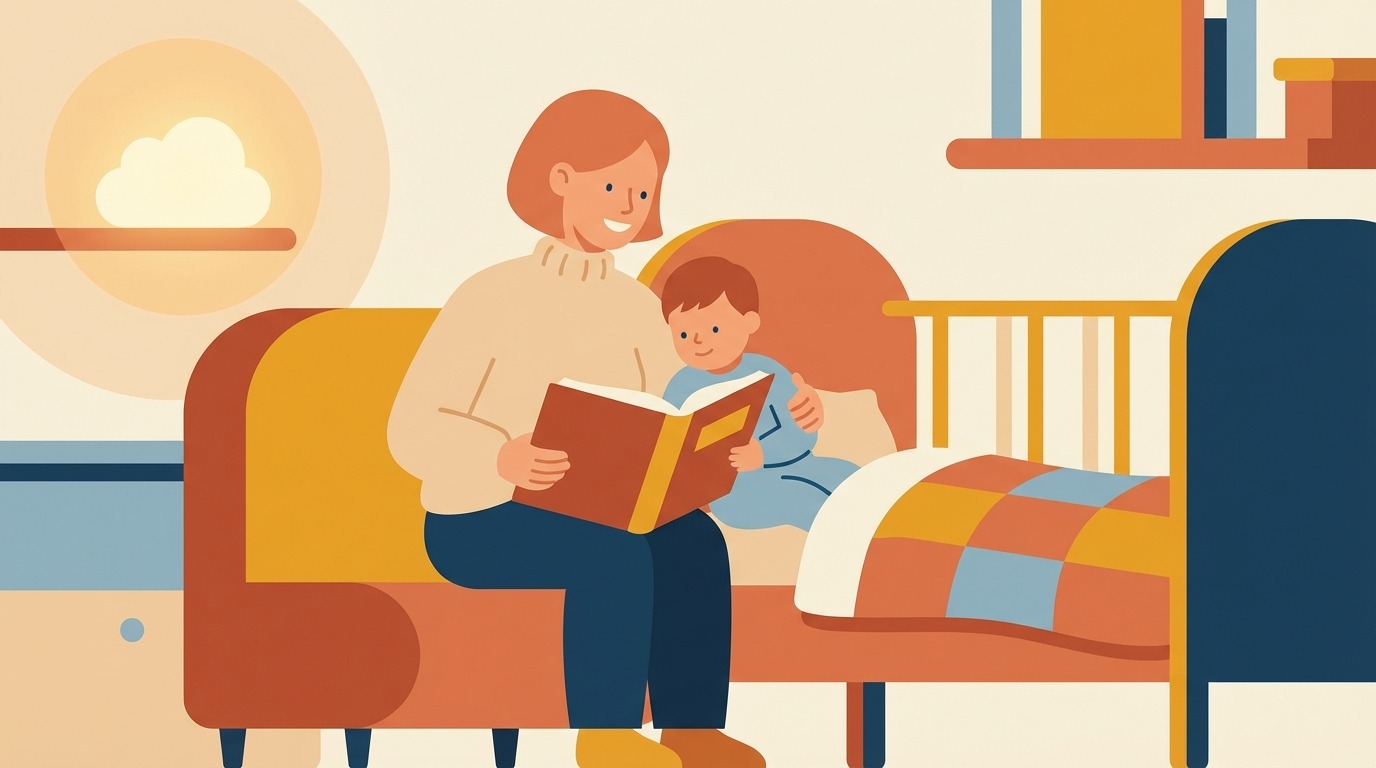
The Lenoir family illustrates this well. With Zoé, aged 2, the evening follows a clear sequence: lukewarm bath, short story, cuddle, nightlight. Thus, attachment is strengthened through repeated gestures. Zoé falls asleep faster. She wakes up less because she has integrated a reassuring sequence. This framework reduces power struggles and values autonomy. The adult remains supportive, without rushing.
Morning rituals have a similar effect. A stable order — gentle wake-up, milk, choosing clothes, a ritualized goodbye — gives rhythm. The child cooperates more because they know what comes next. Meanwhile, speech accompanies each step. This descriptive communication (“now we put on socks”) boosts vocabulary and comprehension. The routine then becomes a learning stage.
Beyond home, alignment with early childhood care facilitates adherence. A conversation with the daycare or childminder harmonizes landmarks. To inform yourself, the overview of early childhood care options helps choose a coherent environment. This continuity soothes morning separations. A “long cuddle then two kisses” repeated daily, in the same place, secures the transition.
Weekly traditions also support emotional regulation. A Sunday “playdough and soft music” creates a home base. The child experiments with patience, coordination, and creativity. This moment, anchored in repetition, becomes an emotional landmark. Moreover, stability doesn’t prevent whimsy. A small variation is enough to maintain enthusiasm without breaking the order.
Finally, the ritual adapts to development. At 16 months, needs differ from those at 30 months. Some guidance on motor and language milestones inspires adjustments. An article about 16-month-old developments helps calibrate expectations. We simplify, shorten, or enrich depending on the moment. Result: a living, never rigid framework.
Key idea: a ritual is not a prison; it’s a promise of constancy. This promise frees energy to explore and learn.
Transmission and family traditions adapted to toddlers: creating meaning without overstimulation
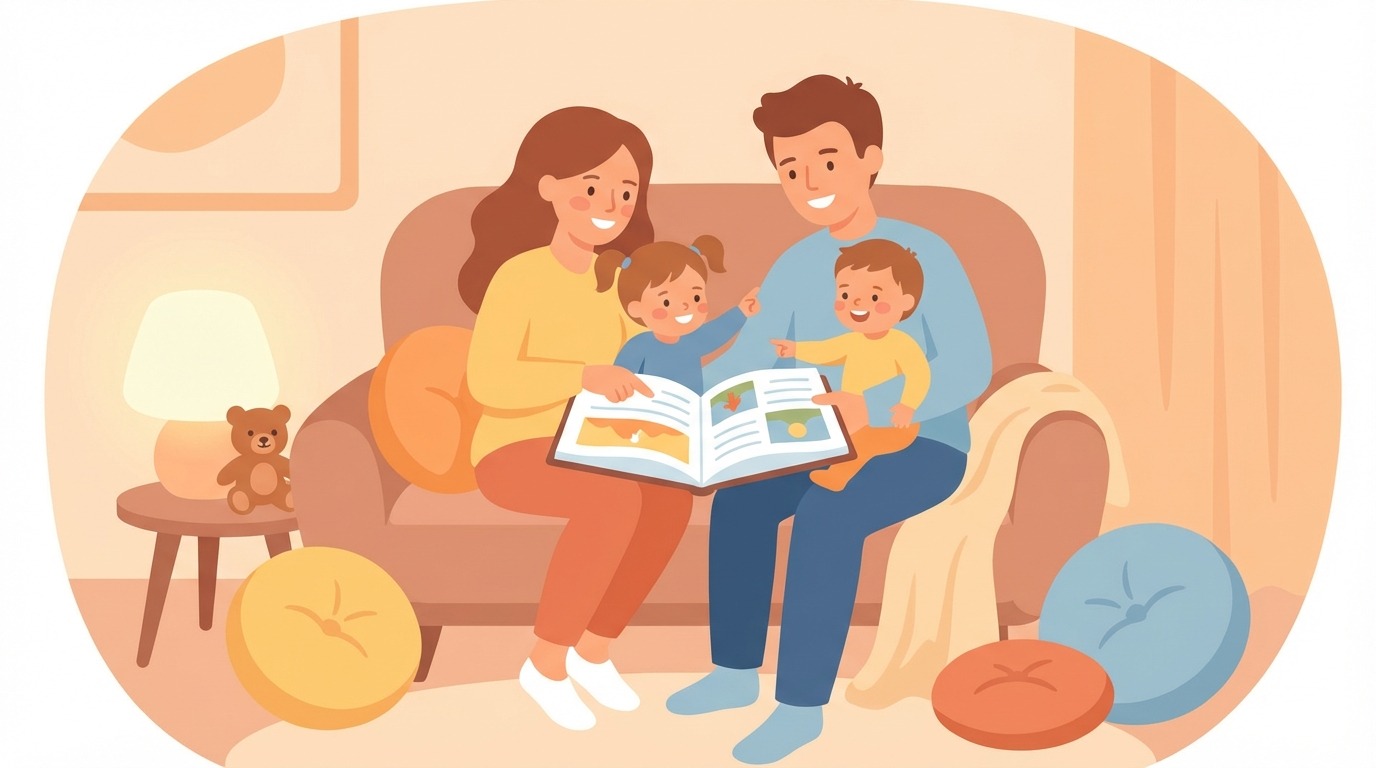
The family tradition is not reserved for large gatherings. Between 1 and 3 years old, it unfolds in slow, repeated sensory micro-rituals. A Sunday cake the child stirs with a spatula. A nursery rhyme that returns every birthday. A photo taken in the same place, in the same season. These landmarks build memory and a shared identity. They nurture the transmission of stories and flavors.
Festivities benefit from being simplified. Fewer guests, more relational quality. A garland, soft music, a quiet corner suffice. For a big event like December, baby-friendly materials allow a gentle progression to joy. The overview of Advent calendars for babies inspires minimalist gestures. Focus on small sensory surprises and a short rhythm.
Magic remains compatible with truth. Should we talk about Santa Claus? The approach can remain playful and respectful of development. Playful resources like these Santa Claus ideas provide ways to tell stories, sing, imagine. The essential lies in the intention: to share joy, without imposing a belief or causing great excitement before bedtime.
The Giraud family established a simple tradition for Lucie’s 2nd birthday: an invented song sung together and a yogurt cake made together. Everyone knows the melody. The repetition organizes emotion. Smiles become contagious. Adults recount an anecdote from their childhood. Lucie listens, laughs, and absorbs an accessible family story.
Adapting traditions means understanding the attention span. At 18 months, ten minutes of ritual suffice. At 30 months, add a narrative fragment. Printed photos or a mini-album help continuity. The child points, names, connects. Communication deepens, language progresses, and joy anchors in time.
Simplicity also reduces friction. Fewer noisy objects, more presence. At a party, a “refuge” corner remains available, with a blanket and a book. The child moves between exploration and cocoon. This healthy oscillation strengthens emotional security. It protects evening sleep, often sensitive after an intense event.
Finally, traditions evolve. If a family gathering becomes a source of tension, recombine. Spread out visits. Choose a more spacious place. Give the child a symbolic task to give them a place (pouring water, bringing napkins). The ritual keeps its soul while adapting to realities.
Key idea: a successful tradition speaks to body and heart. It favors quality of connection, not quantity of stimuli.
Playful rituals and language: small habits that boost communication in 1-3 year olds
Play weaves speech. A short, daily play ritual establishes an exchange space. The child listens, imitates, responds. The parent names, reformulates, describes. This back-and-forth builds a lively communication. In a few minutes, language networks train. This training integrates without pressure because the form stays pleasant.
The “shopping guess” works from 2 years old. Gather three objects, hide them, mime. The child guesses. Vocabulary enriches. To vary, ready-to-use ideas facilitate starting. A detour by this grocery store guessing game gives simple and fun scenarios. Play before dinner or right after bath, always at the same time to anchor the habit.
Some toddlers love to daydream. They observe, wander off, then come back. A contemplative temperament requires gentle transitions. Dedicated resources to imagination, like this article on the dreamy child, help adjust the pace. A calm ritual, with a sensory treasure box, captures attention better than a stream of verbal instructions.
The Ben Amar family reserves five minutes each evening for a “puppet theater.” Two puppets converse. They revisit the day with humor. By naming emotions, the family stages the experience. The child learns to say “I was scared,” “I was happy.” Repetition normalizes these words. It promotes self-regulation.
Three express rituals to nurture language
- 🧺 “I tidy up and name”: pick up three objects naming them, then sort by color. Transmission of concrete words.
- 🎵 “Chorus of the day”: repeat a short nursery rhyme, change a keyword. Playful habits that stimulate attention.
- 🖐️ “Hand-words”: touch each finger while saying a word from the day. Rhythmic communication, easy to memorize.
On Saturday, a walk becomes a word workshop. Pick three leaves, compare, paste in a notebook. The child points, the adult describes. Thus, curiosity drives learning. Over weeks, a living dictionary takes shape. This “treasure book” strengthens family transmission: reviewing, remembering, laughing.
For children more sensitive to noise or changes, a gradual approach helps. Shorten play, reduce stimuli, then lengthen over time. Pleasure always comes first. When enthusiasm fades, adjust the rule or change the schedule. A ritual is not forced. It is cultivated like a plant.
Key idea: a small ritual, repeated with joy, is better than a long forced session. Language loves consistency and fun.
Co-constructing rituals in blended or busy families: methods, tools, and relational accuracy
In a blended family, alignment becomes an art. Calendars differ, habits too. Yet small rituals can unite. Start from the common trunk: meals, bedtime, departures. Then co-write shared landmarks. This co-construction gives everyone a voice, including elders. The 2-year-old senses this coherence. It calms them.
The Karim-Sofia family introduced the “minute of three choices.” Before bath, the child selects a towel, a toy, a song. The framework stays stable; personalization adds pleasure. This approach lowers resistance. It respects attachment to each home without creating competition between houses.
Time is often lacking. Practical tools lighten mental load. A ready diaper bag, labeled boxes, a ritual kit (brush, book, nightlight). Equipment designed for parents structures daily life. A guide like these useful accessories helps choose the essentials without clutter. The goal remains fluidity. Less friction, more presence.
Visual aids clarify steps. A magnetic strip or pictograms placed at child height suffice. The child points, the adult names. Communication gains calm. Keep the strip lively: simplify on the go, detail at home. This flexibility avoids rigidity.
To harmonize between two homes, a “ritual kit” travels: comfort book, small lamp, recorded song. This tactile and sound continuity reassures 1-3 year olds. Meanwhile, adults coordinate on key points: target bedtime, story duration, separation instructions. A shared note group suffices. The child senses agreement. They cooperate more.
5-step action plan
- 🧭 Identify three strategic moments (wake-up, meals, bedtime).
- 🧩 Choose a simple routine per moment, with a micro-choice (a choice).
- 📷 Install a minimalist visual aid, at child height.
- 🔁 Review every 2 weeks: keep, adjust, celebrate.
- 💬 Name what works: “we succeeded in our calm evening,” thus reinforcing emotional security.
When conflicts emerge, a “repair ritual” can be invited. Three gestures: sit, breathe three times, each say one quality of the other. Thirty seconds sometimes suffice to unlock. This symbolic marker protects the relationship and shows the child how to repair a bond.
Key idea: clear, co-constructed rituals transform transitions into bridges. The family gains serenity, even under pressure.
Protective rituals during times of change: emotions, hypersensitivity, and resilience of toddlers
Moving, separation, the arrival of a baby. 1-3 year olds feel these waves, sometimes very intensely. A well-thought-out ritual becomes a beacon. Keep at least two untouchable landmarks: bedtime and a gentle playtime. This stability cushions emotional load. The attachment system remains active, available, reliable.
Some children show a finer perception of noise, light, or change. Adapting the ritual accordingly protects the relationship. Some tips for a hypersensitive toddler guide implementation: provide a quiet corner, favor soft textures, lower the light earlier. Softness is not a luxury. It is a calming lever.
The “weather bag” works well in storms. It contains three ritualized objects: a feather to blow on, a stress ball, a small bell. Each evening, choose one object and perform a micro-ritual. Three breaths on the feather, for example. The child associates this gesture with calming down. They learn that emotions are to be passed through.
The Duclos family had to move urgently. For their son, 2 and a half, they kept the morning song, the same cup, and the evening reading. They added a “postcard” ritual: each Sunday, a drawing sent to grandparents. The transmission of connection materialized. The child found their compass again.
Sometimes daycare becomes support. Synchronize a transitional object. Align a keyword used by adults (“comfort pause”). The child hears the same instruction at the same time of day. This coherence multiplies the calming effect. It maintains the thread between places of life.
Seasonal traditions can also support transitions. A “first autumn leaf” walk, a shared soup on Friday, a photo “growing under the same tree.” These images fix the story. They show time moves forward but the bond remains. To prepare holidays without overload, a gentle framework helps. Choose a low-intensity moment. Limit stimuli. And if needed, draw inspiration from materials designed for early childhood.
Key idea: in change, a stable ritual acts as an anchor. It reminds that “we” remain solid, no matter what happens.
“In every ritual lives a promise: here, you are awaited, loved, and recognized.”
Which bedtime rituals to prioritize between 1 and 3 years old?
A short and stable sequence works best: lukewarm bath, pajamas, very brief story, cuddle, nightlight. Keep the same sequence and a calm atmosphere. Name each step to support communication and emotional security.
How to introduce a tradition without overstimulating my child?
Choose a single symbolic moment (e.g., birthday song) and limit the duration. Prepare a quiet refuge corner. Avoid late surprises. Prioritize presence, not the abundance of activities.
What to do if a ritual becomes a constraint?
Reduce the number of steps and allow a micro-choice for the child (book A or B). Observe enthusiasm. If interest doesn’t return, replace with a shorter variant. A ritual must remain lively and pleasant.
How to connect home and daycare around rituals?
Share a small common lexicon (“comfort pause,” “three breaths”). Align a transitional object. Exchange on sleep times and signals. Continuity strengthens attachment and trust.
Ideas for a seasonal tradition adapted to 2 years old?
A photo at the same tree each season, a Friday soup, or a mini calendar of sensory gestures. To take off gently, explore materials like baby Advent calendars, to adapt to your family’s rhythm.