
Routine Chaminou : Chaminou’s routine: guide for children.
Children love clear landmarks and stories that inspire action. The Chaminou Routine is based on this obvious fact: a reassuring hero, stickers to apply, and short repeated rituals. Result: the child routine becomes smoother, evenings calm down, and autonomy progresses without shouting. This child guide turns small everyday gestures into fun challenges: saying hello, washing hands, preparing the bag, congratulating a classmate. With positive reinforcements, visible monitoring, and mini symbolic rewards, every gesture counts and nurtures confidence.
The Chaminou system spreads quickly, both at school and at home. In four weeks, it establishes solid daily habits: politeness, hygiene, child organization, and mutual support. Adults model, name the effort, and recognize progress. Thus, child development is supported by consistent positive education. The gimmick effect is avoided thanks to measurable goals, frequent feedback, and concrete rituals. At the end of the cycle, a Chaminou Certificate celebrates the journey, not perfection. The child leaves motivated, ready to live their daily activities with more confidence.
| Short on time? Here’s the essentials ⏱️ |
|---|
| 🌟 Value every effort: what is celebrated is repeated. |
| 🐾 Ritualize 4 weeks: politeness, hygiene, organization, mutual support. |
| 🎯 Clear and observable goals: max 3 items per week. |
| 🤝 Simple child responsibilities: roles, feedback, pride. |
| 🧠 Keep joy alive: symbolic rewards, without competition. |
Chaminou Routine and positive education: daily habits that last for 3-8 year olds
The Chaminou Certificate starts from a powerful principle: joyful repetition installs automatisms. When a child receives precise feedback on a successful gesture, they quickly understand what is expected. They then create a positive link between action and recognition, which increases the desire to do it again tomorrow.
Why does this work so well? Because encouragement stabilizes internal motivation. Sanction, on the other hand, focuses on the error and weakens initiative-taking. With Chaminou, the gesture is described: “You said thank you and waited your turn.” This description reinforces the norm and nurtures empathy. Peers are inspired.
Why encouragement beats sanction
Approaches based on positive reinforcement fuel perseverance. The child sees their progress and dares more. At school, a weekly ritual is enough: a sticker is stuck, success is told, smiles are shared. At home, three minutes after dinner keep the momentum without tiring the family.
For shyer youngsters, progressive social learning helps. Concrete paths exist to unlock exchanges with adults. The Chaminou routine frames these moments: a simple sentence, a smile, then praise. Little by little, speaking gains ease.
Simple, measurable, and joyful targets
Three families of goals work very well: hygiene and health, material organization, social relationships. We aim for precise gestures: “I wash my hands before the meal,” “I tidy my desk in 5 minutes,” “I congratulate a classmate.” We measure each week and adjust the difficulty.
Some profiles require more visual clarity or time. Inclusion has its full place in the routine: to understand and adapt, a focus on autism spectrum disorder facilitates adjustments. Visual supports, repetitions, and consistency take crucial importance there.
In the evenings, reading strengthens attachment and internal security. The request “Read me the story again” is not a whim, it is a need for landmarks. The resource Why children demand the same story shows how to ritualize these quiet times. The Chaminou Certificate can also crown the consistency of the evening ritual.
And health? Hygiene routines protect daily life, especially after bath or swimming pool. To avoid small injuries, one can get information on swimmer’s ear in children and establish simple preventive gestures. De-dramatizing is already taking care.
In a word: describe, value, ritualize. Momentum follows naturally.
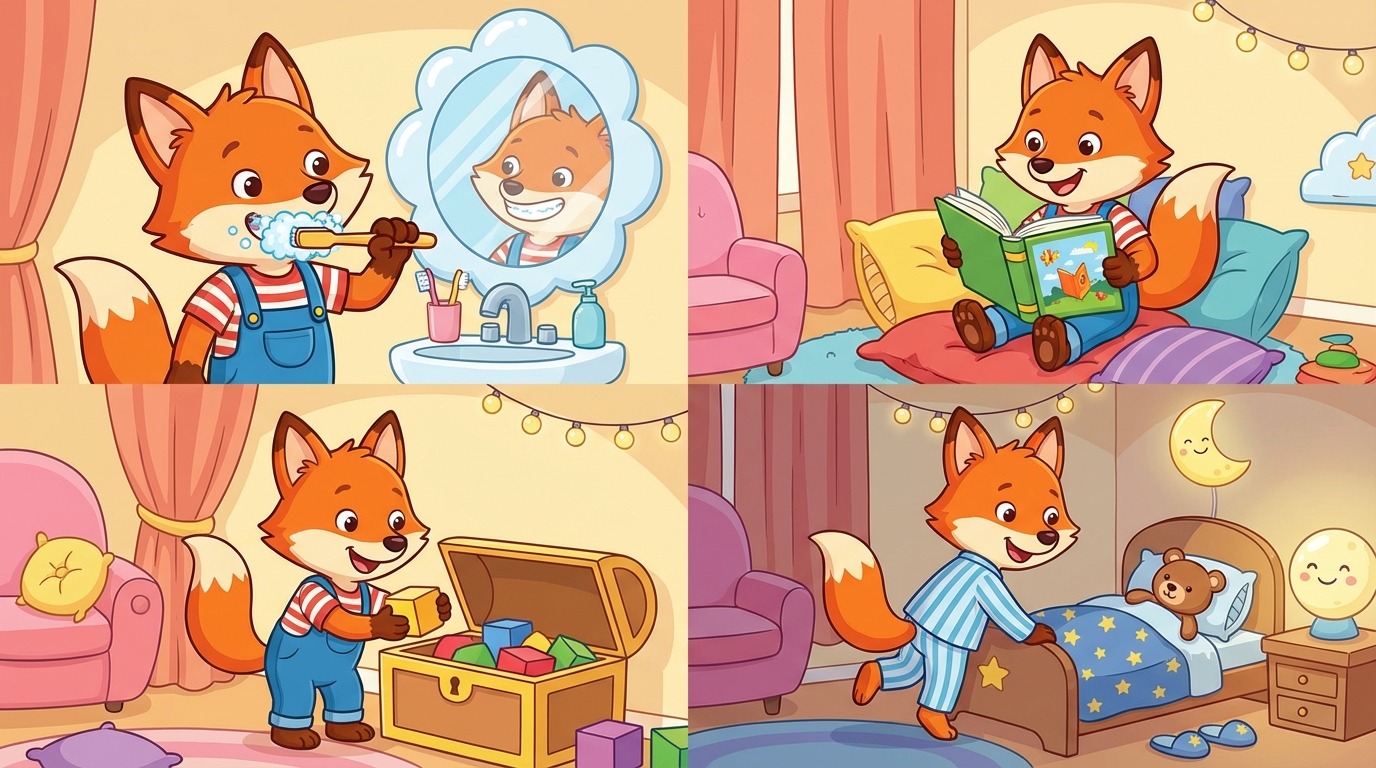
Chaminou Protocol over 4 weeks: morning rituals, daily activities, and visible progression
A short cycle focuses attention and creates a success setting. Week 1 targets politeness and listening. Week 2 secures hygiene. Week 3 establishes child organization. Week 4 develops mutual support, at school and at home.
Week by week action plan
Week 1: “I greet and listen.” Goals: say hello, thank, wait your turn. Week 2: “I take care of myself.” Goals: wash hands at good times, clean teeth, tissue and trash.
Week 3: “I organize myself.” Goals: bag ready the day before, tidy workspace, checked agenda. Week 4: “I support others.” Goals: lend materials, congratulate, offer help.
Each evening, three minutes are enough. Name the effort, explain the benefit, and stick a symbol. So, motivation does not drop. On Saturday, a Chaminou Certificate summarizes the week.
Case study: a CE1 class
In a class of 25 students, 12 goals structured 4 weeks. Fewer interruptions, better prepared backpacks, more frequent compliments. Families received a guide with encouragement phrases and symbolic rewards: drawing, story choice, mini badge. Evenings have become calmer.
For distracted students, a resource on the dreamy child helps understand the need for visual reminders. For math difficulties that disturb confidence, this guide on dyscalculia at school directs benevolent adjustments. The protocol remains the same: micro-goals and precise valuation.
Ritualizing morning rituals changes the day: gentle waking, quick wash, breakfast, bag check. Everyone knows what to do and when. Stress decreases, mood rises, and attention follows.
At the end of the cycle, a presentation moment strengthens oral skills. Each student shares a success, shows their certificate, and congratulates a classmate. This rite anchors a collective memory of progress.
Self-esteem and child responsibilities: building social autonomy with Chaminou
Self-esteem grows when the child experiences mastery. The Chaminou Certificate values the gesture, not the label. We praise “You tidied your desk and said thank you,” not “You are the best.” This nuance protects from comparison and strengthens the feeling of competence.
From courage to try to joy to cooperate
Encouragement rituals develop mutual aid. Each week, we invite noticing a quality in a peer. We learn to formulate a compliment, listen to the response, and smile. Little by little, the relational climate calms.
Imagination supports this work. A fictional companion, like Chaminou and friends, reassures and makes the framework playful. Symbols speak to 3-8 year olds: stickers, stamps, everyday hero gestures.
Adults benefit from harmonizing their stance. The resource on the role of early childhood professionals enlightens modeling: calm voice, direct gaze, short instructions. This consistency facilitates the appropriation of social codes.
Give a role, give meaning
When responsibility becomes a mission, commitment rises a notch. Simple roles work very well: timekeeper, distributor, reporter of praises. Each role has a visible indicator: timer, checklist, notebook. At the end of the week, the Chaminou Certificate crowns the mission.
In cycle 3 then early middle school, these mechanisms prepare citizenship. Respect of the framework, peer help, asking for help when needed. Adolescents explore broader autonomy, nourished by repeated successes.
And when a young one regresses? We adjust the goal, show the gesture again, and value the next success. The spiral “effort → recognition → new challenge” restarts. This is the strength of a positive education that knows learning also means failing and trying again.
Ultimately, a culture of mutual aid settles in: progress becomes collective and sustainable.
Concrete tools for child routine: charts, role plays, and printable resources
A well-thought visual support speeds up progress. The manners chart lists 3 to 5 goals, with color code and “I am proud of” space. It serves to value, not to punish. Short challenges are added to maintain momentum.
Ready-to-use kit
- 🗓️ Weekly “3 goals” chart: one look, one word, one sticker.
- 💬 Ready encouragement words: “You waited your turn, well done!”
- 🎭 Role plays: visitor reception, lending materials, conflict resolution.
- 🌈 Symbolic rewards: choose the story, a dance, a mini badge.
- ⏰ Evening and morning routines: bag check, clothes ready.
Role plays secure social learning. We simulate, then debrief: what happened, what helps, what will we try tomorrow? The child knows what to replay in real life. Tantrums lessen, cooperation grows.
To support evening reading, repetition becomes a pillar of attachment. This article on the request “Again the story!” explains in detail: Rereading is reassuring. Chaminou can serve as the thread: same hero, new variations.
| Week | Goals 🎯 | Indicators 👀 | Rewards 🌟 |
|---|---|---|---|
| 1 | Hello, Thank you, Wait your turn | Two greetings without reminder | Choose the evening song |
| 2 | Clean hands, Teeth, Tissue | Three washings at good times | Chaminou sticker |
| 3 | Bag ready, Tidy desk, Agenda | Ready in 5 minutes | Role play “super tidy” |
| 4 | Lend, Congratulate, Help | One compliment per day | Certificate of the week |
Practical tip: provide a Chaminou corner at child height. A few boxes, a hook for the bag, a magnetic board. The clarity of the place guides the clarity of the gestures.
One tool is never magical alone. Magic comes from regularity, joy, and descriptive feedback. This is the signature of a routine that lasts.
Ethical framework, safety, and continuity: guiding without surveilling family life
Valuing does not mean controlling everything. The Chaminou Routine values visible rituals, not surveillance. Announcing rules, asking for consent, and explaining the why protect the educational relationship. The child then grows in trust.
A calming environment
The physical setting matters. A simple, airy space, at hand’s reach, reduces friction. The child better locates their belongings, orients alone, gains time. The day starts calmer, morning rituals follow one another without shouting.
Preserving health is part of the basics. After swimming, small troubles can be prevented by informing oneself on swimmer’s ear. Fine hygiene, measured gestures: the routine is not only organization, it is daily care.
Avoid pressure, keep joy
The reward remains symbolic. A kind word, a simple privilege, a sticker. When competition sets in, motivation shifts to performance and crumbles. We keep modest goals, accept “off” days, celebrate resumption.
Adults harmonize their vocabulary. A positive education charter recalls three verbs: model, guide, recognize. At school, leisure center, home, consistency avoids contradictory messages.
Continuity builds solidity. After 4 weeks, we restart with new goals or consolidate the fragile ones. Children like to collect: series of certificates, varied themes. Consistency becomes attractive.
In some families, the arrival of a baby changes landmarks. For parents experiencing a pregnancy after 40, ritualizing key moments secures the older siblings. Everyone finds their place without blurring the routine.
To keep an inclusive posture, we adapt without stigmatizing. Particular needs converge around the same goal: landmarks, kindness, and concrete gestures.
Final watchword: recognize without surveilling, guide without controlling. This is how responsibility becomes a happy habit.
“When encouragement becomes a ritual, responsibility becomes a habit, and each child discovers they can grow as a daily hero.” 💫
Comment lancer la Routine Chaminou sans alourdir les soirées ?
Choisissez un seul thème pour 7 jours (politeness or hygiene) and 3 observable goals. Each evening, 3 minutes are enough: name the effort, explain the benefit, stick a sticker. Regularity takes precedence over duration.
Should I reward every successful gesture?
No. Prefer immediate but light recognition: a precise word, a smile, a thumbs up. Reserve the Chaminou Certificate at the end of the week to celebrate the journey, not the moment.
What to do if a child often forgets or regresses?
Calmly restate the goal, show the expected gesture, and reinforce the next success. Maintain modest goals. Once fluidity returns, increase difficulty in small steps.
How to avoid rivalry between brothers and sisters?
Assign differentiated goals according to age. Organize crossed compliments each week. The certificate values each story, without ranking or comparison.
Can Chaminou be adapted for specific needs?
Yes. Multiply visual landmarks, simplify language, and stabilize the order of steps. To better understand certain profiles, read landmarks on autism, daydreaming inattention, or dyscalculia, then pair these approaches with Chaminou rituals.