Growing at Every Stage: Child Development from 3 to 5 Years, Age by Age
| In Brief ✨ |
|---|
| At 3 years: language explodes, autonomy begins (dressing, eating), and gross motor skills become established 🏃♀️ |
| At 4 years: symbolic play becomes rich, coordination sharpens, and friendships form 🤝 |
| At 5 years: phonological awareness, beginnings of reading, logic and group projects 🧠📚 |
| Observe without comparing: every child progresses at their own pace, but landmarks guide support 🧭 |
| Play, talk, move: three simple levers to support development, every day 🎲🗣️🚲 |
| Act early if doubts persist, and rely on the parent–professional partnership 🩺👨🏫 |
Between 3 and 5 years, the child passes spectacular milestones. The body gains confidence, vocabulary soars, imagination overflows, and friendly bonds strengthen. This age-by-age guide illuminates key milestones without confining pathways. It offers concrete suggestions to nurture curiosity, manage emotions, and establish calming routines. The landmarks presented are based on recognized sources and practical experience in daycare and preschool.
Two characters will accompany the reading. Lina, 3 years old, loves running and stacking. Milan, 5 years old, invents stories and counts his marbles. Their life scenes illustrate how play, speech, and movement support the development of all areas: motor, language, cognitive, social-emotional, and autonomy. Parents and educational teams will find realistic ideas, variations, and tools to adjust support according to current needs.
Age 3 years: key milestones for motor skills, language, and autonomy
At 3 years, the body demands space, and thought searches for the right word. Lina climbs, jumps, and asks “why” in series. This turning point deserves careful attention to support drives, secure risk-taking, and value every success, even the smallest.
Gross and fine motor skills: exploring safely
Jumping with feet together, little slaloms, and throwing balls become frequent. A gentle course with cushions and tunnels develops balance. A Baby Stroller remains useful on long outings, especially with a little brother. Fine activities also progress: large beads, modeling clay, shape sorting, and triangular pencils.
To feed this need for action, a Fisher-Price block construction bin stimulates coordination. In the bathroom, an anti-slip step reinforces autonomy for hand washing. A gentle moisturizing cream, like Mustela, transforms the routine into a soothing sensory moment.
Language and cognition: boom of words and “whys”
Vocabulary quickly expands. The child combines sentences and describes actions. Narrating each gesture helps language structuring. Leafing through picture dictionaries and naming images together strengthens joint attention. An Avent training cup can also become a pretext to talk about colors and quantities.
To locate benchmarks from 31 to 36 months, a clear guide is available here: benchmarks 31–36 months. It details realistic milestones and reassures when the pace seems unusual.
Socialization and emotions: playing side by side, then together
At 3 years, parallel play dominates. The child observes peers, then enters a common scenario. Offering two copies of the same toy reduces competition. Putting words on emotions supports self-regulation: “You’re frustrated, we breathe, then try again.”
Quiet times matter as much as activity. A soft Petit Bateau blanket and a short book promote recovery. Nursery rhymes structure the day and reinforce articulation.
Daily autonomy: dressing, eating, finding one’s way
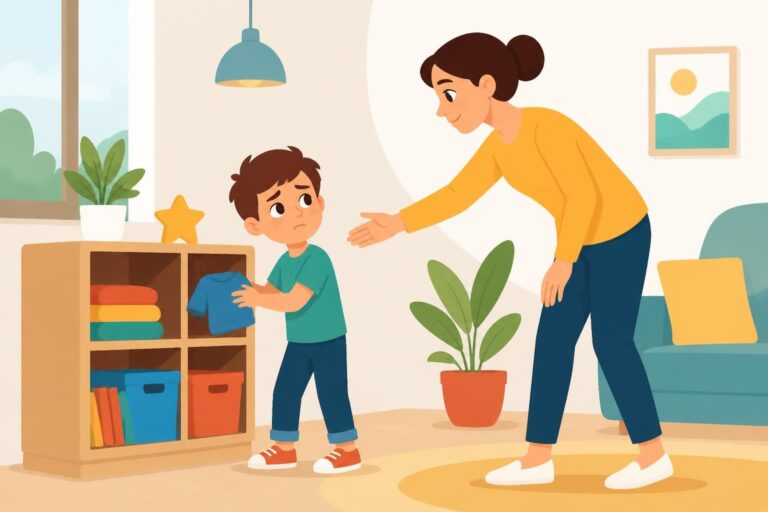
Pulling on a t-shirt, putting on Velcro shoes, and tidying a book become possible. Soft Vertbaudet clothes help successes. At mealtime, a light Dodie fork encourages “I do it myself.” The adult stays close but guides step by step. The effort is emphasized, not only the result.
A simple evening ritual calms: short bath, story, cuddle. Sleep repairs and consolidates the day’s gains. A parent can sing a lullaby, then leave, to support autonomous falling asleep.
For ideas of adapted motor warm-ups, this video offers accessible games.
Closing the 3-year page, one guiding idea for what follows: stay at child height, observe signals, and multiply small chances to act “almost alone.”
Age 4 years: abundant imagination, refined coordination, and first social rules
At 4 years, symbolic play takes on importance. Lina becomes a veterinarian for stuffed animals. She invents stories with props and negotiates roles. This inner theatre nourishes thought, language, and understanding of others.
Symbolic play and rich language
Offering a doctor’s case, figurines, and fabrics turns a corner into a clinic. Elaborate dialogues enrich syntax. The adult enters the story briefly, then withdraws. The goal remains to let the child drive narration. A “market” basket with empty boxes and small scales also feeds pretend play.
Nursery rhymes with gestures strengthen rhythm and articulation. For variety, these proposals are useful: nursery rhymes for awakening. They support memory, listening, and shared pleasure.
Coordination and pre-writing
Cutting with round-tipped scissors, gluing, and drawing straight lines refine grasp. Sensory activities, like pouring rice or handling semolina, improve finger control. For guided ideas, see these sensory activities.
Setting up a child-height table, a soft lamp, and varied pencils supports endurance. A whiteboard erases fears of mistakes. The child dares, retries, and grows fond of the graphic gesture.
Social rules and cooperation
Simple rules are better understood at 4 years. Taking turns, waiting one’s turn, tidying after activity. Cooperative games reduce performance pressure. Instructions benefit from being short and positive. A visual timer facilitates transition to the end of play.
Material setting and environment
A calm, well-organized corner reassures the child. Boxes labeled with photos aid autonomy. A comfortable mat and some sturdy Fisher-Price toys create a stable base. In textiles, a soft Petit Bateau pajama helps ritualize the night.
When a little brother arrives, the older child explores baby’s things curiously. Leafing through The Book of Birth by the family opens discussion about growth. The Natalys brand often evokes preparations. The 4-year-old likes to “help” with an imaginary suitcase for maternity.
Games to offer at 4 years
- 🎭 Free dress-up with fabrics and hats
- 🧱 Blocks of varied sizes for building and storytelling
- ✂️ Cutting strips, gluing on lines
- 🎲 Short cooperative games with simple rules
- 🎵 Nursery rhymes with gestures and rounds
To support this phase, one compass remains valid: the more open the play, the more the child invents. Language follows, and confidence grows.
Age 5 years: pre-reading, logic, and lasting friendships for a successful start at school
At 5 years, Milan strings stories together and is interested in the sounds of words. He cooperates more and enjoys multi-step projects. The desire to write his name arrives, sometimes with contagious pride.
Phonological awareness and beginnings of reading
Playing with rhymes, chanting syllables, and spotting the initial sound foster pre-reading. A sound lotto and rhyme books support the ear. The adult models by pointing to each read word. Reading becomes a shared adventure, neither test nor race.
To enrich perspectives, a comprehensive file on children’s intellectual development clarifies links between language, memory, and attention.
Logic, numbers, and problem-solving
Sorting by size, completing sequences, and solving a 24-piece puzzle boost logical thinking. Board games introduce counting and rules. The child learns to lose and replay. Strategy is encouraged without overloading the mind.
Gross motor skills and body confidence
At 5 years, coordination matches biking and scooter riding. Hopping gains stability. A park outing offers real opportunities to climb and assess risk. A well-fitted helmet reminds the rule “we protect what matters.”
For playful ideas on sounds and rhyme, a video search can inspire mini-routines at home.
Outdoor activities sometimes require car trips. A Bébé Confort car seat reassures for sporty outings. A breathable Petit Bateau outfit respects effort. On a long walk with the youngest, a Baby Stroller eases the siblings’ pace.
Emotional regulation and friendships
Cooperative games and team challenges teach listening and negotiating. Emotion is validated, then a solution is sought. A “quiet corner” with cushion, hourglass, and emotion cards offers a refuge. Talking about friendship, respect, and consent naturally fits into bedtime stories.
Final checkpoint: at 5 years, the child likes choosing small challenges. Keep the playful spirit, adjust difficulty, and celebrate effort.
Supporting 3–5 years: calm routines, chosen games, and well-thought environment
Between 3 and 5 years, the environment is leverage. Clear organization and stable rituals free energy for playing, talking, and moving. Everyday objects become autonomy supports when within reach and well-chosen.
Soothing rituals and well-being
A consistent evening routine reduces the child’s mental load. Short bath, story, breathing, sleep. A suitable Mustela massage oil transforms calming returns into sensory appointments. Relaxation practices earn their place starting in preschool. For more, these leads on child well-being and relaxation offer simple ideas.
Talking, reading, singing daily
Board books give way to longer albums. We anticipate the story, guess the meaning of a word from the picture, and laugh at repetitions. Nursery rhymes keep their strength, including for 5-year-olds. Useful resources are gathered here: language-stimulating nursery rhymes.
Motor games and outings
A balanced schedule alternates movement and rest. The park, free dance, and home relays maintain endurance. A balance bike prepares for biking. On outings, a reliable Dodie or Avent water bottle ensures hydration. Materials don’t need to be expensive but gain from being sturdy and simple.
Material and space organization
Transparent boxes, a low shelf, and framed images facilitate autonomous tidying. A cozy reading corner, an activity table, and a music basket form three clear zones. In textiles and décor, Vertbaudet offers modular solutions that evolve with age. Sturdy Fisher-Price toys secure repeated explorations.
A typical week, without overload
- 📚 Monday: long story + rhyme of the day
- 🏃 Tuesday: mini home motor course
- 🎨 Wednesday: painting or modeling clay
- 🎵 Thursday: nursery rhymes with gestures, rounds
- 🌳 Friday: nature outing, leaf collection
- 🧩 Saturday: family puzzle, cooperative game
- 😴 Sunday: short relaxation, quiet bath
3–5 years milestones by domain
This summary table helps visualize common achievements while respecting individual variations. It serves as a discussion support among referring adults.
| Age | Motor 🏃 | Language 🗣️ | Cognition 🧠 | Social/Emotions 🤝 | Autonomy 🌟 |
|---|---|---|---|---|---|
| 3 years | Jumps feet together; throws/catches large ball | Short sentences; names actions | Simple sorting; puzzles 6–12 pieces | Parallel play; names basic emotions 🙂 | Dresses partially; eats with utensils |
| 4 years | Hops; pedals | Simple storytelling; asks “why” | Simple logical sequences; counts objects | Associated play; waits turn ⏳ | Washes hands; tidies by categories |
| 5 years | Coordination on bike/scooter | Detailed stories; rhymes | Initial phonemes; game strategies | Cooperative play; better regulates frustration 💪 | Dresses alone; participates in chores |
Practical summary: a clear framework, limited choices, and open games put the child in success. The adult observes, adjusts, and keeps the relationship at the center.
Milestones, warning signs, and partnership with professionals for 3–5 years
Observing reassures, acting early protects. Landmarks guide without confining. When concern persists, the alliance between parents, teachers, and caregivers opens simple, often very effective solutions.
Flexible landmarks, only child
Some children speak early, others run early. Strengths are valued, slower points supported. A shared observation notebook avoids approximations and highlights progress. Moderate gaps are frequently filled with routine adjustments and targeted games.
Warning signs to consider
At 3 years, if no understandable sentences by a close person, a language assessment is considered. Lack of interest in shared play also questions. At 4 years, marked difficulties coordinating scissors or pencil, despite training, merit advice. At 5 years, if rhymes and syllables remain unreachable after playful attempts, consult. Look at the whole picture, never an isolated sign.
Who to contact and how to proceed
The pediatrician or primary care doctor remains the first contact. The speech therapist, psychomotor therapist, and occupational therapist provide precise assessments. The preschool educational team observes daily and proposes adjustments. A common, short, reassessed plan often delivers quick and measurable results.
Useful resources for deeper insight
To illuminate relational dimensions, this file on social development offers concrete landmarks. On thought and memory, this overview on child intellectual development helps situate realistic expectations.
Case studies: Lina and Milan
Lina, 3 years old, struggled to cut. One month of games with tweezers, large beads, and firm clay was enough to re-launch the gesture. Milan, 5 years old, got frustrated with board games. Shifting to cooperative games, then gradually back to classic rules, calmed the sessions. In both cases, fine observation and precise adjustment made the difference.
A final principle summarizes the approach: listen to the child, agree among adults, and advance by small visible steps. Progress consolidates, confidence follows, and the joy of learning brightens daily life.
Which games support language development between 3 and 5 years?
Imitation games, repetitive stories, nursery rhymes with gestures, and rhyme games boost vocabulary and articulation. Speak in action, reformulate without strict correction, and read a short book daily.
How to promote autonomy without causing failure for the child?
Break tasks down, offer limited choices, and use suitable materials (soft clothing, step stools, light cutlery). Value effort and accept imperfection. Stable habits secure and speed up progress.
When to consult if concern persists?
If a delay disrupts daily life or if doubt lasts several weeks despite accommodations, talk to the pediatrician. Preschool and specialists (speech therapist, psychomotor therapist) complete the evaluation.
Which everyday items help development?
A simple water bottle (Avent or Dodie), sturdy blocks (Fisher-Price), varied books, easy clothing (Petit Bateau, Vertbaudet), and a secure car seat (Bébé Confort) make autonomy accessible and safe.
Should screens be totally avoided at 3–5 years?
Limited, accompanied, and chosen use is preferable. Prioritize active and social activities. If a screen is used, comment on the story, move afterward, and keep the screen away from bedtime.