
Tantrums Anger 5 Years: Managing tantrums in children aged 5 years and older.
| Short on time? Here’s the essentials ⏱️ |
|---|
| Anger is a normal emotion in a 5-year-old child and can mask tiredness, fear, or injustice 😤 |
| Staying calm, validating the emotion, and offering soothing techniques reduces the duration of anger outbursts 🫶 |
| 5 C rules (clear, concrete, consistent, coherent, consequential) secure child behavior 📏 |
| After the outburst, debriefing, repairing, and practicing self-control accelerate emotional development 🧠 |
| Consult if outbursts become frequent, violent, or interfere with school and relationships 👩⚕️ |
At the age of five, emotions still overflow. The brain is developing, tolerance to frustration varies, and social cues are refined. In this context, anger outbursts — or tantrums — are neither tantrums nor signs of educational failure. They often signal an unmet need, stress, or misunderstanding. By focusing on an adjusted parent-child communication, accessible soothing techniques, and consistent reference points, the adult helps the child transform the storm into learning.
Studies in developmental psychology confirm that a stable framework, combined with active listening and positive reinforcement, supports emotion management and encourages self-soothing. The goal is not to extinguish anger but to learn to read and channel it. Over weeks, each step toward self-control builds confidence. A winning path for the child, as well as for the family, which regains breath, coherence, and patience.
Understanding anger at 5 years to better act: triggers, developing brain, and early signals
Observe first. At five years old, anger often arises when the need for control, justice, or autonomy hits a limit. A refused snack, an interrupted game, an unclear rule are enough. Behind the explosion lie tiredness, hunger, sensory overload, anxiety, or fear. The child struggles more than manipulates.
On the neurodevelopmental level, the prefrontal cortex, the conductor of inhibition, remains immature. The limbic system reacts quickly. This asymmetry explains why the storm builds in seconds. Demanding adult-level mastery would be unrealistic, while training micro-skills becomes strategic.
Typical triggers to spot early
Sensitive factors can be tracked with an observation journal. Disrupted routines, unanticipated transitions, and vague expectations often recur. A telling example: Noah refuses to leave the park. He is not rejecting the adult; he defends a moment of unfinished pleasure. Announcing the end five minutes before and offering an alternative reduces the impact.
Putting the 5-6 year stage in perspective sheds light on the developmental margin. This age explores friendship, group rules, and emerging regulation. To deepen understanding, consulting this clear reference on affective development at 5-6 years helps adjust expectations and interventions.
Neuro-affective reading and putting feelings into words
Naming the emotion calms the alarm system. Saying “You feel frustrated because you want to continue” helps reconnect language. The child feels understood, which lowers intensity. Gradually, they will reuse these words before the storm. It’s active learning, not sudden revelation.
Comparing with the 3-4 year period helps relativize. Anger at 3-4 years is more frequent, but the mechanism is similar. At five, tools become more verbal and cooperative. It shifts from extinguishing fire to prevention by anticipation.
- 🧭 Frequent triggers: transitions, perceived injustice, vague instructions
- 🍽️ Basic needs: hunger, tiredness, need for movement
- 🧠 Internal factors: fear, anxiety, sensory overload
- 🧩 Key solutions: announcing transitions, limited choices, validating the emotion
Remember this changes everything: anger is not the enemy. It alerts and guides educational adjustments. At this stage, understanding is already soothing.
Responding during the outburst: soothing techniques, parent-child communication, and non-violent boundaries
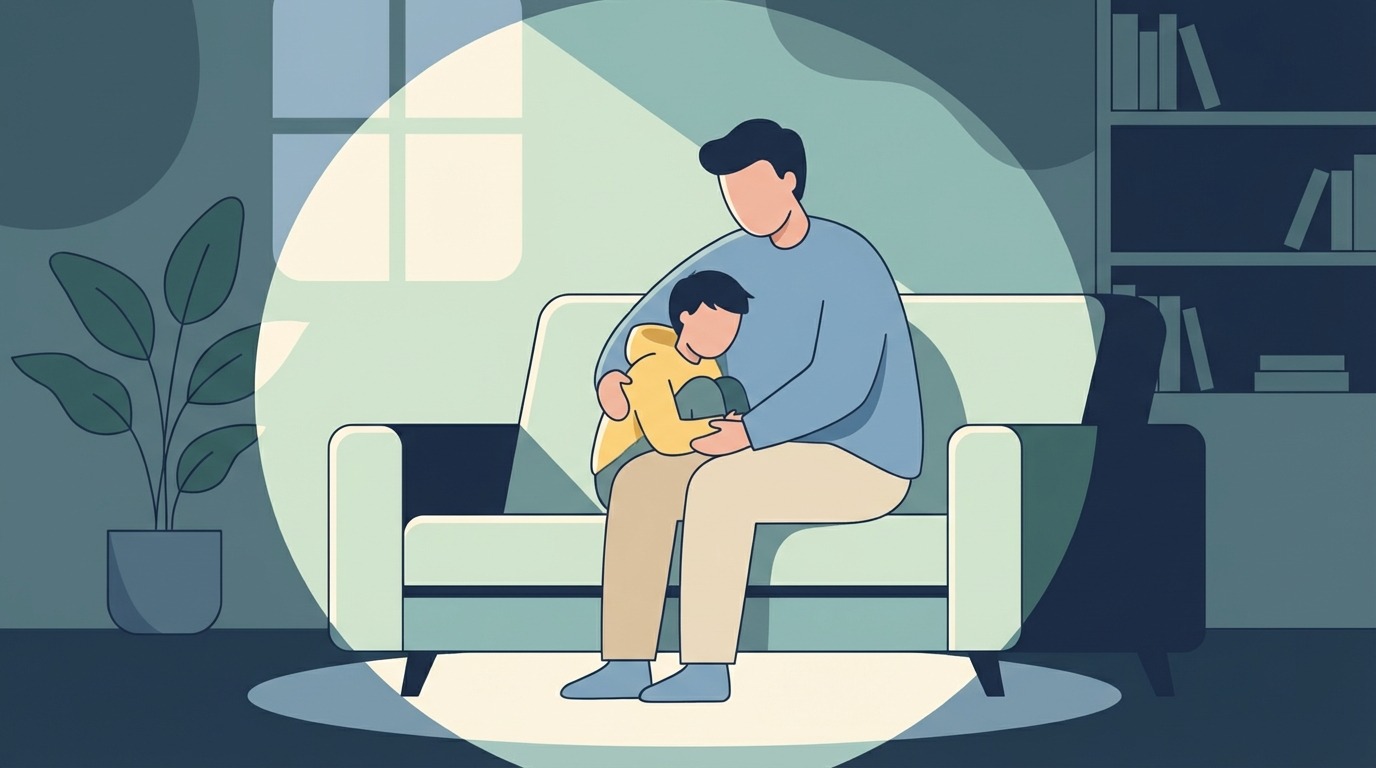
At the heart of the storm, priority is emotional and physical safety. The adult keeps a calm voice, speaks little, offers a quiet space, and provides stable presence. Trying to reason prolongs the storm. Validating, containing, and waiting for calm are more effective.
A winning approach follows three brief actions. First, name the emotion: “You are very angry.” Then, offer an option: “Would you prefer to breathe or sit in the quiet corner?” Finally, regulate together with a simple gesture: coherent breathing, deep pressure on the shoulders if the child agrees, or a reassuring hug.
Minute-by-minute protocol
If Maya screams and throws a cushion, the adult calmly intervenes and protects others. They state the rule: “No hitting.” They offer a repair later. The logical consequence follows behavior without humiliation. A thrown toy is put away for the evening; it will be returned tomorrow. Gentle firmness creates trust.
To broaden the range of group actions, a resource on the art of intervening with different children helps adjust support according to profiles. Adjusting without labeling is the goal.
When a violent gesture occurs, the limit must be clear: “I love you and I stop you.” We step away if needed, then plan the repair. Emphasizing learning and responsibility, not shame, protects self-esteem while reframing child behavior.
Tantrums decrease when the child feels the adult controls their own emotions. A regulated parent becomes a resilience tutor. Presence is worth more than a long speech.
After the outburst: repair, understand cause, and practice self-control
When the emotion decreases, the learning window opens. A short silence helps the nervous system stabilize. Then comes the three-step debrief: tell, name, seek solutions. The adult listens first, then reformulates, finally co-constructs a strategy.
An effective example: “What made you angry?”, “Where did you feel it in your body?”, “Next time, shall we try raising your hand or going to the quiet corner?” These questions strengthen emotion management and self-efficacy. The child perceives that they can influence what happens next.
Repair and logical consequences
Repair embeds learning into action. A torn drawing can be redone, a hurtful word can be replaced by a restorative message. Courage to try is valued, not perfection. This logic structures emotional and social development without shifting into harsh punishment.
Concrete tools matter. An “anger journal” for drawing, a body map of sensations, a calming box (stress ball, breathing images, noise-cancelling headset) train patience and self-control. Progress is seen in micro-gestures.
| Rising signals 🌡️ | Quick responses 🔧 |
|---|---|
| Clenched fists, red cheeks | “4-4” breathing with counting 🫁 |
| Avoidant gaze, escalating cries | Quiet corner and visual timer ⏳ |
| Clear refusal, “it’s not fair” | Limited choices and reformulation 🧩 |
Closing the debrief with a short plan promotes commitment. “Next time, you show me the ‘pause’ card and we breathe together.” Repeated, this ritual installs protective habits.
Preventing outbursts: routines, 5 C rules, positive reinforcement, and sensory tools
Prevention means marking out the day. Predictable schedules for meals, play, homework, and bedtime stabilize the internal state. Transitions benefit from being announced with a visual timer. The child anticipates and adjusts better.
Effective rules follow the 5 C. They are clear, concrete, consistent, coherent, and consequential. Saying “We walk in the hallway” rather than “We don’t run” directs action. Positive reinforcement anchors these expectations by valuing each observable progress.
The 5 C applied daily
- 🧾 Clear: formulate in simple, positive words
- 🧱 Concrete: describe the expected action, not the prohibition
- 🔁 Consistent: same rule, same response, same calm
- 🎯 Coherent: adult model aligned with the rule
- 🔗 Consequential: logical and explained consequence
Offering framed choices supports autonomy: “Do you put away the Legos now or in ten minutes?” The child feels an actor. Emotions regulate faster when the environment offers grips and options.
Foundations are built early. To understand the trajectory of self-regulation, exploring this guide on self-control between 1 and 3 years illuminates continuity of skills. Current prevention relies on these foundations.
Supplementing with playful supports reinforces motivation: emotion wheel, pictograms, puppets. An evening ritual to “empty the bag” through drawing or three breaths guides falling asleep and reduces next-day tantrums. Prevention settles in repeated small acts.
When to seek help and which advanced approaches to adopt: emotional coaching, school-family cooperation
Sometimes, the intensity, frequency, or school impact of anger requires an evaluation. Warning signs include isolation, recurrent aggression, repeated conflicts, learning delays, or verbalized distress. Better to consult early than exhaust the relationship.
A specialist (psychologist, neuropsychologist, psychoeducator) identifies root factors and proposes a plan. Therapeutic play sessions, social skills training, or a self-regulation program structure lasting progress. Family and school co-pilot.
Advanced tools that make a difference
“Emotional coaching” shapes a firm and empathetic presence. It follows five verbs: observe, name, validate, guide, train. In practice, the adult becomes an emotional buffer while transferring concrete tools to the child. Self-soothing routines become reflexes.
For group settings, training the educational team in common scripts avoids incoherence. A sheet “when X screams, we…” aligns responses and reassures the child. Smooth partnerships strongly reduce incidents.
Additionally, regular physical activity, outdoor time, and creativity (drawing, music) act as pressure valves. A journal can host frustrations that dare not be expressed. Regularity nurtures patience and inner security.
To refine understanding of earlier stages and differentiate maturity from difficulty, these milestones on development at 3-4 years offer a useful reference. The longitudinal view helps choose the right tool at the right time.
Remaining attentive to successes, even subtle ones, accelerates the path. Each targeted praise builds a skills staircase toward solid emotional autonomy.
“Transforming anger into language is giving the child a compass for life.”
How to differentiate tantrums and real anger in a 5-year-old child?
Observe the context and intensity. A tantrum often aims for an immediate gain, while real anger follows an emotional overflow (tiredness, injustice, fear). Validate the emotion, then offer a framed choice. If the child can calm down and cooperate, regulation progresses.
Which soothing techniques work best during an outburst?
Speak little and calmly, name the emotion, offer a quiet corner, guide simple breathing (4 seconds inhale, 4 exhale), offer a hug if the child accepts. Sensory objects (stress ball) and a visual timer also help.
Should you punish after an anger outburst?
Favor logical consequences and repair over punishment. The goal is learning: understanding the cause, repairing, then training an alternative strategy for next time. Punishment alone does not teach regulation.
When to consult a professional?
If outbursts become more frequent, intense, violent, interfere with school or relationships, or if the child expresses distress. An assessment helps identify root factors and establish an adjusted intervention plan.
How to involve the school in emotion management?
Share useful information with the teacher, align a few simple scripts (same words, same gestures), and follow a coherent plan. Common visual tools and regular feedback smooth cooperation and reassure the child.