Eczema Itchy Skin: Eczema in children: skin and itching.
| Short on time? Here’s the essentials ⏱️ |
|---|
| 👉 Child eczema is a non-contagious inflammatory dermatitis, marked by flare-ups. |
| 🧴 A routine of skin care and hydration reduces itching and relapses. |
| 🌪️ Key triggers: excess hygiene, cold, dust mites, allergies, stress, and pollution. |
| 🛌 Sleep is often disrupted; dedicated tools help the family recover. |
| 🧪 Treatments range from emollients to targeted therapies, depending on age and severity. |
| 🧠 Understanding the itch–scratch cycle changes the daily management. |
| 🧒 Many children see eczema ease before puberty if the skin ecosystem is protected. |
Redness, plaques, dry, tight skin, itching that wakes at night: eczema in children dictates its own rhythm. Yet, very concrete keys soothe family life. The modern approach combines skin science, simple actions, and environmental strategies. It aims for a clear goal: fewer flare-ups, more serenity.
The mechanisms are known. The skin barrier is fragile, inflammation escalates, and scratching sustains the vicious cycle. However, every family experiences a different story. One baby reacts to cold, another to stress, a third to detergent. Thus, the response must be personalized. Between hydration, bath rituals, fabric choices, and medical follow-up, there is real room to maneuver. And when school, sports, or sleep falter, targeted solutions allow progress without giving up childhood.
Childhood eczema: skin mechanisms, itching, and inflammation
At the heart of eczema, the skin loses its role as a shield. Ceramides decrease, water evaporates, and irritants penetrate more easily. This permeability stimulates the immune system. It triggers a local inflammation, visible as red plaques and diffuse irritation. This hypersensitive state is often called atopic dermatitis in children.
Pruritus, or itching, is not a detail. It activates cutaneous nerve fibers and causes a persistent neurological loop. The child scratches, the skin damages, microbes exploit microfissures, and the inflammatory response intensifies. This “itch–scratch–itch” cycle explains fatigue and night awakenings. Breaking this cycle then becomes a therapeutic priority.
Early onset and evolution in childhood
First plaques often appear in the very first months. The cheeks and convexities are affected first. Then, folds take over with age. Many children see improvement by puberty. This horizon motivates families. It encourages persistence in skin care and daily hydration.
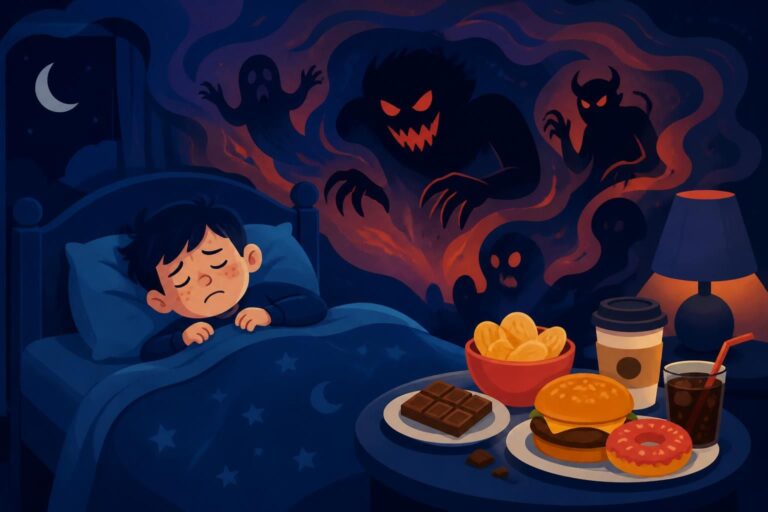
Triggers vary widely. Excess hygiene with harsh products immediately irritates. Poorly ventilated interiors increase dust mite load. Cold cracks the skin barrier. Too early dietary diversification can also destabilize an already sensitive terrain. Hence the interest in a graduated and coherent action plan.
Clinical landmarks and practical decisions
A concrete example helps visualize. Léa, 3 years old, wakes crying every other day. Her skin is dry despite a “for everyone” cream. In the evening, baths that are too hot and a scented gel worsen the situation. By adjusting lukewarm water, replacing the gel with a syndet, and applying a rich emollient within three minutes, nights lengthen. The logic is simple: restore the barrier and soothe the inflammation.
To go further, a health directory can guide parents toward reliable and structured concepts. A useful starting point is this health index which allows sorting themes and avoiding misconceptions. The essence remains the same: think skin barrier, gentle routine, and trigger identification. This triad avoids many wrong turns.
In short, understanding the engine of childhood eczema means taking back control: less anxiety, more targeted actions, and a daily life that breathes better.
Recognizing signs by age and avoiding common confusions
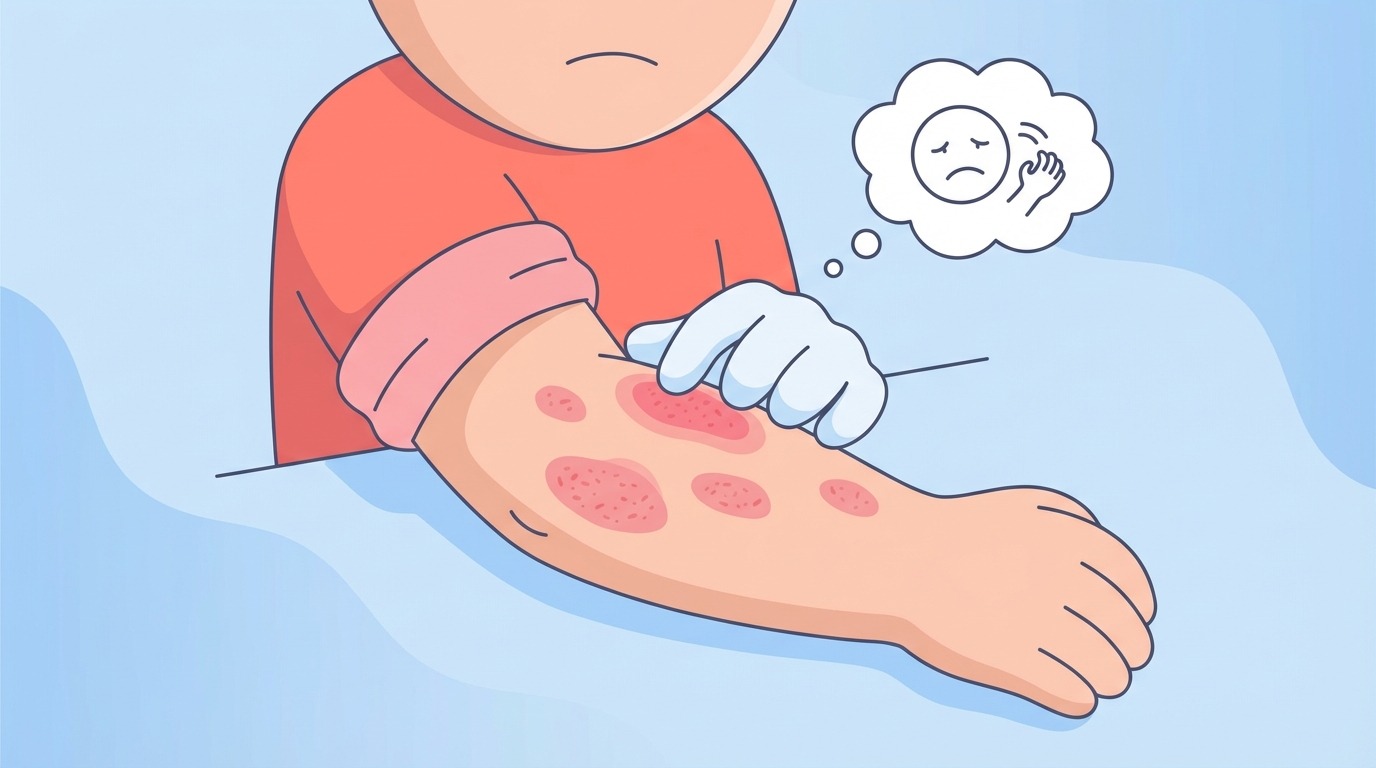
Infants, preschool children, then schoolchildren do not express eczema in the same way. In babies, irritation often affects cheeks and forehead. It forms red, dry, sometimes oozing plaques. As the child grows, folds of elbows and knees become preferred zones. Wrists and ankles can also become inflamed.
Sleep provides valuable clues. The infant does not really scratch but is restless, cries more, and sleeps poorly. In schoolchildren, linear scratches reveal nocturnal itching. Morning fatigue, unusual irritability, and concentration difficulties at school complete the picture. These signals invite reviewing evening routines and skin care.
Differential diagnosis: eczema or other cause?
The skin of little ones sometimes shows bumps or redness not related to eczema. To better distinguish, this guide about baby bumps and redness provides useful visual landmarks. Some eruptions are linked to heat, others to localized irritants, others to benign infections. Methodical observation avoids inappropriate treatments.
A common confusion involves scabies. Grooves, intense nocturnal itching, and involvement of the entire family point to this clue. To clear doubts, this practical article on scabies in children describes signs and management. In case of uncertainty, medical advice enables rapid and targeted treatment. Thus, eczema is not worsened by unnecessary interventions.
Body areas and social impact
Plaques visible on the face or hands impact self-esteem. At school, a child may avoid painting, modeling clay, or sports for fear of irritating their skin. They may hide their arms under long sleeves even in summer. These attitudes signal psychosocial impact. Adults can then explain eczema to peers and teachers. Simple education defuses teasing.
In daily life, managing pruritus is anticipated. Short nails, soothing cuddly toy, thermal mist in the bag, and cotton jacket limit risks. A well-equipped child feels empowered. They dare to say when it itches. They learn to tap the area rather than scratch. These micro-habits offer concrete victories.
Differentiating skin presentations and noticing social impacts helps build a solid plan. Early proper reporting limits flare-ups and protects confidence.
Daily skin care: hydration, bath, textiles, and effective actions
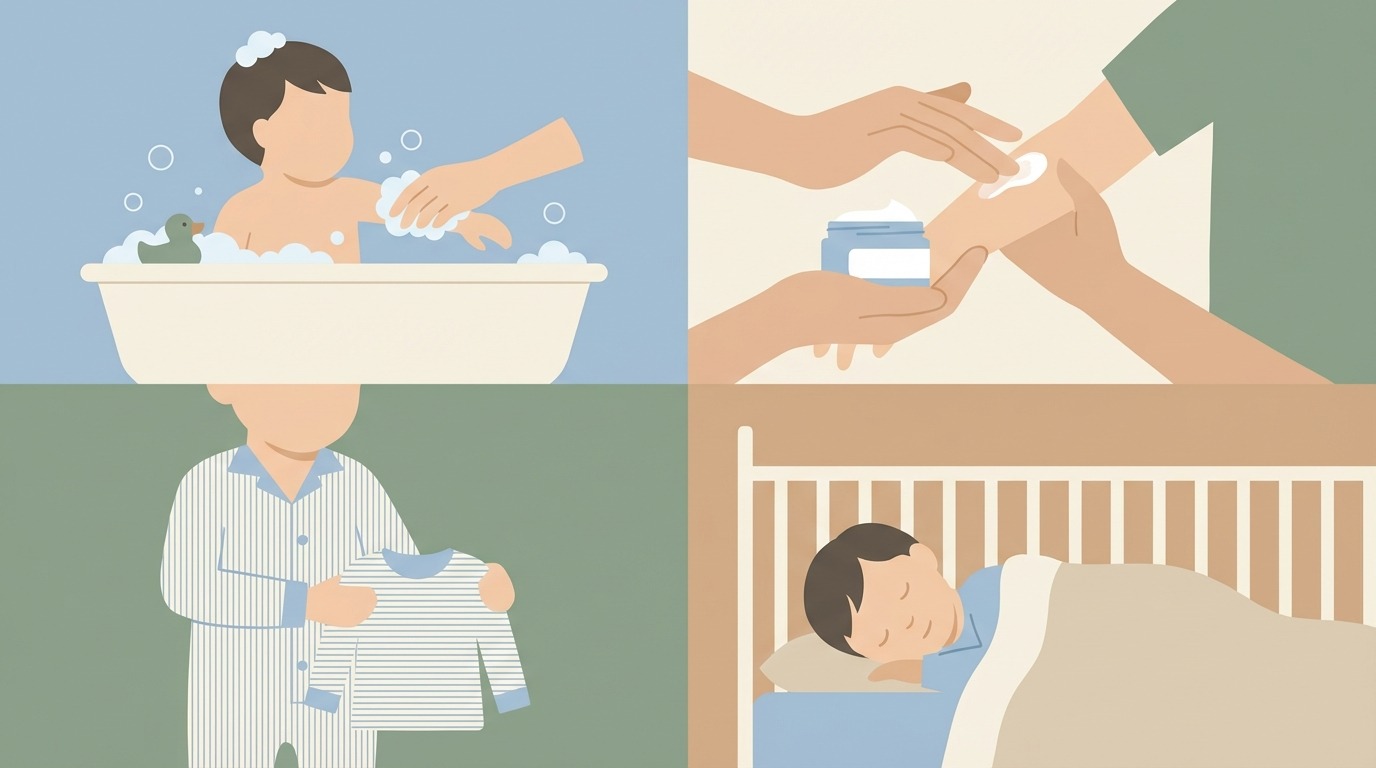
The basis remains always hydration. A rich emollient, applied morning and night, strengthens the barrier. It is also used after each bath, within three minutes. This “golden time” locks water in the skin. The texture is chosen according to the season: balm in winter, cream in spring, and sometimes lotion in summer on non-lesioned areas. Regularity counts more than brand.
The bath must be lukewarm and short. A fragrance-free syndet replaces classic shower gel. Pat the skin with a soft towel. Then apply the emollient without rubbing. This sequence reduces irritation. It also improves night comfort. After a few days, children ask for it themselves because it relieves.
Practical routine and proven tips
To move from theory to action, these 8 practical tips guide step by step. They recall the interest of cotton clothing, washing at 30–40 °C with gentle detergent, and extra rinsing. They also stress the environment: air out, dust gently, and avoid scented diffusers. Each detail limits cumulative inflammation.
The sun requires specific vigilance. Photoprotection protects the already fragile barrier. This guide on children’s sunscreen helps choose suitable filters and dose quantity. The goal remains clear: enjoy the outdoors without overheating the skin or triggering new flare-ups.
- 🧴 Hydrate twice daily with a rich emollient (skin care)
- 🚿 Prefer a lukewarm, short bath with fragrance-free syndet
- 👕 Choose soft textiles: cotton, flat seams, no wool
- 🧼 Wash new clothes before use, gentle detergent, longer rinse
- 🌬️ Air the room, vacuum with HEPA filter if possible
- 🧊 Use cold packs or sprays to break the itching
To visualize an effective routine, a short tutorial video can help anchor gestures and dosages. It reassures and motivates the child to participate.
Technical textiles can also help. Pajamas with integrated mittens limit night scratching. Soft silicone dressings protect fissured zones. Additionally, well-supervised “wet wraps” calm flare-ups. Apply a dermocorticosteroid on the plaque, then a wet dressing, and finally a dry one. Relief is often rapid when the protocol is respected.
This toolbox does not replace medical advice in case of extensive or oozing lesions. However, it offers a solid base. With regularity and gentleness, the skin becomes more supple and tolerant. Evenings become calmer and the child regains their bearings.
Triggers, allergies, and prevention: dust mites, cold, pollution, and smart management
Triggers are often multiple. Eczema loves “too much” contexts: too much hygiene, too much heat, too much friction. Conversely, poorly ventilated interiors increase dust and mites. Prevention consists in balancing. Clean without over-washing. Heat without drying. Dress without compressing.
On the allergy front, vigilance is required. Eczema is not an allergy itself but reveals permeable skin. Some children combine eczema and food or respiratory allergies. The peanut question often comes up. To understand safe introduction strategies, this guide on peanut allergy management enlightens families. Dialogue with a professional then structures trials.
Mapping factors and useful responses
Rather than a theoretical list, an actionable map structures priorities. The table below links trigger and response. It avoids changing everything at once. It proposes durable micro-adjustments. This granularity matters for the child’s adherence and family morale.
| Trigger ➜ Preventive Response ✅ |
|---|
| ❄️ Dry cold ➜ More occlusive balm in the evening, soft scarf, humidifier in the room |
| 🌆 Urban pollution ➜ Targeted airing in the morning, face rinse on return, barrier emollient |
| 🧽 Excess hygiene ➜ Reduce bath frequency, syndet, no perfume, careful rinsing |
| 🕷️ Dust mites ➜ Anti-mite covers, regular 60 °C washing of bedding, daily ventilation |
| 🌞 UV and heat ➜ Shade + hat + pediatric sunscreen, avoid overheating |
| 🍽️ Suspected foods ➜ Food diary, medical advice, targeted tests if needed |
| 🧠 Family stress ➜ Soothing routines, guided breathing, structured parental support |
In real life, changing one thing at a time remains the best route. For example, dim lights, start a short audio story, then hydrate with slow gestures. These transitions soothe the nervous system, which reduces the itching sensation. Pruritus is partly neurological. Calming it “from outside and inside” is thus logical.
Finally, prevention includes school and sports vigilance. Flare-up periods are reported. Outings are anticipated with a kit: emollient, spray, soft dressing. A well-prepared child is less exposed to over-irritations. Eczema becomes discreet when the environment becomes an ally.
Current treatments and innovations: from dermocorticosteroids to targeted therapies, without forgetting daily care
Daily care is not always enough. During flare-ups, the dermocorticosteroid of appropriate class quickly calms inflammation. Calcineurin inhibitors are useful as follow-up, especially on the face and folds. “Wet wraps” potentiate the effect in stubborn flare-ups. Medical follow-up adjusts molecules and duration. The goal is clear: treat quickly, then space out.
In recent years, biotherapies have changed the game for moderate to severe forms. In eligible children, monoclonal antibodies precisely target inflammatory pathways. They reduce crises, irritation, and itching. Topical JAK inhibitors exist for adolescents, depending on authorizations in progress. Access is discussed with a dermatologist experienced in pediatrics.
Therapeutic adherence and safety
Proper use makes all the difference. Cream is dosed in fingertip units. Active areas are treated while sparing healthy skin. Then, a “weekend” or maintenance schedule is followed according to instructions. This strategy limits relapses. It avoids spirals of short but too close treatments.
The skin’s microbial load also deserves attention. Baths with diluted bleach, strictly supervised, can reduce superinfections in some children. There is no improvisation. A clear, dated protocol is followed. Benefit appears when lesions ooze or get infected frequently.
A educational video on wet dressings or correct topical application can reassure. It ensures dosing and improves overall efficacy.
Medication is only one pillar. The other remains the trust relationship, therapeutic education, and seasonal adjustment. Winter requires richer balms. Summer requires rigorous photoprotection. Growth demands adapted clothing sizes. A logbook facilitates these adjustments and structures family memory.
Ultimately, treating pediatric eczema means orchestrating science, routine, and listening. This alliance reduces hospitalizations, protects sleep, and makes days lighter.
Sleep, school, and family life: calming itching and restoring confidence
Sleep quickly derails when itching sets in. A short, always identical ritual prepares the nervous system. Soft light, white noise, calm hydration, then a story. To support this routine, digital tools adapted for toddlers exist. Resources on baby sleep apps help set schedules and cycles.
When skin itches at night, scratching relieves momentarily but prolongs the flare-up. Mittens or smooth cotton gloves limit lesions. A fragrance-free aloe vera gel, validated for age, can also soothe. If the child wakes, thermal water mist and a short cuddle often suffice to restart. The key is repeating the same gestures.
Emotional impact and stress management
Stress does not cause atopic dermatitis but worsens it. Life transitions, school start, or a quarrel can precipitate a flare-up. Learning to decode these moments helps prevent them. Landmarks on stress in young children offer concrete tools: butterfly breathing, calm corner, and simple words to name sensations. Pruritus decreases when emotional pressure diminishes.
At school, informing the teacher avoids misunderstandings. The child can apply emollient during recess if needed. A dedicated kit reassures: neutral cream, soft dressing, tissues, spray. Sports activities are not forbidden. They are simply prepared: lukewarm shower after effort, hydration, and breathable textiles.
Family coordination and habit anchoring
Families benefit from sharing roles. One prepares care, another reads the story, a third checks the room. A weekly to-do list avoids mental load. Grandparents also receive key instructions. Thus, the child finds the same gestures everywhere. Coherence soothes their nervous system and skin.
During the day, sensory breaks prevent irritation. Five minutes of breathing, a cool glove placed on the plaque, then a calm game reignite momentum. Teachers appreciate having these practical sheets. They provide a framework and set healthy limits. The message remains positive: eczema is manageable, and childhood continues.
When nights finally become more stable, the whole family breathes. Parents smile more. The child laughs more, explores better, and learns faster. A calm daily life becomes the best maintenance treatment.
“Soothing the skin is freeing childhood.”
How to differentiate eczema and scabies in children?
Scabies causes very intense nocturnal itching, often affects several family members, and shows characteristic grooves. Eczema alternates calm periods and inflammatory flare-ups with dry skin and plaques. In case of doubt, medical advice and targeted treatment are needed. An illustrated guide on scabies helps spot key signs.
What hydration routine to adopt daily?
Two applications of emollient per day, after a warm and short bath, remain the base. Use a fragrance-free syndet, pat the skin, then apply the emollient within three minutes. Adjust the texture according to the season: balm in winter, cream in spring and autumn, light lotion in summer if the skin tolerates it.
Do food allergies always trigger eczema?
No. Eczema is not systematically linked to an allergy. However, some children combine eczema and allergies. A food diary and medical advice guide possible tests. The goal is to avoid unnecessary exclusions while securing proven cases, notably peanut.
When to consider more advanced medical treatment?
In case of frequent flare-ups, extensive plaques, very disturbed nights, or school impact. The doctor first adjusts topicals, then discusses wet dressings, and if needed, targeted therapies for moderate to severe forms. The decision remains personalized and reviewed.
Which reliable resources to consult as a priority?
For practical landmarks: a daily care checklist, tutorials on wet dressings, sheets on pediatric photoprotection, and a health index to navigate key concepts. These resources help act without getting lost in conflicting information.